
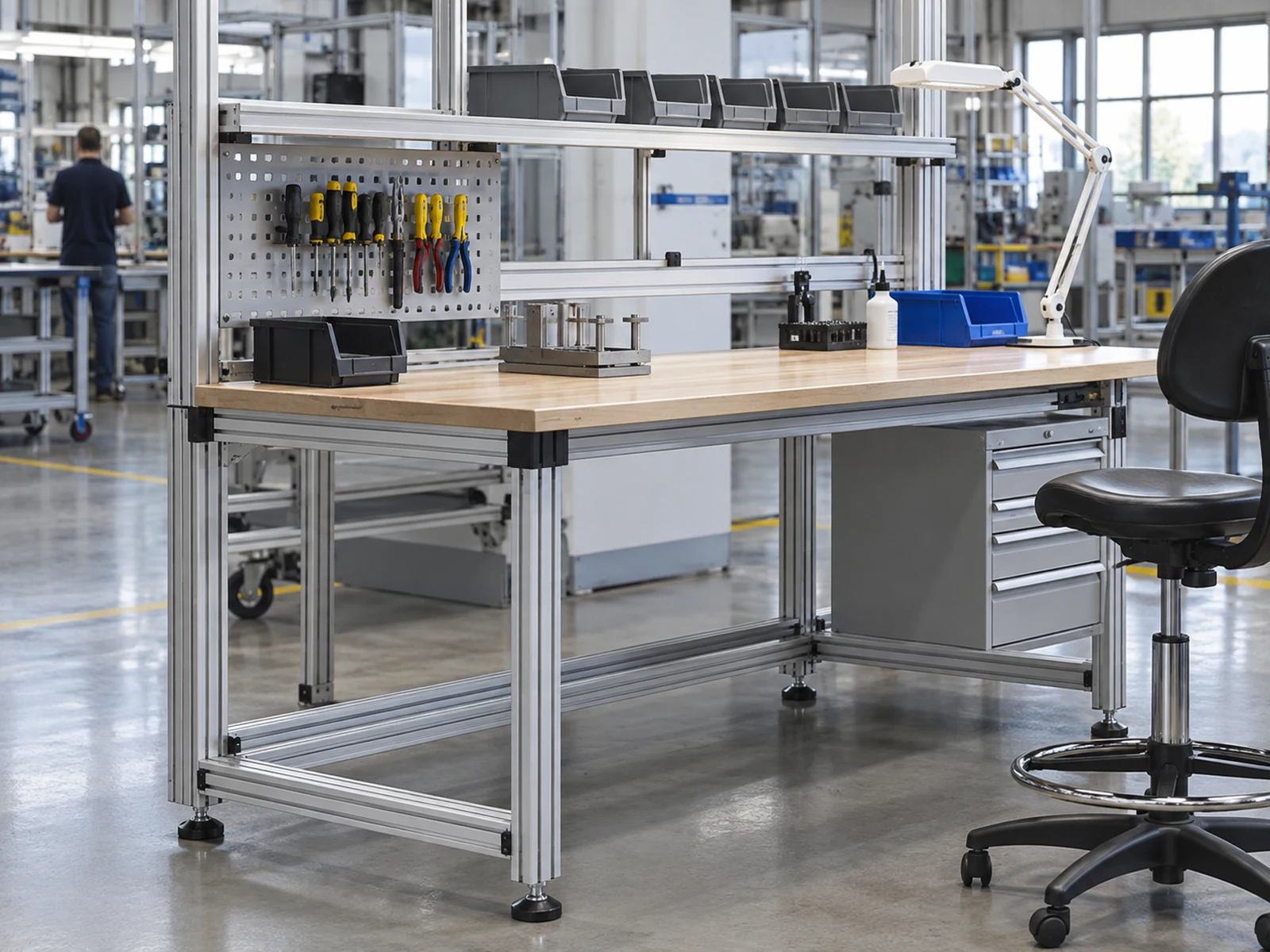
An industrial workbench line extension can mean three different purchases: an accessory mounted to an existing station, another complete station linked beside it, or new frame members that change the footprint of the current bench. The quote should identify which one is being supplied. Otherwise two offers can use the word “extension” while pricing different structures, interfaces and installation work.
Start with the work the additional space must support. Is the bottleneck a missing tool rail or upright, a second operator position, or a longer uninterrupted work surface? Record the current bench make and profile system, the planned position in the line, the load and services that the system owner must approve, and the space available around the station. Those facts determine whether a modular accessory, an adjacent bench or a frame modification is the sensible request.
Industrial workbench line extension: what must actually grow
- Accessory on the present bench: choose this route when the working footprint is adequate and the change is mainly storage, lighting, tool presentation or an upright. Confirm mounting points and the bench supplier’s permitted loading before ordering.
- Additional station beside it: choose this when another operator or process needs its own surface. Specify whether the stations need a mechanical link, shared utilities or simply a common height and material flow.
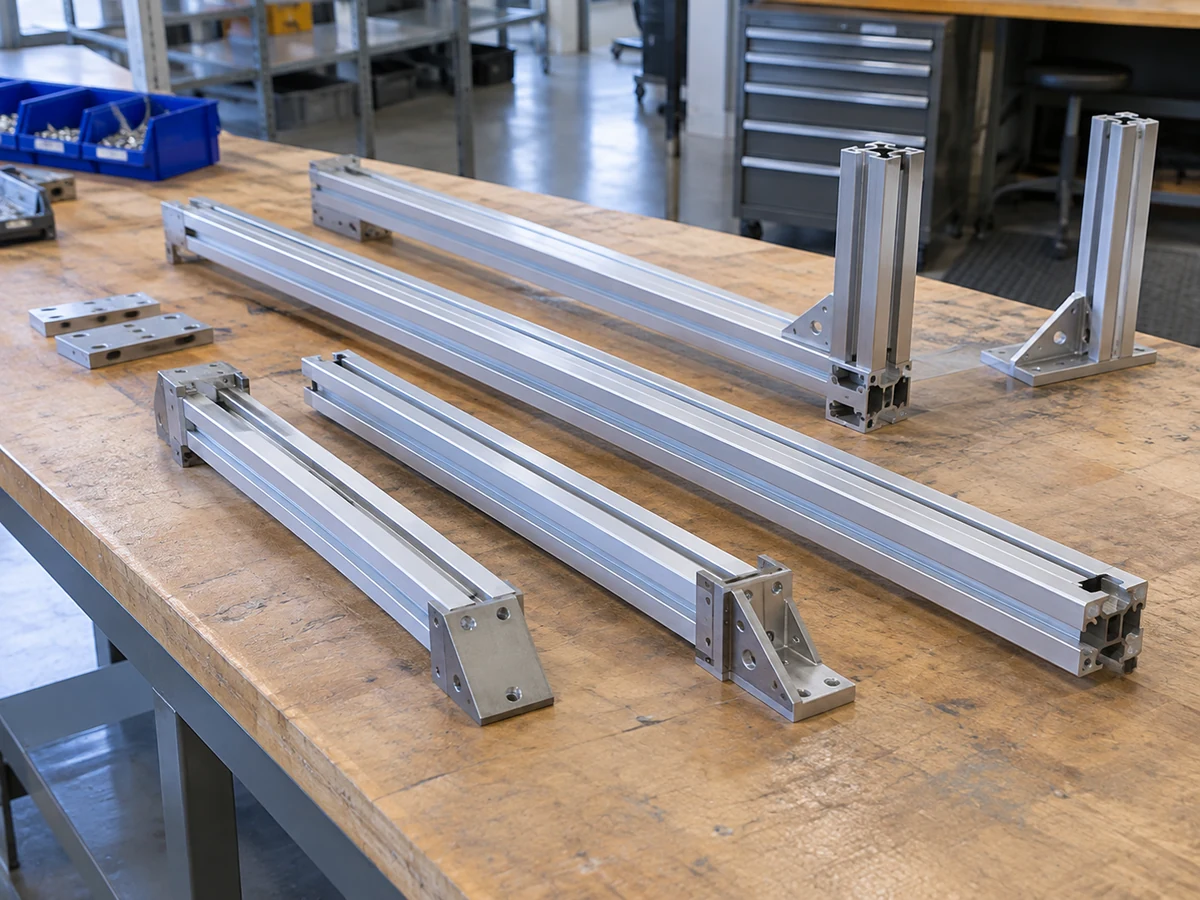
- Longer existing frame: choose this only after the system owner checks the structure, joints, top support and installation access. A cut aluminum member is one component of this job; it is not an approved workbench extension by itself.
The distinction is practical, not semantic. A buyer comparing a frame-cutting quote with a complete-station quote should separate the fabricated members, connectors, top, accessories, service work and commissioning. The lowest member price may leave the largest integration gap.
Check system compatibility before measuring new parts
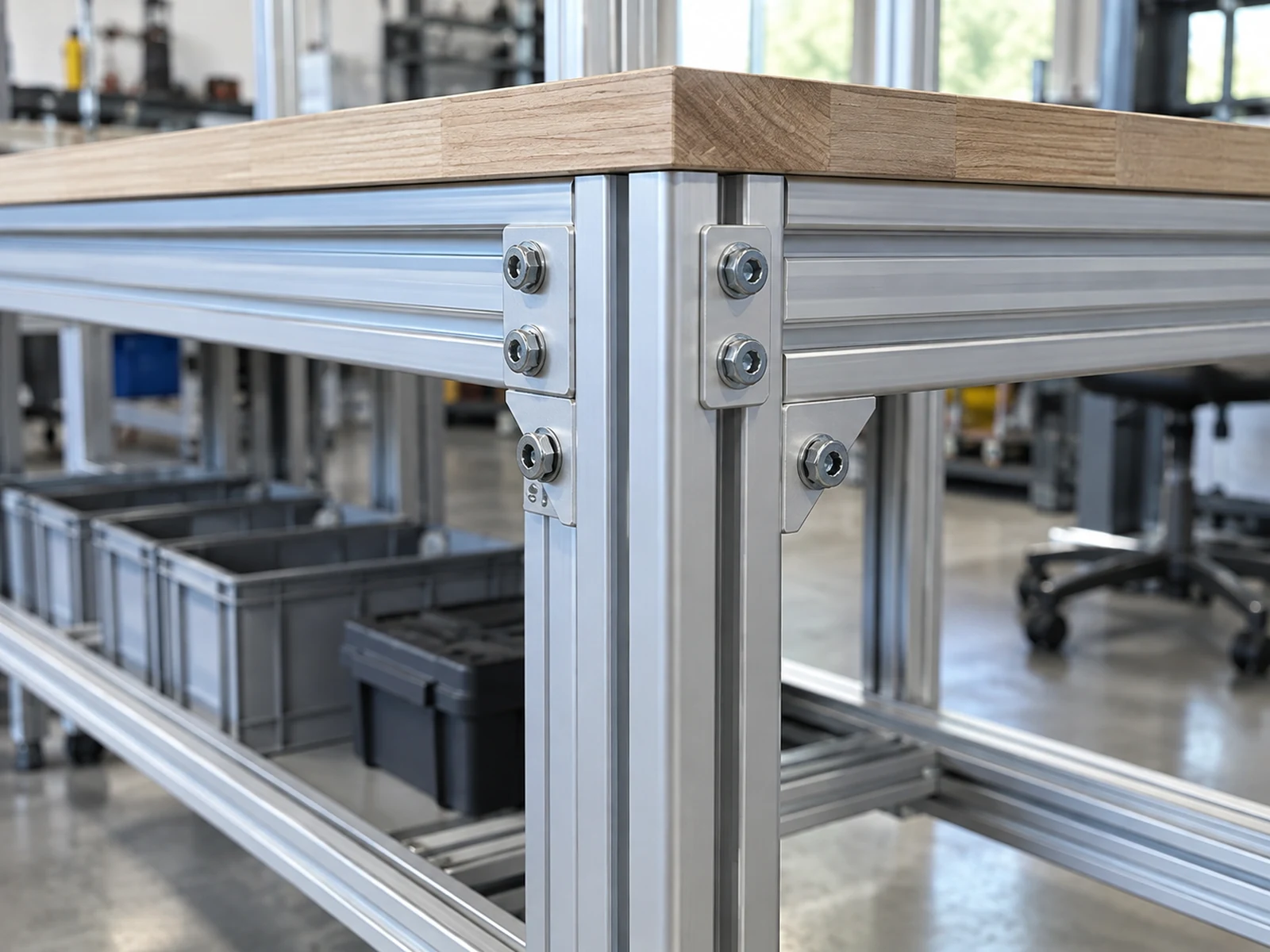
Aluminum profiles with similar outside dimensions may use different slots, fasteners, joints and design rules. Identify the original workbench system, profile series, connector type and current drawing or bill of materials. Ask the system owner or qualified designer to approve cross-system substitutions, load paths and any change to guarding, electrical service or ergonomics. Do not assume that a visually similar extrusion will accept the existing hardware.
Bosch Rexroth’s aluminum profile kit information treats profiles and connection technology as a coordinated system and warns that apparently similar components are not automatically interchangeable. item’s Work Bench System describes modular stations that can be interlinked and fitted with uprights or accessories. These are examples of supplier-specific systems, not evidence that either supplier’s parts fit another brand’s bench.
An item retrofit profile is an example of a component-level addition to that supplier’s workbench system. Its product page describes a set for attachment with a system clamp; it should not be read as a universal kit or a complete, preassembled extension. Use the original manufacturer’s documents for the specific station being changed.
Put all three routes on the same comparison sheet
Ask each vendor to price the same accepted result: the number of usable stations, required work-surface area, permitted operator access and the interfaces to adjacent processes. The scope sheet should state what is included, excluded and to be approved by the system owner. This makes a quotation for a cut-member package comparable with an accessory kit or a complete new bench.
- Existing condition: bench maker, profile series, drawings, photographs of joints, top construction, level and floor anchorage.
- Target arrangement: added station or length, operator position, material flow, clearance, planned utilities and any required linked accessories.
- Parts and work: profiles, connectors, brackets, feet, tabletop, surface finishing, cutting, deburring, packaging, assembly and installation.
- Approval boundary: who checks structural capacity, electrical/ESD requirements where relevant, ergonomic reach, guarding and site acceptance.
- Acceptance evidence: drawing revision, parts list, labeled sample members, joint-fit check, assembled inspection and sign-off owner.
Do not import a load rating, dimensional tolerance or safety claim from a generic image or a saw video. Those values belong to the approved design and the actual supplier’s documentation. If the present frame has no reliable drawings or its maker is unknown, a separate new station can be easier to specify than altering an undocumented structure.
Where cut aluminum members enter the decision
For a frame modification or a custom adjoining station, the fabricator may need repeatable cut lengths and clean, identifiable ends. Send the saw supplier a real profile drawing and a representative material sample; identify any cavities, inserted hardware or finish that affects clamping and the end condition. Then agree on a sample plan that the assembly team can use to check fit at the actual joint. A saw supplier can discuss cutting and handling of the supplied aluminum member. The bench designer remains responsible for whether that member belongs in the structure.
Our earlier industrial workbench frame saw trial guide explains how to evaluate cut-member ends against an assembly need. For a line extension, add the interface and scope questions above before treating a successful cut as a purchase decision.
Use a physical trial to close the right uncertainty
A useful trial starts with a drawing revision and a named acceptance owner. For an accessory, check that the specified fastener engages the existing system and that access remains usable. For an adjacent station, check the top transition, operator clearance and material handoff. For a modified frame, check the assembly drawing, member labels, joint fit and approved inspection points. Record deviations before authorizing the production batch. A video of a saw running does not answer any of these workbench-system questions.
Equipment footage and what it can show
The following Jiurun Machinery channel video shows general aluminum sawing equipment footage only. It does not show this workbench, the proposed extension, the profile system or a customer trial; it provides no evidence of fit, capacity, cut quality or performance for this project. Evaluate the actual profile and approved assembly separately.
Send an RFQ that names the decision
Write one sentence at the top of the RFQ: “We need an accessory on the current bench,” “We need one additional linked station,” or “We seek an approved extension of the existing frame.” Attach photographs, the system identification and available drawings. Then ask bidders to show the included parts, interfaces, excluded approvals, trial method and handover documents. This prevents a part-only offer from being mistaken for a commissioned workstation.
If your approved design requires cut aluminum profiles, contact JiurunCut with the profile drawing, material, cut-length schedule and desired sample inspection. We can discuss the cutting equipment and sample scope for those members; the workbench system owner should approve the structural and site-level extension.