
Industrial partition infill panel replacement is a purchasing decision about interfaces, not automatically a reason to buy new aluminum cut parts. A cracked clear sheet or damaged mesh may leave the surrounding frame sound. A distorted profile, loose corner, failed anchor or deformed panel-retaining groove changes the scope. Before requesting a quotation, identify what the partition is meant to do and which parts actually failed.
This guide is for buyers of modular aluminum-profile partitions and enclosures. A machine guard or other protective barrier needs its responsible safety owner to approve the repair specification and return to service. A visually similar office divider is not evidence that a protective enclosure can use the same panel or hardware.
First decide whether the frame still performs its job
Photograph the whole bay, both sides of the damaged opening, the corners and the attachment to the floor or adjacent modules. Record the system or drawing reference before removing clips. The first question is whether the damage is confined to the infill, or has moved into its support. A crack in a sheet is different from a bowed post, pulled fastener, twisted door frame or enlarged slot.
Check the panel edge and its retainer separately. If the panel is broken but the retaining system is intact, a panel-only order may be possible. If a gasket, clip or strip no longer holds the edge, quote that hardware with the panel. If the profile groove, frame joint or fixing point is damaged, replacing just the sheet may leave the original failure in place. Do not use a new infill to hide movement in the frame.
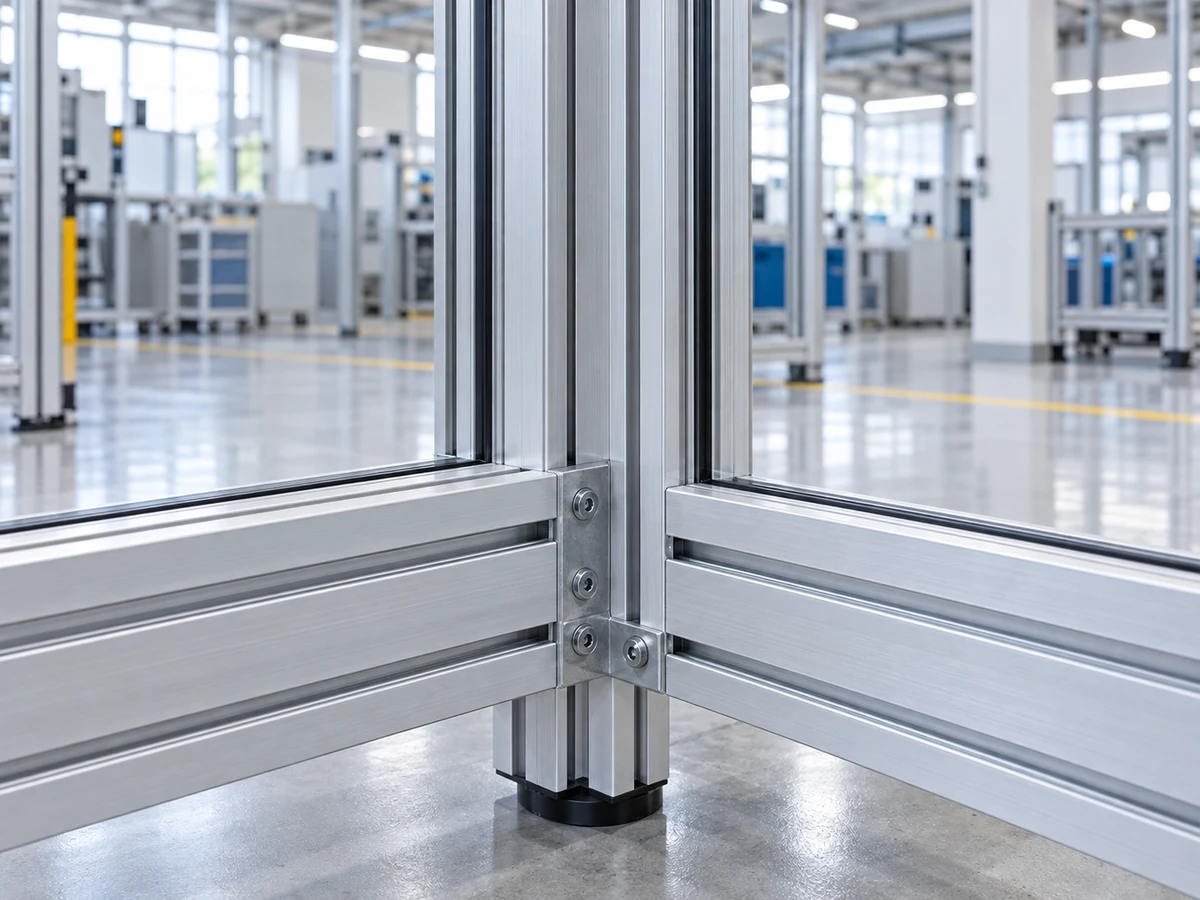
Panel mounting is system-specific. 80/20 separates panels, panel and mesh mounts, hinges, latches, and gasket or edge components in its product range; those are distinct order lines rather than interchangeable names for one part. item’s Line 6 panel-clamping strip example describes a removable panel in an existing closed profile frame. That example explains why a panel-only route can exist; it does not establish compatibility with an unidentified partition system.
Industrial partition infill panel replacement: four supply routes
| Observed condition | Quote scope | Release question |
|---|---|---|
| Only the infill is damaged; frame and retention are verified sound | Matching panel, with the approved material and edge treatment | Will it fit the actual clear opening and the existing retainer? |
| Panel and clips, strips or gasket are damaged | Panel plus compatible retention parts | Are the profile groove and fastening interfaces still usable? |
| One or more frame members or joints are damaged, but the module design remains valid | Approved replacement members or a labeled cut kit | Can the original system and cut details be identified and trial-fitted? |
| Multiple interfaces, anchors or the protective design cannot be reliably recovered | OEM or designer-approved complete module | Who owns fit, installation and functional acceptance? |
The cheapest line item is not necessarily the cheapest repair. Compare the work needed to identify compatible parts, remove the damaged component, fit a replacement, inspect the completed assembly and document its release. A panel-only quote is useful only if its dimensions, material and retention method are known. A complete module may be the cleaner purchase when the existing frame cannot be positively identified or assessed.
Build an RFQ around the real interfaces
Send suppliers an annotated drawing or measured sketch, not a photograph alone. Name the profile system and series if known; include the extrusion cross-section, groove and retainer detail, panel type and thickness, visible opening, overall module size, edge finish, joint hardware and mounting points. State which dimensions are measured at the installed assembly and which are the supplier’s required cut or fabrication dimensions. Those are not always the same.
For a door or access panel, also record hinge side, swing, latch position, clearances and any interlock interface. For a stationary bay, record adjacent modules, the base and top fixings, and whether the panel is captured in a closed frame or held by removable retainers. Provide both a front view and a detail of the panel edge. If the partition has a protective role, attach the owner’s approved material and performance requirements; do not infer them from appearance or from a generic photograph.
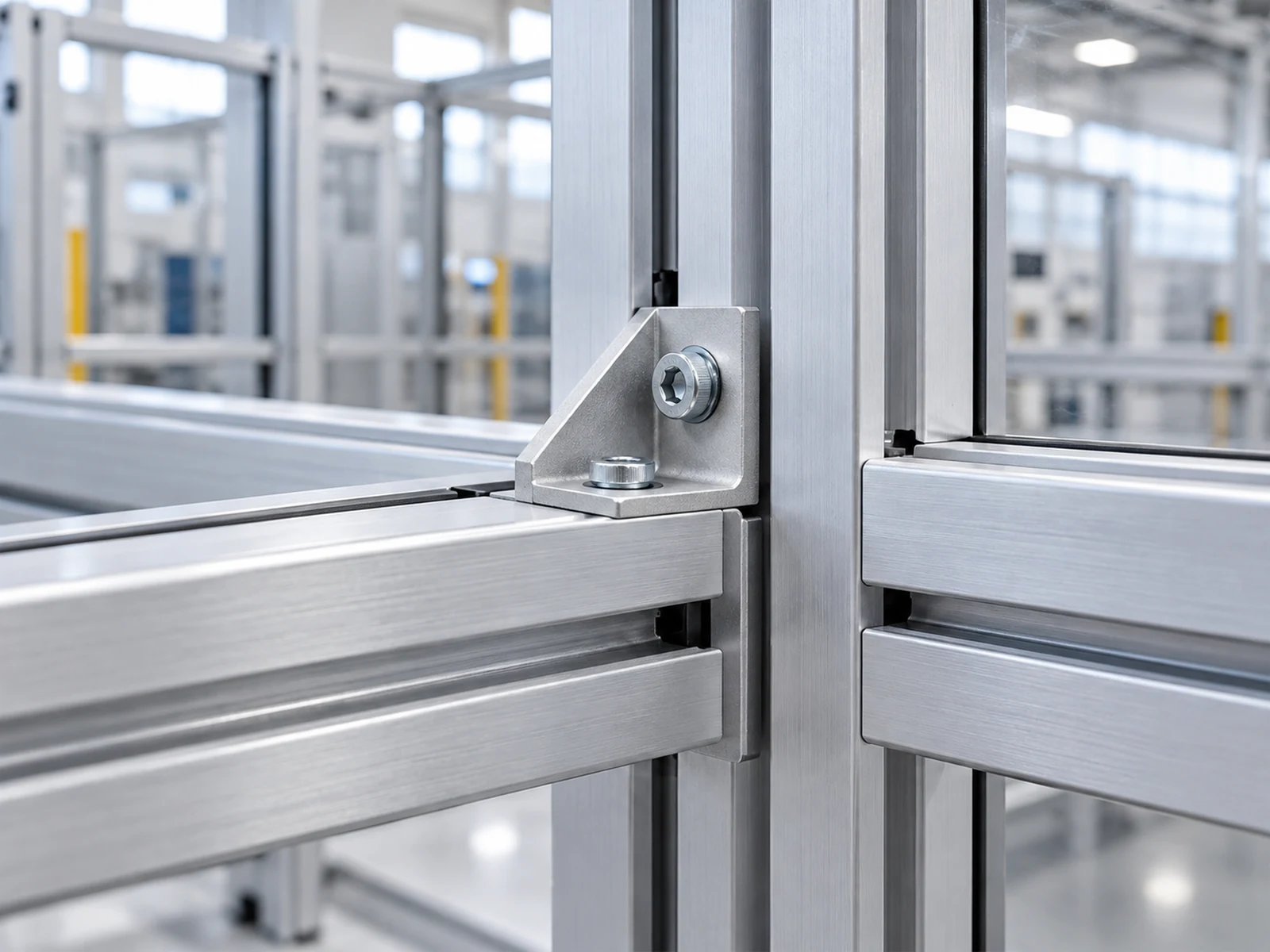
Ask every bidder to mark what is included: panel, clips or strips, gasket, fasteners, frame members, machining, labeling, delivery protection and on-site assembly. Require a response for missing information instead of silently substituting a near-looking profile. If the original system is discontinued, request a proposed interface drawing and an explicit approval step before cutting or ordering a batch.
When are new saw-cut members justified?
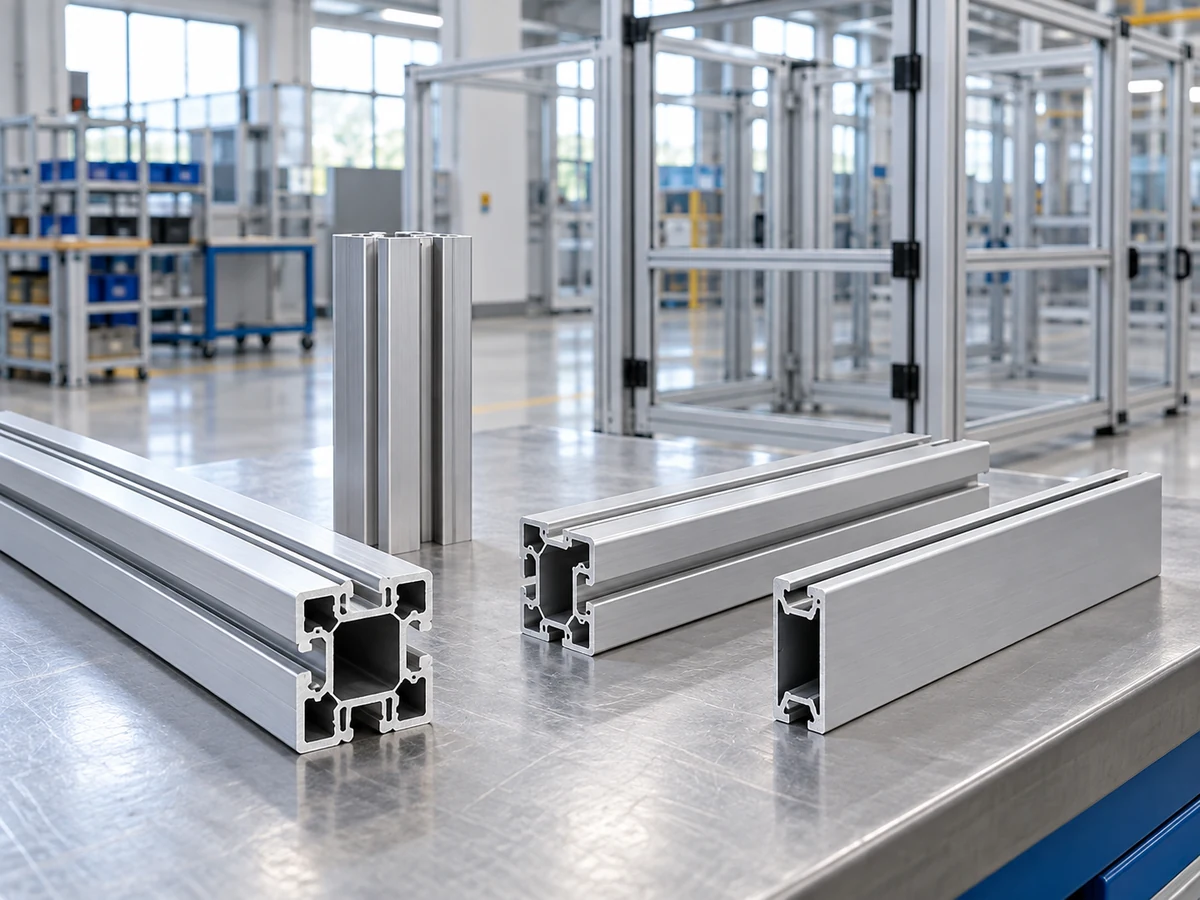
An aluminum saw becomes relevant when an approved route calls for new frame members, not merely because an infill panel is damaged. The buyer should establish the member material and section, cut length reference, end geometry, hole or connector preparation, finish protection and part labeling. A supplier who can cut a straight length has not thereby demonstrated that the replacement will fit the existing joint.
For recurring repairs across a known modular system, compare three routes: order finished original parts, buy labeled cut kits from a specialist, or cut controlled members in-house. In-house cutting may be sensible when the input profiles, drawings, inspection method and repeat volume are stable. It may be a poor investment for sporadic panel-only damage or unknown safety-critical assemblies. See our separate industrial partition frame saw-trial guide for a witnessed post-to-beam fit check, and our reconfiguration guide when the layout itself is changing.
Review a sample before releasing a batch
For a panel order, confirm the material identification, finished size, edge condition and fit in the intended retainer. The sample should seat without forcing the frame or leaving an unsecured edge. For a cut-member order, check the supplied profile against the approved section, identify its reference faces, inspect the ends and connector preparation, then dry-fit a representative joint and panel. Record the accepted sample and its drawing revision so later shipments are judged against the same reference.
Finish with an installed-assembly check appropriate to its purpose: panel retention, corner alignment, access operation, fixing integrity, sharp edges and the buyer’s documented functional requirements. Where the bay is part of a machine guarding system, the responsible designer or safety owner must approve the repaired configuration and release it for use. Bosch Rexroth’s EcoSafe range illustrates that protective frames, panels and compatible modules form a defined system; a similar-looking substitution should not be treated as an approved equivalent.
Video: general aluminum profile cutting example
The following video from the Jiurun Machinery YouTube channel shows general angle-saw equipment and a cut aluminum profile. It does not show the partition in this article, its infill material, an approved replacement configuration, a customer repair, or performance of a repaired guard.
Questions buyers should answer before ordering
Can a damaged panel be replaced without dismantling the whole frame?
Sometimes. It depends on the identified profile and retention system. Some systems offer removable strips or mounts; others capture the panel during frame assembly. Ask for the original assembly detail and a controlled removal method before assuming the route.
Does a new panel prove the partition is safe to use?
No. It may restore one damaged component, but it does not by itself verify anchors, frame joints, access hardware or a protective function. Use the approved design and the responsible owner’s acceptance process.
When should we quote a new aluminum cutting process?
Only after recurring, approved frame-member replacements create a clear cutting workload. Define the supplied section, end and connector requirements, representative fit trial and inspection plan before comparing machines or subcontracting routes.
Make the next quote decision specific
Send the frame and panel drawings, damage map, profile identification, mounting details and intended function. Ask suppliers to price the panel-only, panel-plus-retainer and approved member or module routes that the inspection actually supports. If new aluminum members are needed repeatedly, contact JiurunCut with the cut-part drawing and sample profile to discuss a witnessed cutting trial. A saw quotation should follow that scope decision, not replace it.