
An industrial partition frame saw trial should answer a specific purchasing question: can the proposed cutting process supply the posts and beams that your approved connector system will assemble, identify and release? A neat sample cut on an unrelated extrusion does not answer it. The useful trial starts with the actual partition drawing and ends with an assembled, traceable joint and a decision record.
This guide is for buyers who cut aluminum members for modular factory partitions, access-area dividers or similar framed enclosures. It covers the saw-side evidence to request from a supplier. The installed partition’s strength, anchorage, guarding, fire response and regulatory suitability require separate design and site approval; a saw trial cannot certify them.
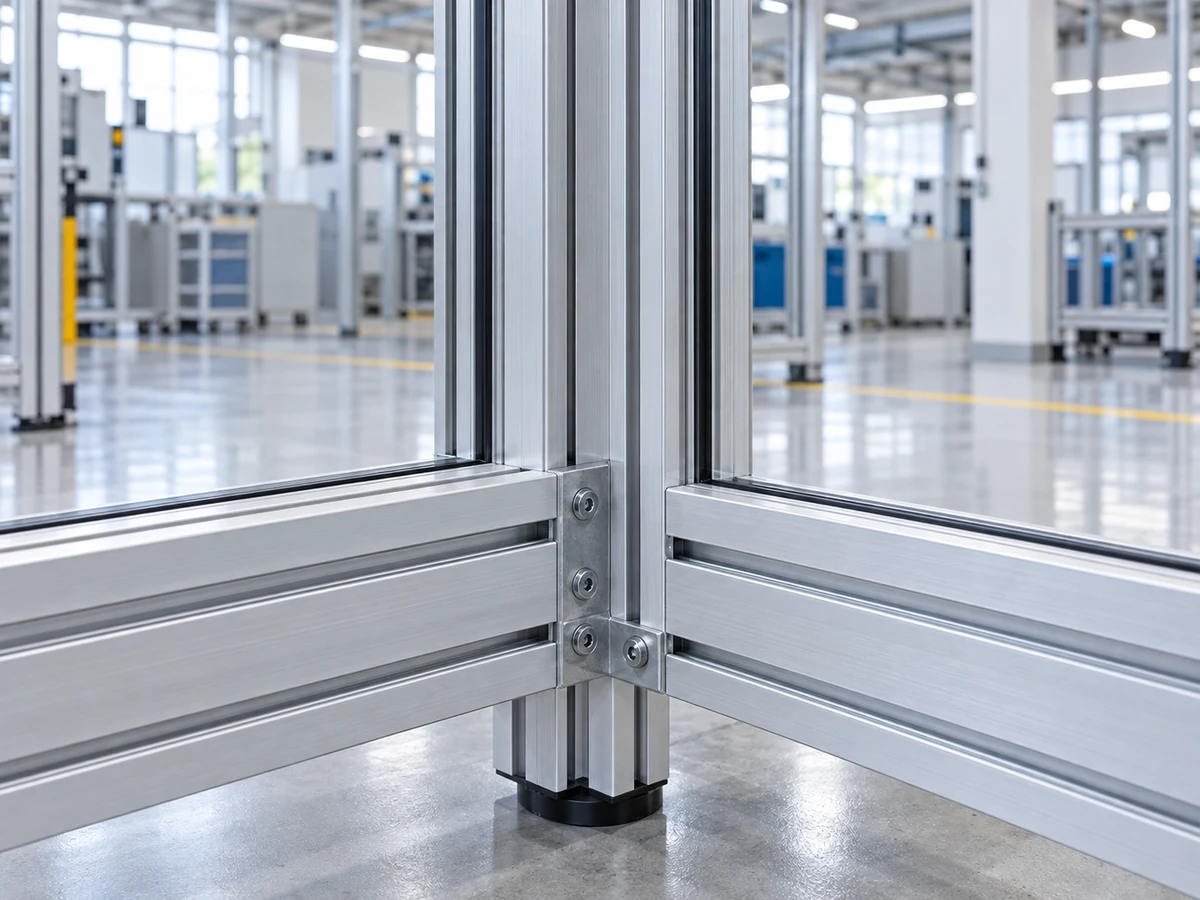
Start with the released joint, not the saw brochure
Before asking for a trial, freeze one representative partition bay. Identify the vertical post, each horizontal beam, the approved connection method, the panel or infill interface, and any handed or door-side members. State the drawing revision and who can approve deviations. A list of raw profile names is insufficient: two sections that look alike can require different connector access, end preparation or orientation.
Ask the system designer or kit supplier to define which operations belong to the saw station. Is the output a square-cut blank, a labeled member ready for another machining station, or a completed joint-ready component? If holes, slots, tapping or connector installation happen elsewhere, keep their acceptance separate. Otherwise a successful assembly may hide an unclear saw requirement, while a failure may be blamed on cutting when the connector preparation was wrong.
Connection choice matters. Bosch Rexroth’s FRAMEpro CAD overview describes how connector selection feeds a frame model and its sawing and machining parts list. 80/20’s fastening-method catalog likewise shows several ways to join T-slot profiles. These are examples of a principle, not interchangeable approvals for your system: obtain the exact manufacturer instructions for the chosen profile and connector family.
Build a trial pack that reproduces the buyer’s real mix
Give each supplier the same controlled pack. Include a drawing or cut list with member IDs, the authoritative length datum, section and slot orientation, quantity, finish or protective-film condition, and the end treatment required before the next operation. Mark the assembly position and left/right hand where they matter. Supply a current bill of materials and the matching connector, fastener and panel details permitted for the demonstration.
Select a modest but representative sample: a common post, a common beam, a short member that is awkward to label or hold, and a member from a second profile or setup if the real production mix contains one. The point is to expose setup changes, identification and joint fit; it is not to maximize the number of impressive cuts. Record stock length, section, batch and surface condition so that another shop can repeat the comparison.
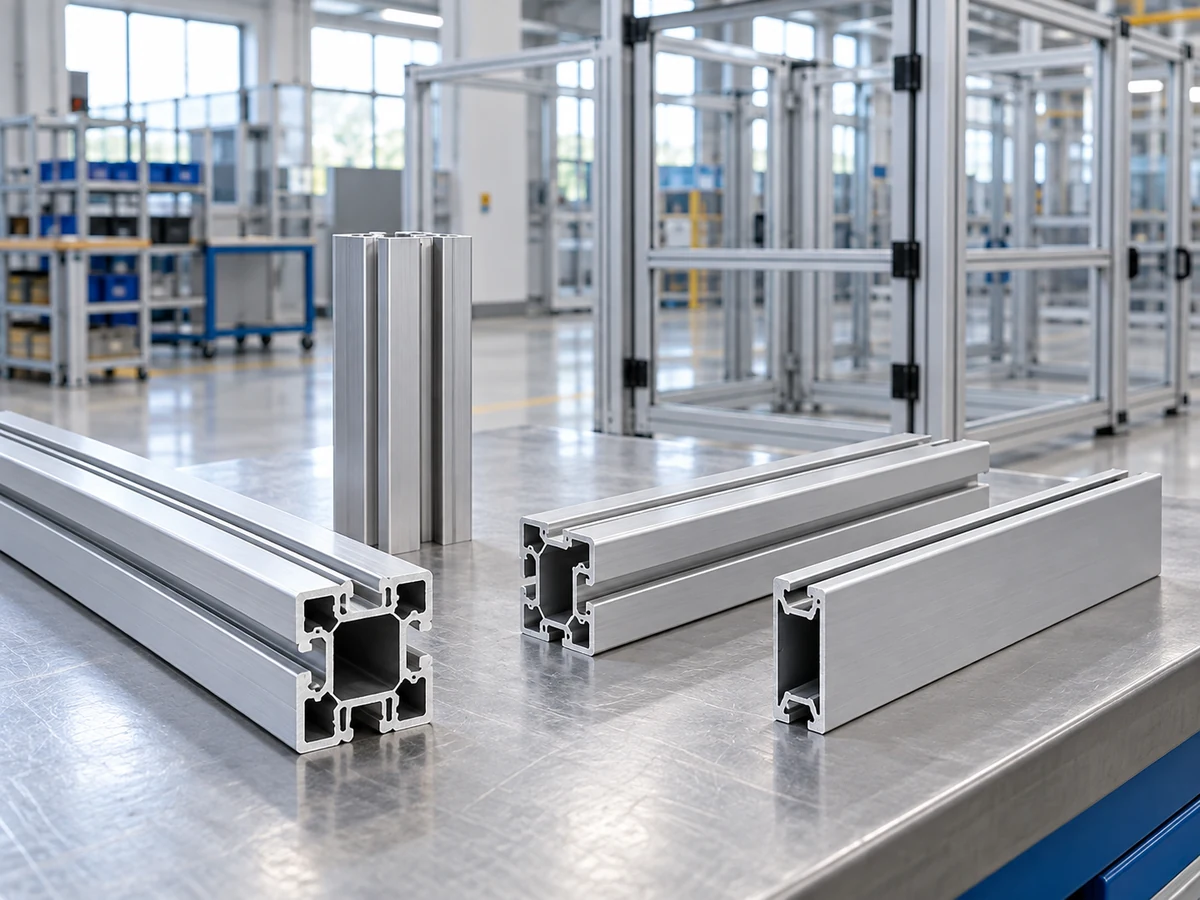
Industrial partition frame saw trial: separate cut-piece and assembly checks
At the saw, record the released measurement method before cutting. State where the length is taken, how squareness or end condition will be judged, what burr or edge condition is acceptable for subsequent handling, and which face or slot establishes orientation. Use the drawing and connector supplier’s tolerances; do not adopt a general machine feeding figure as the finished member’s length accuracy. Make a first-article check after each relevant setup change rather than relying on one early good piece for the entire batch.
Preserve the identity of each cut member through the trial. A precise beam in the wrong bay, or a correctly cut left-hand part labeled as right-hand, is still a supply failure. Define the tag, tray or kit method before cutting. Segregate setup pieces and rejected ends from acceptable members. For short offcuts, decide whether they are scrap, controlled reusable stock or trial specimens and mark them accordingly.
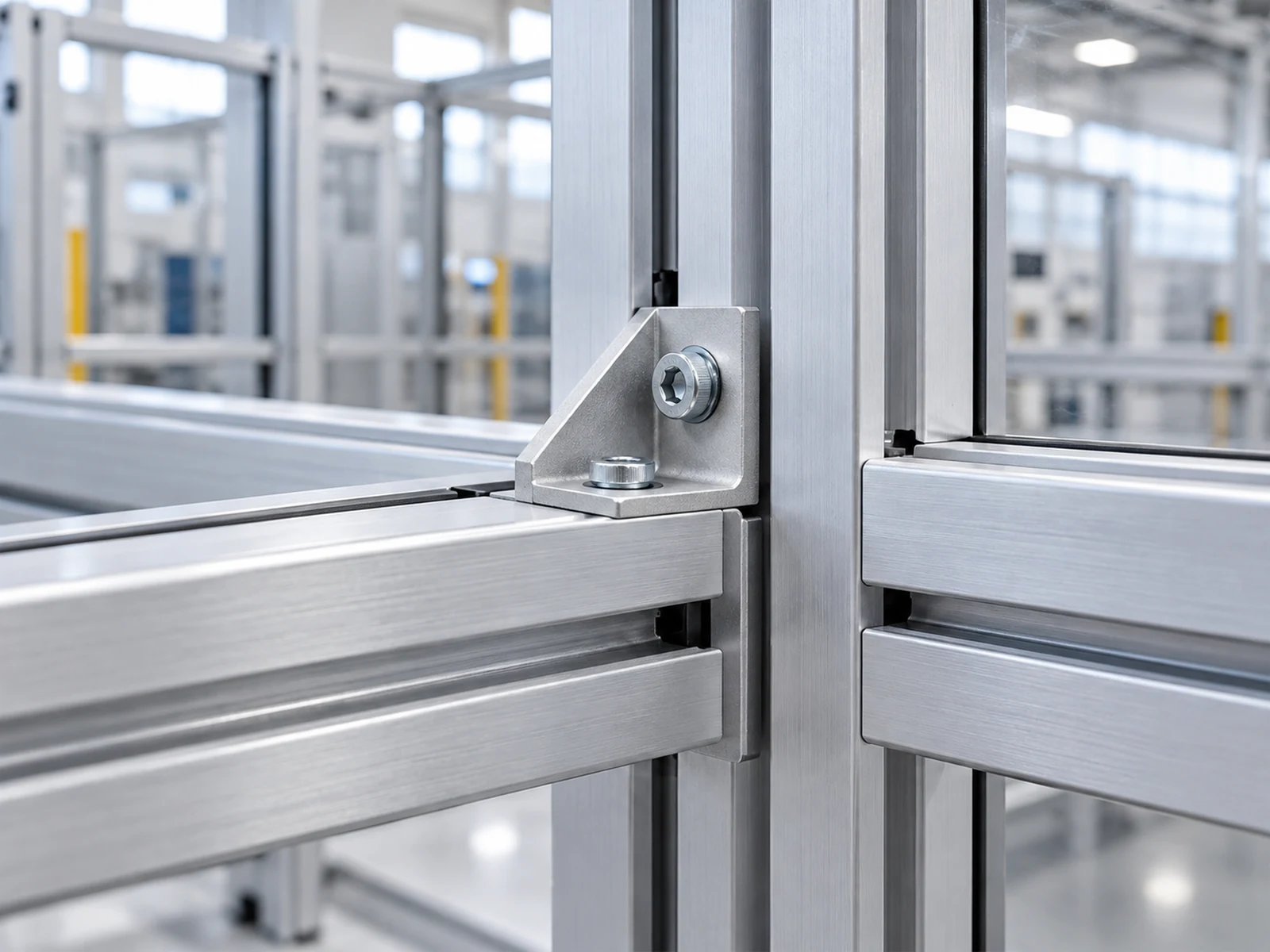
Then dry-fit the selected post and beam with the approved connector and the intended panel or infill interface. Look for accessible fasteners, clean seating, the required orientation, and whether the panel path is obstructed. If the assembly needs a gap, clearance or door alignment check, measure against the released system drawing and have its owner sign the result. Avoid treating a visually closed joint as proof of structural performance or installed safety.
Use a small acceptance matrix instead of a single pass label
- Released input: Retain the drawing revision, cut list, stock and connector identity; the partition-system owner signs.
- Cut output: Retain each member ID, measured length and end condition by the approved method; quality or production signs.
- Mixed-batch control: Retain the first article after a setup change, labels and reject segregation; production signs.
- Joint dry-fit: Retain photos and observations against the approved connection and panel interface; the assembly or system owner signs.
- Purchase decision: Retain open exceptions, corrective actions and any repeat-trial trigger; buyer and technical owner sign.
Use actual measured results in this matrix, with units and the approved acceptance limits. An unresolved fit issue is an exception, not a pass. If a trial piece requires hand dressing, rework or a substitute connector, record that intervention and decide whether it belongs in the proposed production route. The supplier’s claim of throughput should be evaluated only after the accepted-output route is clear.
Compare buying routes on joint-ready output
One buyer may purchase precut, labeled frame kits; another may buy an aluminum saw and keep preparation in-house. Compare the cost and lead time per accepted, joint-ready member set, not cuts per hour alone. Include material yield, setup time for profile changes, workholding, labor for labeling and secondary machining, inspection, packaging, and any rework found during assembly. If panels, doors or site installation constrain the schedule, include those handoffs as well.
A vendor demonstration is strongest when the same released pack is run on each proposed process and the same quality team checks the output. If the future factory will change between several extrusion sizes, ask to see the changeover and the first article after it. If the real order is a large single run, weigh repeatability and material flow more heavily. Keep the decision tied to your actual mix; no universal machine configuration or feed setting can be inferred from a generic video or photograph.
For a broader machine-purchase framework, see our partition manufacturing saw-selection guide. If the decision instead concerns reusing existing members during a layout change, read partition frame reconfiguration. This article addresses the narrower post-to-beam trial and its release evidence.
Video: general equipment context only
The Jiurun Machinery channel clip below shows general aluminum sawing equipment footage. It is not a demonstration of this partition system, connector, material batch, model configuration, customer job, trial result, cut quality or performance. Use the released drawings and your own witnessed trial to judge those points.
What to send with an RFQ
Send the released bay drawing, cut list, stock descriptions, approved connection and panel-interface information, required output state, inspection method, trial quantities and decision owners. Ask the supplier to identify the proposed saw configuration and any secondary process it assumes. Request a witnessed sample run, labeled outputs and an exception log. Where finished length or fit tolerances have not yet been approved, ask the system designer to set them before asking the saw supplier to promise them.
Need a machine proposal for your partition-member mix? Contact JiurunCut with the drawing revision, profile list and intended output state. We can discuss a trial scope and the questions your team should verify before committing to a purchase; final acceptance remains with your engineering and quality owners.