
Industrial aluminum door pull replacement starts with identifying the installed interface, not ordering a similar-looking bar. A loose, bent, missing, or awkward-to-grip pull may be one failed component in an otherwise sound access door. It may also be a symptom of damaged mounting points, a distorted door, or an obsolete profile system. Those conditions call for different purchase orders.
This guide helps maintenance and purchasing teams choose a ready-made handle, a compatible retrofit kit, a controlled cut aluminum member, or a larger approved door assembly. It concerns equipment and enclosure access pulls. A load-bearing handrail, a safety-critical machine guard, or a door with an interlock needs its responsible designer or safety owner to approve the specification and return to service. A photo of a handle is never proof of safe substitution.
Identify the door and the failed interface first
Record the door or access panel identifier, drawing revision, manufacturer or profile series if known, and the purpose of the pull. Photograph the full door, its hinge and latch side, both handle mounts, and the underside or rear of the fixing points. Note whether the handle is a single molded or extruded part, a bar between separate standoffs, or part of a proprietary door kit. A matching finish or outline does not establish a matching mount.
Check where movement actually occurs. A loose fastener in a sound threaded insert is different from a stripped insert, torn panel, distorted extrusion slot, cracked bracket, or door that binds and transfers load into the pull. Ask the maintenance owner to decide whether the existing substrate and fastener path can still be used. If a protective door is affected, document its guarding and interlock requirements before a supplier proposes replacement parts. Do not size a new pull to mask a failing door.
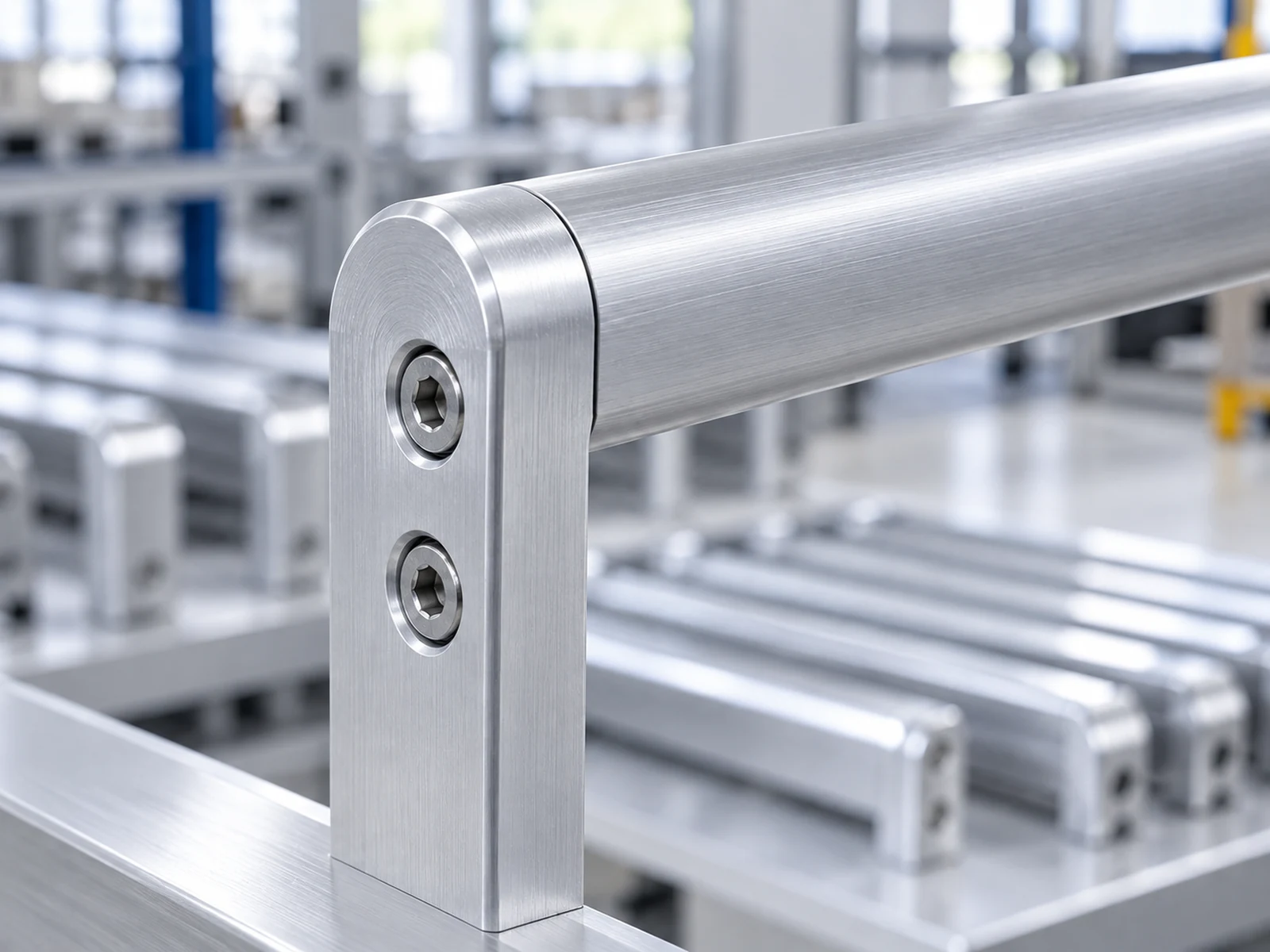
Modular systems show why identification matters. 80/20 describes a handle intended to mount to a T-slot profile, while item describes a handle for a defined D30 system. These are examples of system-specific interfaces, not alternatives that can be assumed to fit the same installed door. Obtain the original part number or an approved interface drawing when possible.
Industrial aluminum door pull replacement: four purchasing routes
| Observed condition | Quote route | Release question |
|---|---|---|
| Identified handle and sound original mounting points | OEM or system-matched ready handle with specified fasteners | Does the supplied part and hardware match the installed series, revision and finish? |
| Original handle unavailable but the door and mount are approved for a new interface | Designer-approved retrofit kit: pull, adapters, brackets and fasteners | Who owns the revised interface drawing and completed-door acceptance? |
| Approved design uses a replaceable straight bar between retained, sound mounts | Cut member or prepared bar to the released drawing, with any end work stated separately | Is the bar section, cut reference, end preparation and assembly fit controlled? |
| Door panel, mount, hinge, latch or protective function cannot be isolated as sound | Approved door component set or complete door assembly | Who verifies the whole assembly and authorizes return to use? |
Compare total scope, not just the price of the visible grip. A ready handle can avoid new interface design when the original system is known. A retrofit kit can be appropriate when the old part is discontinued, but the kit must include a released method of attachment and an acceptance owner. A cut bar is economical only if the retained mounts are specified and sound. Where the door itself is damaged, a bar-only purchase leaves the real problem unresolved. The separate machine guard door replacement guide deals with full-door scope; it does not make an individual pull automatically interchangeable.
Measure the interfaces that make or break compatibility
Send a dimensioned sketch or drawing with the center-to-center spacing of mounting points, fixing direction, thread or slot interface, bracket footprint, available edge distance, door thickness, hand clearance, projection, overall envelope and required finish. Mark which values are measured on the installed door and which are approved design requirements. A supplier should flag dimensions it cannot confirm; it should not fill gaps from an illustrative photograph.
For a bar-and-standoff construction, distinguish the visible outside span from the bar’s cut length and the mounting centers. End caps, insertion depth, bracket pockets and any post-cut machining can make these different dimensions. Identify whether the input is a solid or hollow extrusion and whether the ends need deburring, drilling, tapping, coating or assembly. Do not infer a cut length from the distance between screws.
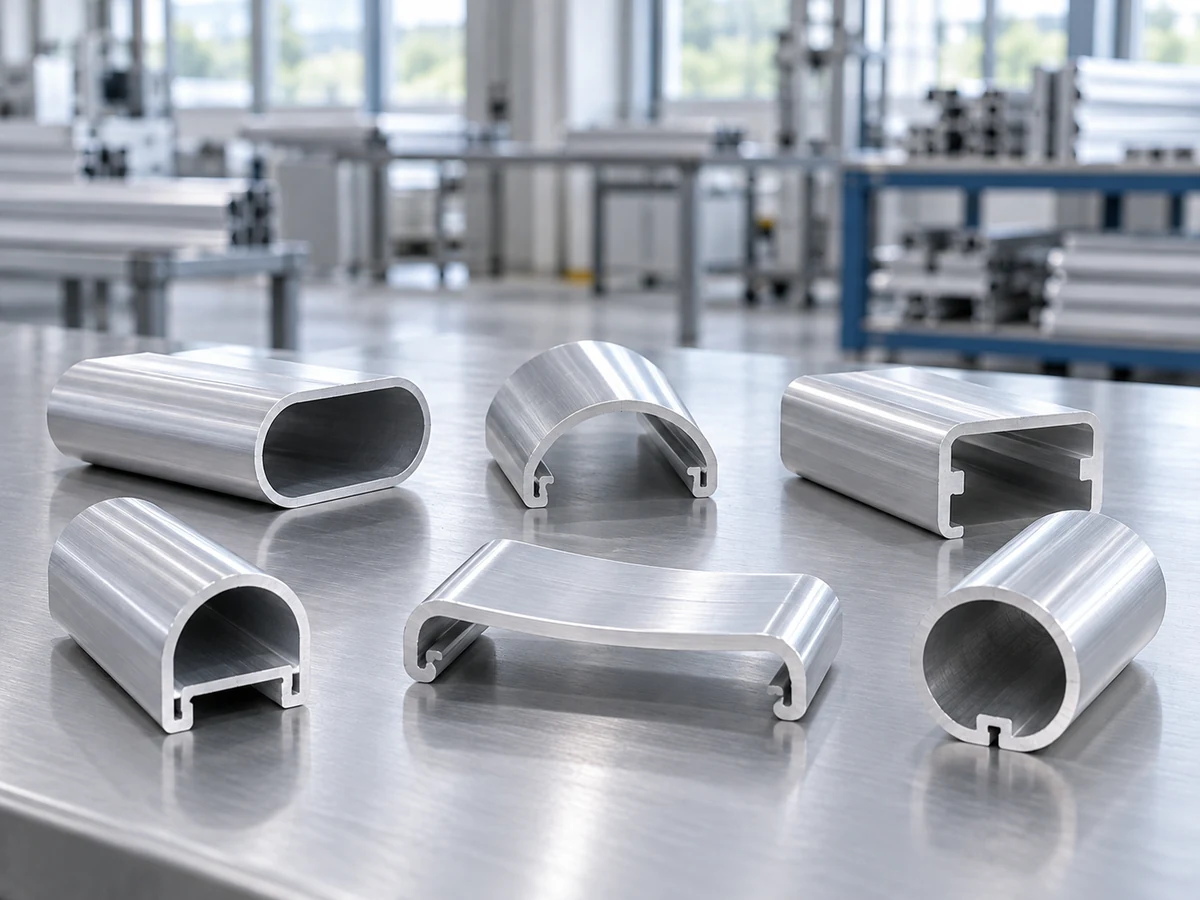
Record the existing handle’s part mark, material callout if available, finish and color reference, as well as the door system’s fastener or insert specification. For a retrofit, ask the responsible designer to state permitted changes to the door face or extrusion. Any change to an interlocked guard, escape route, rated barrier or protective enclosure needs its own formal approval; a simple grip-fit check is not that approval.
When does a saw-cut bar make sense?
A saw supplier becomes relevant after an approved design identifies a replaceable aluminum member. The RFQ should define the supplied profile and condition, drawing revision, datum for cut length, end geometry, burr and surface-protection expectations, quantity by variant, part labeling and packaging. Separate the straight cutting operation from any later drilling, tapping, end caps, coating or installation. A saw-cut sample cannot prove a bracket or door assembly is structurally suitable.

For a repeatable family of approved replacement bars, compare buying finished OEM spares, ordering labeled cut parts, and controlling cutting in-house. Put annual demand, profile variants, set-up changes, inspection time, scrap exposure and assembly work on the same comparison sheet. A single emergency replacement rarely justifies selecting a new saw. For manufacturing-stage questions, see our pull handle blank cutting RFQ guide; for goods already received, use the separate handle receiving inspection guide.
Release one representative replacement before a batch
Ask the supplier for a clearly labeled sample against the current drawing. Confirm the bar section, finish, cut reference, end condition and included hardware at receiving. The authorized maintainer should trial-fit it to one approved door without forcing fasteners or hiding gaps under washers. Check the intended grip clearance, fastener engagement, door movement, latch and hinge operation, and any owner-defined functional checks. Photograph the accepted assembly and record the drawing, part and hardware revisions.
If the sample reveals a door or mount problem, stop the bar-only route and return to the scope decision. If it fits, release the batch with the same inspection points and a rule for substitutions. A change in profile, bracket, finish, fastener or mounting hole pattern should trigger review rather than silent substitution. For a protective door, only its responsible owner can complete the safety checks and authorize return to service.
Video: general aluminum profile saw example
The following video from the Jiurun Machinery YouTube channel shows a general angle-saw cutting process for an aluminum profile. It does not show this door pull, its material, a replacement kit, a customer repair, fit approval or performance. Use it only to understand a possible cutting stage after the approved replacement design has been specified.
What to send in the replacement RFQ
- Door or enclosure ID, purpose, system maker or profile series, drawing and revision.
- Photos of the whole door, failed pull, both mounts and the reverse side; note any damage to the substrate.
- Approved mounting centers, interface dimensions, hand clearance, finish and hardware specification.
- The requested quote route: ready handle, approved retrofit kit, cut bar, or complete assembly; identify what installation work is excluded.
- Sample and batch quantity, variant labeling, inspection criteria, packaging and the person who accepts the installed result.
If the only work you need is a controlled cut aluminum bar, contact JiurunCut with the released profile drawing, sample section, cut dimensions and expected repeat volume. We can discuss the cutting process and a representative trial. The door owner remains responsible for the handle design, hardware compatibility, installation and any protective-function approval.