
Honing vs lapping starts with how the abrasive reaches the bore wall. Honing uses abrasive stones on a tool. The automated bore-lapping example discussed here uses loose abrasive compound with a lap.
For an aluminum component, give the finishing provider the actual bore and drawing. Ask it to qualify the proposed route for that part.
Three decisions in a finishing inquiry
1. Read honing vs lapping in the bore-finishing context
Sunnen’s process overview describes honing with abrasive stones around a mandrel. The tool rotates and moves back and forth while the stones contact the bore wall.
Its automated bore-lapping description uses a grooved lap and loose abrasive compound between the tool and bore. The lap also rotates and reciprocates.
This comparison concerns those bore-finishing descriptions. A quotation for flat-surface lapping needs its own identified work surface and process scope.
Ask the supplier to name the actual operation
“Polish the hole” leaves the proposed tool and delivery condition unclear. Ask whether the offer includes honing, bore lapping or another named operation.
Keep the supplier’s answer attached to the controlled feature. If different bores receive different operations, show each one separately on the quoted scope.
A process label is useful for understanding the proposal. The final decision also needs the supplier’s review of the material, starting feature and required result.
Keep the comparison on the same part
Give competing providers the same released drawing and material description. A general brochure describes a process; the supplier still needs to review your aluminum component.
Identify the surfaces that may be used to locate or hold the part. Show completed features and visible faces that the finishing proposal must respect.
If one offer begins with a supplied rough bore and another includes its preparation, record that scope difference before comparing prices.
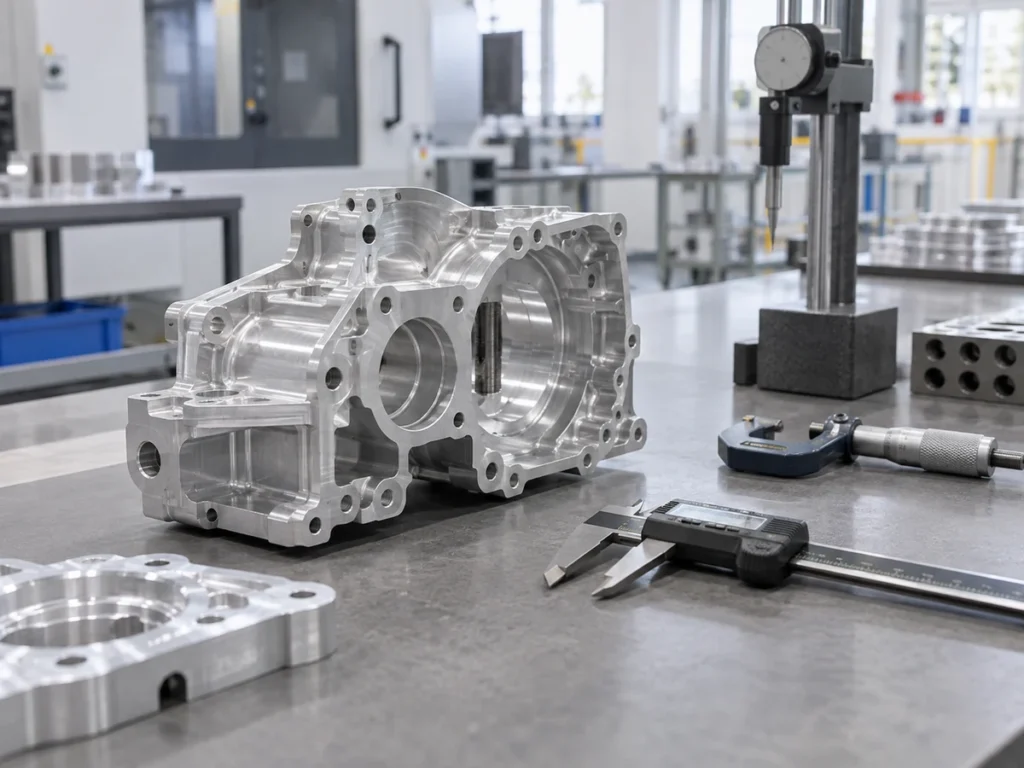
2. Agree the incoming bore before releasing blanks
Describe the actual starting component. Include the alloy and condition, drawing revision, existing operation stage and available bore measurements.
State whether the bore is through or blind. Show its depth, entrances, shoulders, interruptions and nearby walls on the complete drawing.
Have the finishing provider confirm whether that incoming feature is suitable for its proposed route. Obtain its approved preparation requirements before making a production batch.
Keep a preparation allowance part-specific
Ask who defines the incoming diameter and any permitted variation. Retain the approved instruction with the drawing rather than inserting a general allowance from a different job.
If the provider changes the preparation request, identify the affected drawing and order. Ask whether already prepared blanks remain suitable.
Use the reaming and boring guide for a separate discussion of earlier hole operations. This article addresses the proposed abrasive finishing stage.
A fictional request with one missing decision
Imagine inquiry B12 for an aluminum housing. One fictional offer says “hone bore”; another says “bore lap.” Neither identifies the approved incoming bore condition.
The immediate purchasing question is what each provider needs to receive. There is no measured result or accepted sample in this example.
| Offer field | Question to resolve |
|---|---|
| Honing named | What incoming feature does the proposed route require? |
| Bore lapping named | What preparation and final checks are included? |
| Starting condition missing | Who supplies and approves the preparation instruction? |
These entries help complete an inquiry. They assign no universal process ranking, removal allowance or supplier capability.
Once the providers respond, compare the same delivery stages. Keep extra preparation, finishing and reporting work visible in the price comparison.

3. Compare the required finished-feature evidence
List the acceptance characteristics separately. Identify the bore diameter, specified form, required surface condition and any relationship to another part feature.
Ask the finishing provider which records cover each requirement. Keep the actual reported quantity, evaluated region and part condition visible.
Read size and form under their own headings
A row labeled diameter should remain a diameter result. Request the separate evidence required for a stated form characteristic.
The roundness and cylindricity guide explains the difference in geometric coverage. Keep the indicated characteristic connected to its own evaluation.
If the provider reports only selected locations, ask how those records address the drawing’s required region. Record unresolved coverage before sample approval.
Specify the surface question clearly
Replace an unexplained “smooth bore” note with the approved surface requirement. Ask the drawing owner to resolve any missing definition before the provider selects its checking method.
Retain the reported parameter, units, method and evaluated location where the agreed specification requires them. A bright bore photograph gives the reader different information from a measurement record.
Ask when the report applies in the operation sequence. If another operation follows finishing, retain the final acceptance stage agreed for the delivered part.
Approve a named sample and scope
Request a representative sample when qualifying the proposed finishing route. Identify the actual component and the completed operation stage.
Review the required results with the responsible drawing and quality owners. State which characteristics are accepted and which remain open.
If the supplier changes the material, preparation or finishing proposal, ask whether the existing approval still covers the new arrangement. Keep the decision with the relevant order.

Write a request that keeps the decisions together
Please review the identified aluminum bore for your proposed honing or bore-lapping route. Confirm the incoming feature you require, the included preparation and the records for the released finished-bore requirements.
Attach the complete drawing and actual material condition. Identify the requested quantity, supplied stage and required delivery stage.
Ask the provider to mark exclusions in its offer. Keep the response readable enough for purchasing, machining and inspection reviewers to follow the same feature.
When the job starts with sawn stock, send JiurunCut the aluminum section and cut list. Confirm the starting lengths and cut-end requirements with the downstream provider.
Keep honing vs lapping qualification with the finishing supplier’s actual component review. This article does not claim that JiurunCut supplies either finishing process.
Questions that close the inquiry
Does a process name guarantee an accepted aluminum bore?
The supplier needs to review the actual part and provide the agreed finished-feature evidence.
Does this comparison cover flat lapping?
It addresses bore finishing. Identify the work surface and required scope separately for a flat-lapping offer.
What should be clarified before blank production?
The provider’s approved incoming-bore requirements and the included preparation stage.