
High-speed door upright cutting can sound like a simple two-piece saw order. The difficulty begins when a door supplier calls the same item an upright, a guide track, or a complete side assembly. A cut length alone will not tell a fabric door manufacturer which side receives the motor, where a wind bar travels, or which fittings arrive installed. Before asking an aluminum saw supplier for a trial, decide exactly what your shop is authorized to make.
This article is for an OEM or approved fabricator buying a cutting process for its own released door design. It does not identify the material of a particular commercial door upright, approve a field modification, or treat a saw-cut sample as a door safety test.
High-speed door upright cutting begins with the delivered part
Take one approved door drawing and its bill of materials. Mark the left and right upright as either a supplied finished assembly, a prepared member that needs secondary work, or a raw profile your shop will cut. Then mark the guide track, seals, covers, brackets, and fasteners separately. An installed part can look like one extrusion while its purchase record contains several operations and supplied components.
The Super Seal Series 8500L installation manual shows why this separation matters for one specific high-speed fabric door: its instructions distinguish electrical upright motor-bracket attachment, wind-bar guide tracks, guide-wheel assemblies, brush gasketing, and holes used during assembly. Those details belong to that manufacturer’s system. They are examples of questions to ask about your own released design, not dimensions or functions that JiurunCut claims every door has.
Three supply routes change high-speed door upright cutting
Finished OEM upright
Saw question: Would cutting it change the supplied assembly scope or require OEM approval? Release evidence: Part number, handedness, order length, installation drawing, and supplier authorization.
Prepared profile or kit
Saw question: Which cut remains in-house, and which guide, hole, seal, or bracket is already present? Release evidence: Incoming condition, protected areas, released cut datum, and the downstream operation owner.
Raw approved extrusion
Saw question: Can the actual section be supported, clamped, cut, and handed off for further preparation? Release evidence: Approved section drawing, cut list, trial stock, inspection method, and assembly check.
Do not combine prices from these routes as though they purchase the same output. A ready side assembly may include work that a saw cell cannot deliver. Conversely, a cut blank may be economical for a fabricator that already owns the approved machining and assembly route. A separate roller-shutter manufacturing guide addresses the broader component mix; the decision here is the side-upright handoff on a high-speed fabric door.
Mark the motor side and the moving path on one drawing
Write the viewing direction on the drawing before using “left” or “right.” Then label the electrical or motor side, the fabric travel path, guide opening, top and bottom ends, mounting face, and any hole pattern. If the upright is reversible only in theory, the quote must still identify which face contacts the saw support and which end remains the assembly datum. An overall length measurement cannot substitute for those relationships.
For the cited Super Seal design, the installation sequence places motor brackets on an electrical upright and later guides door tabs and wind-bar rollers through upright tracks. A cut could affect those interfaces if the manufacturer had authorized cutting at that production stage. That is an inference from its installation steps, not permission to alter a supplied upright. Ask the responsible door designer to issue the cut drawing and the post-cut acceptance conditions.
Make a cut sample answer a fit question
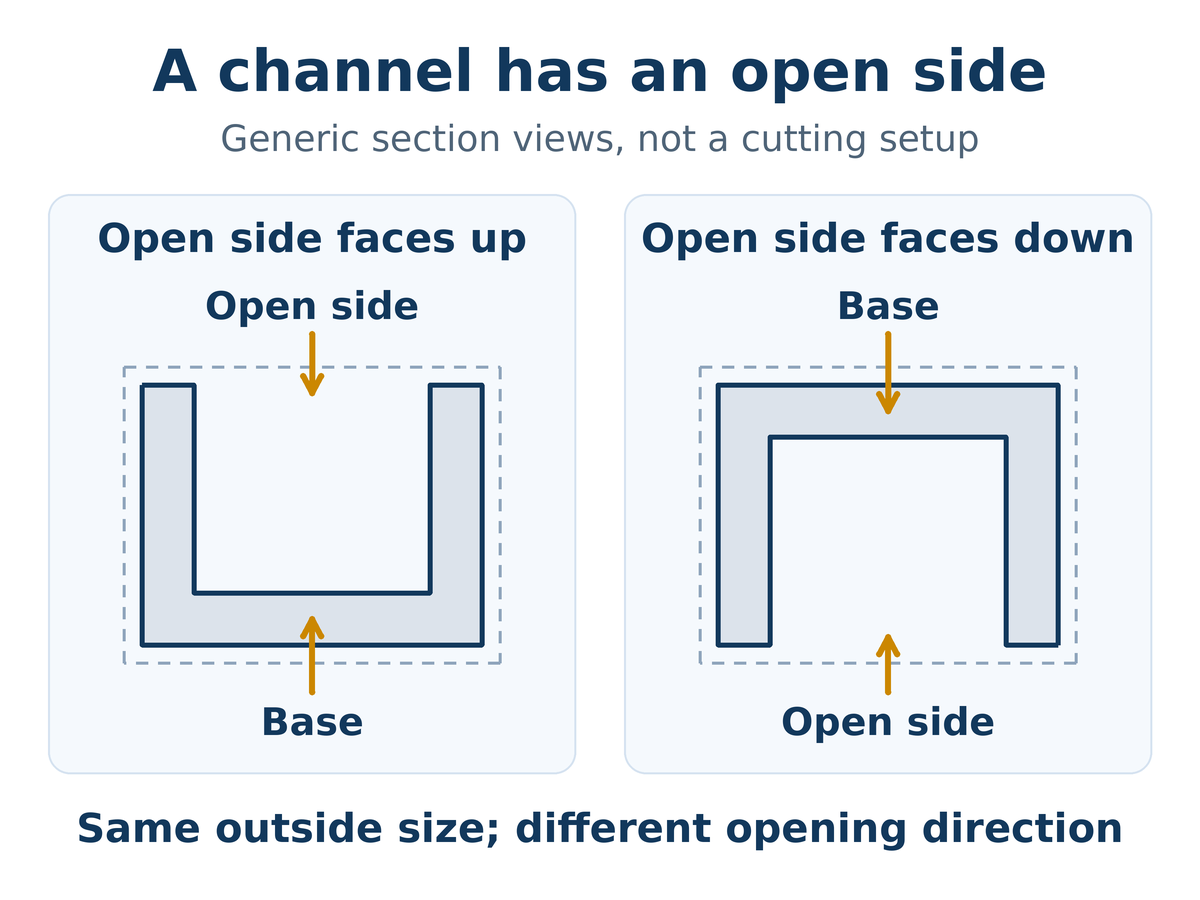
Give the saw supplier an approved sample of the real profile, including the longest stock length and the shortest released blank that matter for the order. A loose square tube or generic channel can show machine operation; it cannot validate the guide track on your door. Record the stock orientation, support points, clamping contact, blade and setup used, and the inspection datum. For an open or multi-cavity section, inspect whether the guide opening and nearby lips retain the approved shape after clamping and cutting.
Keep the first cut piece for the door designer’s fit check. Compare its end condition and length to the approved drawing, then check the specified seal, track insert, cover, bracket, or rolling component that actually meets the cut end. The person responsible for the door assembly must decide the acceptance method and tolerances. The saw trial ends at a documented cut blank and downstream fit handoff; it does not establish the finished door’s operating speed, safety function, wind resistance, or service life.
Ask for a release record, not a bare cycle-time claim
Before placing the equipment order, request a record with five linked items: the exact profile revision; left and right blank identifiers; the cut datum and inspected end; the downstream fit result; and the name of the party accepting each stage. Add a rejected-part path: if the first blank distorts, who changes the fixture or stock orientation, and who authorizes another trial? That question prevents a machine quotation from quietly turning into an unapproved door redesign.
Dynatect’s aluminum roll-up door information lists separate left and right side rails and also describes a pre-framed assembly option for its own door family. It is a useful public example of how supply stages can differ. It is not a specification for a high-speed fabric door, nor evidence that JiurunCut supplies either door system.
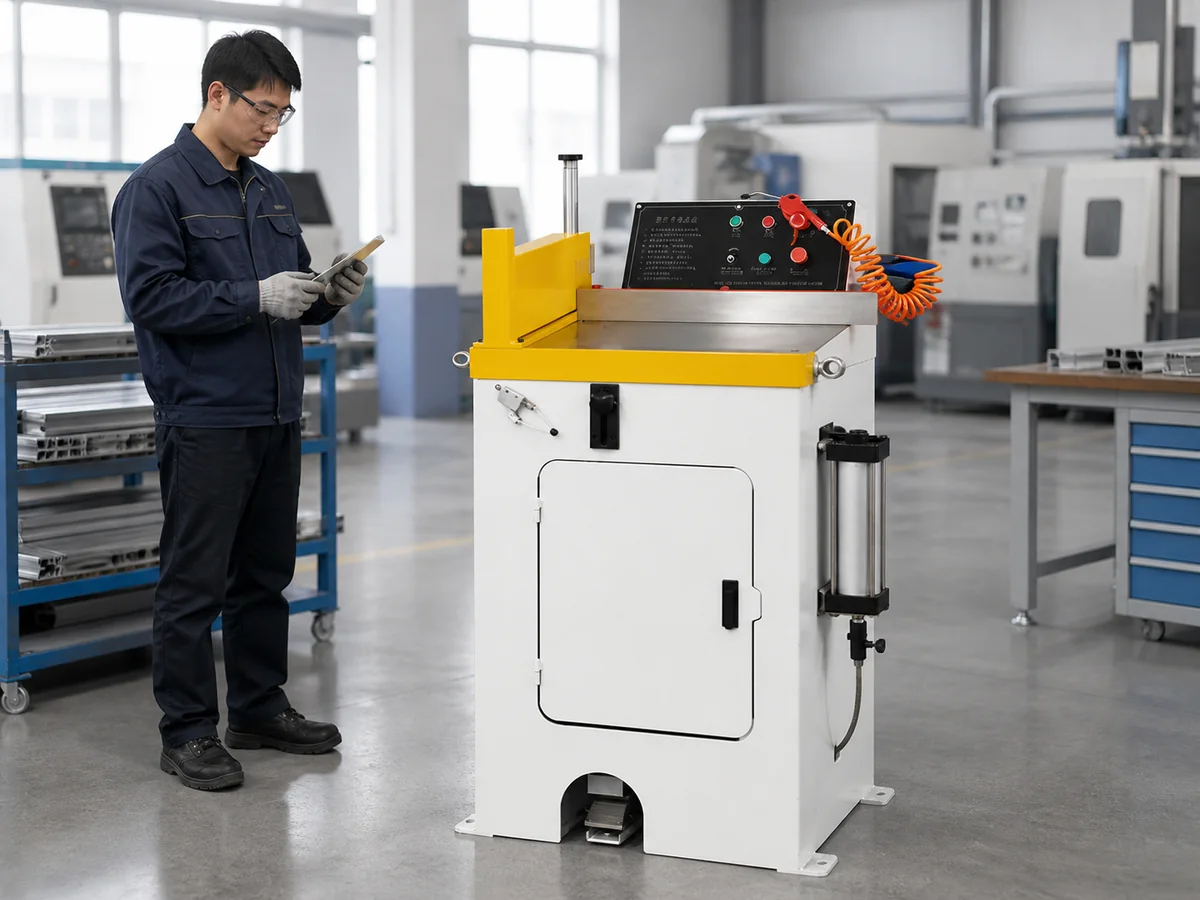
The video below is from the Jiurun Machinery channel. It shows related automatic aluminum cutting equipment and its feed path. It does not show the upright or door system discussed here and cannot prove a cut result, model suitability, door fit, or performance.
The one-page inquiry to send
Send the approved upright section drawing, a marked left/right assembly view, the current supplied-part list, incoming stock condition, target cut list, and the door designer’s first-piece fit check. Ask JiurunCut to identify which cutting operations it can quote against those materials and which facts still need a physical trial. Contact JiurunCut with that packet. The resulting quotation should name the cutting boundary and leave door-system approval with the responsible manufacturer.