
An evacuation chair may contain aluminum tubular frame members, but an RFQ for cut blanks is not an RFQ for a complete evacuation device. The useful starting point is the chair manufacturer’s released drawing: it identifies which tubes are aluminum, which ends are cut before bending or joining, and which dimensions belong to a controlled assembly. If your team is sourcing sawn frame blanks, send that boundary to the cutting-machine supplier before discussing throughput or saw size.
This guide is for OEM buyers and process engineers defining evacuation chair aluminum tube cutting work. It covers straight or angled sawn blanks and the checks that make a trial informative. Chair design, occupant support, stair movement, braking, restraints, and final safety approval remain with the chair manufacturer and its qualified validation team.
Evacuation chair aluminum tube cutting starts with the drawing
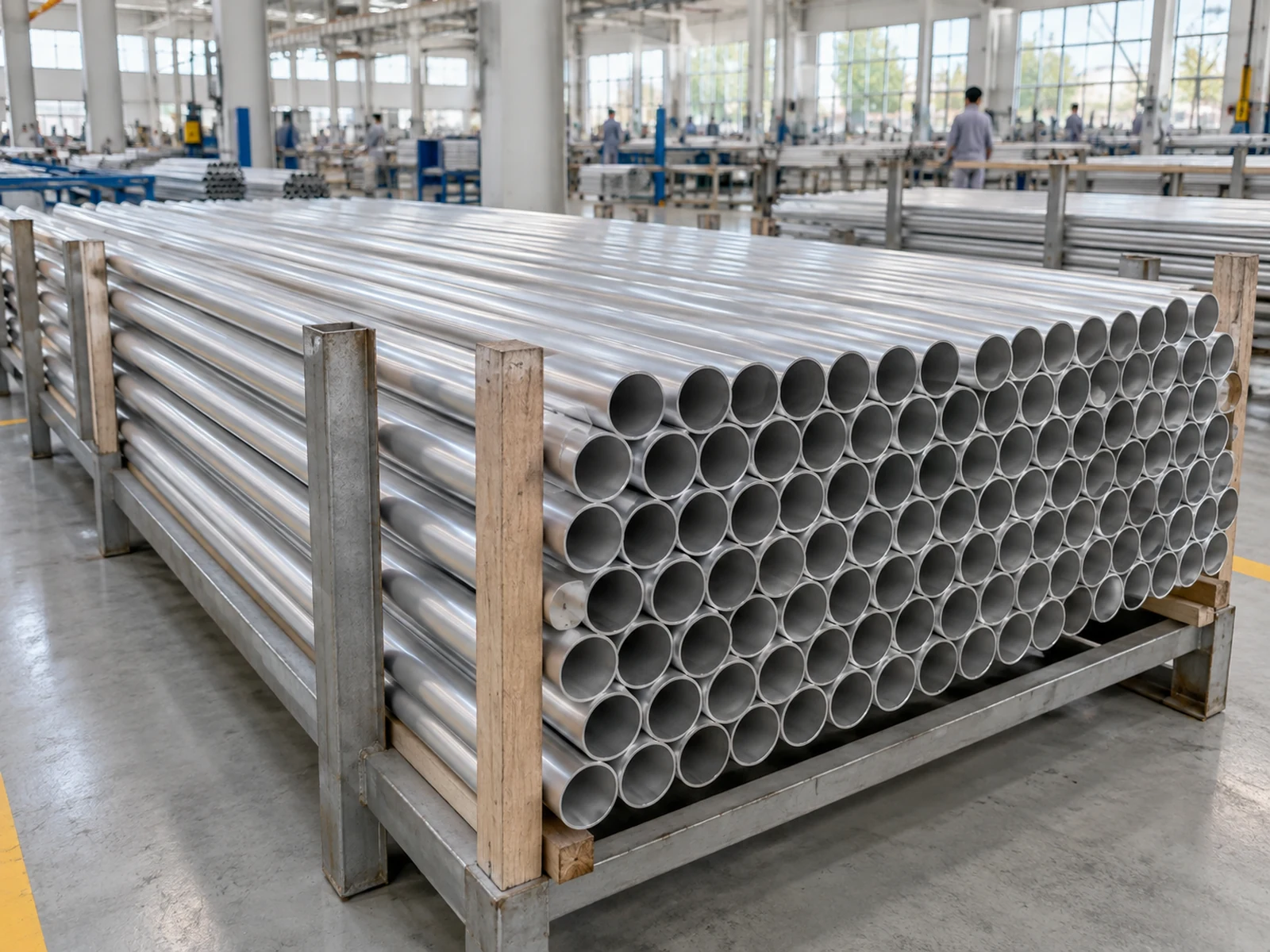
Commercial evacuation-chair examples show why the material list must be model-specific. Promeba describes its PS-172 as having a painted aluminum tubular structure, folding rear handles and extendable front handles. NAFFCO describes an enameled aluminum frame on its ST-PLUS. Those are examples of product architecture, not evidence that another design uses the same alloy, wall, tube route, joint, or load rating.
Break the approved bill of materials into member families. A side-frame rail, crossmember, handle tube, and support tube may each have different section sizes, end angles, surface requirements, and downstream operations. Some apparent “tubes” in an assembled chair may be bent, welded, machined, purchased as subassemblies, or made from a material other than aluminum. Put only the confirmed saw-cut aluminum items in the blank-cutting RFQ.
Release a cut list that a saw supplier can actually test
For each member, supply the drawing number and revision, material designation and temper, outside section and wall, stock condition, required blank quantity, target cut length, angle, datum, and the tolerance method. Say whether the dimension applies to an unfinished blank or a finished piece after bending, machining, coating, or assembly. If a protective film, visible face, extrusion seam, or print mark matters, identify its orientation.
| RFQ field | Buyer decision to release | Why it affects the cut |
|---|---|---|
| Member and revision | One identifier for each approved tube | Prevents mixed lengths from an older chair design |
| Section and stock | Alloy/temper, outside shape, wall, straightness, stock length | Sets support and contact requirements |
| End definition | Square or miter; long-point/short-point datum; clocking | Prevents an apparently correct length with the wrong mating face |
| Downstream route | Bend, hole, weld, coating, assembly, or purchased component | Determines allowance and handling requirements |
| Acceptance | First-piece measurements, end condition and permitted rework | Makes trial comparison repeatable |
Do not use one generic “chair frame tube” line for several different parts. Even equal nominal lengths can require different end orientation or inspection rules. A useful split is one row per part number, revision, section, cut geometry, and downstream route.
Choose a datum for square and angled ends
A square-cut tube is usually straightforward to describe when the drawing states the measurement faces and where the length is taken. A mitered member needs more: the angle reference, rotation or clocking around the tube, and whether length is measured at the long point, short point, centerline, or a fixture datum. For a tube that will be bent, identify whether the sawn blank length is before forming and who owns the bend allowance.
A sample should be checked against the released drawing with a documented method. If a supplier measures along one face while the OEM measures along another, the dispute is not solved by tightening a machine setting. Agree on the datum first, then review saw repeatability.
Support hollow tube without changing its shape
Round and thin-wall tubes can roll, mark, or distort when the contact arrangement is wrong. Ask the machine supplier to show how the stock is located, supported at the cut, and restrained through feed and blade entry. The contact geometry and pressure must suit the approved tube; a flat-face clamp that works for a solid extrusion may be unsuitable for a hollow member. Long stock also needs an infeed and outfeed plan that does not pull the part away from its stop or datum.
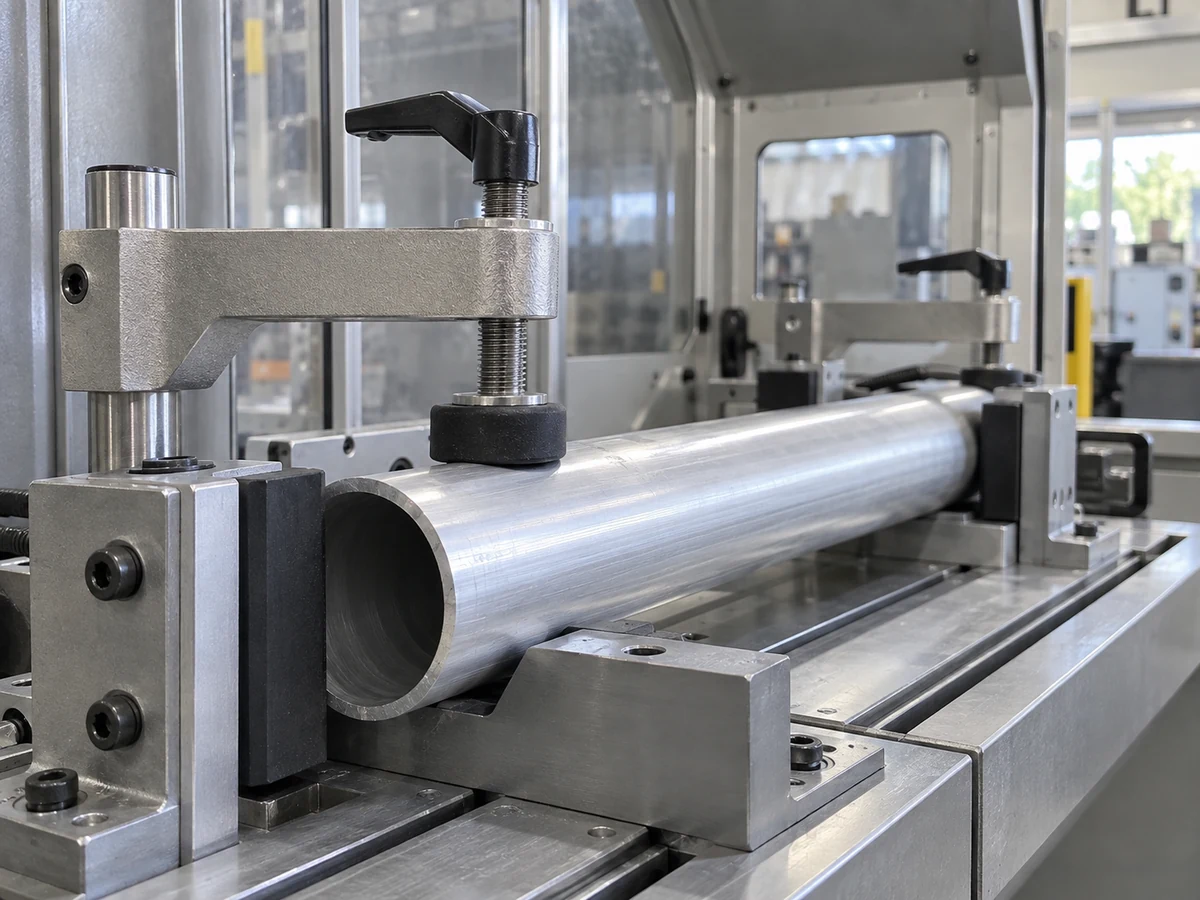
For a first-article run, check the tube before and after clamping for flattening, visible contact marks, local wall deformation, and movement at the stop. The acceptable condition belongs in the OEM drawing or quality plan. A photograph of a clamp alone cannot prove that an individual chair member is safe to assemble.
Define the end condition before judging speed
Cut-end requirements should separate saw quality from later deburring or machining. State allowable burr, end-face damage, internal lip, edge break, squareness or angle, and surface marks. Specify whether the supplier delivers a saw-cut blank, a deburred blank, or a machined finished part. If a tube end enters a socket, hinge, or welded joint, identify the mating feature and the dimension that matters after finishing.
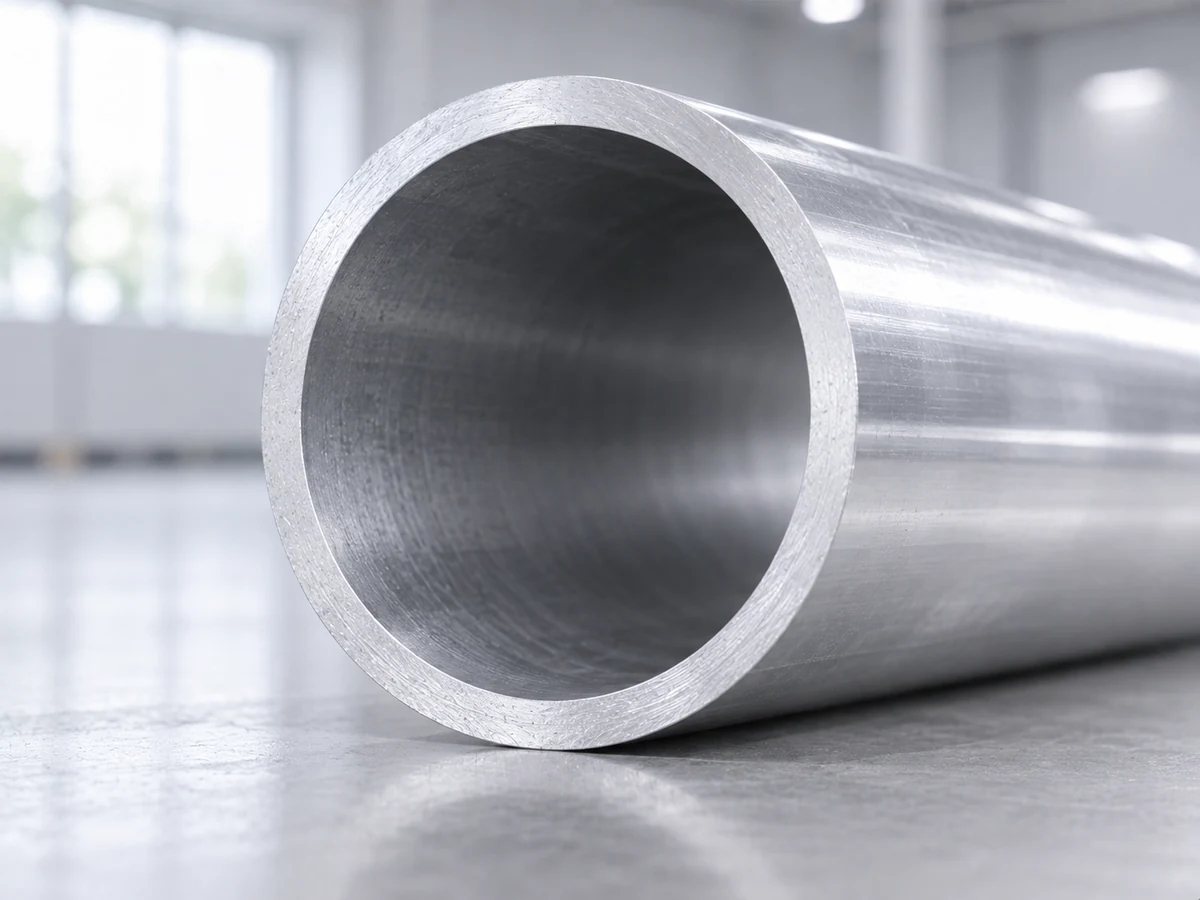
Compare samples at the same inspection stage. An as-sawn end and a manually finished end are different deliverables. If deburring removes enough material to change a critical length, the finish allowance must be part of the released blank dimension rather than an afterthought.
Keep the trial separate from whole-chair validation
A practical sample run starts with one released part family and the actual stock condition. Record part and stock revision, machine setup, fixture/contact points, feed direction, cut orientation, first-piece measurements, end photographs, burr review, and the count of conforming pieces. Repeat after a stock change, blade change, or fixture adjustment if those changes matter to the OEM’s process approval. Compare yield and time only after the samples meet the same acceptance criteria.
A successful saw trial can support a decision about making blanks. It does not establish chair load capacity, stair-descent control, occupant restraint, hinge life, brake performance, corrosion resistance, or regulatory conformity. Those outcomes require the complete chair manufacturer’s own design controls and testing.
Watch a general saw process example
The following video is from Jiurun Machinery’s own channel. It illustrates a cutting-machine process that a buyer can use to discuss stock presentation, holding, and cut handling. It is not an evacuation-chair tube test, a specified machine configuration for this RFQ, or performance evidence for the pictured material.
What to ask before selecting the cutting route
Describe the expected batch size and mix of part numbers, but do not choose a saw solely by maximum section size or headline cycle rate. Ask for a trial on the most difficult released tube: a thin wall, an angled end, a visible finish, or a short member with a hard-to-hold datum. Review how quickly the operator can change stops and contact tooling without mixing part revisions. Consider whether an automatic feed, manual feed, or separate finishing step fits the actual lot pattern.
If the chair design includes welded or bent parts, a saw may only supply the starting blank. Show the next process owner where its datum begins, and decide who labels and segregates cut stock. For a mixed kit, package and trace by part number and revision so a correct tube does not enter the wrong assembly position.
Copy this blank-cutting RFQ checklist
- Chair manufacturer, project reference, drawing number and released revision for each aluminum member.
- Confirmation that the quoted work is saw-cut blanks only, plus named downstream operations.
- Alloy/temper, tube section and wall, stock length and surface condition.
- Cut length datum, miter angle/clocking, tolerance and first-article inspection method.
- End finish, permitted burr/marks, protective handling and scrap/rework rule.
- Quantity per member, lot size, annual mix, labeling and traceability requirement.
- Actual sample stock or approved drawing plus the decision maker for trial acceptance.
Send the released drawing and representative tube samples to JiurunCut for a cutting-process discussion. State which details are still provisional. We can review the saw and holding question against the specified blanks; the chair OEM remains responsible for the completed evacuation device.
Related reading and source notes
For another member-based buying example, see our wheelchair-frame aluminum cutting guide. This evacuation-chair guide uses a separate folding evacuation-chair blank list and does not reuse that product’s geometry or acceptance assumptions.
Construction examples: Promeba PS-172 and NAFFCO ST-PLUS. Their published descriptions establish only that these manufacturers describe aluminum chair structures; they are not JiurunCut trial records or specifications for another OEM.