
Wheelchair frame aluminum cutting is a narrow manufacturing purchase decision, not a claim that a saw makes a wheelchair. A wheelchair producer may cut approved aluminum frame members from stock, buy prepared member sets, buy assembled frames, or buy complete chairs. The useful question for an equipment RFQ is which released metal-cutting work the factory actually retains. The answer depends on the specific frame family, incoming stock, downstream operations and the acceptance evidence the product owner requires.
For context, Sunrise Medical describes a folding chair with a heat-treated aluminum frame and an oval-tube cross-brace. Ottobock identifies an aluminum rigid-frame chair in another product family. These are examples of different finished products. Neither page establishes the raw-stock form, blank dimensions, fabrication route or saw qualification for a Jiurun machine. Obtain those details from the wheelchair maker’s current, approved manufacturing record.
1. Define the member before choosing the saw
A finished wheelchair’s seat width, overall length and folding size are product dimensions. They are not a cut list. Ask the manufacturing owner for a released member schedule: part identifier and revision, material and incoming form, section drawing, cut-end geometry, length reference faces, allowed tolerance, protective condition, quantity per accepted frame, and the next receiving operation. Keep left- and right-hand or front- and rear-specific members distinct where the drawings require it. If a drawing only identifies the assembled frame envelope, the saw RFQ is not ready to promise cut blanks.
State the supply stage explicitly. A straight, as-cut tube blank is different from a bent tube, a drilled or machined member, a joined frame, and a finished chair. A saw vendor can be asked to demonstrate the first stage against approved sample material. Forming, joining, holes, surface finishing, assembly and finished-product approval need their own responsible route and evidence. Do not infer that every component of an aluminum-frame wheelchair is aluminum or saw-cut.
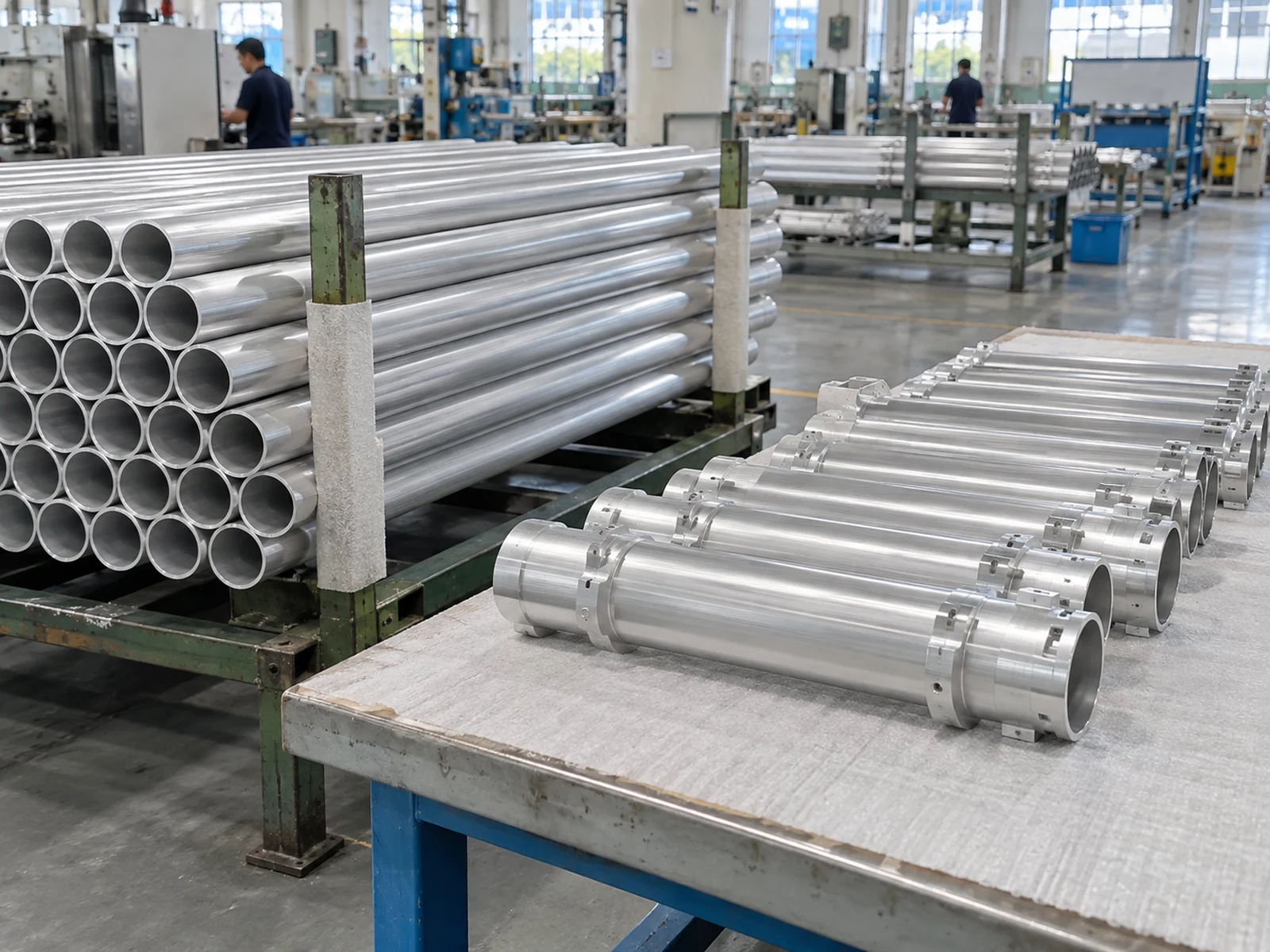
2. Compare four supply routes at one accepted stage
Put the alternatives on the same worksheet before comparing price. Route A buys the approved raw material and performs its released straight cutoff in-house. Route B buys identified, cut members. Route C buys prepared members or an accepted frame subassembly. Route D buys a finished chair or an agreed higher-level assembly. The purchased output, remaining labor and qualification burden are different in each route. A low price per blank cannot be compared directly with a price per accepted frame.
- Retained cutoff: include actual stock procurement, end losses, setup, tooling, handling, inspection, nonconforming pieces and downstream work.
- Bought cut members: include supplier qualification, delivered cut-end and identity requirements, incoming inspection and shortages.
- Prepared frame supply: define which bends, features, joins, finishes and records are included before counting it as equivalent.
- Complete product supply: treat product validation, fit, support and finished-chair acceptance as a separate commercial and technical decision.
Use a common denominator such as complete accepted frame sets available to the same downstream receiver during the same period. If a set needs six approved member identities and one is missing, a pile of good blanks is not a complete set. Record the limiting member, the planned family mix, changeovers and replacement-part demand separately. Avoid multiplying one attractive trial cycle by every chair sold; only released in-house cutoff work belongs in the equipment load.
3. Show the actual section and handling state
The saw proposal needs representative samples of the actual incoming forms: round, oval, rectangular or other profiles as released, not a generic “aluminum wheelchair tube” description. Include the largest and smallest approved sections, wall variations that matter to support, straight lengths, surface state, and any product-family mix that changes the fixture or feed route. A finished frame photograph is useful context, but it cannot prove the bare stock can be supported or clamped in the proposed station.
At a trial, the buyer should identify which face or axis sets the cut-length datum, how the stock is presented and supported, what happens to short pieces and remnants, and how parts are separated by revision and hand. Ask the vendor to record the trial configuration and any exclusions. If a special nest, liner, stop or outfeed aid is necessary, it belongs in the quotation. Machine availability or a video of another workpiece does not establish compatibility with this frame member.

4. Release an accepted first-off, not just a machine cycle
Agree with the product owner and next-process receiver what a first-off cut member must prove. The record can identify stock lot and profile, member drawing revision, saw setup, selected datum, measured length and cut-end features, visible-face condition, sample quantity, and the person or department accepting the result. The acceptance limits come from the approved part drawing and manufacturing plan, not from a general saw brochure. If the blank subsequently bends or joins, confirm which dimensions are evaluated at the blank stage and which belong after those later operations.
Inspect several parts across the relevant sequence if production variation matters. Keep incoming defects separate from saw-generated marks and from later handling damage. Do not describe an acceptable straight cutoff as evidence of completed frame strength, wheelchair fit, stability, braking, patient safety or regulatory conformity. Those are product-level responsibilities requiring their own authorized tests and records.
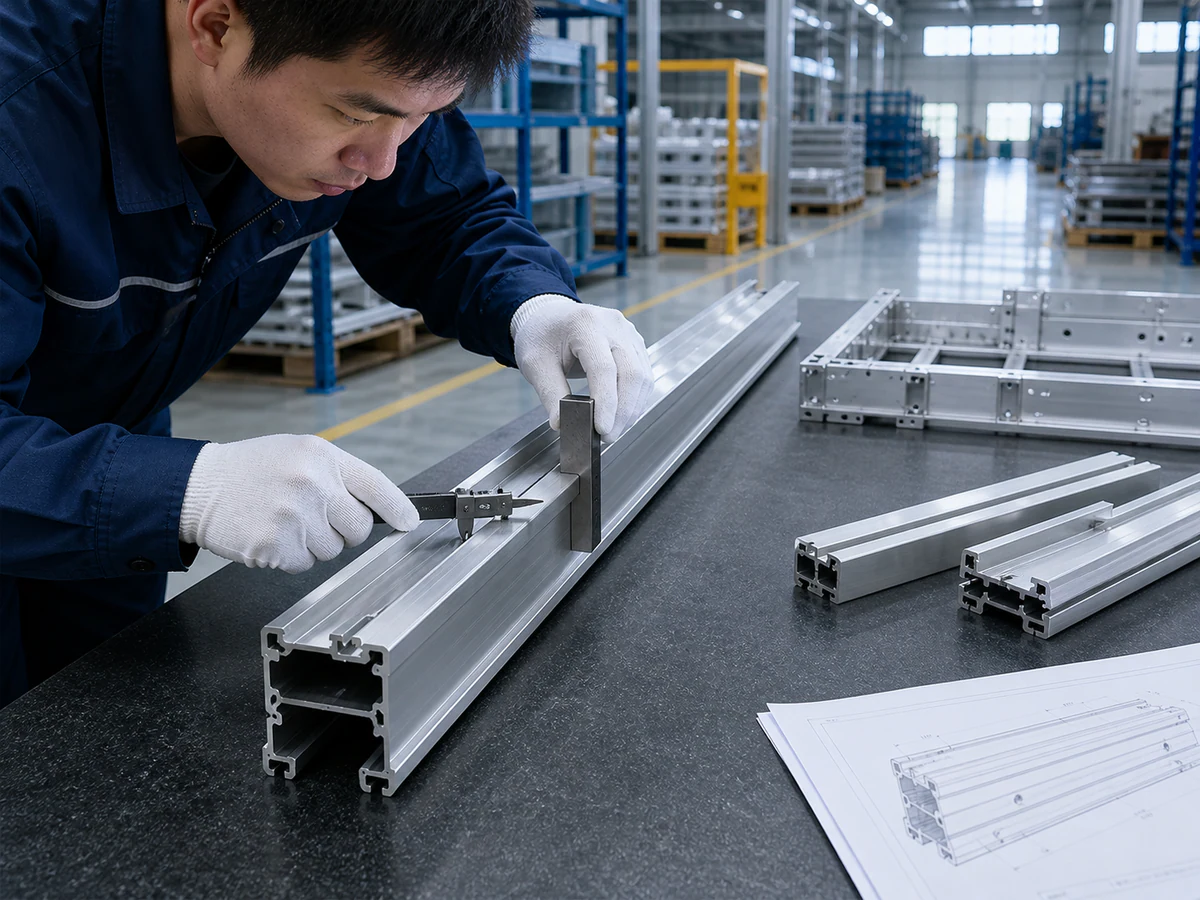
5. Ask for a quote that covers the complete cutoff cell
A useful RFQ names the proposed aluminum cutting machine and also itemizes the loading and outfeed boundary, usable stock length, clamps and support tooling, blade and consumables, identification method, inspection method, changeover work, operator tasks, floor space, utilities, training and acceptance trial. Have the vendor specify what is supplied, optional, or provided by the buyer. If buying prepared members instead, ask the supplier to quote against the identical revision-controlled output and delivery cadence.
For mixed chair families, request a representative trial matrix rather than one favorite profile. List the highest-volume member, the most awkward approved section, the shortest and longest released blank, and any orientation-specific member. State who provides stock and drawings, who approves samples, and whether a retest is needed after a different blade, fixture or stock revision. The sample-cutting trial checklist is a starting framework; the wheelchair maker must set its own part acceptance.
6. Read the equipment video as an equipment example
The short Jiurun Machinery video below shows an aluminum-cutting equipment scene. It helps a buyer see the general machine and material-handling context. It does not show or validate wheelchair material, a released frame-member drawing, an approved clamp arrangement, a customer trial, cut tolerance or finished-chair performance.
Wheelchair frame aluminum cutting RFQ: what to send
Send the released frame-family and member list, actual incoming stock drawings and samples, cut-end and length references, surface and identity requirements, quantity by family, downstream receiver, first-off criteria and the supply route you want compared. Identify missing or bought components explicitly. Ask each bidder to return the same output stage, exclusions, complete cell scope, representative trial plan and evidence format. This keeps a machine quote tied to cut-member work rather than an unsupported claim about a complete medical device.
If your factory retains the approved aluminum cutoff operation, contact JiurunCut with the released stock and member information. We can discuss whether an aluminum saw trial is appropriate and what must be checked on your real workpieces. Final frame design, wheelchair assembly, product testing and compliance remain with their authorized owners.