
Energy storage frame drawing revision is a purchasing decision before it is a cutting instruction. A cut kit can contain the right number of aluminum members yet still be wrong for the current cabinet or PACK frame if its lengths, end orientation, connector interfaces or finish belong to different drawing states. The buyer needs one approved configuration for each order line and a visible rule for remaining older stock.
This guide concerns aluminum frame members and cut kits in an energy-storage enclosure supply route. It does not claim that a saw validates battery safety, cabinet sealing, structural performance, electrical integration or a specific customer’s design. The useful question is: which revision and effectivity does the supplier actually quote and deliver?
Start with an energy storage frame drawing revision baseline
Give the supplier a controlled package, not a screenshot of the latest model in a chat. Name the assembly identifier, the member part numbers, each drawing revision, the dated cut list, the stock profile specification, and the approved effective order or batch. State who can release a change. If one member is revised while its mating connector remains old, the package must say whether the combination is approved. A common project name alone cannot answer that.
ISO’s public description of ISO 10007 configuration-management guidance identifies configuration identification, change control, status accounting and audit as distinct parts of the process. The standard is general guidance; it does not certify this article’s example, the pictured parts or a Jiurun machine. Apply the idea by recording the approved state that both purchasing and cutting receive.
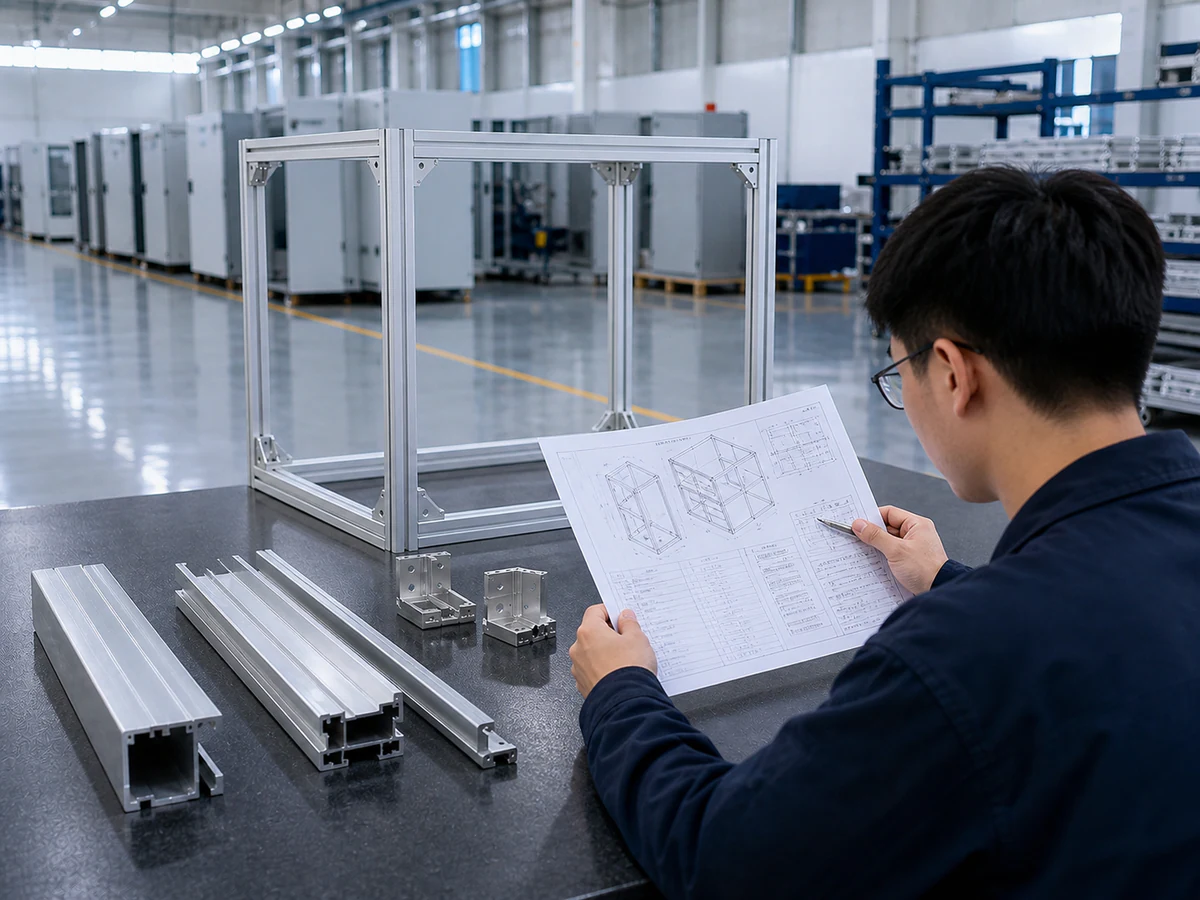
Separate the member list from the assembled frame
A frame assembly drawing and a saw cut list answer different questions. The assembly document shows mating relationships and the accepted configuration. The cut list tells the shop which aluminum members to make from which profile, in what length and quantity. The bill of materials may include brackets, seals, fasteners, panels and bought-in subassemblies that the saw supplier does not produce. Do not silently turn every BOM line into a saw capacity or a delivered cut part.
A NIST manufacturing information reference notes that bills of materials can appear at different stages and that a final BOM is needed for production planning. That supports asking for the correct production-stage list; it does not imply that a single file can replace fit checks. In the RFQ, attach an explicit crosswalk from assembly location to member ID, profile section, cut length, end condition and applicable revision.
Decide when the new revision takes effect
“Use the new drawing” is incomplete when purchase orders, long stock, partially cut batches and finished kits coexist. The change instruction should state the first affected order, serial range, lot or agreed effective date; the treatment of work in process; and whether old-revision stock may be used, reworked or must be segregated. Put disposition authority in writing. A supplier should not blend old and new members simply because they share a profile name.
For repeat orders, ask the supplier to quote the transition. A revision may change only a hole or connector interface, or it may change a cut length, end orientation or kit composition. If the change lies outside the saw operation, show that boundary and identify the downstream owner. If it changes the cut blank, compare the new program, fixture or inspection requirement with the previously accepted state before releasing the next batch. Avoid implying that a saved machine program automatically encodes the right product revision.
Prevent mixed cut kits during batch planning
Different frame variants can use similar-looking aluminum sections. Define a kit identity that travels with every member: assembly ID, member ID, revision, handedness or orientation when relevant, quantity and lot. Separate kit bins or labels for approved states. If a production schedule combines variants to reduce setups, the output still needs to be sorted into the right assembly-state records. A length-only count is not enough when two revisions have the same nominal length but different ends or connector features.
The batch plan should describe where identity is checked: when stock is issued, when a cut list is loaded, at the first-off sample, when members leave the saw, and at kit packing. Each check needs a responsible person or system and a record. The aim is not paperwork for its own sake; it is a traceable answer when receiving finds a short, mirrored or mismatched member.
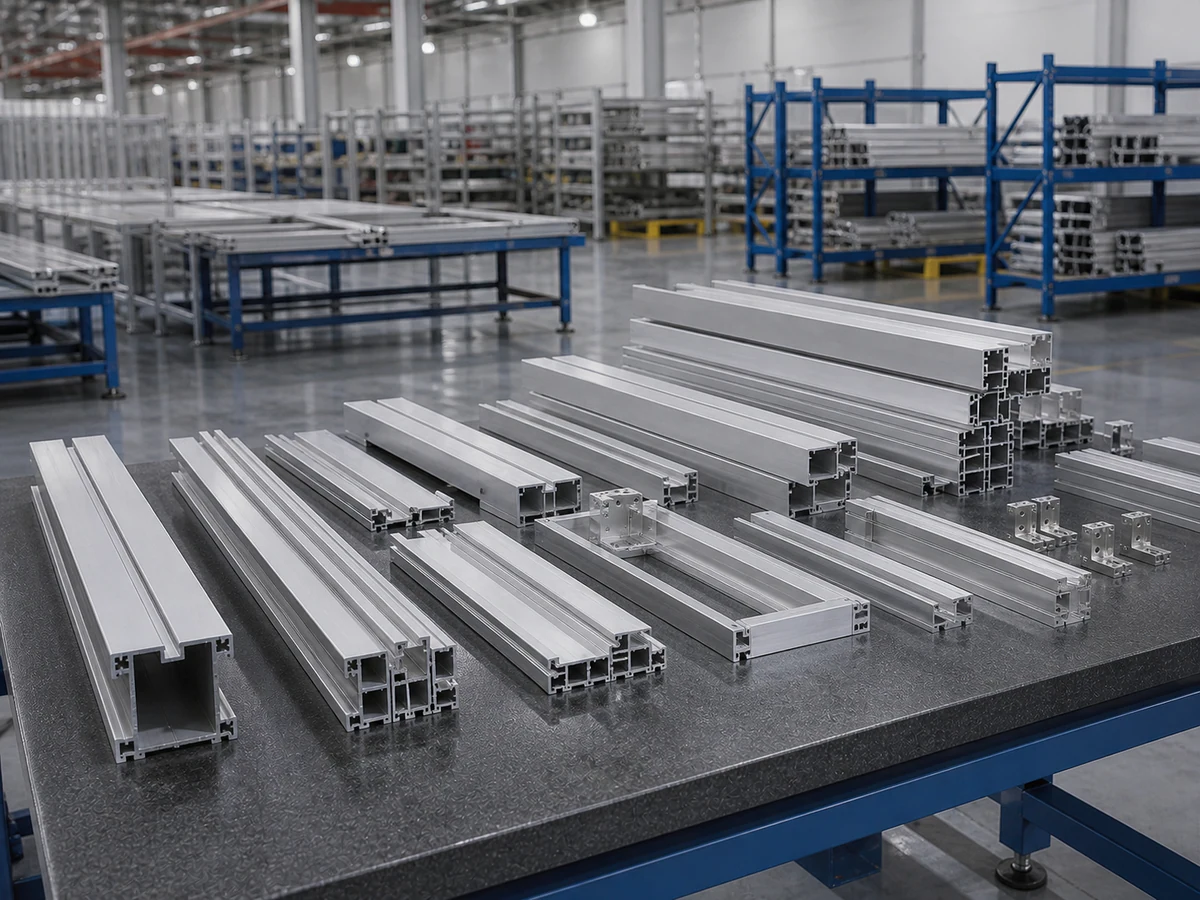
Verify the changed interface with a representative kit
Before a repeat batch, select a representative set from the new approved state. Check the drawing’s length datum, cut-end condition, handedness, connector interface and intended assembly position. If the change concerns a mating joint, confirm that the matching bracket or panel revision is also present. A loose-part measurement cannot by itself approve a cabinet assembly. Conversely, a fit-up photo does not replace the specified cut-blank measurements.
Capture the sample ID and the actual revision of every member used in the fit check. Record open issues and who closes them. If a supplier proposes a substitute profile or a late cut-list edit, route it back to the design owner before treating the kit as accepted. Do not claim a witnessed saw trial demonstrates battery enclosure fire, electrical or environmental performance; those belong to the appropriate system validation route.
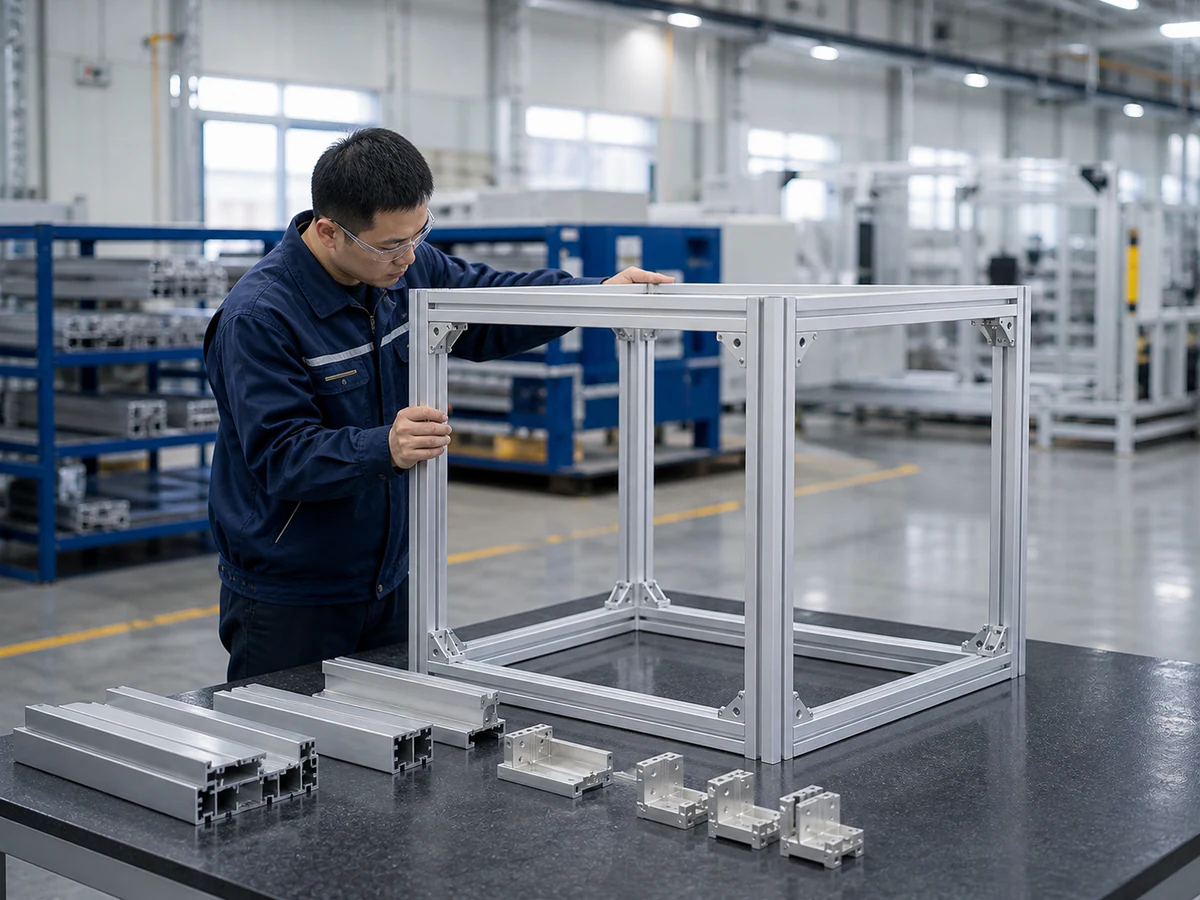
Compare quotations on the same released state
Ask each supplier to state the revision it priced and the deliverable it priced: long stock, saw-cut members, a labelled kit or an assembled frame. The quote should identify included cutting, end preparation, drilling or milling if any, finish protection, kit sorting, inspection records and packaging. List excluded work separately. Then ask what happens if a drawing changes after quotation but before production: who receives the change, when the price and lead time are recalculated, and how old inventory is handled.
A cheaper quote may exclude kit identity or a new revision trial. A more expensive quote may include finished assembly or downstream inspection. Compare like with like by using one revision baseline and one acceptance package. For the broader choice among frame, kit and retained in-house cutting routes, see our energy storage cabinet rail supply guide. The energy storage cutting solution page provides application context, but the actual quoted profile and machine scope still require a specific review.
A copyable revision-handover checklist
- Assembly identifier and released assembly drawing revision.
- Member IDs, approved profile sections, material specification and individual drawing revisions.
- Cut-list version, length datum, end orientation, quantity and kit mapping.
- Effective order, lot or serial boundary, plus disposition of older stock and work in process.
- Included and excluded cutting, secondary operations, finish and assembly tasks.
- Representative sample and mating-part revisions for first-off and fit review.
- Records delivered with each kit and the authority to approve a deviation.
Send this list with the RFQ. Ask the supplier to answer “included,” “excluded,” or “open decision” for each line. Do not release production while two files claim to be the current cut list for the same order. If a change has no effect on cut members, say so explicitly; that is a useful decision too.
Video: general saw equipment, not revision evidence
The following Jiurun Machinery channel video shows general aluminum-saw equipment footage. It is an example of a cutting-stage machine only. It does not show these energy-storage members, a controlled drawing revision, a customer order, a qualified cabinet, the stated configuration or a measured trial result.
Request a quote that names the configuration
When evaluating a Jiurun saw for retained aluminum frame-member cutting, send JiurunCut the released member drawings, profile samples, cut-list version, planned mix and first-off acceptance criteria. Ask for a representative cut-blank trial if it helps assess the proposed saw. Keep assembly fit, cabinet-level validation and final revision approval with the parties responsible for those decisions.