
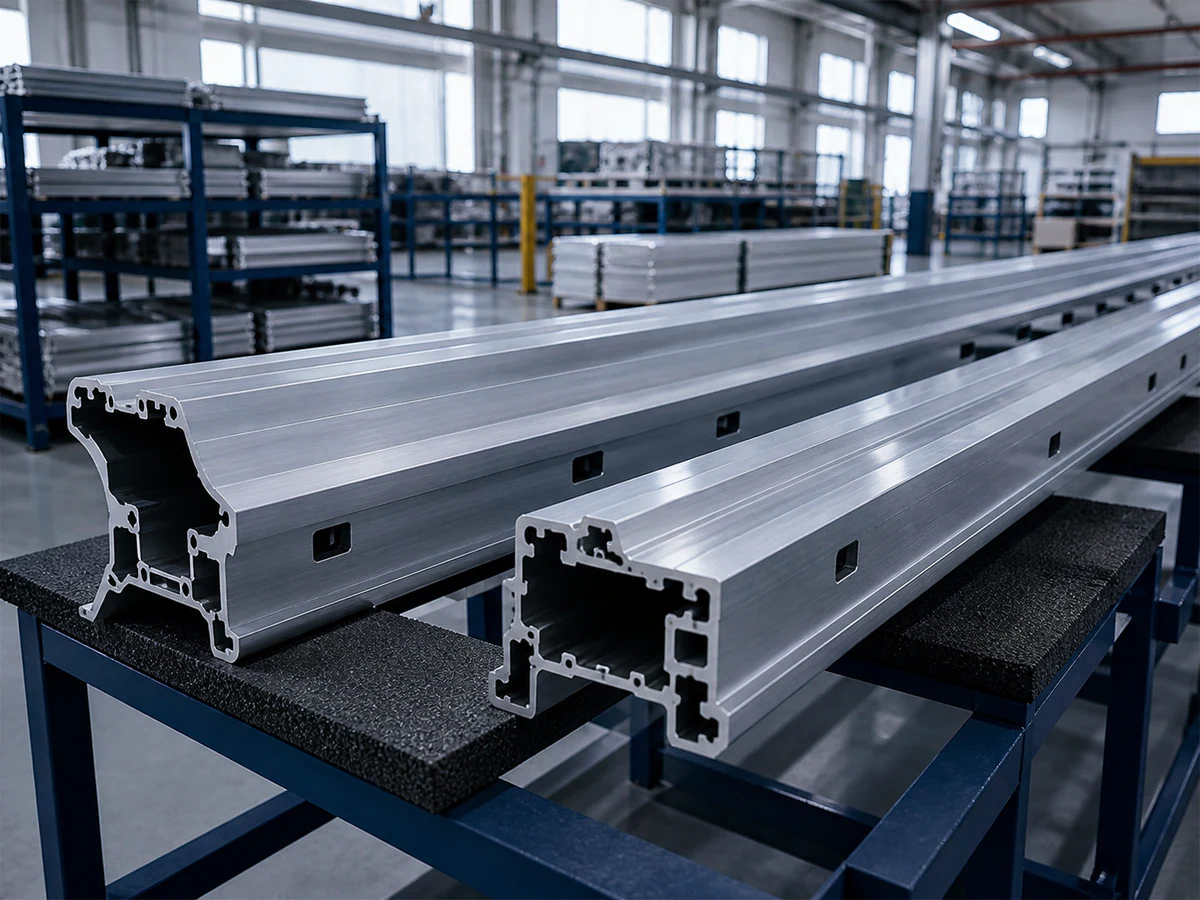
Featured image: related grooved automotive threshold extrusions, used only to illustrate profile handling. They are not elevator sill components or evidence for this application.
Elevator door sill extrusion cuts begin with a released component definition, not a doorway width. A landing threshold and a car sill may use different profiles, interfaces and handoffs. This guide is for buyers comparing factory saw-cut blanks for an already approved aluminum sill design. The elevator manufacturer and qualified project team remain responsible for the assembly, installation and applicable safety requirements.
When requesting a quotation, send the profile drawing and revision, identify the finished part and the cut blank, and explain which operations follow sawing. That simple separation lets a supplier price the right process without implying that a cut extrusion is a complete elevator door sill.
1. Elevator door sill extrusion cuts need a released part definition
Start with the exact part number, drawing revision and location in the approved door package. Specify whether the line item is a landing sill, a car sill or another threshold-related member. Give the profile cross-section, alloy and temper if controlled by the drawing, finish condition, stock length, quantity by part number, and any handed variants. If the section is proprietary, provide a controlled drawing or physical sample through the normal supplier review process.
Do not calculate a blank solely from the nominal clear opening. The approved design may include end conditions, interfaces with adjacent components or later machining stock. A supplier needs the released cut dimension and datum, including the drawing’s tolerance, before deciding whether its process is suitable.
2. Separate saw-cut dimensions from finished dimensions
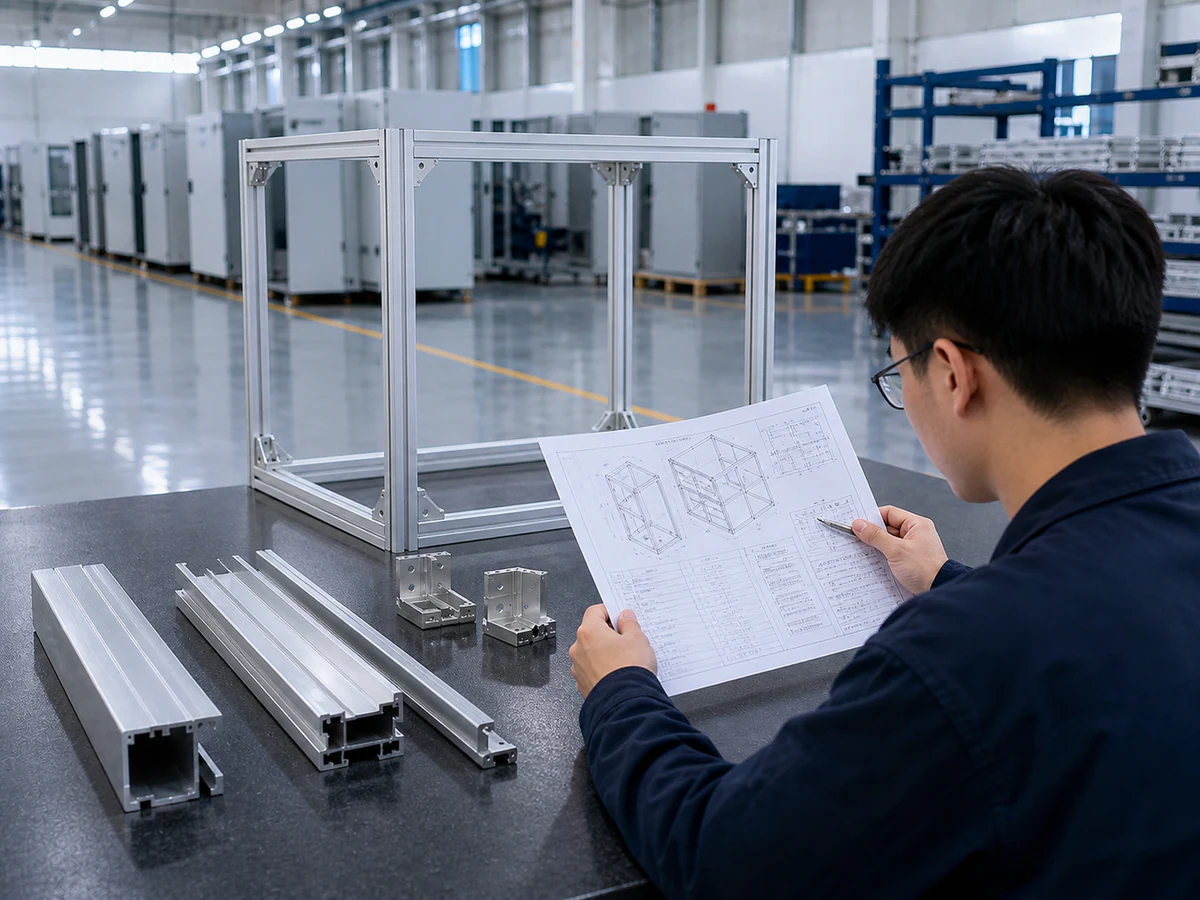
A quotation should distinguish the saw-cut blank from the finished sill. Mark the measurement datum and the required length of the blank. If an end will be milled, drilled or otherwise processed after sawing, show the stock allowance and who owns that operation. If the cut face remains visible or is part of a joint, state the drawing’s end condition and appearance requirements. Avoid a single unexplained “overall length” that could refer to either the raw blank or the delivered finished part.
Ask the supplier to confirm how it will measure the part: which face is the datum, whether the measurement is taken before or after any downstream operation, and how it will handle a profile with an uneven end feature. For left- and right-hand parts, send separate line items even when their nominal lengths match. This reduces the chance that a correct-length blank is routed into the wrong assembly.
3. Identify the channel and guide surfaces that need protection
Many threshold-related extrusions have grooves or channels. Their actual geometry varies by approved design. The purchasing drawing should identify surfaces that must remain clear of burrs, dents, swarf or clamp marks. The supplier can then propose support and clamping for the representative section, including protection of visible finish areas. A general saw demonstration is useful for discussing process flow, but it cannot prove a specific sill’s fit or field performance.
Send photographs of the real profile when possible, including the open side of the channel and any thin or projecting edges. State how the extrusions arrive: bare, anodized, coated, with protective film or in a partially assembled state. These details affect handling, inspection and packaging. They are also more useful for a saw quotation than a broad “elevator aluminum” label.
4. Map the downstream operations and ownership
List the work expected after cut-off: for example, end milling, holes, inserts, surface finishing, cleaning, labeling or assembly, only where those operations are on the released drawing. Make clear whether Jiurun’s customer, another subcontractor or the saw supplier performs each step. If a hole pattern or end feature is referenced to a cut face, the machining team should verify that the proposed cut datum supports its fixture plan.
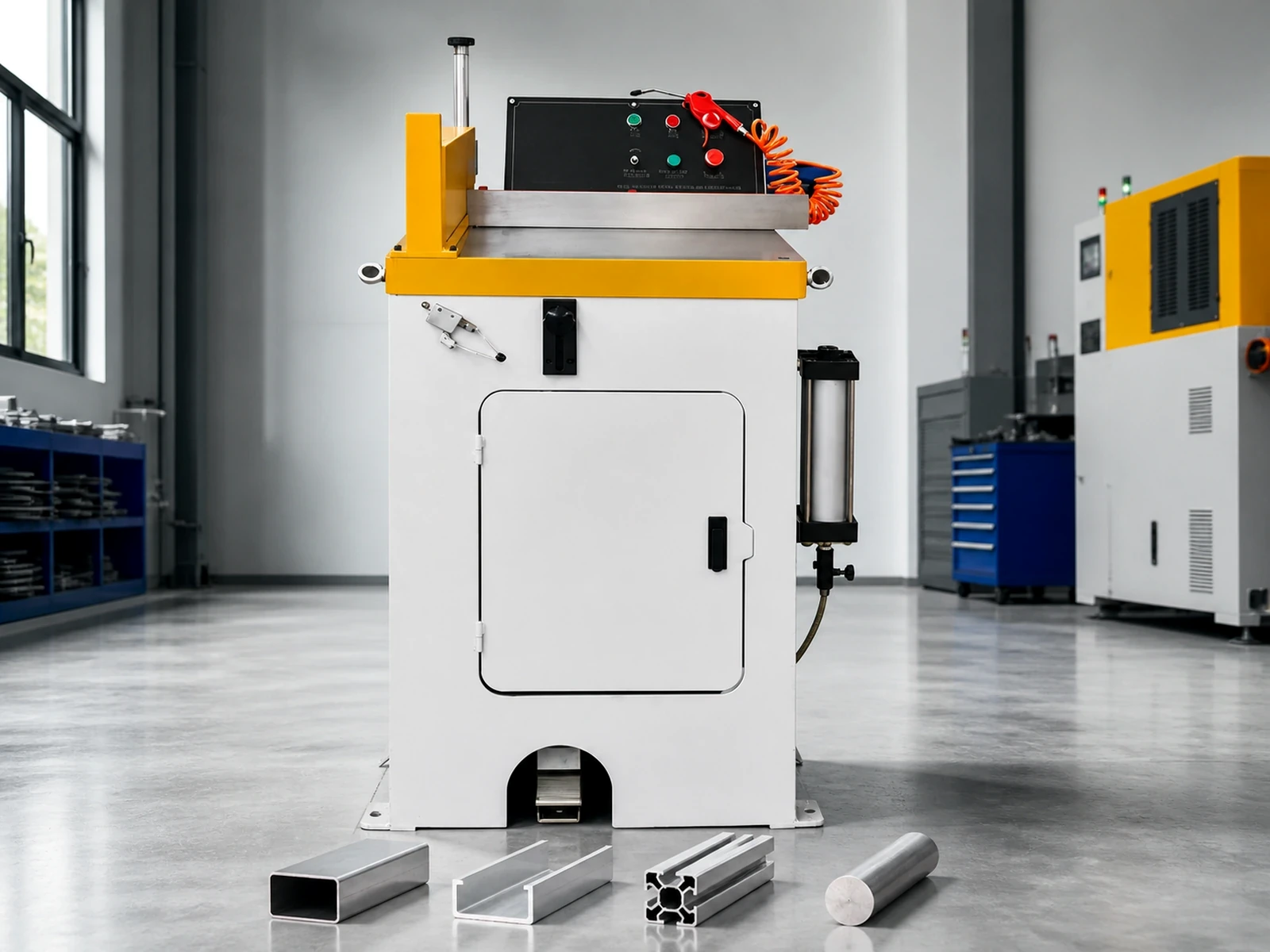
For a cut-only order, require the supplier to quote a cut-only scope. A photo of a machined threshold or a machine model name should not silently expand the scope to a finished, tested or certified elevator component. Keep the commercial description, drawing and inspection plan aligned.
5. Agree on a representative sample and inspection record
Before a production quote becomes a production release, decide what evidence the buyer needs from a representative blank. Typical questions concern measured cut length, cut-face condition, burr control, visible marks and identification. Use the drawing’s actual acceptance criteria; do not borrow tolerance figures from an unrelated profile. For a thin-walled or asymmetric section, ask whether a sample cut is needed to confirm support and handling before the lot is committed.
Define the sampling quantity, the measurement method and the record format in the RFQ. If downstream machining changes the final dimension, distinguish the saw supplier’s acceptance point from final-part inspection. The trial tells you whether the proposed cut process meets the agreed blank specification. It is not evidence of door operation, elevator safety or installation approval.
6. Keep material identity and handling traceable
Ask how the supplier will keep part numbers, revisions and lots apart. A useful label identifies the line item, quantity, drawing revision and any buyer-required lot reference. If several similar threshold members share a shipment, require separate bundles or clear separators. State whether film, interleaving or end protection is required for the delivered finish, and who will remove swarf from channels before packing.
Pack length and transport constraints can affect the cut plan. Give the delivery destination and the maximum package dimensions where they matter. If material is customer-supplied, record usable stock length and quantity rather than assuming every bar can yield the same number of blanks.
7. Compare RFQs on the same scope
Request a line-by-line reply that confirms the drawing revision, material condition, cut length and tolerance, quantity, sample or first-article requirement, downstream-operation boundary, packaging and lead-time assumptions. Ask each bidder to identify exclusions and any proposal that changes the drawing. Compare these replies alongside price. A cheap rate based on a different datum, unfinished scope or unprotected visible surface is not the same offer.
For a practical starting document, see our aluminum cutting-list preparation guide. If you are evaluating saw equipment or a cut-off process, send Jiurun a drawing revision, representative profile details and target output through the contact page. We can discuss the cutting step and what would need a sample review; the approved elevator design and its acceptance remain with the responsible project team.
Related equipment video
The following video from Jiurun’s own channel shows a general profile-cutting equipment scene. It does not show or verify this article’s elevator sill, material specification, customer project, exact machine configuration or performance.
Reference scope
Manufacturer material shows that elevator entrance assemblies may include aluminum sill or threshold components; for example, see Schindler 5500 entrance details and Nexus Elevator Supply’s sill overview. Those sources describe their own products. The RFQ checks above are a purchasing framework, not a claim that Jiurun supplied those systems or that one profile fits every elevator.