
E-bike battery housing extrusion cutting is a small part of a much larger battery-system build. The saw can produce an aluminum tube blank, but it cannot establish whether an end cap seals, a latch locates, a cell carrier clears the inner wall, or the completed pack fits the bicycle frame. A useful purchase specification therefore starts at the handoff between the cut tube and the people responsible for the end caps and assembled battery.
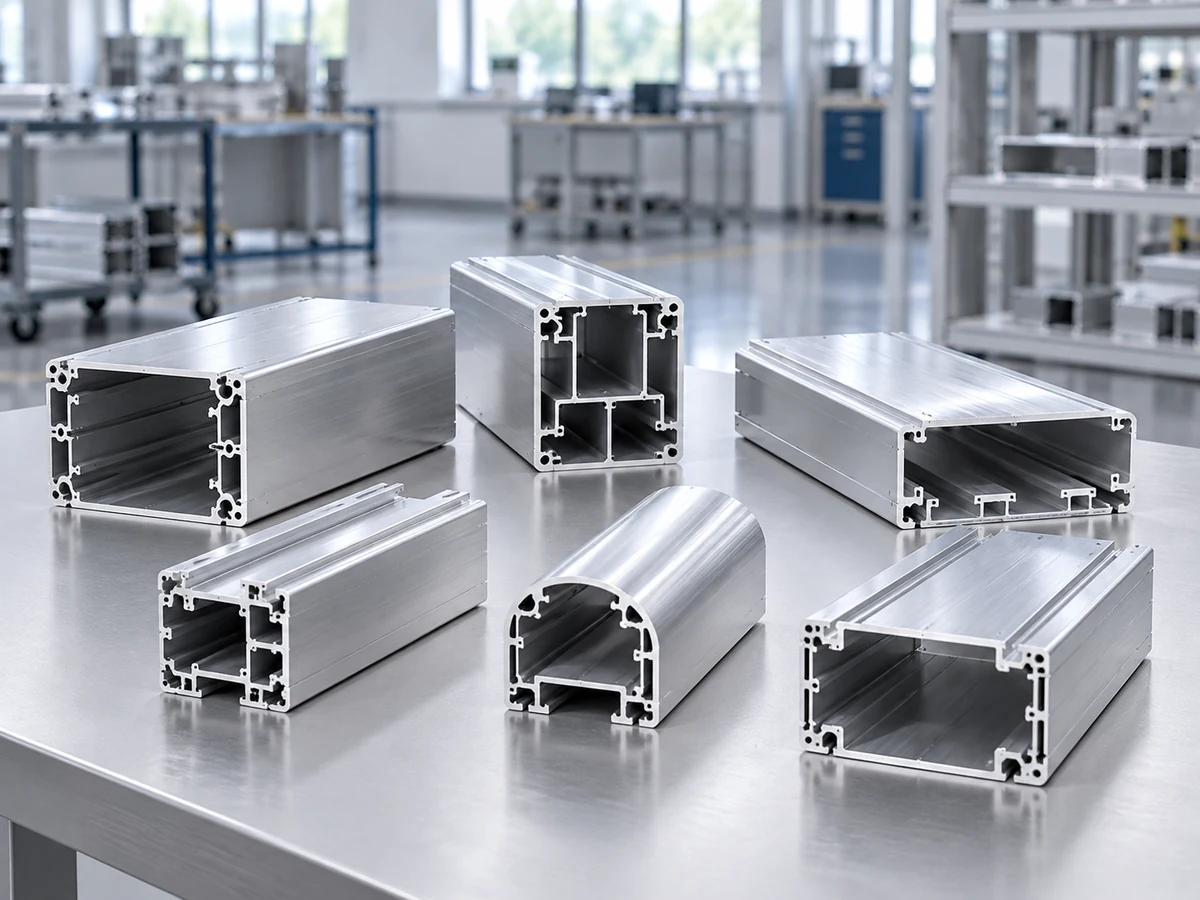
Frame-integrated e-bike batteries show why this distinction matters. Giant describes one EnergyPak Intube design as an aluminum-housed battery fitted inside a bicycle frame tube. That is an example of system packaging, not a specification for your extrusion or evidence that any Jiurun saw has cut that product. Other battery designs use different shapes, materials, covers, and assembly routes. Confirm the actual drawing and sample stock before selecting a saw. The featured photo shows generic instrument enclosure sections as a related shape illustration; it is not an e-bike housing or a validated battery part.
Start with the tube-to-end-cap interface
The most expensive cutting mistake may be a blank that meets a nominal length but causes trouble after the next operation. An end cap might reference the outer wall, an internal ledge, or a machined feature added later. The assembly team may need clearance for a carrier, connector, fastener, seal, or cable path. None of these can be inferred safely from the phrase “battery housing extrusion.”
Ask the design owner to mark the cut-dependent datums on the drawing. Identify which face is the length reference, whether both ends remain saw-cut, which end receives later machining, and which surfaces contact fixtures or cosmetic packaging. If a cover is fitted at both ends, record the tolerance stack across the two interfaces rather than giving the saw a disconnected length number.
Also separate the metal blank from the finished battery enclosure. Saw cutting does not verify sealing, electrical isolation, thermal design, crash behavior, battery safety, or compliance. Those checks belong to the relevant engineering and test owners. The cutting trial should only demonstrate outcomes that can actually be observed and measured at the blank stage.
E-Bike Battery Housing Extrusion Cutting: What to Send in an RFQ
- Actual profile section: a drawing and physical offcut showing the open cavity, wall thickness changes, lips, ribs, and any internal rails. State the alloy and temper from your approved material specification.
- Blank length and reference faces: the finished blank dimension, permitted variation, squareness or angle requirement where specified, and the measuring method.
- End-cap relationship: mating drawing or sample cover, insert depth, contact features, and any end-face burr limit that affects assembly.
- Stock condition: supplied bar lengths, straightness, protective film, surface finish, and whether extrusion ends arrive trimmed or rough.
- Downstream process: which end is drilled, milled, deburred, cleaned, coated, or assembled after sawing, and which features are created there.
- Acceptance samples: the quantity and inspection plan for first article, mid-run, and last article blanks.
For a product family, send the smallest and largest housing sections plus the profile with the least forgiving wall or lip. A single easy sample can hide a fixture limitation. If the design is still moving, identify revision-controlled dimensions and label the remainder provisional. That makes a supplier response comparable without pretending a development drawing is frozen.
Support the section before choosing a cutting cycle
A hollow profile can move, mark, or distort if a clamp bears on a thin unsupported wall. The practical question is where the stock contacts the infeed support, fence, clamp, and outfeed as the blade enters and leaves. A long bar also needs a controlled reference at the leading end; otherwise a nominal stop position may not represent the same physical face on every cycle.
Show the supplier the approved clamping zones and cosmetic faces. Ask for a stopped setup photo and a trial with your real extrusion. During the trial, inspect whether support maintains the specified datum without crushing an opening, catching a lip, or rubbing a finished surface. Do not copy fixture pressure or blade settings from a different section merely because both parts are aluminum.

Inspect the cut face at the assembly handoff
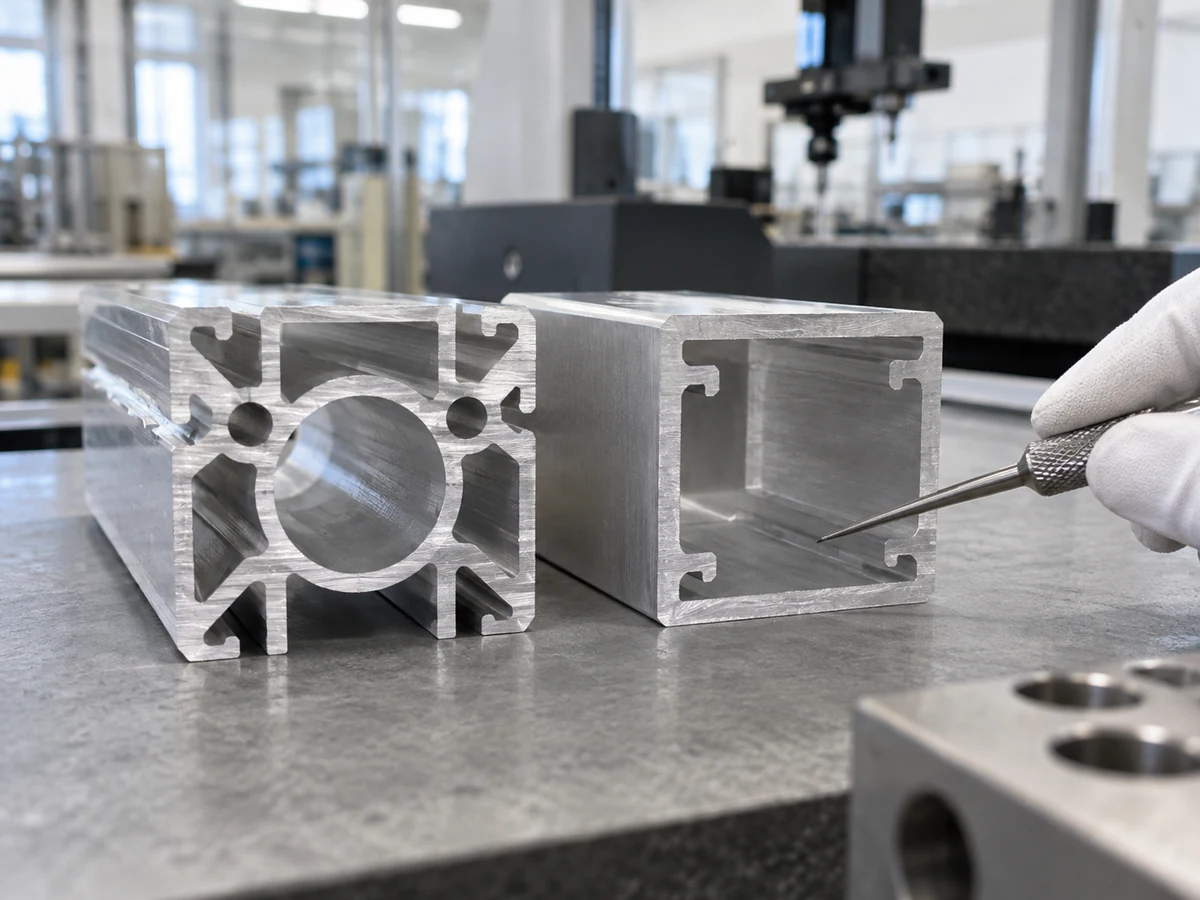
Length alone is an incomplete acceptance result. Inspect the end face for burrs, wall rollover, visible distortion, scratches at the chosen datum, and debris that could interfere with an end-cap fit or later machining. The specific limits must come from the product drawing and downstream process owner. If a later milling operation removes the saw face, state that clearly so the saw is not held to an irrelevant finished-face requirement.
Use a repeatable inspection routine: agree on the reference surface, tool, location, and handling condition; then retain representative first, middle, and final pieces from a run. Photograph each end face with the same orientation. Record any deburring or washing before judging fit, because a post-process cap test cannot isolate saw quality unless the sequence is known.
Separate saw capability from battery-system approval
A cutting trial should answer a narrow set of questions: Can the proposed machine and fixture handle the actual section and stock length? Do the blanks meet the agreed cut-stage drawing checks over a representative run? Can operators remove and protect parts without creating new marks? These answers need a sample record, not a catalog claim.
The completed pack has a different approval path. Cell selection, battery management, enclosure sealing, thermal behavior, electrical safety, and frame integration require their own engineering evidence. A saw video or photo cannot prove those outcomes. If the housing design is still under review, treat saw capacity and fixture concept as provisional until real stock and a released drawing are available.
Watch a related aluminum saw demonstration
The following Jiurun Machinery channel video shows a related aluminum saw in operation. It is an equipment illustration only: the footage does not identify an e-bike battery housing, the material grade, a customer project, a selected configuration, or any dimensional or battery-system test result.
Use one trial sheet for the whole handoff
Bring the extrusion, two end-cap samples, the current drawing, and a simple pass/fail sheet to the trial. The sheet should list profile revision, stock length, datum, target blank length, permitted variation, end-face checks, surface handling checks, and any downstream machining that will remove or change the saw face. Note each sample’s sequence position and keep rejected parts with the reason recorded.
Then review the results with both the cutting supplier and the battery enclosure designer. If a part fails cap fit, determine whether the cause is the saw blank, extrusion variation, a later operation, or the cap itself before changing the machine specification. This prevents a cutting purchase from absorbing responsibility for an unresolved assembly design. For another way to structure sample comparisons, see our saw trial stock-length guide.
Next step for a useful saw quotation
Send Jiurun the released or revision-marked housing profile drawing, physical sample stock, blank length list, end-cap interface notes, and your cut-stage inspection criteria. Ask for a machine and fixture proposal tied to those inputs, followed by a documented sample trial before committing to production assumptions. Contact Jiurun Machinery to discuss your actual aluminum extrusion and the handoff your assembly team needs.