
A replacement blade reaches the receiving bench with a crushed carton corner and a displaced tooth protector. The packing list says the quantity is correct, but that does not answer whether this particular tool can be installed. A damaged aluminum saw blade should move through a documented receiving decision before anyone treats it as production-ready. The buyer needs to preserve the delivery evidence, obtain a blade-specific assessment, and keep the next cutting trial separate from a freight claim.
This article addresses a new or replacement circular saw blade arriving for an industrial aluminum saw. It does not identify a fault in a Jiurun machine or approve a particular blade. The featured equipment photo shows a related saw cutting area, not the received tool, its carton, or a shipment inspection.
Damaged aluminum saw blade: record arrival condition
Make the first record about what was actually received: purchase order and blade line, delivery date, package identifier, carrier reference, outer-carton condition, inner restraint, and the blade identification visible without unsafe handling. Photograph the unopened package from several sides before moving the blade. If the carton is wet, torn, punctured, compressed, or re-taped, capture that condition and the position of any protective ring or separator. Do not infer from a clean outer carton that the teeth or body are sound.
Keep the carton, labels and packing materials until the seller or carrier states what evidence they require. The purchasing team should confirm the contractual claim route and reporting deadline from the actual order and transport terms. Those terms vary; a universal claim window would be misleading. A delivery signature or a correct item count is not a technical blade-release decision.
Identify the tool before assessing the damage
Compare the blade marking and supplier document with the ordered tool identifier, intended material and the machine-specific approved specification. Diameter, centre bore, plate thickness, kerf and tooth specification can be different order fields; one matching diameter does not establish fit. Our blade supply guide covers the quantity and standard-versus-spare question. The receiving record here is about the condition of each delivered physical blade.
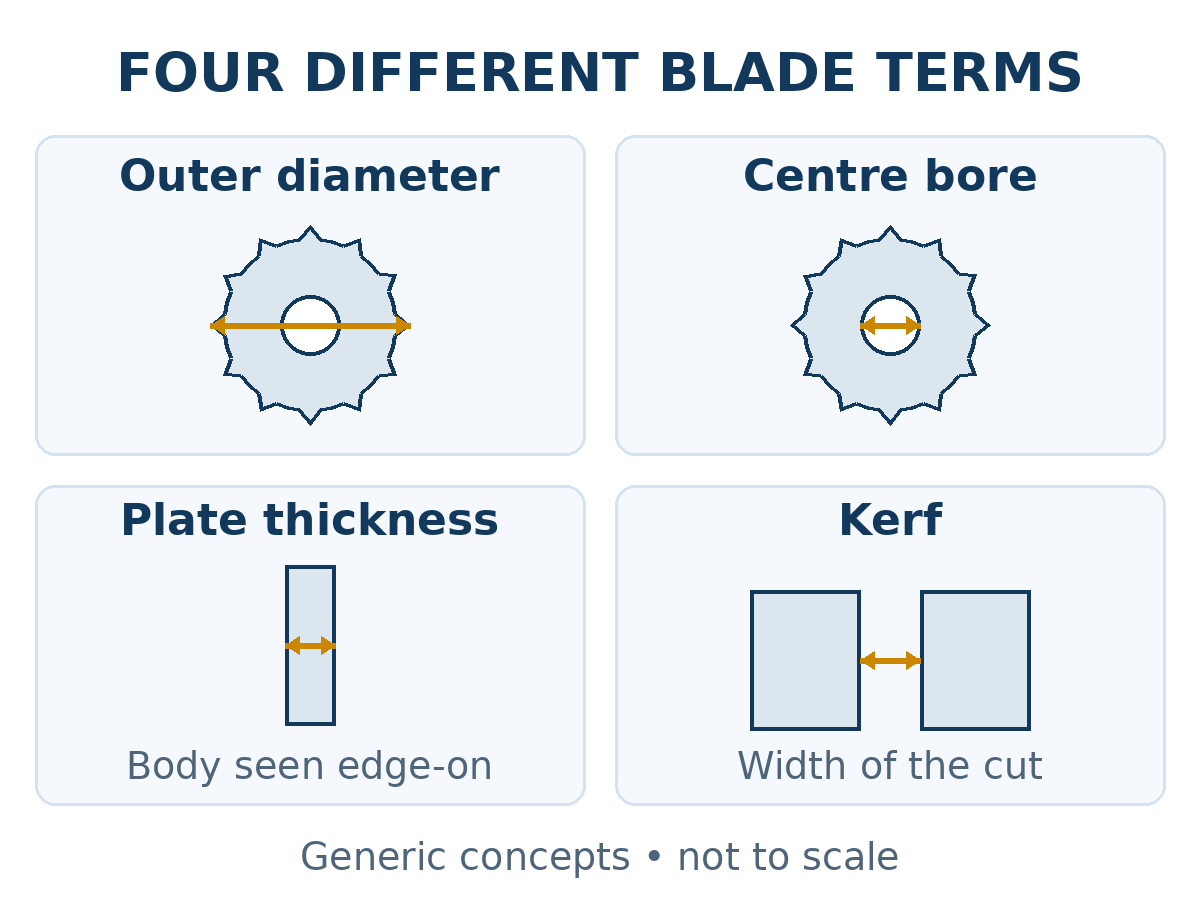
Write down which blade is in question when a box contains more than one tool. If markings are obscured or do not match the purchase line, put that blade on hold and ask the supplier for identification. Do not use a first cut as the method of discovering whether an uncertain tool was supplied.
Separate a shipping claim from a safe-use decision
Three outcomes are possible, and they need different owners. First, the supplier may confirm the package and tool are acceptable after an authorized inspection. Second, a specialist may need to assess a suspected tooth or body defect and issue a written disposition. Third, the tool may need replacement or return. Purchasing can negotiate the commercial outcome, but it should not overrule a technical hold.
Freud’s circular saw blade instructions call for suitable packaging in transport and checking saw teeth before use; the manual says to remove a blade from service when breakage, cracks or warping are suspected. Leitz’s circular saw blade instructions also warn about packaging damage and require expert assessment of damaged tools. These are manufacturer examples, not a substitute for the instructions supplied with the actual blade and saw. In particular, do not straighten, retip, grind or trial-cut a suspect blade to settle a claim without the responsible manufacturer’s approved disposition.
Give the seller a compact evidence set: order line, blade marking, package and protector photos, close views of the suspected area taken safely, and a written description of what is visible. Ask whether the supplier wants the blade held in its original package, returned, or inspected by an authorized tool specialist. Name who pays for assessment and how a replacement will be identified. Avoid declaring a tooth chip from a low-resolution carton photo or declaring the whole disc unusable from packaging damage alone; both conclusions require examination of the actual tool.
Do not let an accepted claim become an untested cut
Once a sound, correctly identified replacement is available, the production question is separate. The approved blade and saw instructions govern installation. Then use a representative aluminum profile and the agreed first-off checks for cut length, squareness, burr and surface condition as relevant to the job. Record who accepted the blade identity and who released the first part. This is a controlled return to the existing cut specification, not a performance claim for a different blade or a new machine configuration.
If the damaged item is a service-return blade rather than a new shipment, preserve its service record and apply the site’s existing release process. Our blade storage and reuse guide addresses that later gate. The purchase decision in this article is narrower: who can close a suspect arrival, and what exact replacement or assessment is owed?
Put one disposition line on the purchase record
A useful closure line reads: “Blade ID ___ from delivery ___ held on receipt because ___; package evidence retained by ___; supplier disposition ___ dated ___; replacement or return reference ___; technical release owner ___; first accepted cut record ___.” Fill it with observed facts and leave unknown fields open. That single line stops a commercial credit from being mistaken for proof that a tool is fit to rotate.
For a new saw purchase, state how many blades are included, whether one is fitted or packed separately, how each is protected and identified, and who handles a suspect arrival. If the saw and blade come from different suppliers, identify the party responsible for machine-tool compatibility before the order is placed. Send JiurunCut the saw model and serial number, the approved blade reference, the aluminum profiles and cut requirements, and the delivery question; ask for configuration-specific guidance rather than assuming any blade shown in an equipment photo is approved.
Related equipment video
The Jiurun Machinery channel video below shows related automatic aluminum saw equipment in operation. It does not show the replacement blade, its carton, the damage described here, a customer shipment, a receiving inspection, or proof that a disputed tool passed a cut. Use it only to locate the cutting stage when discussing blade identity and release.
Discuss your blade and saw configuration: contact JiurunCut with the order reference, machine identity, tool marking and the documented question. Keep a suspect blade on hold until the responsible supplier and qualified personnel give a clear disposition.