
A damaged aluminum ladder rung is a product-safety decision before it is a cutting job. Remove the ladder from use, identify its maker and exact model, and ask whether that maker permits the affected component to be replaced. A cut-to-length aluminum section, even one that looks similar, is not an approved repair. The buyer’s real choices are usually a complete replacement ladder, a manufacturer-authorized service route for a specifically listed part, or—only for a ladder manufacturer working from its own released design—a controlled production order for new components.
This guide separates those choices so maintenance buyers do not confuse stock supply with permission to return a ladder to service. It also helps OEM production teams define the limited job an aluminum saw can perform. US workplace rules are cited as examples; local requirements and the original manufacturer’s instructions govern a particular ladder.
Damaged aluminum ladder rung: take the ladder out of service
A missing, cracked or loose rung may affect the load path through the rail-to-rung connection. Visual similarity between a proposed spare and the original does not answer whether the joint, rail or whole ladder still meets its design. For US general-industry workplaces, OSHA 29 CFR 1910.23(b)(9)–(10) calls for inspection and removal of a ladder with structural or other defects until it is repaired under the applicable rule or replaced. For US construction work, 29 CFR 1926.1053(b)(16)–(18) addresses defective portable and fixed ladders and requires a repair to restore the original design criteria before return to use.
These provisions do not make a generic replacement rung suitable for a particular commercial ladder. Tag or otherwise isolate the unit according to the applicable workplace procedure; then obtain a decision from the responsible manufacturer, owner and qualified safety personnel. Do not use a production trial on a saw as evidence that a field repair is safe.
Identify the product before seeking a part
Record the manufacturer, model, mark or serial identifier, ladder type, material and available instructions. Photograph the full ladder and the damage without placing it back into service. Note whether the issue is a rung, rail, hinge, lock, foot or connection, since parts policies differ. Check for deformation or damage in adjacent members rather than treating the visibly broken piece as the whole problem.
Werner’s climbing-equipment FAQ lists certain replaceable accessories for particular ladder families but says it does not recommend repairing a damaged ladder; it does not sell replacement sections for extension ladders. Louisville Ladder’s FAQ likewise limits repair discussion to available replacement kits and says its instructions and qualified repair expertise matter. These are maker-specific examples, not universal rules for every ladder brand. The presence of a parts catalog must not be read as approval to fabricate a structural rung.
Compare the three purchasing routes
Route 1: replace the complete ladder
Use this as the baseline quotation when the maker offers no authorized structural repair, the model cannot be identified, damage extends into the rails or connections, or the approving party cannot establish a return-to-service route. Quote the correct ladder family and configuration, not merely a similar length. Include disposal or quarantine of the defective unit, new-unit receipt, documentation and any operational downtime in the comparison.
Route 2: obtain an explicitly authorized part or service kit
Ask the original manufacturer or its authorized channel for the exact model-and-mark match, part number, written instructions, who may perform the work, and who will accept the repaired unit. A replacement foot or label is a different risk from a structural rung. A kit that exists for one ladder does not transfer to another model. If authorization, required expertise or acceptance evidence is missing, keep the ladder out of use and return to the complete-unit route.
Route 3: commission a new component for OEM production
This route is for a ladder manufacturer producing its own released design or an approved manufacturing partner—not an end user improvising a repair. The manufacturer controls the drawing revision, section identity, material specification, connection design, downstream forming or joining, test plan, inspection and final product approval. The cutting station can prepare an aluminum member to an agreed intermediate condition. It cannot certify that the member is an interchangeable spare or that a finished ladder meets workplace rules.
For OEM work, release the member and the cut stage separately
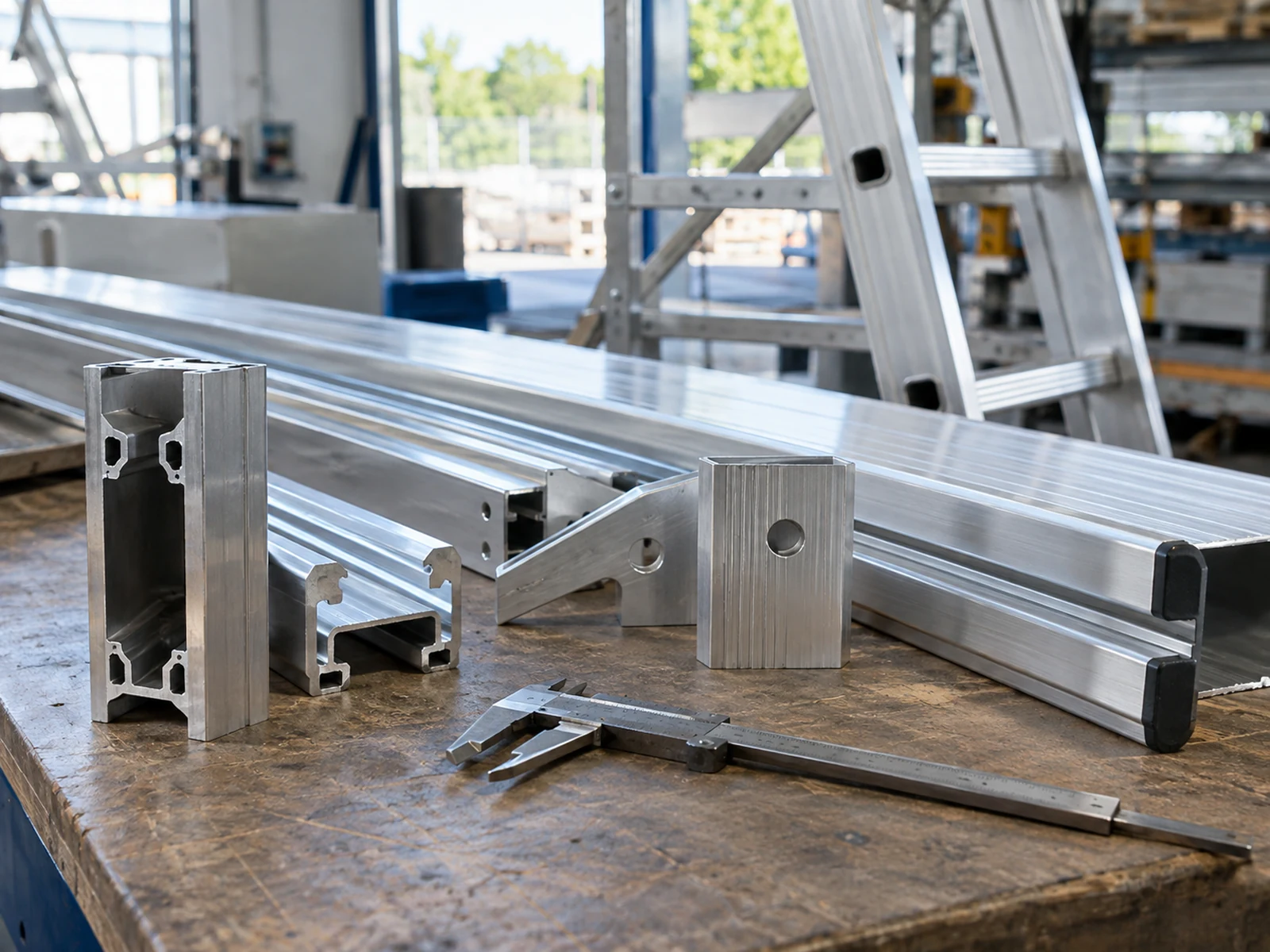
An OEM order should name the ladder family, component code, drawing revision and material condition before a machine is selected. Distinguish a raw extrusion, a saw-cut blank, a part after secondary operations, and a completed rung or rail assembly. State which party owns drilling, forming, surface work, fastening, inspection and final product qualification. A quote for an aluminum saw is meaningful only for the operations the buyer actually retains.
For each retained cut member, define the incoming section and the required handoff: cross-section orientation, length reference, cut angle if applicable, end condition, batch or kit marking and the next process. Tell suppliers which dimensions are stock references and which are acceptance criteria at the saw handoff. Do not transfer an overall finished-ladder fit or load requirement to a single cut-length claim. If the approved part route is a complete bought assembly, there may be no in-house saw work to justify.
Separate forecasts for new ladder production from occasional service demand. A one-off damaged rung does not establish a recurring machine workload. A production investment should be compared against bought approved components using the actual family mix, changeovers, handling, reject route and downstream capacity. Ask for a quotation around representative released members and the real retained station boundary rather than a generic “ladder rung saw” label.
What a sample cut can and cannot establish
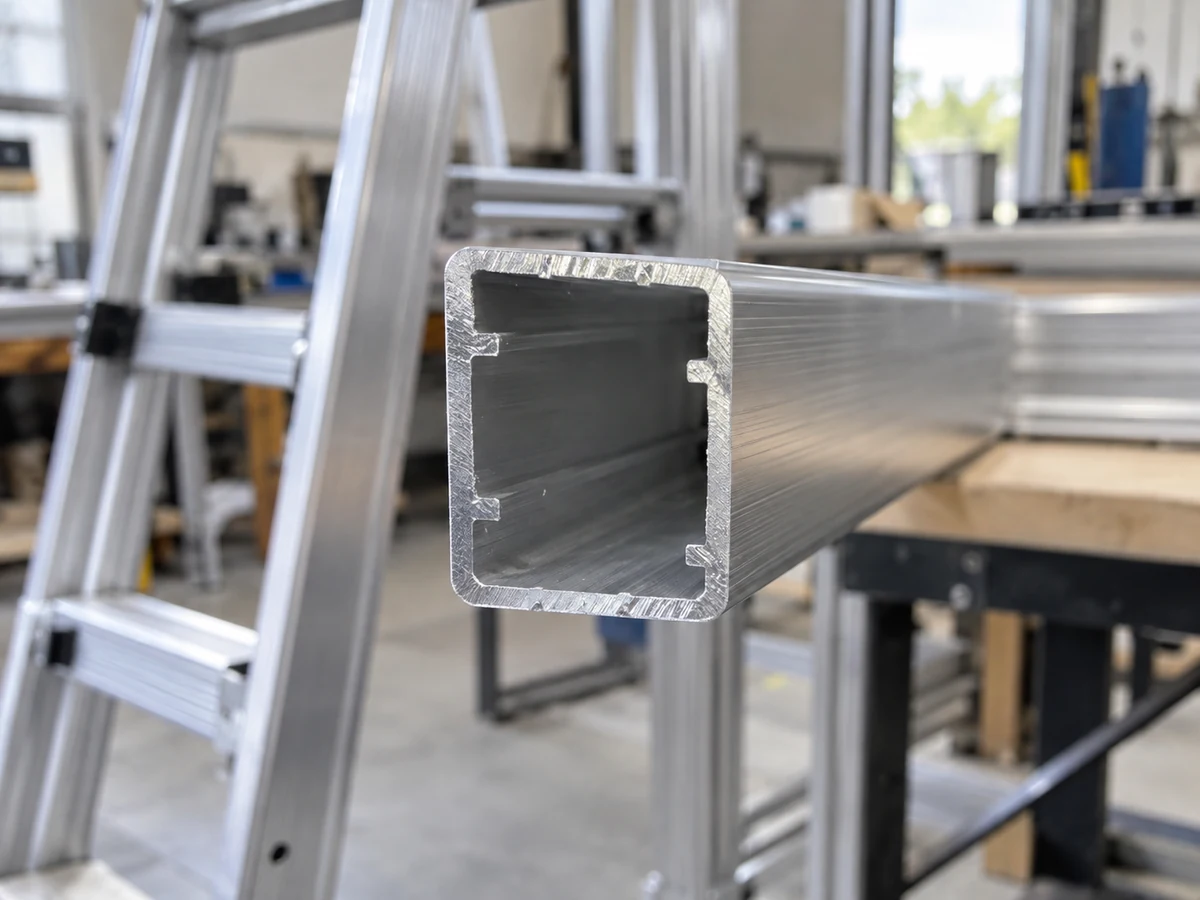
For an approved OEM production project, use the actual released input and record the machine configuration, support and clamping, cut program, operator method and batch. Inspect the agreed saw-stage outputs: length reference, end condition, orientation, burr handling and traceable kit identity. Compare each result with the buyer’s released drawing and agreed inspection method. A good cut on one section does not prove the full ladder, rail-to-rung connection, coating, slip surface or durability.
Keep three sign-offs separate: the saw supplier can demonstrate the quoted cutting operation; the OEM can accept the manufactured component at its defined stage; the product authority must decide whether the completed ladder or authorized repair may be released for use. Never substitute the first sign-off for the third. Record open deviations and the owner who will resolve them before any purchase-order release.
A practical request for quotation
For a complete ladder or maker-authorized service route, send the original manufacturer the model and mark identifiers, damage description, photographs and the specific request for a written replace-versus-repair determination. Ask for the exact approved item, instructions, authorized installer or service channel, lead time and acceptance record. Do not request a generic cut length as though it were a drop-in safety part.
For an OEM cutting-station quotation, send a separate production package: released member drawings and revisions; sample profiles and material condition; annual and batch quantities by family; the retained saw-stage operations; end and marking criteria; handling constraints; downstream handoff; and the evidence required at factory acceptance. The manufacturer remains responsible for the product design and qualification. Our ladder-manufacturing saw guide discusses the broader product-family decision, while the ladder saw-trial checklist focuses on testing an already defined production member.
Video: general aluminum-cutting equipment context
The Jiurun Machinery video below shows general enclosed aluminum-cutting equipment and material handling. It is not footage of the ladder, rung, manufacturer-approved repair, model configuration, customer, trial cut or performance discussed in this article. It only helps an OEM buyer visualize the kind of cutting station whose scope would still need to be defined and verified.
Frequently asked questions
Can a matching aluminum extrusion be cut into a replacement rung?
Matching the visible section and length is insufficient. The original ladder maker or authorized product authority must decide whether a structural replacement is permitted for that exact model and what process, parts and acceptance are required. If that route is not established, replace the ladder rather than ordering a fabricated rung for field use.
Does an accurate saw sample prove the ladder is safe?
No. It supports only the specified cut-stage checks. It does not validate the joint, rail, whole product, workplace compliance or an in-service repair. Keep component inspection and product release as separate records.
When should a ladder OEM consider its own aluminum saw?
When the OEM retains recurring preparation of released aluminum members and can define the actual station boundary, family mix and acceptance criteria. If approved components or complete assemblies are purchased, or service demand is occasional, an in-house saw may not be the right purchase.
Planning a ladder-component production line? Send JiurunCut the approved member drawings, section samples, quantities and required saw-stage handoff through our contact form. We can discuss the cutting scope and a representative sample plan. For a damaged ladder in service, seek the original manufacturer’s replacement or authorized service decision first.