
An aluminum saw for ladder manufacturing is a purchase for the metal members your factory actually cuts, not for every ladder shown in a product catalog. A manufacturer may sell several ladder families, buy some components ready for assembly, and retain only selected rail, rung, step or brace work. Before choosing a machine, define the released product families, the incoming supply stage and the parts that still require a cut at your site. This keeps the quotation tied to a real workload.
This guide is for a purchasing and production team planning an in-house cutting route. It does not design a ladder, assign a safety rating or treat a saw trial as certification of a finished access product. Those decisions belong to the product owner and its applicable approval process.
Start with the product family and material route
The word “ladder” does not describe one section or one factory route. Step ladders, leaning ladders, extension ladders and platform products can involve different assemblies. Some products are made with aluminum; others use wood or glass fibre. KRAUSE’s published ladder categories illustrate that breadth. They are a market example, not evidence of your own bill of materials or of a JiurunCut machine configuration.
Make a family-by-family list from your released drawings. Identify which models your site makes, which are bought or assembled from supplier-prepared kits, and which are outside the aluminum cutting scope. If a family is not aluminum or its metal members arrive cut to length, do not count it as saw demand. A machine quote built from catalog names alone can overstate the work it must perform.
Build a retained-cut register before requesting a quote
For each eligible part, record its product family, part number, drawing revision, metal section, incoming stock length and condition, required cut length or angle, cut-end requirement, downstream operation and receiving department. Add the expected order mix and campaign pattern, but keep forecasts separate from released orders. Mark who owns any preparation already done by a supplier. The register should answer a simple question for every line: does this factory actually cut this member from incoming stock?
- Stock to cut member: long aluminum stock enters the site and the cutting department owns the cut. Include this in the saw workload.
- Supplier-prepared member: the part arrives at a defined length or end condition. Include only a documented additional cut, if one truly remains.
- Purchased assembly or complete ladder: the site receives a kit or finished product for later operations. Keep it in the supply map but exclude it from saw-cycle estimates.
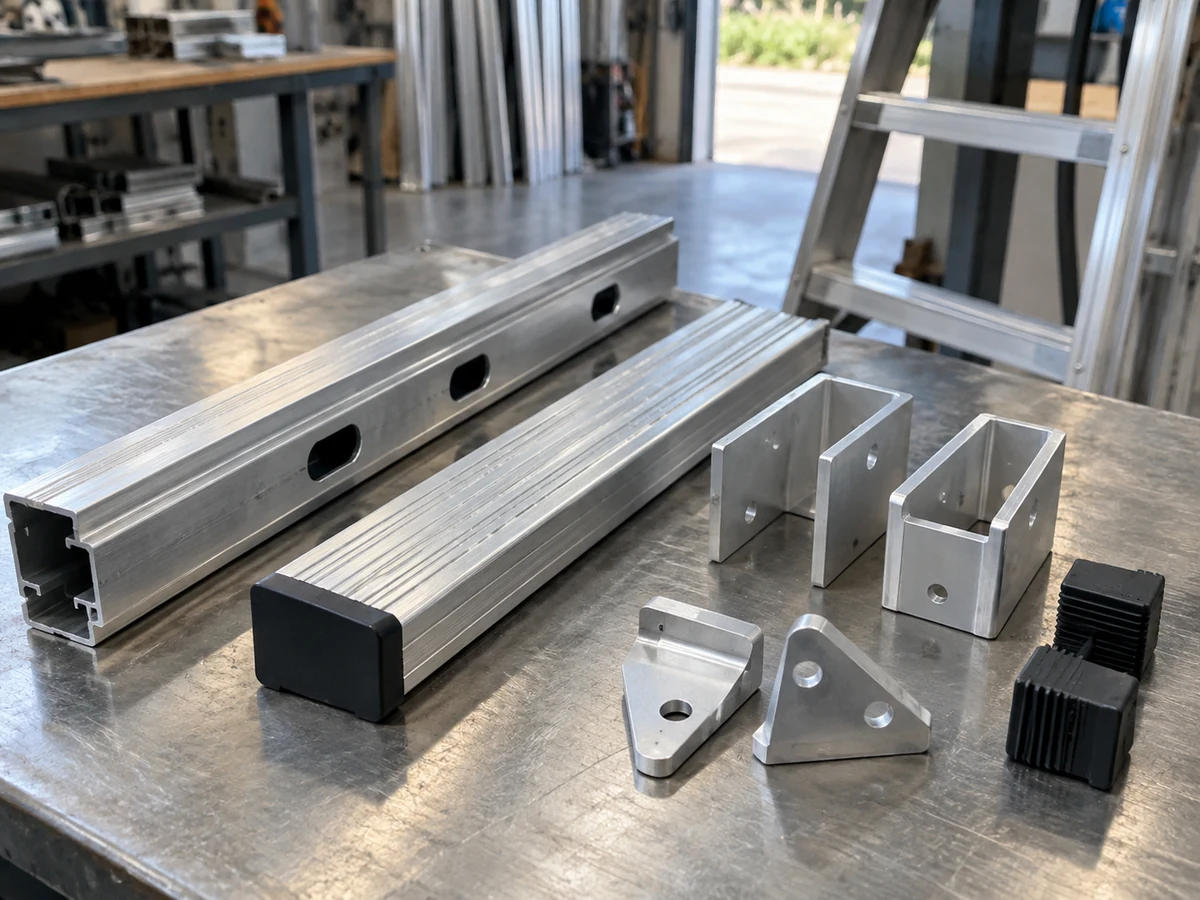
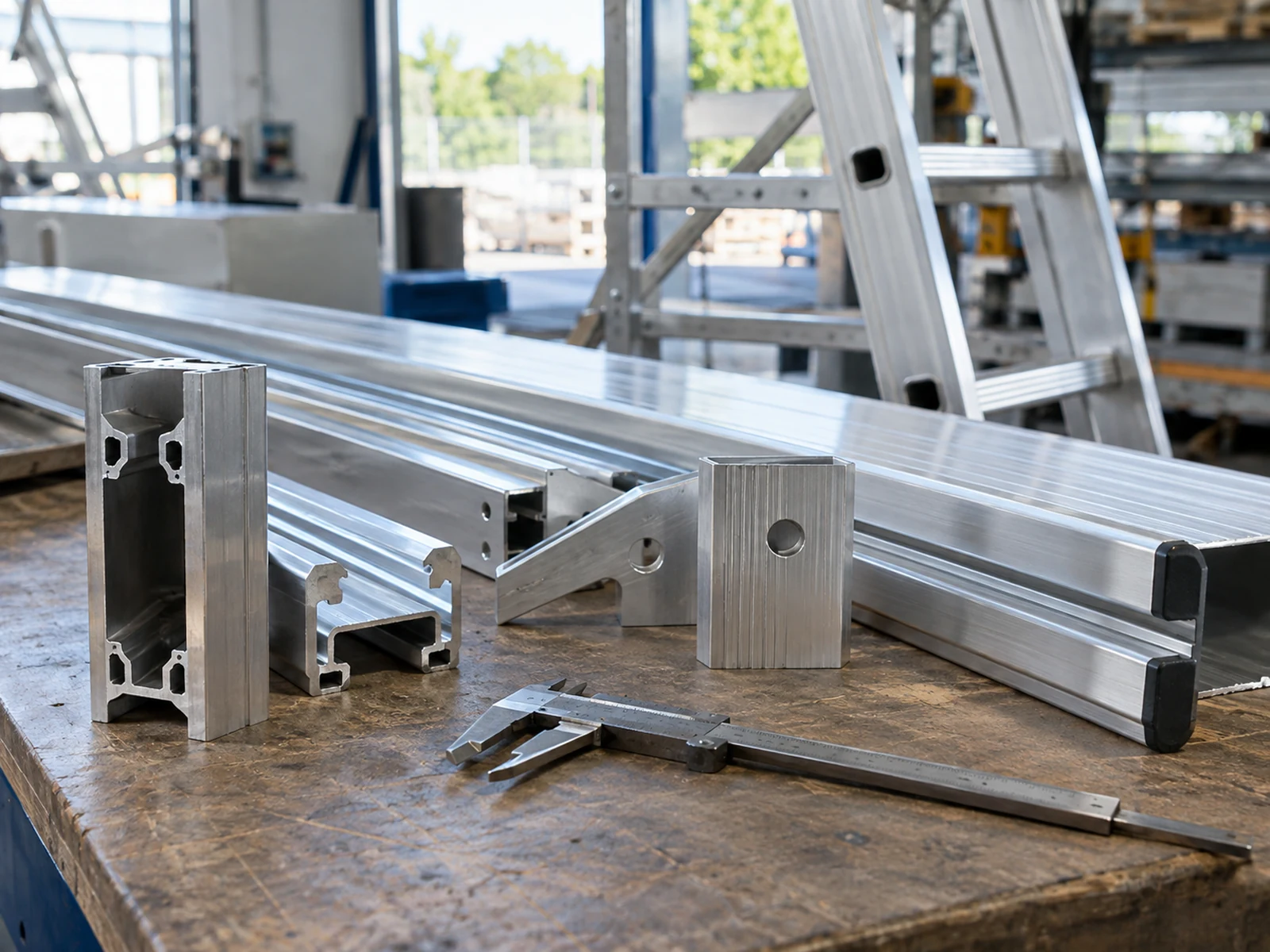
A rail, rung and brace may use different profiles even within one approved product family. Do not merge them into a single “aluminum profile” line. State the reference face, part orientation and whether a cut end is visible, joined or machined later. This gives a supplier enough information to discuss stock support, clamping and discharge without assuming that the finished ladder dimension is the saw-cut dimension.
Define where the cutting operation ends
The saw’s accepted output is a cut member at a specified handover point. A ladder may still require punching, forming, fastening, surface treatment, end caps, assembly and final inspection after cutting. The purchasing team should name the department responsible for each later stage. A clean cut face or a feed-positioning number does not establish finished-product dimensional acceptance, structural performance or regulatory conformity.
Ask the product engineer to identify the drawing datum used for the cut and the feature checked at the next operation. Where an end will be subsequently machined, record the allowance and owner. Where rails are paired, define how left and right members are identified. For variable-length work, include the real range of released parts, not a single convenient example. If an angle is required, identify the angle reference and the receiving feature that depends on it.
Compare the three supply choices at the same delivery stage
An aluminum saw for ladder manufacturing is one option within a broader make-or-buy decision. Compare complete purchased ladders, supplier-prepared members and in-house stock cutting at the same accepted stage. A low raw-stock price is not comparable with a prepared kit price until cutting labor, scrap, handling, downstream preparation, fixtures, inspection and schedule responsibility have been included. If the factory already buys cut rails but wants to bring only emergency replacement cuts in-house, size the business case for that real exception workload.
Separate recurring production from occasional prototypes and repairs. The best station arrangement for short repeat batches may differ from the arrangement needed for long rails or frequent changeovers. List the stock forms that dominate actual volume, then identify the low-frequency parts that could require a different setup. Treat every untested family as an open quotation item rather than assuming one demonstration covers the whole catalog.
Request a representative trial and a bounded machine proposal
Send the supplier a small, representative set of released section drawings and sample stock. Include the widest or most difficult section, a routine high-volume member and a short part only if each genuinely occurs in the retained work. State the incoming stock condition, target cut reference, intended output stage and inspection method. Ask the supplier to identify the proposed blade, clamping, feed, length stop, guarding, material support and discharge arrangement used for that trial, and distinguish standard equipment from options.
Record the test stock, machine model and actual configuration alongside each inspected sample. Measure the agreed features using a documented method, and note burrs, handling marks and any follow-on work. A trial on a convenient general profile is useful for discussing the equipment, but it is not proof for a different rail, rung or finish. If representative stock cannot be supplied, leave the untested items explicitly open in the purchase decision.
The video below shows a general Jiurun machinery saw equipment scene. It is a visual example of equipment operation only. It does not show this ladder material, a proposed model or configuration for this article, a customer order, a representative sample trial or verified cutting performance. Request a separate demonstration against your released members before accepting any capability claim.
Use a decision package that the next reviewer can audit
Before approving the purchase, keep one package with the released family list, retained-cut register, representative drawings, supply-stage comparison, tested stock, proposed machine configuration, sample inspection record and unresolved exceptions. The responsible product team should separately document how the resulting members are prepared, assembled and validated as ladders. This prevents a cutting-station acceptance from being mistaken for acceptance of the complete product.
For a closer look at part-level handovers, read our aluminum ladder components cutting guide. If the retained workload is clear, review the aluminum profile cutting machine range as a starting point for a configuration discussion, not as a preselected model.
JiurunCut supplies industrial circular saw equipment for aluminum and other nonferrous metal work. To discuss an aluminum saw for ladder manufacturing, send the released member register and representative section drawings, together with the factory’s incoming stock condition, quantity mix and required handover stage. We can then discuss a proposed cutting scope and what should be verified in a sample trial.