
Custom aluminum extrusion MOQ means the supplier’s minimum order quantity for the stated extrusion order. It is not a universal number. Before comparing offers, identify the unit, the profile scope and the condition in which the material will be delivered.
Your factory may need 200 finished cut parts, while an extrusion quote uses a minimum mass per shape. These quantities describe different stages. This guide explains five questions that connect the material order to your cutting plan without treating a supplier’s MOQ as a guaranteed number of usable finished parts.
Read the whole minimum-order statement
- Keep the quantity, unit and profile scope together.
- Separate extrusion stock from finished cut pieces.
- Clarify tooling and release arrangements before approving the order.
On this page
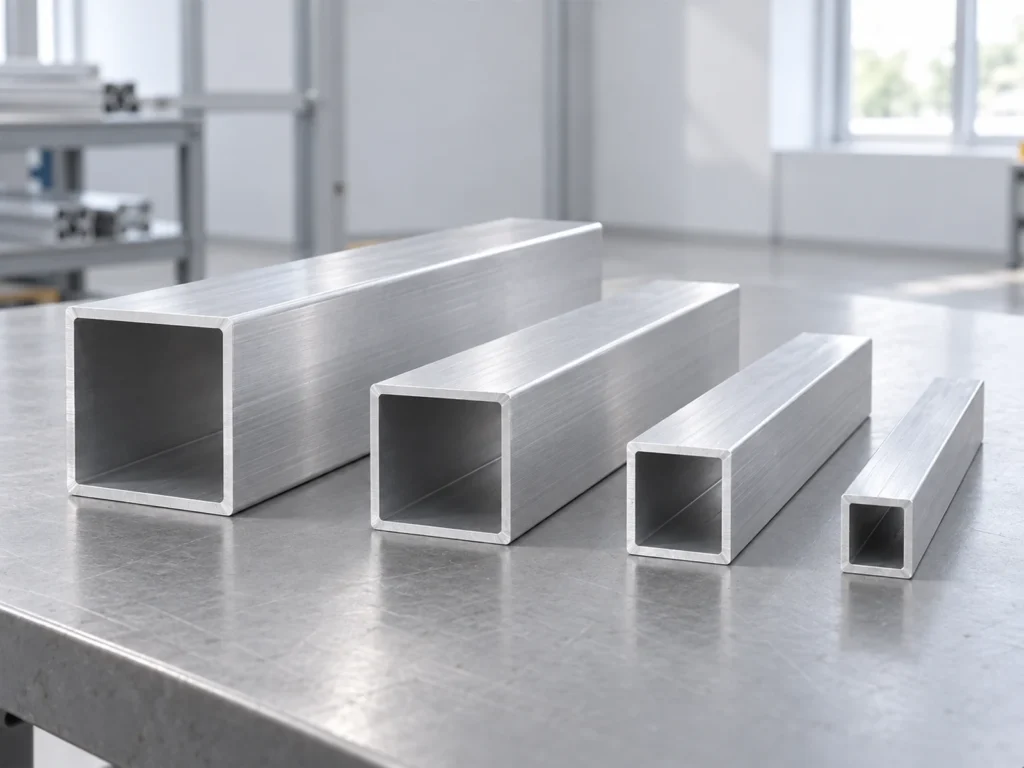
Custom aluminum extrusion MOQ depends on the supplier and order
Published supplier policies illustrate why a single industry-wide MOQ would be misleading. Tri-State Aluminum’s product overview says it extrudes on order rather than stocking its standard shapes, and describes a mass-based minimum per shape. A standard section in a catalog therefore does not necessarily mean ready-to-ship stock.
By comparison, Minalex’s questions for extrusion buyers says it does not require a minimum order quantity for its customized miniature extrusions. These are examples of different published approaches, not recommendations or policies that apply to every profile.
Ask each supplier for a quote against your actual section, material and delivered condition. Confirm the current order terms rather than copying a general website statement into a purchase order.
Also distinguish a custom extrusion from an existing extrusion cut to a custom length. A new cross-section may require an extrusion-tooling discussion. Shortening stock changes the length; it does not create a new extrusion cross-section.
Question 1: what unit does the minimum use?
Write down the minimum exactly as quoted: mass, linear length, stock lengths or finished pieces. Include the unit system. “Minimum 500” is not meaningful until you know what is being counted.
If the quote uses mass and your production plan uses pieces, request the agreed mass per length and supplied stock length. You can then build a planning conversion. Keep the source of that mass figure visible; a similar-looking section may have a different amount of metal.
Do not confuse net material mass with shipment gross mass. Packaging contributes to shipping weight but does not automatically count toward an extrusion minimum. Ask which mass basis the supplier uses.
Likewise, distinguish a piece of raw stock from a finished piece. One long extrusion may supply several cut parts, depending on their lengths and the approved cutting plan. The quote should make the counted item explicit.
Question 2: does the minimum apply per profile?
An order containing several sections may need to meet separate minimums. Do not assume that their masses can be pooled. Ask whether the minimum applies per shape, material condition, finish or another quoted grouping.
For a frame with two profile types, keep the quantities on separate lines. Identical outer dimensions do not prove identical profiles. The exact section reference and drawing revision identify what the supplier is being asked to make.
Then ask how multiple cut lengths from the same approved section are handled. They may share raw material, but that does not automatically combine all downstream machining or finishing requirements. Confirm the supplier’s treatment of those variants.
A clear order line names the profile, material condition, required delivery length or part identity and quantity. If a revised cross-section changes the order basis, request a revised quote rather than assuming the original terms still apply.
Question 3: what condition is counted and delivered?
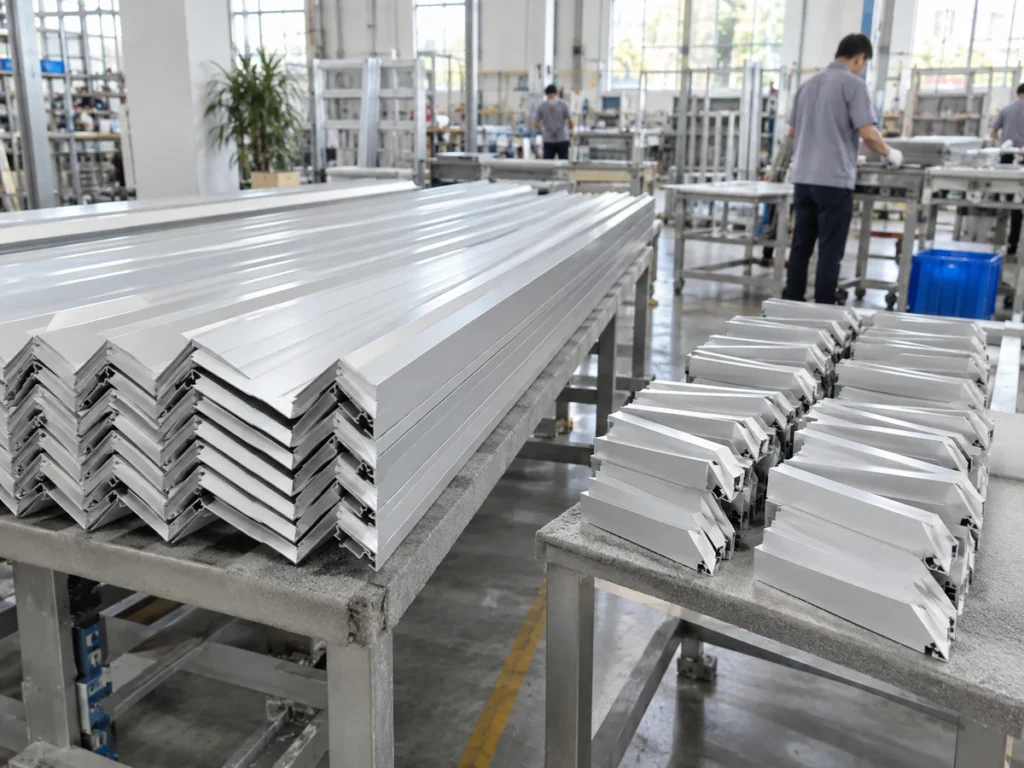
Confirm whether the offer is for extrusion stock, cut blanks or completed fabricated parts. Identify included finishing, drilling, deburring, inspection and packaging. Comparing a stock minimum with a finished-part minimum without matching scope can hide a substantial difference.
Bonnell Aluminum’s FAQs distinguish extrusion, later fabrication and finishing, and explain that quote scope can include tooling, order volume and those later services. This supports a practical purchasing distinction: the supplied stage belongs alongside the quantity.
| Quoted quantity | Clarification to request |
|---|---|
| Extrusion mass | Profile scope, mass basis and delivered stock lengths. |
| Cut-piece count | Part lengths, drawing revision and included operations. |
| Finished-part count | Complete supplied condition and acceptance requirements. |
Also identify how any agreed quantity variation is handled. Ask what is expected to be ordered, manufactured and delivered. Do not invent a standard overrun or underrun percentage when the quote does not state one.
Question 4: is the minimum for one order or a release arrangement?
A forecast, a committed order and a shipment release are different records. Annual demand helps describe the project, but it does not automatically satisfy the minimum for a particular production order.
If you propose several deliveries, ask whether the supplier accepts that arrangement and how the minimum is applied. Record who holds the remaining stock and how the balance is identified. Do not treat a conversation about future volume as an agreed storage program.
Provide a separate schedule for required deliveries and unresolved approvals. Tooling review, material release and later operations may affect the plan. The MOQ statement alone is not a delivery promise. Our cutting lead-time guide separates production stages from the finished delivery schedule.
Question 5: how is tooling handled?
For a custom section, identify whether the quote includes new extrusion tooling and how that item is described. A one-time tooling line and a material-order minimum answer different questions.
Ask who approves the section drawing and trial material before the production order is released. Record the agreed responsibility for drawing changes and whether a change requires another quotation. Do not assume that paying a tooling charge resolves every later revision.
Bonnell’s FAQ notes that custom-extrusion projects can have a one-time die cost in addition to piece-part pricing. Use this as a reason to inspect the quoted lines, not as a source of a universal die price.
Keep any ownership, storage or repeat-order conditions in the supplier’s actual written terms. Resolve those commercial details with the supplier before placing the order.
A fictional quantity translation for the cutting plan
Suppose a fictional offer specifies 200 kg of one profile, and the agreed planning mass is 2 kg per meter. Dividing 200 kg by 2 kg/m gives 100 m of material. These numbers demonstrate units only; they are not an actual supplier MOQ or profile specification.
If every desired part were 0.5 m long, that 100 m would contain 200 part-length equivalents before any cutting or other allowances. It does not guarantee 200 accepted parts. The raw stock lengths and the approved plan still matter.
Account separately for kerf, required end trims, unusable material, retained remnants and later-operation requirements. Do not hide them inside the supplier’s minimum. Our blade kerf guide explains why nominal part lengths alone do not describe total cutting consumption.
When the buyer needs multiple finished lengths, prepare the actual cutting list rather than converting everything into one average length. Keep the extrusion purchase quantity and the accepted finished-part target as separate fields.
Buyer questions
What is a typical custom-extrusion MOQ?
There is no single figure that applies to every supplier and section. Request the current minimum, unit and scope for your actual order.
Does a standard profile always mean stock is available?
No. A supplier may have an existing die and still manufacture the section on order. Confirm inventory and order conditions separately.
Can I combine different profiles to meet the minimum?
Only if the supplier confirms that grouping. A per-shape minimum should not be treated as a combined-order minimum.
What should I provide for a cutting review?
Send the actual section, material condition, supplied stock lengths and required finished-part list. Include any later-operation and delivery requirements. Discuss your cutting plan so the equipment review can use the material you expect to receive.