
Crane cabin sliding window frame cutting should start with one question: which approved window parts will arrive as saw-cut aluminum members, and which will arrive as a finished glazing assembly? A crane cab is a safety-relevant system. A clean cut does not approve its glass, seal, lock, visibility, mounting, or completed cabin. This guide helps a cabin OEM, glazing subcontractor, or equipment buyer prepare a useful cut-part or saw RFQ without assigning those later responsibilities to the saw.
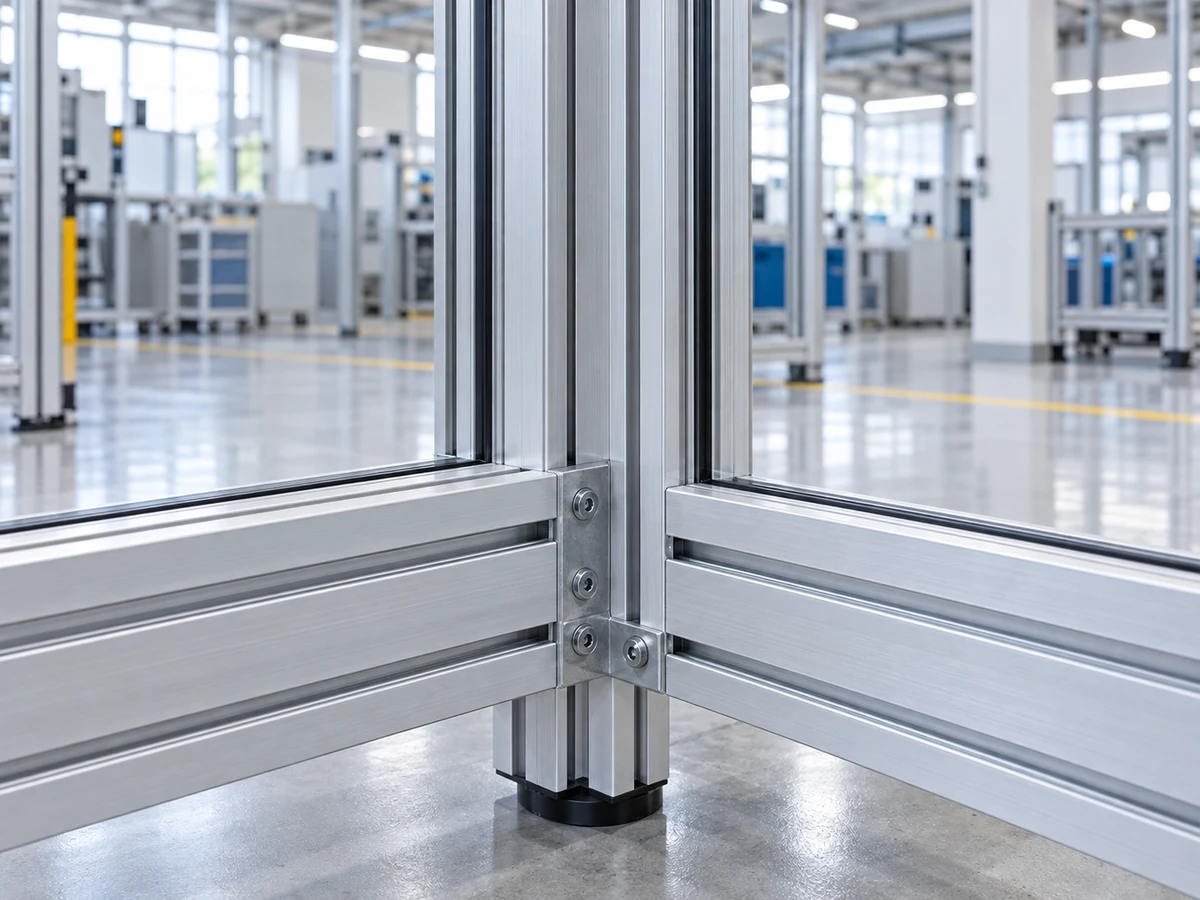
Cabin designs vary. WHCRANE’s crane cabin description lists aluminum material for door and window frames and identifies side windows with different locking positions. By contrast, Scancab’s SC25 cabin description describes safety glass glued into the cabin. These are examples of different supply architectures, not specifications to copy into another cabin. Ask the system owner for the released drawing before assuming an aluminum frame blank exists.
1. Crane cabin sliding window frame cutting starts with the approved unit
Identify the cabin program, drawing revision, and window position: side sliding leaf, fixed front pane, lower viewing window, door light, or another opening. Record which of those positions actually uses a separate aluminum frame. The quote may be for raw extrusion, a saw-cut member, a machined frame kit, a glazed sliding window, or a complete cabin module. Those are different units of purchase. Write the accepted unit in the RFQ heading and on every line item.
For example, a supplier of a finished sliding window may own the frame cut, corner join, glass installation, weather seal, lock, and functional check. An in-house cabin shop might instead buy a released extrusion and retain those operations. Comparing the price of one bare cut member with the price of a tested window assembly would misstate the manufacturing decision. A useful first question is: “Which operation remains in our plant after this supplier’s delivery?”
2. Freeze the profile section before asking for a length
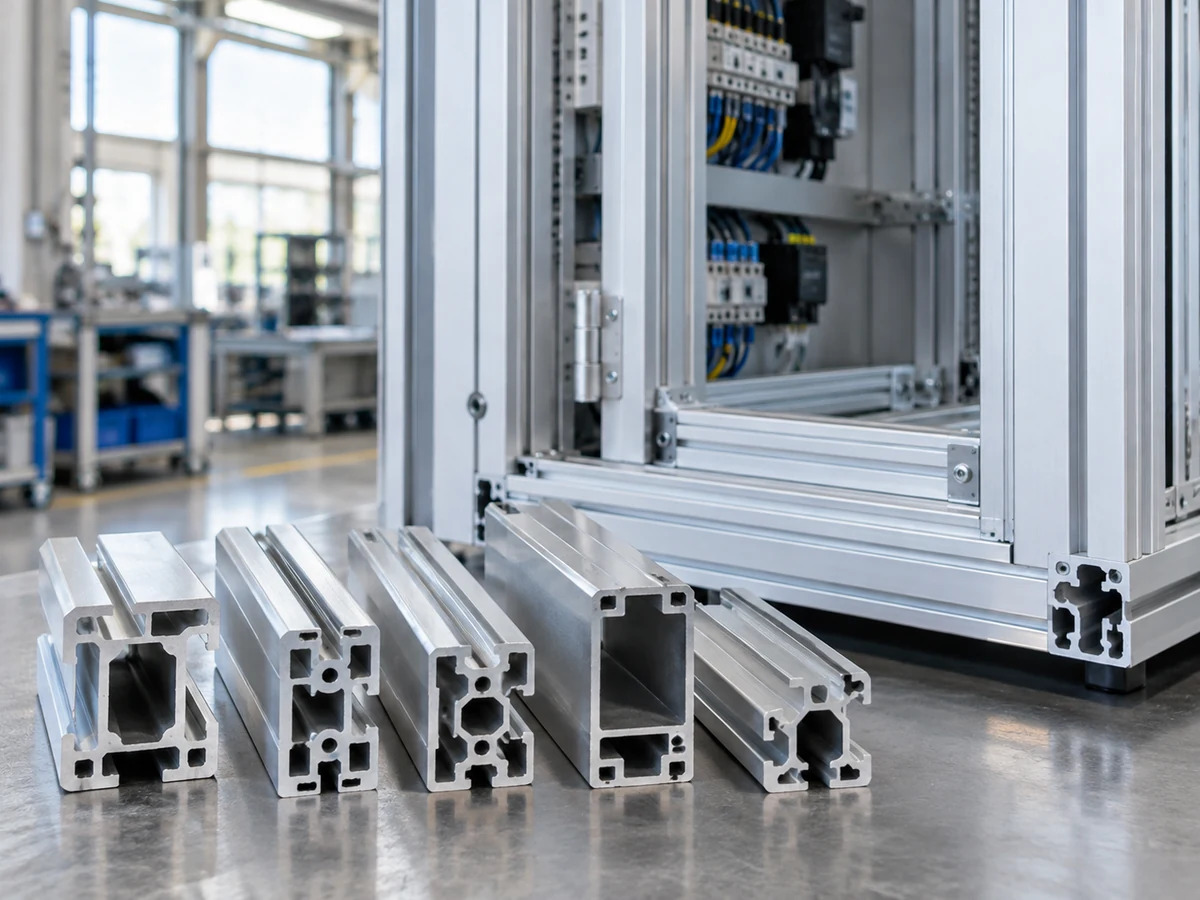
For each approved aluminum member, provide the section drawing, material and finish requirements, wall and pocket geometry, and the face that must remain free of clamp marks. Ask whether the profile carries a glazing channel, sliding track, seal recess, fastener land, or trim interface. The outside envelope alone is insufficient: two profiles with similar overall dimensions can have different mating features and support surfaces.
Separate stock identity from finished part identity. A receiving label should connect the delivered extrusion to the released section and revision. If a proposed replacement section changes a channel or corner interface, obtain the window-system owner’s approval before cutting production stock. Our related window-frame profile substitution guide explains why a visually similar profile is not automatically interchangeable.
3. Specify the cut datum, end form, and handedness
For crane cabin sliding window frame cutting, a length is only useful when its reference points are known. State whether it is measured to the long point of a miter, the short point, a square end, a shoulder, or a functional corner datum. Mark the visible face, inside/outside orientation, and left/right hand on the drawing. If multiple window positions share a section but use different end forms, give each finished member its own part number and revision rather than relying on one informal cut list.
Record the allowed cut-end condition in terms the assembly team can inspect: burr location, edge damage, visible-face marks, and whether downstream deburring or corner machining is included. Do not translate a general saw feed-positioning value into a promised finished-frame tolerance. The cabin OEM must set the actual member acceptance limits from its released window design, and the trial should measure those limits on the supplied profile.
4. Review support and clamping on the real extrusion
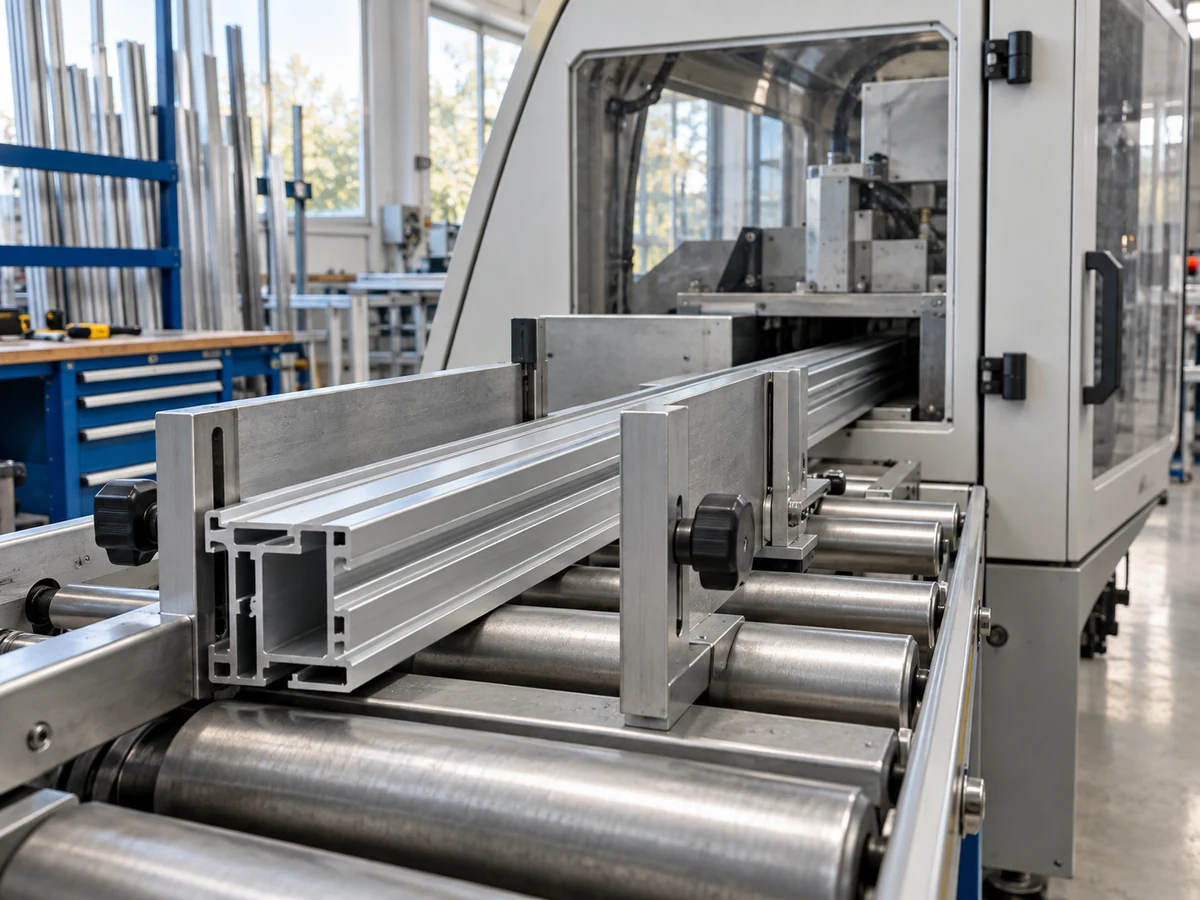
Thin lips, open glazing channels, coated faces, and uneven walls may react differently to a clamp than a simple solid bar. The machine supplier needs a section drawing and, where possible, representative stock to assess contact points, support length, orientation, and safe handling. A drawing review can rule out obvious conflicts; a representative cutting trial is needed to assess cut quality on the actual profile and selected fixture.
For a mixed window program, include the smallest and largest released sections, the shortest practical part, the longest supported part, and any part that changes orientation. Ask how the operator identifies the correct stop and clamp setup at changeover. The aim is a repeatable release process for the specified parts, not a claim that every aluminum cabin profile fits one standard machine configuration. JiurunCut’s machine overview describes its industrial circular-saw scope; suitability for this window schedule still requires a drawing-led review.
5. Keep glazing and cabin approval outside the saw acceptance
List the operations after sawing: corner joining, drilling or milling, surface finishing, seal installation, glazing, track adjustment, lock fit, and installation into the cab opening. Assign an owner for each step. The frame saw may produce a dimensionally acceptable blank while the completed window still fails to fit or operate. Conversely, a purchased window assembly can meet a cabin drawing without the buyer owning any profile-cutting operation.
Do not infer that a saw trial establishes glass retention, impact protection, escape provisions, sight lines, weather sealing, or the crane’s regulatory approval. Those checks belong to the responsible cabin and glazing engineers under the applicable project requirements. A well-written RFQ makes that boundary explicit so the cut supplier is judged on its cut parts and the system owner retains system-level sign-off.
6. Build a first-off trial around the released cut list
Before a machine purchase or recurring cut-part order, agree a small but representative first-off set. It should include the critical profiles, both hands if applicable, the specified end geometries, and a changeover between materially different members. Keep the approved drawing, stock lot, fixture contact plan, stop setup, and measurement method together with the samples. Record who accepts the cut end and who later checks frame assembly fit.
Measure against the drawing’s actual datums, inspect the visible surface and channel, and let the downstream assembler try a sample corner or sliding interface where that is part of the agreed review. If a part fails, record whether the issue arose at sawing, subsequent machining, frame joining, or glazing. That evidence is more useful than an unsupported blanket accuracy claim. Repeat the relevant part of the trial after a material, fixture, blade, or program change that could affect the accepted characteristic.
7. Compare like-for-like offers and close the handoff
Ask each bidder to quote the same released schedule and delivery stage. For a crane cabin sliding window frame cutting offer, request unit of sale, stock supply responsibility, saw setup, scrap and remnant treatment, inspection records, packaging of visible surfaces, batch identification, and treatment of revised drawings. For a machine offer, ask about profile and length range, clamping concept, infeed/outfeed handling, changeover work, operator steps, and the agreed sample test. For a finished-window offer, add glazing, seal, lock, and assembly acceptance to the supplier’s scope.
| RFQ item | Evidence to attach | Owner to name |
|---|---|---|
| Window identity | Cabin program, position, released drawing and revision | Cabin/system engineer |
| Cut member | Section, material/finish, datum, end form, hand, quantity | Cut-part buyer and supplier |
| Trial | Representative stock, sample matrix, measurement and visible-face checks | Saw supplier and accepting inspector |
| Downstream fit | Corner, track, glazing, seal and lock checks where applicable | Window assembler/system owner |
The commercial comparison then becomes clear: buy ready-to-install windows, buy prepared frame kits, outsource cut members, or retain cutting in-house. The lowest quoted cut price is not necessarily the lowest complete-window cost if rework, inventory, or assembly responsibility moves elsewhere. Use the same approved part schedule and the same receiving condition when comparing alternatives.
What the Jiurun saw video shows
The video below is a general Jiurun aluminum-saw demonstration. It illustrates an equipment process only. It is not a crane cabin sliding-window frame trial, and it does not verify the article’s section, model configuration, customer, cut tolerance, glazing fit, or performance.
Send a cut-part or machine RFQ that can be answered
Send the released window-member drawings, section and finish details, the cut list with datums and handedness, quantities, acceptable end condition, and a short description of which glazing and assembly steps your team retains. If you are considering a saw, add representative stock and the proposed first-off checks. Contact JiurunCut with the profile and cutting requirement so the proposed machine direction can be reviewed against the actual parts. Any sample test, configuration, commercial scope, and support terms should be agreed in the quotation.