
Cold saw vs chop saw for aluminum is not always a comparison between two separate machine categories. Manufacturers use these names in different ways. A product described as a chop saw can also use cold-cut terminology, while industrial non-ferrous cold saws can have different head movements and levels of automation.
The useful comparison is between exact machines and their approved cutting configurations. Identify the tool, aluminum application, clamping, handling and delivered scope. This guide examines four naming myths that can make two quotations seem more comparable than they really are.
Compare machines by what they actually provide
- Identify abrasive cutting or a toothed cutting blade.
- Confirm the exact machine and blade configuration for aluminum.
- Review part holding, length control and handling together.
On this page
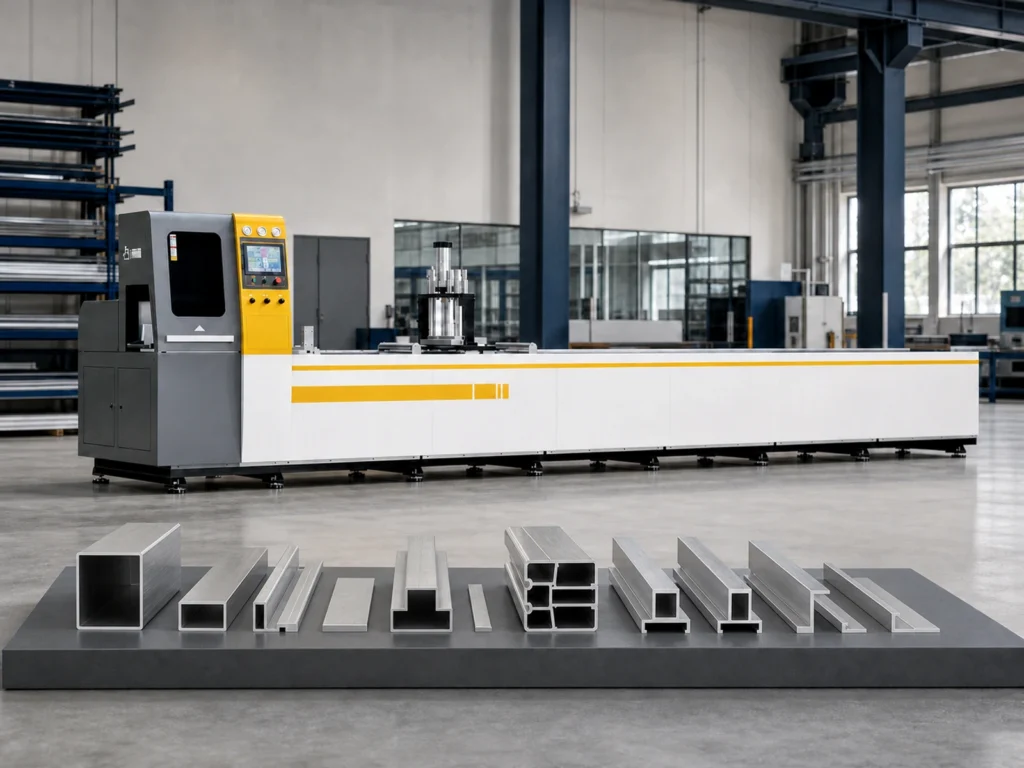
Cold saw vs chop saw for aluminum: start with the exact product
Product naming can overlap. Evolution’s chop-saw overview describes toothed carbide-blade machines and uses cold-cut language. That is direct evidence that the term “chop saw” need not identify an abrasive-disc machine.
Scotchman’s SUP-500 page describes a non-ferrous upcut circular cold saw for aluminum and other listed materials. Its upward cutting arrangement differs from the familiar downward-pivot image many buyers associate with a chop saw.
These product descriptions support a naming conclusion, not a claim that the machines perform identically. Read the exact model documentation before building the comparison. A category label does not tell you every configuration or supplied option.
| Term in an offer | What still needs confirmation |
|---|---|
| Chop saw | Actual tool type, material approval and head arrangement. |
| Cold saw | Exact model, blade configuration and material application. |
| Non-ferrous saw | Approved section range, holding arrangement and order scope. |
| Automatic saw | Which loading, feeding, cutting and collection steps are automatic. |
Myth 1: every chop saw uses an abrasive disc
Abrasive cutting and toothed-blade cutting use different cutting tools. Evolution’s overview explicitly contrasts abrasive discs with its carbide blades. The buyer should therefore ask which tool the particular offer uses instead of inferring it from “chop saw.”
Request the supplied tool reference and its intended material application. A clear quote should distinguish an included blade from an optional blade and identify the approved pairing with the machine.
Do not treat this distinction as permission to convert an abrasive machine by installing a toothed blade. The complete machine-and-tool combination needs manufacturer approval. A matching outside diameter alone is not evidence of compatibility.
Our saw blade size guide explains why diameter is only one part of a fit review. Keep mounting details, rated limits and the machine documentation together.
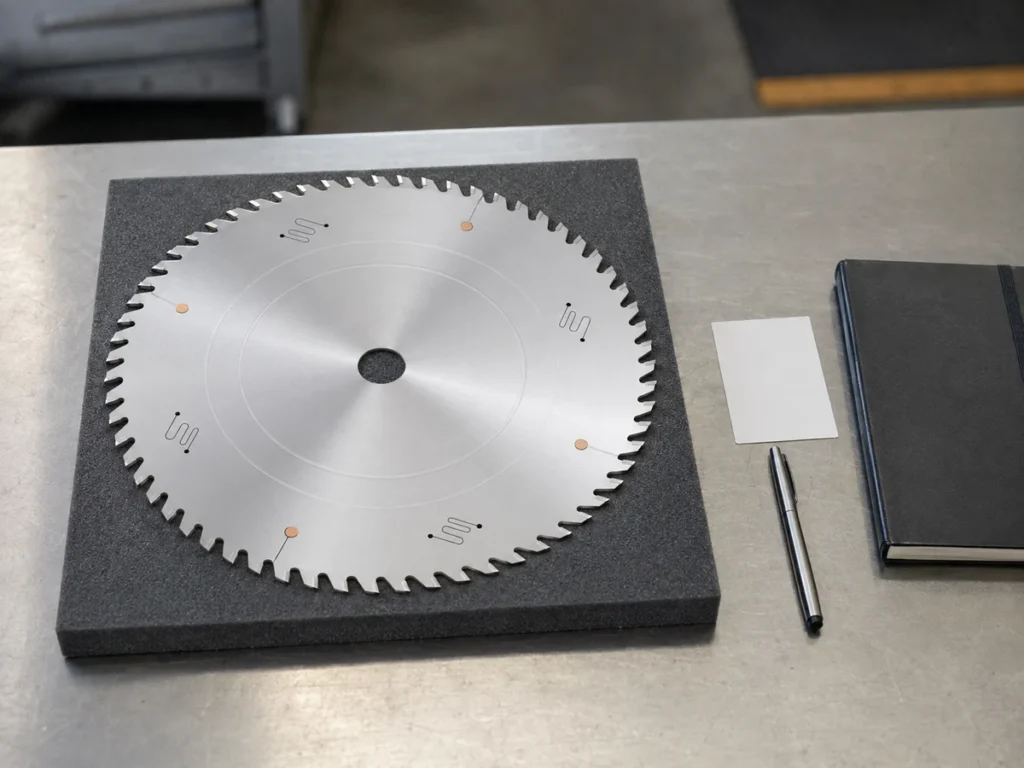
Myth 2: every cold saw has the same speed, lubrication and movement
The word “cold” does not provide an operating setting. Do not carry a speed assumption from a steel-cutting machine into an aluminum application. Use the exact model’s approved configuration and the selected tool’s documentation.
Likewise, confirm the lubrication arrangement instead of assuming that the category name means dry cutting or a particular coolant system. The SUP-500 page, for example, lists mist lubrication as a feature of that model. It is not a rule for all machines carrying the cold-saw label.
Separate saw-head movement from material feeding. A rising blade, a downward head and a moving feed carriage describe different motions. They affect how an order is evaluated, but none is fully defined by a short category name.
Ask the supplier to show which motion performs the cut and how the stock reaches the cutting position. A machine video can provide useful visual context; it does not establish approved settings or a production result for your section.
Myth 3: a metal-cutting description approves every aluminum job
“Metal cutting” is broad. Confirm that the exact machine and supplied blade are intended for the aluminum material and section you plan to use. A description centered on steel does not automatically answer that question.
Evolution’s aluminum EVOMAX blade page identifies an aluminum-specific tool and lists named compatible saws. The useful lesson is to look for an explicit tool-and-machine application rather than assuming all blades under the same brand are equivalent.
Review the complete section drawing, not just one outside dimension. Hollow profiles, solid bars and multi-chamber sections present different geometry for the holding and capacity review. Confirm the required orientation and cutting angle as part of the application.
Use the model’s applicable capacity information. A straight-cut entry and a miter-cut entry can describe different conditions. Ask the supplier to identify the entry relevant to your drawing instead of applying a single advertised maximum everywhere.
For a detailed geometry review, see our cutting capacity diagram guide. It explains how to connect the stated envelope to the actual section and cutting position.
Myth 4: a machine name guarantees quality and production output
A label such as cold saw or chop saw does not guarantee the finished length, angle, edge condition or number of accepted parts. Define those requirements separately and evaluate the offered setup against them.
For repeated cutting, include how length is established and how stock is supported. Clarify loading, clamping, cutting and collection responsibilities. A machine with a powered cutting movement may still depend on an operator for several other steps.
Read quality claims with their stated conditions. A general “burr-free” description does not replace your agreed edge requirement or the results of a representative trial. Define what the part must look like and how acceptance will be checked.
Also separate single-cut time from total batch performance. Repositioning stock, changing a length, inspecting parts and clearing the work area can belong to the process. Our cycle-time and batch-output guide explains why a short cutting clip is not a complete output measure.
Compare a fictional pair of offers using the same job
Imagine Offer A is titled “aluminum cold saw” and Offer B is titled “metal chop saw.” Both offers show a circular toothed blade, but neither includes a complete handling description. These are fictional offers, not quotations from the manufacturers cited above.
Start by requesting each model and approved aluminum blade pairing. Then send the same stock drawing, material condition and finished-part list to both suppliers. This removes the naming assumption from the application review.
Next, compare length control and handling. If one offer includes a feed system and the other includes only a cutting machine, record the difference directly. Do not interpret a lower quoted machine subtotal as a complete equivalent process.
Finally, request evidence against the same part requirements. Specify the features to inspect and the supplied scope to evaluate. The purpose is to compare two documented configurations, not to declare a universal winner between two overlapping names.
Build the comparison around your actual parts
- Machine model and approved aluminum cutting-tool reference.
- Material condition, section drawing, orientation and required angles.
- Finished lengths, quantities and relevant acceptance requirements.
- Stock support, clamping, length control and handling scope.
- Included equipment, site requirements and proposed trial evidence.
Keep options visible in the quotation. A feeder, support table or collection arrangement shown in a photograph may need its own order line. Resolve that scope before comparing the complete proposed systems.
Buyer questions
Can a chop saw also be described as a cold-cut saw?
Yes. Manufacturer naming can overlap. Identify the actual model and tool instead of treating those labels as mutually exclusive.
Does cold saw mean one fixed operating speed?
No. Use the approved machine and blade documentation for the actual material. The name is not an operating instruction.
Can I replace an abrasive disc with an aluminum blade?
Do not infer compatibility from diameter or appearance. Obtain manufacturer approval for the complete machine-and-tool combination.
How should I start a JiurunCut equipment review?
Send the section drawing, material condition and intended part list. Include the desired loading and length-control arrangement, or identify what is still undecided. Request an aluminum cutting review so the discussion can begin with the work the machine needs to perform.