
A CNC aluminum saw name does not, by itself, confirm that the quoted equipment makes your mounting holes. Show the complete finished part and ask which operations the proposal includes. Keep the end cuts, holes and any other required features clear so the purchase matches the component you need.
One finished part can need several operations
Imagine an aluminum rail with a finished length, shaped ends and mounting holes. Producing its end cuts answers one part of the drawing. The holes are another requirement that must also have a place in the production route.
The Aluminum Extruders Council’s fabrication overview describes cutting as a common starting point, followed by processes such as machining and assembly. Use the complete component drawing to discuss which work belongs to the saw proposal and which work belongs elsewhere.
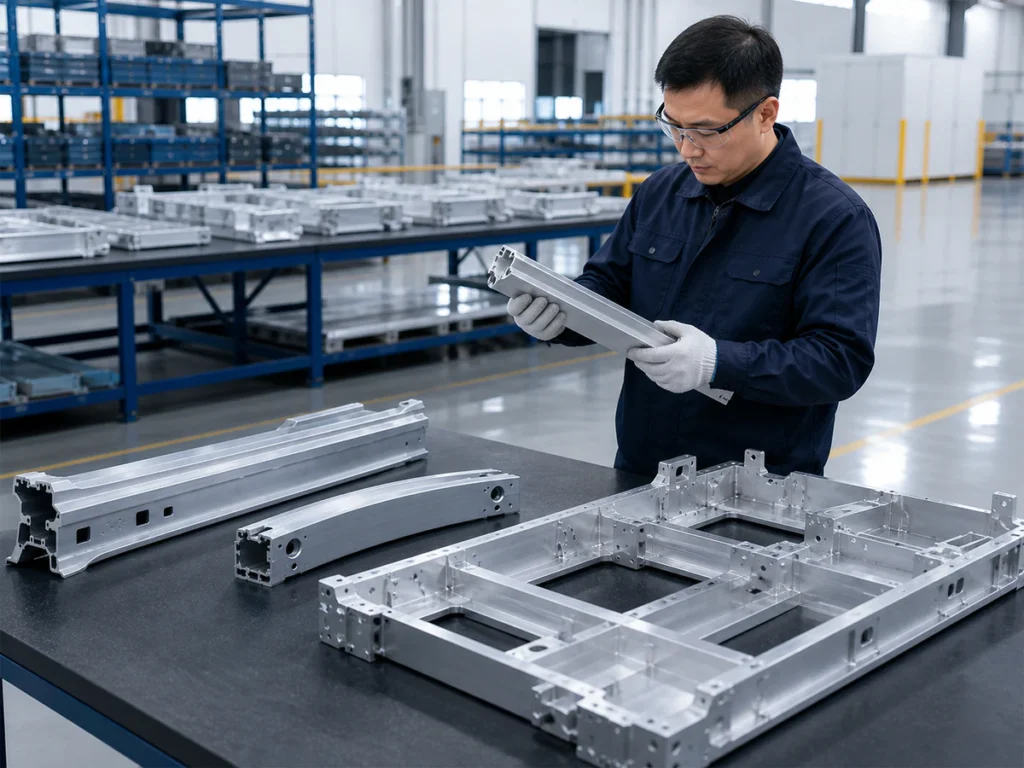
Does your drawing include holes as well as cut ends?
Share the full component drawing, including the features that must be present for assembly.
Question 1: which cutting operations does the CNC aluminum saw cover?
Give the supplier the profile section, finished lengths and end shapes. Ask the quote to identify the cutting work covered by the proposed equipment and the stock condition used for that review.
Jiurun’s JR-455CNC catalog page lists servo automatic feeding and automatic clamping. These descriptions help explain stock positioning and holding within a cutting workflow. Ask the supplier to connect the quoted functions to your actual parts.
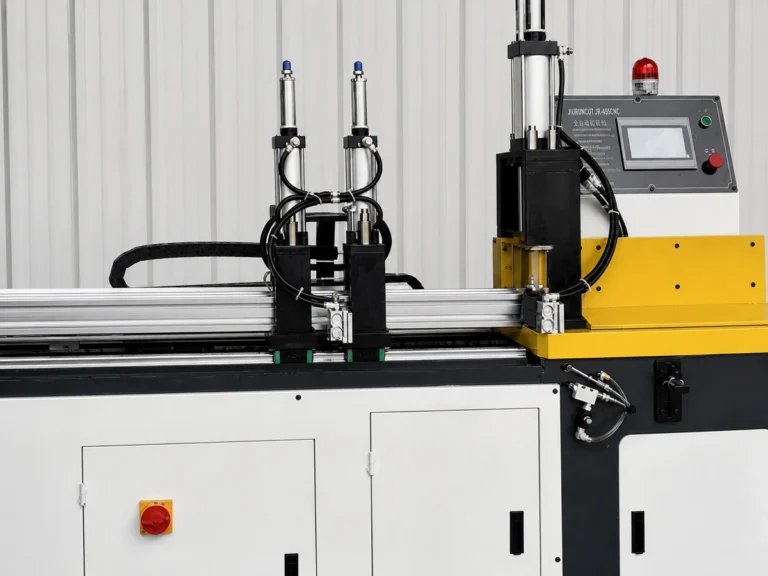
The clamping and feeding comparison explains why those two functions belong separately in the workflow discussion.
Question 2: who produces the holes and slots?
Identify each feature needed after the end cuts. Ask whether it is made by equipment included in the current proposal, by your existing machinery or by another supplier. Have the operation and the responsible party stated clearly.
If combined cutting and machining equipment is proposed, ask which features it covers on your drawing. If the work is split between machines, ask how the cut parts move to the next stage and what information goes with them. Do not rely on a broad equipment name to settle that scope.
Keep every required feature on the drawing
Tell Jiurun which work your workshop already handles and which work you want the proposal to include.
What if the incoming stock already has holes?
Say so at the start of the inquiry. The supplier needs to know whether the saw receives a plain extrusion, a partly processed member or another prepared workpiece.
Keep the existing feature locations and the required end cuts on the same finished drawing. Ask the supplier to review the incoming condition and the references used for the proposed cutting arrangement. A photo of the outside section alone will not describe the complete prepared part.
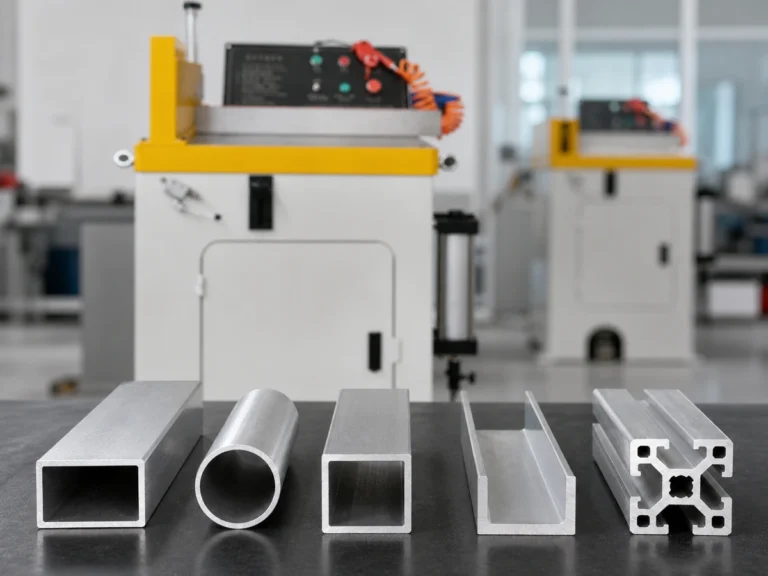
Define the result you expect to receive
Be clear whether the proposed output is a cut member ready for another operation or a component ready for assembly. Include the finished length, end direction, hole locations and fit requirements that apply to the agreed result.
This avoids comparing a cut-only offer with a broader component-processing offer as if they cover the same purchase. Our quote-scope guide explains how to keep included equipment and work clear.
Ask Jiurun to explain the complete route for a representative component. Confirm the actual configuration and covered operations before treating the proposal as a solution for every feature.
Watch: Jiurun JR-455CNC saw reference
Use this JR-455CNC reference when discussing the proposed cutting workflow and the remaining component operations.
Discuss your CNC aluminum saw requirements with Jiurun
Send the complete part, not only its cutting length. Ask for the covered operations and the remaining work to be clear in the proposal.
Machine context: Jiurun brochure, physical PDF page 7, through Catalog & Downloads. The operation scope must be reviewed for the quoted configuration and your finished component drawing.