
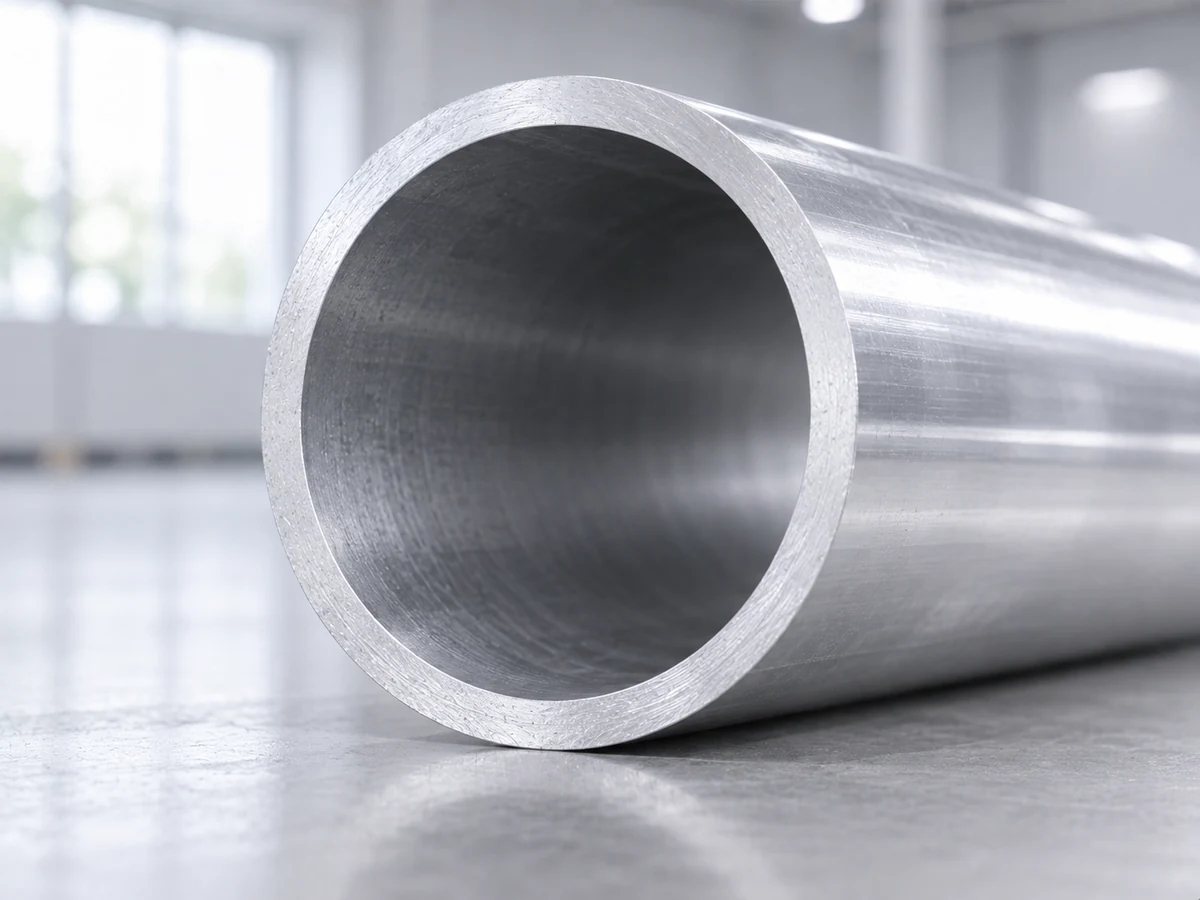
A hollow aluminum tube can leave the saw with a tidy end face and still carry loose chips in its bore. The problem may appear only when an assembler tilts the part, fits an insert, or opens a protected channel later. A clean exterior, therefore, is only one part of cut-piece acceptance. Chips inside hollow aluminum cuts need a separate inspection and handoff decision.
This guide concerns saw-cut aluminum blanks. It does not prescribe a universal cleaning process or certify any pictured section. The approved part drawing, downstream assembly requirements, machine instructions and site safety procedure determine the final method.
Where can a chip remain after the saw cut?
A single open tube is easy to see into near its end, but its full length is harder to judge. Internal ribs, narrow channels, closed pockets and intersecting cavities can hide loose material from a quick end-face glance. Orientation matters too: a chip that stays in place on the bench may move when the part is rotated for packing or assembly. These are reasons to define an inspection, not proof that every hollow extrusion traps chips.
Start with the actual section drawing. Mark each accessible passage and identify the passage that will later accept a fastener, insert, cable, seal or fluid path. If a cavity cannot be viewed or reached by the approved method, record that limit rather than calling the entire part “chip free.” Our hollow-profile section guide explains why outside dimensions alone do not describe the saw-cut workpiece.
Define what the cut part must be ready for
“Clean after cutting” is too vague for a buyer or saw supplier. A part that goes straight to an open fabrication step may have a different acceptance requirement from a tube that receives a close-fitting connector or a sealed component. Ask the downstream team which cavities matter, whether loose particles are permitted, how the part is handled before assembly, and who owns any clearing operation.
Keep the saw trial and the later assembly test distinct. The trial can show the delivered blank, its visible cut face, and a repeatable inspection route. It cannot establish the performance of an unprovided connector, finished assembly or cleaning station. If the customer needs a particle limit or a validated cleanliness level, put the method, sampling plan and responsible party in the specification; do not infer it from an attractive cut-end photo.
How to check for chips inside hollow aluminum cuts
Agree on a representative section, blade, length range and cutting orientation before the trial. For each sampled part, record which end is inspected and which cavities are accessible. View the bore under adequate light with the machine stopped and the part safely removed. If the approved work instruction calls for turning the part, do so over a contained collection area and record whether any loose material appears. If inspection needs a borescope or other tool, define it before quoting the result.
Separate three observations in the trial record: loose chips at the cut end, material found farther inside an accessible cavity, and particles released during the approved handling step. A burr attached to the wall is a different defect from a free chip. Photograph the location with a scale or section reference, but do not treat one photograph as a whole-batch guarantee.
- Relevant cavities: retain the marked cross-section and assembly interface.
- Location of loose material: note the end, cavity and handling position in the inspection record.
- After-cut responsibility: name the clearing, checking and acceptance owner.
- Unverified areas: identify any inaccessible cavity or untested part variation.
Use the same sample definition when comparing a machine or process change. A better-looking face does not by itself show that a deep cavity is clear, and a different length or internal section may change what can be inspected.
Do not turn a cleaning shortcut into a safety claim
Any clearing step needs the site’s approved method, containment and worker protection. Do not reach into a running saw, defeat guarding, or improvise a blast into an occupied area. For US workplaces, OSHA 29 CFR 1910.242(b) restricts compressed air used for cleaning to less than 30 psi with effective chip guarding and personal protective equipment. Other jurisdictions and the actual equipment instructions may impose additional requirements. That rule is a safety boundary, not evidence that air is suitable for this section or sufficient to clear its full length.
Also distinguish chips retained in the part from chips that escape the saw enclosure. The latter calls for a guard and collection-path investigation, as described in our enclosure chip-path guide. A cleaner floor does not establish a clean internal bore.
Put the responsibility into the purchasing handoff
Send the supplier a section drawing, material and temper, requested cut lengths, downstream insert or sealing interface, and the cavity inspection requirement. State whether the quotation covers a saw-cut blank only, a separate clearing operation, or an agreed sample check. Ask for a trial record showing the exact section and handling sequence. If the customer owns a later cleaning or assembly station, name that boundary openly.
The decision is practical: accept the cut blank against a documented, observable condition, then assign any additional cleanliness validation to the party equipped to perform it. This avoids promising an invisible result from the saw alone.
Related JiurunCut machine video
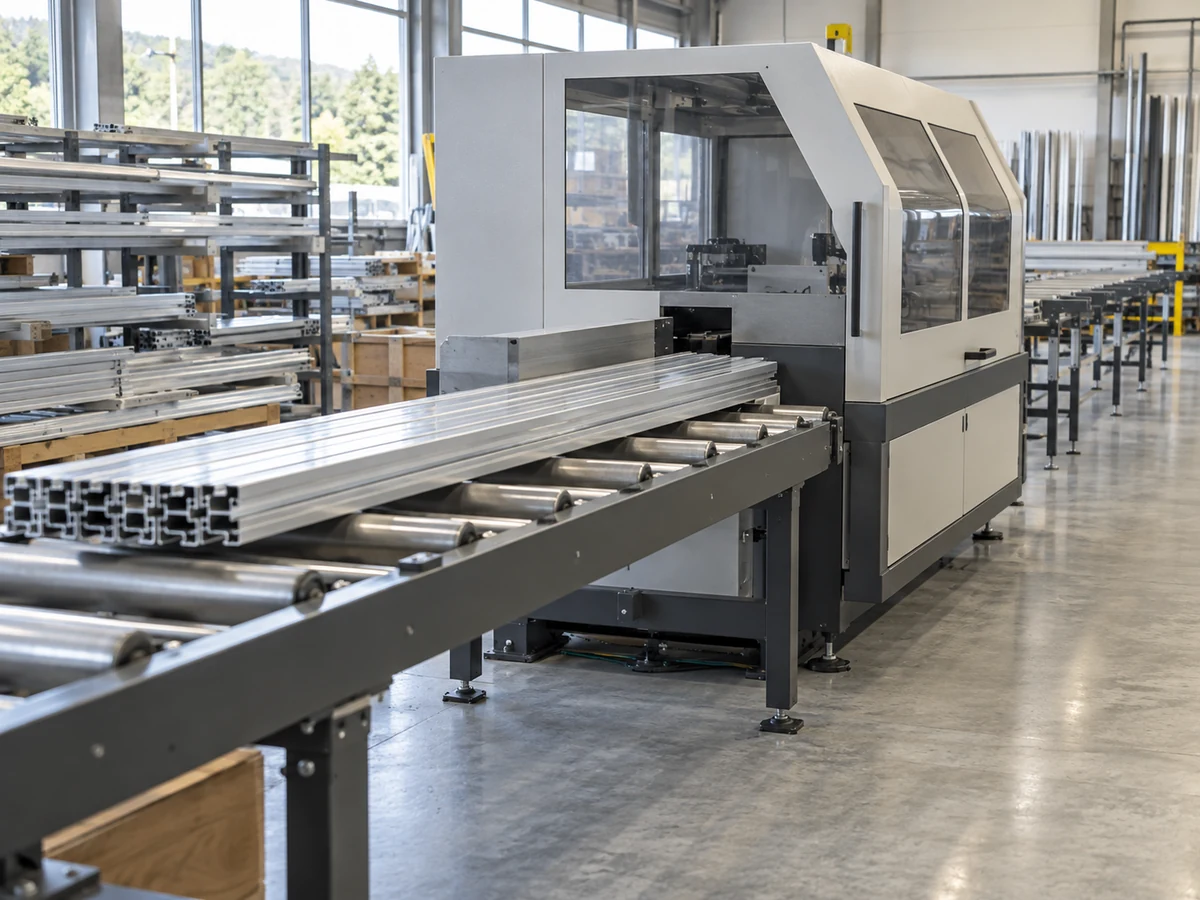
The short video below shows a JiurunCut automatic aluminum saw feeding a long extrusion. It is relevant machine context only. It does not demonstrate this hollow-tube section, an internal-chip check, a cleaning method or particle performance.
What to send for a useful review
Send JiurunCut the profile cross-section, planned cut lengths, downstream fit, and the exact cavity condition you need to verify. We can discuss a representative saw trial and the equipment boundary. Any cleaning or finished-part acceptance method should be agreed with the responsible process and safety teams for the real job. Share your cutting requirements here.