
Bicycle access ramp channel cutting is a supply-stage decision before it is a saw purchase. For a short installation, the approved ramp kit and its documented site-trimming method may already solve the job. A shop-cut blank becomes worth quoting when a manufacturer or system owner has released the exact channel section, end-cap option, joiner arrangement, cut length and receiving checks. Neither route can be chosen from a staircase’s visible length alone.
This guide is for purchasers and fabricators comparing a complete stair-ramp kit, supplier-cut channel pieces and repeatable in-house cutting. It does not provide an installation design or approve any modification to a named product. Use the current product owner’s instructions and the responsible site designer’s requirements for the actual project.
First ask what is being purchased
Three quotations that all say “bike ramp” may cover different deliveries. A complete system includes channel sections, end caps, joining hardware, mounting brackets and the instructions that control how those parts meet. A channel-blank order supplies cut extrusions to an approved list but leaves system hardware and installation to another party. A machine inquiry covers only the proposed cutting operation on representative stock. Put the supply boundary on the first line of the RFQ so bidders cannot price different work as though it were equivalent.
- Complete kit: request the exact product revision, section count, cap choice, joining hardware, brackets and site-installation scope from its supplier.
- Precut members: request the released section drawing, finished cut lengths, end treatments, labeling and who will check fit with the genuine hardware.
- Cutting equipment: provide physical profile samples and a drawing-controlled trial. The machine supplier can assess how the profile is fed, supported, clamped, cut and checked; it cannot approve the stair installation.
For example, Saris Infrastructure’s Bicycle Access Ramp is offered as aluminum ramp sections with associated parts, and the product page says its sections can be cut to length on site. That is a product-specific statement, not permission to substitute a different section or assume every bike ramp should be factory sawn. Cyclehoop’s different Bike Wheeling Ramp also describes custom-length cutting, but its profile, mounting and end details belong to its own system. Do not mix the two instructions.
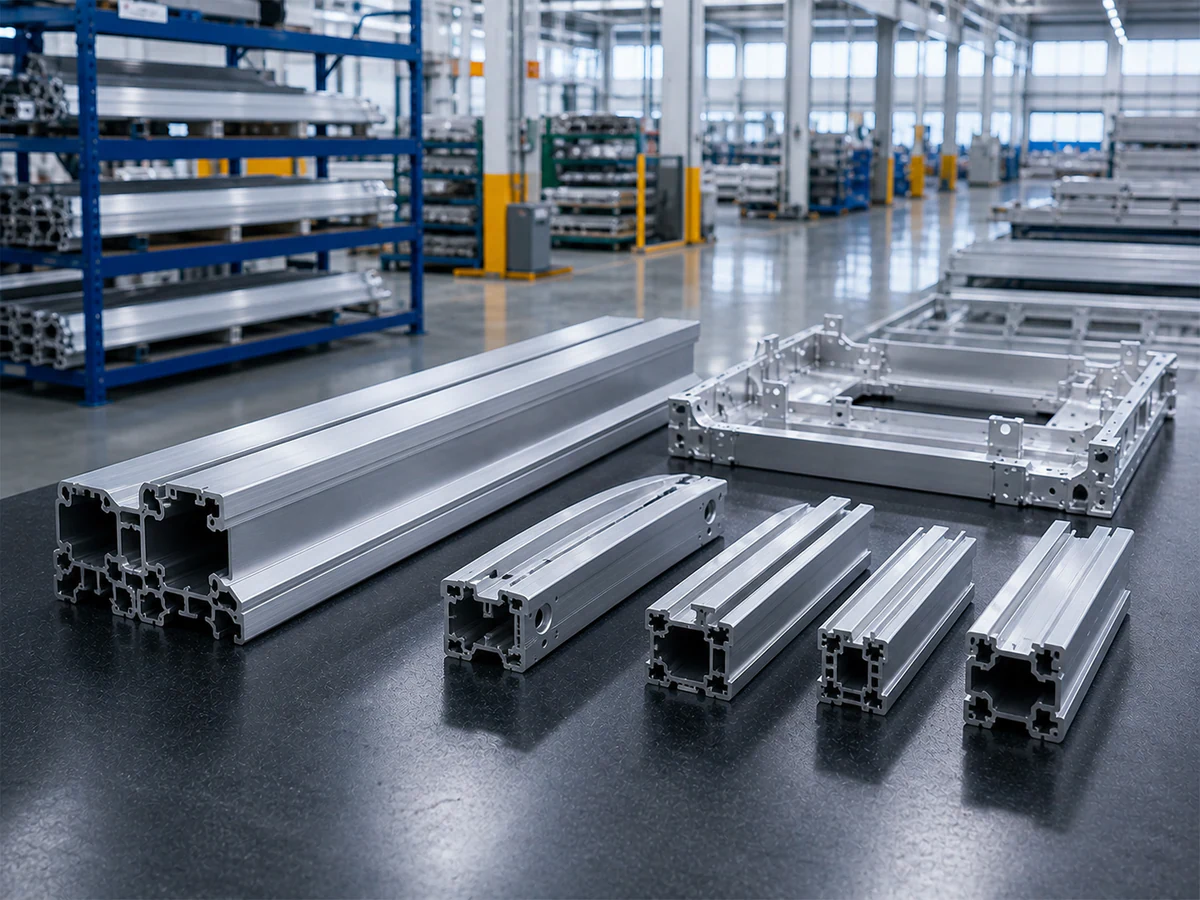
The end cap changes the length calculation
The clearest reason to obtain the current installation guide is that the visible installed run is not necessarily the metal length. The current Saris installation guide distinguishes Standard and Lite end caps. For its Standard end caps, the guide says to subtract 5 inches from the verified installation length to obtain total ramp-channel length. For its Lite end caps, it says not to make that subtraction. An older Bike Fixation guide presents the Standard-cap subtraction without that later option. The lesson for an RFQ is to name the cap type and guide revision before anyone releases a cut list.
Consider the current guide’s own example: a 7-foot installation with Standard end caps calls for a 6-foot-7-inch channel cut. That is not a universal allowance for bicycle access ramps, and it is not a tolerance recommendation. If the kit uses Lite caps, a different product, a revised guide or a project-specific detail, return to that controlling document. Record the measured installation reference, the finished metal length and the source of the conversion in separate fields.
Longer runs add a second decision. The same guide describes an uncut section plus a cut section and a joiner for a longer installation; current product information also lists both 8-foot and 4-foot section variants. Before optimizing yield from stock, identify which supplied section may remain uncut, which piece may be shortened, which ends face the joiner and which cap is used at each exposed end. A calculation that maximizes material yield but leaves the wrong end at the joiner is not an acceptable part.
Site trim, supplier-cut pieces or an in-house saw?
Choose the kit’s documented site-trim route when the volume is small, the supplier permits it, the installation crew has the specified tools and the actual stair measurement is best confirmed at site. The Saris guide calls for an aluminum-suitable chop-saw blade and removal of burrs after cutting. That instruction does not validate another saw, blade, guard arrangement or worksite procedure. The installer and product owner remain responsible for their own methods.
Ask for precut pieces when a released site measurement and approved kit configuration exist and consistent labels, finish protection or repeated identical lengths would simplify the installation. Confirm whether the system supplier will accept an outside-cut channel and how the returned pieces will be checked with end caps and joiners. A shop can produce the right nominal length while still damaging an internal slot, marring a grip surface or losing the identity of a handed piece.
Evaluate an in-house cutting cell only when repeat volume, changeovers and the actual profile justify it. Compare the complete process cost: handling long sections, cut setup, first-off checks, burr removal, protected collection and rework. A saw quotation without those steps can look cheaper while leaving the critical handoff unresolved. If the product supplier prohibits external cutting or will only warrant a complete unmodified kit, stop the equipment comparison for that product.
Release the channel section, not a generic “U-profile”
A wheel-ramp channel can have lips, internal slots, grip material, mating features and finished faces that differ from another open extrusion. Send an end-view drawing and a physical sample of the actual approved section. Identify alloy and temper if controlled by the designer, overall envelope, wall and feature thicknesses, profile bow or twist limits, stock length and finish condition. Mark the wheel-contact face, surfaces that may be clamped, and any preinstalled tape or graphics that must be protected.
The cut-length convention belongs on the member drawing. State whether measurement is between two finished metal faces, between installation references or across a joined assembly. Identify the datum end, the location and orientation of the cut, and the tool-access restriction around slots and lips. If the assembly requires a square end, specify how squareness is checked against the relevant profile datum. If the supplied stock already has a prepared end, state whether it must remain untouched.
A representative sample should answer practical machine questions before anyone promises output: Does it rest stably on the support? Can the clamp contact a noncritical surface without collapsing a lip or marking the wheel path? Can the blade clear all cavities? Where do chips collect? Can a cut piece be removed without striking the finish? These are trial questions, not capabilities inferred from an equipment photo. Our cutting and drilling route guide explains why operations after sawing need their own scope.
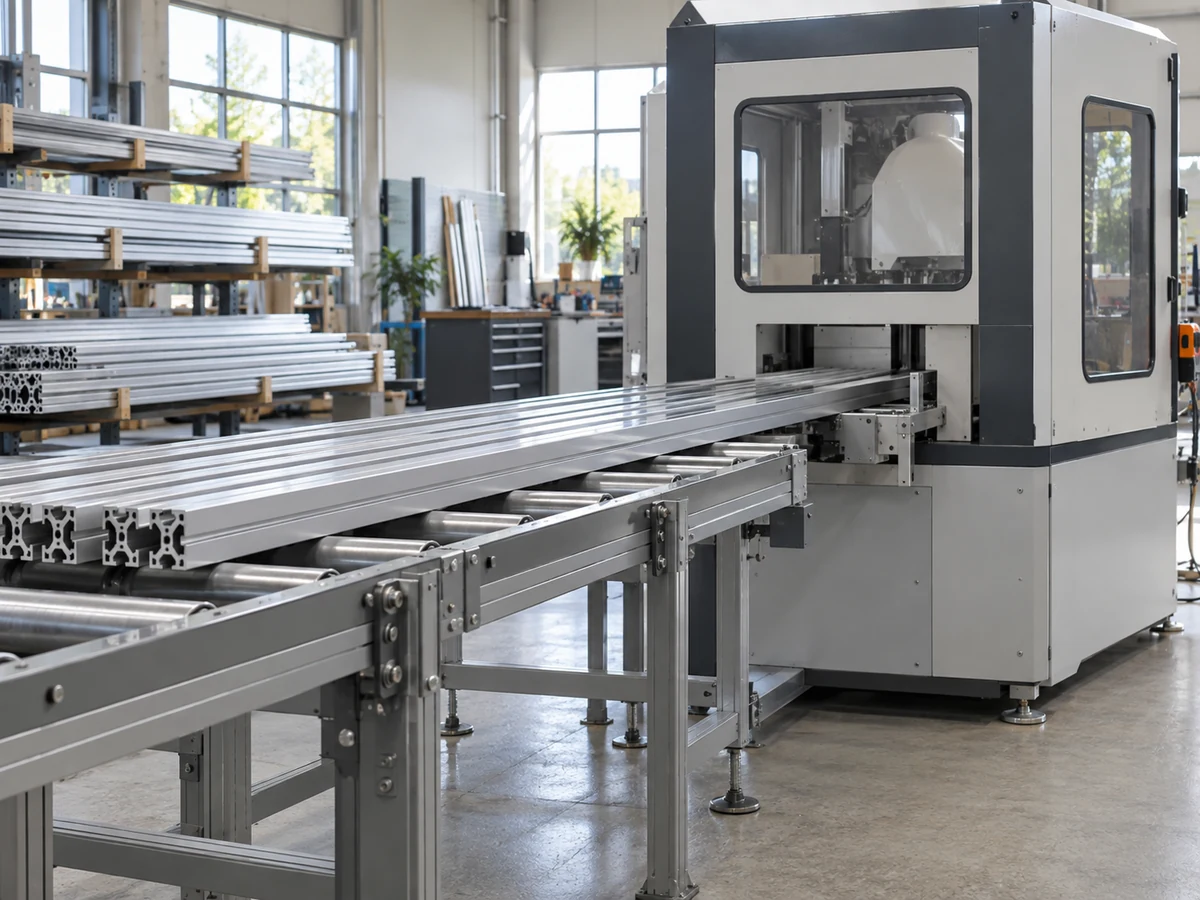
Inspect the end as an interface, not just a shiny cut
For a named kit, acceptance is whether the cut member works with its approved end cap, joining part and bracket sequence. The current Saris guide directs users to remove burrs and align the grip-tape pattern at a joint. It also describes a minimum joiner overlap for that product. Those details show why an end-face photo alone cannot prove assembly fit. The exact kit instructions, not a generic saw specification, control the hardware and installation checks.
Agree on a first-off inspection with the product owner or assembly team. It can include the finished length against the correct cap rule, a square end referenced to the approved face, burr condition on accessible edges, no damage to slots or grip material, cap seating, joiner entry and orientation, and a representative joined assembly. Record which items are measured, which are visual, and who signs off. Do not invent a numerical tolerance from the example length; get it from the drawing or acceptance specification.
If the part needs post-cut drilling, adhesive application, tape replacement, surface treatment or a protective sleeve, list that operation separately with its own owner and inspection point. A machine trial that only produces bare cut stock does not demonstrate a finished compliant ramp module. Our sawing and deburring route discussion is useful when comparing whether edge finishing belongs at the machine or a downstream station.

Bicycle access ramp channel cutting RFQ: separate evidence from assumptions
Send one controlled package to every candidate supplier. The following fields prevent a machine proposal, a cut-parts quote and a complete-kit offer from being silently compared as the same thing:
- System authority: product maker, kit model, drawing and installation-guide revision, approved cut location, Standard or Lite cap choice, and written permission for any external cutting.
- Parts: channel profile ID, incoming lengths, finished lengths with datums, end orientation, quantities by length and expected mix per batch.
- Interfaces: actual end cap and joiner samples, bracket locations that affect cutting or handling, grip tape and finish protection, and any post-cut operation.
- Process: site or shop cut, proposed saw and blade only after sample review, support and clamp concept, burr-control step, labeling and packing.
- Acceptance: first-off sample count, measurement method, assembly-fit checks, acceptable cosmetic condition, disposition of rejected pieces, and the party who releases the next batch.
For a repeat order, request the supplier’s response as a trial plan rather than an unsupported cycle-time claim. The plan should say which exact stock will be tested, how changeovers between lengths will be handled, what sample outputs will be inspected and what conditions would require a different fixture or cut sequence. If the actual approved extrusion is unavailable, call the trial preliminary and keep machine suitability open.
What a related machine video can show
The following video from Jiurun Machinery’s own channel shows an aluminum cutting machine in operation. It is a useful view of feeding and sawing as general process steps. The pictured machine and material do not establish suitability for a bicycle access ramp, a specific kit, a named product revision, end-cap fit, cut quality or production rate. Those claims require an approved channel sample and an agreed trial.
Make the purchasing decision in the right order
If you need one stair run, obtain the approved kit and follow its current measurement, cap and cutting instructions. If you need repeated released parts, ask whether the system owner accepts supplier-cut blanks and specify the complete first-off interface check. If you manufacture authorized channel modules at volume, compare cutting equipment only after the actual profile and hardware can be trialed. That sequence protects the application decision while giving the saw supplier a concrete job to quote.
JiurunCut can review the cutting stage when you provide the approved extrusion drawing, a physical section, target finished lengths, batch mix and acceptance requirements. Send the profile and production target for an engineering discussion. Product approval, installation design and site safety remain with the relevant system owner and responsible professionals.