
A tube can leave the saw at the specified length and still refuse to seat in the manifold. For a battery cooling plate tube, a neat cut face is only the first handoff. The plate designer must still confirm how the tube end enters its manifold, how the assembled envelope is measured and which later operations make the coolant path tight. A buyer who asks for “cold plates cut to length” without naming that boundary may receive the wrong part, even if the saw performs its cut correctly.
This guide is for a released design that uses separate extruded multiport aluminum tubes joined to manifolds. It is not a recipe for designing a cooling plate or a claim that every battery plate is made this way. Setrab, for example, lists both extruded-tube and stamped-plate architectures. A separate case study from Power Products International describes an extruded base plate with welded manifolds. Those routes create different cut parts and different inspection duties.
First decide whether the drawing contains a separate tube blank
Ask the plate supplier or design owner for an exploded view and bill of materials before selecting a cutting machine. In a multiport-tube design, the saw may cut individual flat extrusions; the manifold supplier prepares receiving openings; assembly, brazing and leak testing follow elsewhere. Fiter-Auto describes just such a route: tubes are cut to different lengths, manifold insertion features are prepared, tube insertion and overall assembly size are checked, and the core then proceeds to brazing and leak testing. That is one manufacturer’s route, not a Jiurun production claim.
If the design instead starts with a one-piece extruded plate, a stamped pair, or a purchased fully tested cold plate, the part presented to a saw may be different or there may be no separate tube-cutting job at all. Identify the physical incoming stock and the exact outgoing unit: long extrusion, saw-cut tube, cleaned tube ready for assembly, or complete pressure-tested plate. A purchase order should name one of these stages. The same word “plate” cannot substitute for a part number and release drawing.
The manifold can reject an otherwise clean cut
At the joint, the assembler cares about more than the number shown in the cut-list length column. The approved manifold groove, tube insertion depth, end-face condition and finished overall assembly dimension have to work together. A length measured from the wrong face can change how much tube is available to enter the manifold. Excess burr or local wall deformation can keep an end from seating as intended. A damaged port mouth can complicate the next operation. None of those observations proves a leak or predicts thermal performance by itself; they identify checks for the responsible assembly team.
Request a section view of the tube and a separate joint detail showing the manifold opening and measurement datums. Label the tube’s long direction, the face used for cut-length measurement and any finish or clad surface that must be protected. Do not copy a generic tube picture into an acceptance drawing. The actual number, shape and wall thickness of the ports come from the approved section, while the allowed end form and insertion condition come from the joint specification.
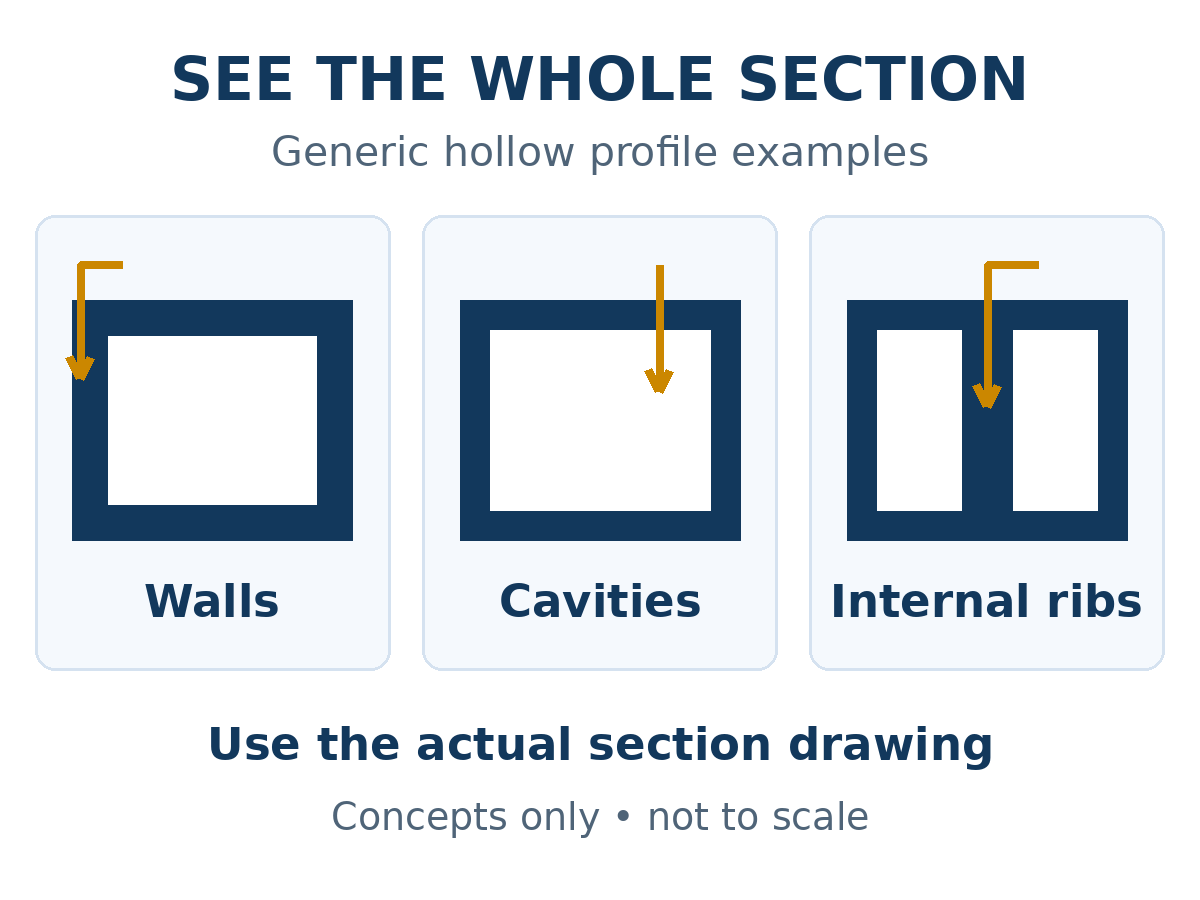
Release the battery cooling plate tube against assembly dimensions
The design owner should distinguish the tube blank length from the finished plate envelope. They may be related through insertion allowances, manifold geometry, end caps and later processing, but there is no universal subtraction that a saw vendor can infer from a product photograph. Put the released tube length, datum faces, tolerance, drawing revision and responsible approver on the cut instruction. If one plate uses several tube lengths or handed parts, identify each separately so that a batch cannot be mixed merely because the sections look alike.
Then mark the operation boundary. Is the saw responsible only for a square cross-cut? Does a second station deburr the end, clean the passages or protect the cut tube for transport? Who owns groove punching in the manifold, insertion, brazing, welding, flatness checks and leak testing? A saw quotation should state what is included and what remains with a downstream processor. For header material rather than individual tube stock, the decision changes; see our microchannel heat exchanger header cutting guide for that different part boundary.
A drawing revision should travel with the stock and accepted sample. A revised manifold joint may change the required blank even when the tube’s outer section has not changed. Before repeating a run, compare the current tube and manifold drawing revisions with the approved cut list. That simple check is more useful than relying on a previous nominal plate size.
Inspect the end before it enters someone else’s process
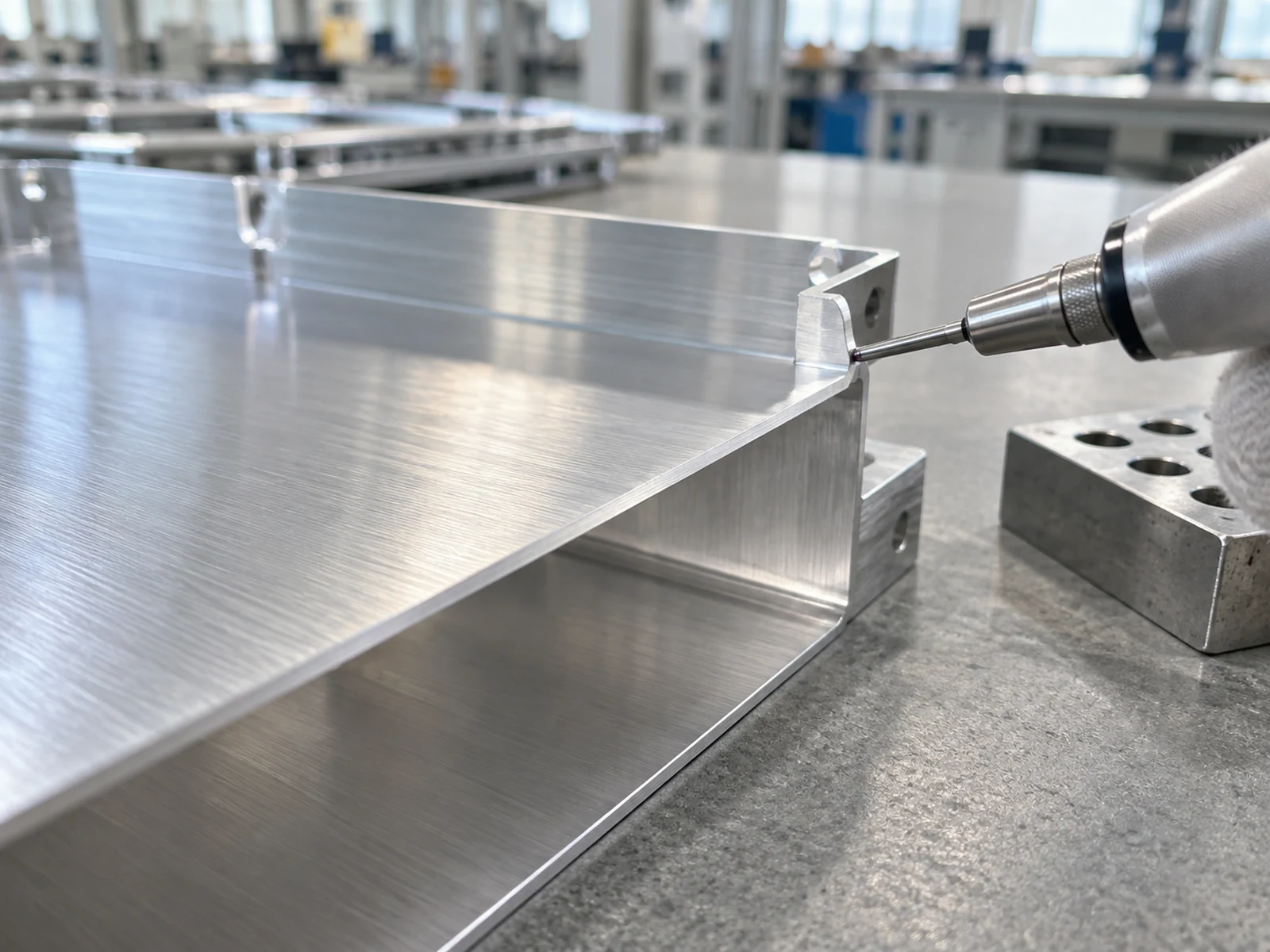
A first-off check should show the full cross-section, not only a ruler on the outside edge. Look at whether the thin walls have stayed in the required shape, whether the port openings and cut face meet the drawing’s criteria, and whether burrs or chips are left where the next process cannot accept them. Measure length against the specified reference, then repeat after any deburring or cleaning that can alter the contact point. Record the method and acceptance limit supplied by the design owner rather than inventing a universal burr, squareness or cleanliness limit.
The handling route matters too. A flat, multiport extrusion may have a visible or functional face that cannot be crushed by a clamp. Short blanks can have less available holding length; long stock may need support at the feed and outfeed. Ask the saw supplier to demonstrate the proposed fixture on representative stock and check the first, last, shortest and longest parts required by the real cut list. Review a cut sample under the agreed inspection conditions. A clean example on unrelated solid bar is not evidence for a thin-wall multiport tube.
Witness the saw trial without claiming a finished cold plate
For a useful trial, bring the approved tube extrusion or an explicitly representative sample, the released section and joint drawings, and the proposed receiving and measuring plan. Show the machine operator where the usable clamping faces are and which surfaces must remain protected. Witness stock presentation, clamping, the cut and part discharge. Retain enough samples to compare the start of the run with later pieces. If the design requires cleaning or a further end operation, identify who performs it before the assembler accepts the tube.
The following video from Jiurun’s own YouTube channel shows a Jiurun automatic aluminum saw and its cutting area. It is a general equipment view that helps a buyer discuss stock presentation, guarding and cut access. It is not a battery cooling tube trial, a verified fixture for this section, or evidence of any quoted configuration’s accuracy or throughput.
If the plate manufacturer has a real mating manifold available, that team can use it for a separate trial fit with the sampled tube. Keep the two records distinct: the saw vendor can report cut-blank condition under its agreed test; the assembly owner decides whether the end seats in the joint and whether later joining and pressure tests pass. Do not turn a dry trial fit into a claim that the final coolant circuit is sealed.
Put the release evidence with the party who can judge it
Before ordering production capacity, ask who signs off each stage. The saw-cut blank needs its own drawing, lot identity, length and end-face inspection record. The assembly needs insertion and overall-size acceptance. The finished cooling plate needs its specified joining, dimensional and leak-test release. Fiter-Auto describes these as later, separate steps in its process. Jiurun can discuss saw selection and cut-blank trials for supplied aluminum stock; the cooling-system designer and plate manufacturer retain responsibility for the final thermal and pressure requirements.
Compare a cut-tube supply quote with a complete-plate quote only after both suppliers state the same handoff stage, quantities, inspection responsibilities and downstream work. A cheaper tube blank is not a substitute for an accepted plate, and a finished-plate price does not tell you whether an in-house saw is justified. Use your actual tube families, cut lengths, annual mix and receiving criteria to make that decision. For the broader application context, see JiurunCut’s new-energy vehicle aluminum cutting overview.
If you have a released multiport section and manifold joint drawing, send JiurunCut the tube cut list, stock dimensions and acceptance method. We can review the saw and fixture questions for the aluminum blank. The plate maker should approve insertion, joining and completed cooling-plate tests.
Sources for the design and process distinction: Fiter-Auto multiport tube cooling plate process; Setrab battery cooling plate architectures; Power Products International extruded plate case study. These manufacturers’ examples explain possible routes; they are not Jiurun customer projects or machine-performance evidence.