
Banner stand pole cutting starts with a compatibility question, not the height printed on the artwork. A retractable banner stand may use a telescoping mast, a clutch or twist lock, a base socket, and a top rail connection. The graphic height and the erected display height describe the customer-facing display; neither is automatically the saw length of an inner or outer aluminum tube. For an OEM or an approved replacement-part fabricator, the safe purchase order is a model-specific pole assembly or an approved component drawing that names each blank and its finish stage.
This guide is for buyers preparing a production RFQ, not for cutting an unidentified retail stand to a guessed dimension. A manufacturer replacement-pole listing illustrates why compatibility and included parts need to be stated: even a pole sold for named banner-stand families may exclude another component. Check the actual approved stand and revision before transferring any dimensions or locking details into a tube order.
First decide what the supplier must deliver
Ask whether the purchase is for a complete compatible pole, a replacement upper or lower section, a cut-only blank, or a finished kit ready for assembly. Those are different commercial items. A cut blank may still need deburring, coating, drilling, swaging, insertion of fittings, and assembly inspection by another party. A complete pole must also fit the stand’s base and top rail and lock over its working range. If the drawing calls for parts after surface treatment, make clear whether the quoted cut length is measured before or after that process.
Record the stand manufacturer, product family, exact model, version and any approved drawing revision. Include an intact sample or controlled CAD and a written parts list when available. The product’s graphic format alone does not establish tube outer diameter, wall, profile, overlap or connector geometry. A retractable stand example has a telescopic pole alongside its cassette and graphic system; it is an example of a system, not a universal pole specification.
Banner stand pole cutting needs a part-level cut list
Separate the dimensions into four fields: printed graphic height, erected stand height, collapsed or packed pole length, and the finished length of each tube section. Add the functional overlap at the minimum and maximum approved extension. The cut list should identify the inner and outer member, quantity per stand, material and temper if specified, cross section, nominal outer and inner dimensions, wall, end condition, and tolerance that the OEM has approved. If a pole is not round, do not substitute a nominal round tube because it looks close in a photograph.
For a telescoping pair, the inside fit is affected by more than nominal diameters. Coating thickness, tube straightness, ovality, seam position, burrs and any formed end can change how the lock moves. Define the acceptance method on actual mating samples and the drawing’s datum faces. Avoid promising a generic clearance or overlap number: it depends on the stand design and its load path. Our separate telescoping tube overlap guide addresses the general tube issue; this RFQ also has to protect the banner stand’s cassette, clutch, top rail and shipping interfaces.
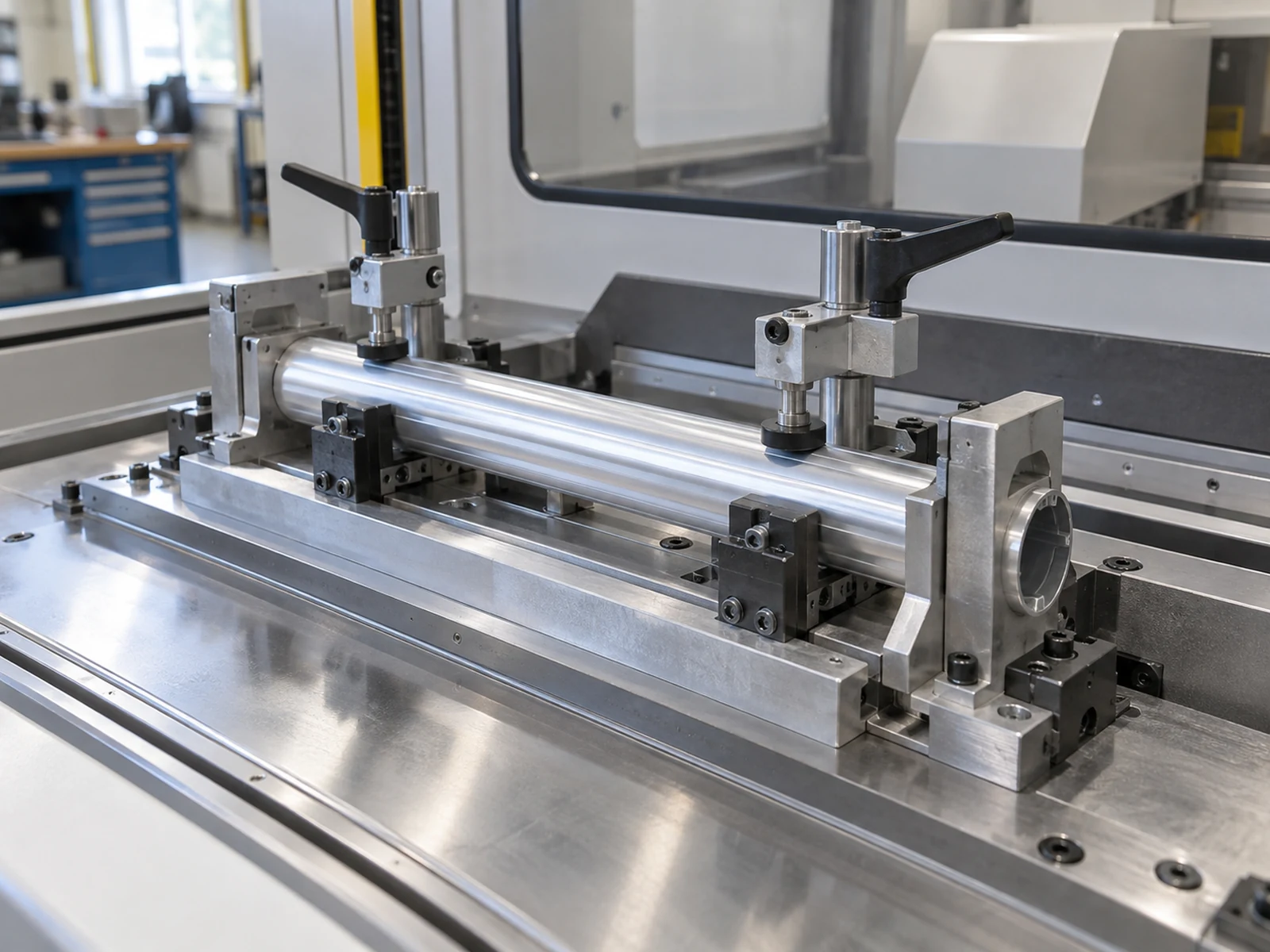
Protect the stand interfaces before choosing a saw
Mark which tube end enters the base socket, which supports the top rail, and where the clutch, twist lock, plug or sleeve engages. A replacement pole that has the right overall height may still fail to seat in the base or grip the graphic rail. Specify the insertion depth, stop position and orientation only from the approved design. If the stand uses a formed, drilled or fitted end, a saw alone cannot supply that finished feature. State which operation and which supplier owns each interface.
It is also useful to label the ends on the drawing rather than writing “two identical cuts.” The saw datum and the assembly datum may differ. If a component has a bevel for a specific design, document it; if it requires square ends, write that explicitly. An angle-cut sample is not a substitute for a square-cut mast blank.

Plan cutting and handling around the approved blank
The production plan should start with a small approved sample and the actual tube stock. Check that the stock can be supported along the infeed and outfeed, located consistently without crushing a thin wall, and released without dragging a cosmetic surface against hard stops. Ask the cutting supplier how it will identify inner and outer members, segregate revisions, measure the finished length and check the end for burrs or distortion. A method statement is more useful than an unsupported claim of speed or universal accuracy.
For quantities, define how first article, in-process and final samples will be selected. A practical acceptance sheet can record the measured length against its datum, the end condition, visible surface damage, and a trial fit with the approved mating part. If no mating component is available, flag fit validation as an open responsibility rather than assuming that dimensional inspection proves the assembled pole will work.
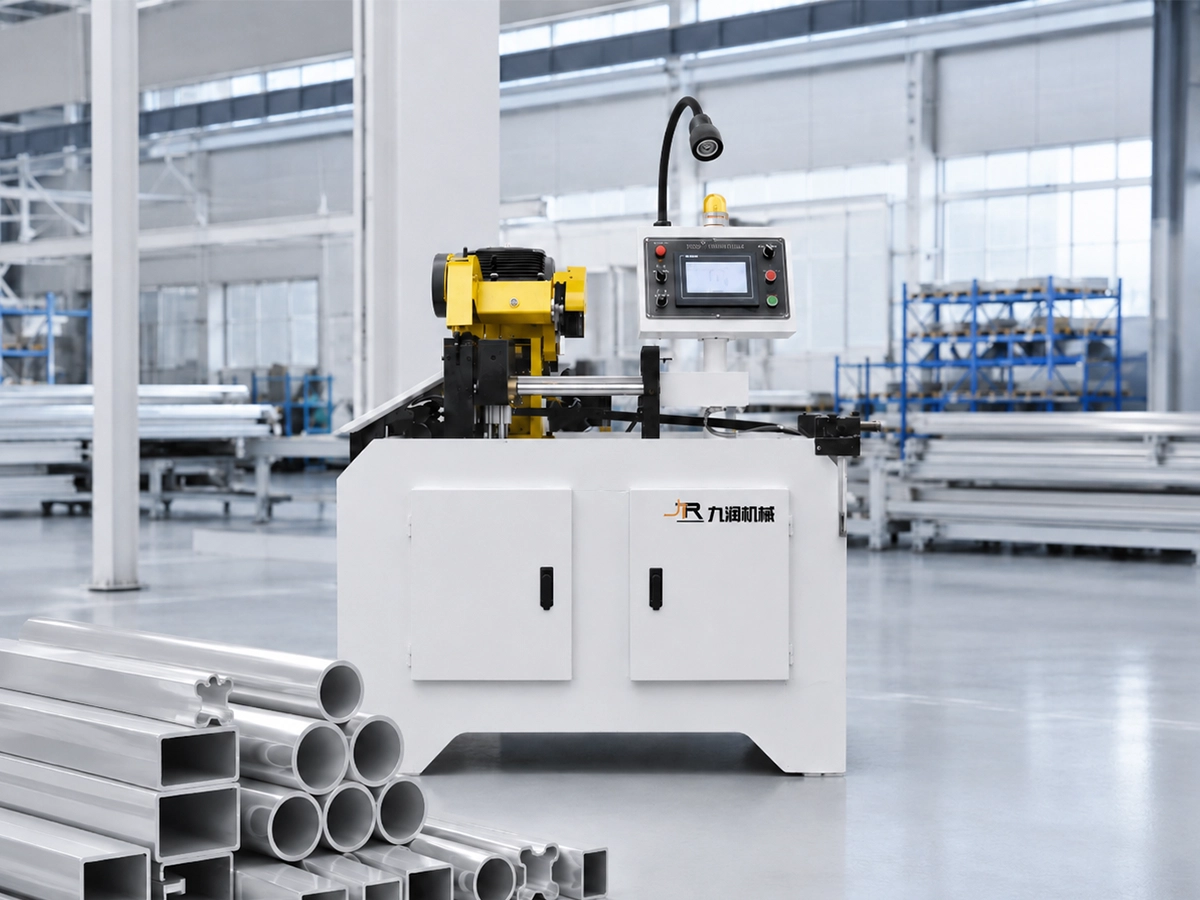
The video below shows related Jiurun cutting equipment in operation. It is an equipment illustration from our own channel; it does not show the banner-stand pole, a selected model configuration, a customer order, or performance evidence for this application.
Package the order so a second batch can be repeated
Put the article description on the order line: stand family and revision, inner or outer member, approved blank drawing, quantity, cut length and datum, end geometry, surface state, inspection standard, packaging and delivery stage. State whether fittings and locks are supplied by the buyer or installer. Protect exposed ends and finished surfaces during packing, and label bundles by part number and revision. A batch of visually similar poles is easy to mix if the inner and outer sections or successive design revisions are unmarked.
For a complete replacement pole, compare the actual collapsed package length with the stand’s storage area and carrier. For a cut-only blank, verify that the next operation has enough material and can identify the assembly end. This avoids buying a correct-looking tube that cannot become the approved pole after downstream work.
RFQ checklist for OEM and approved fabricators
- Identify the retractable stand model, revision and whether the order is for a complete pole, subassembly or cut blank.
- Provide separate drawing lines for inner and outer members, with quantity per stand and approved material, section and finish.
- Separate graphic height, erected height, collapsed length and each actual tube cut length.
- Mark assembly datums, base-socket and top-rail interfaces, lock engagement and end geometry.
- Define who owns deburring, coating, forming, drilling, fittings, assembly and fit verification.
- Agree on first-article evidence, measurement records, cosmetic protection, batch marking and revision control.
Send the approved pole drawing and sample description with the RFQ. Review Jiurun’s aluminum cutting equipment range if you are selecting a cutting process, then ask for a configuration review against the actual stock and required operations. No image or video in this guide establishes that any particular Jiurun machine has been qualified for your banner stand.