
An RFQ that names only a door width is not yet a cut list for an aluminum saw. The deliverable might be a bare aluminum carrier, an assembled seal shortened under the seal maker’s instructions, or a fitted door set that must still close and seal. Those three purchases have different owners and acceptance tests. For automatic drop seal cutting, decide which item is being delivered before asking a saw supplier to quote a cycle.
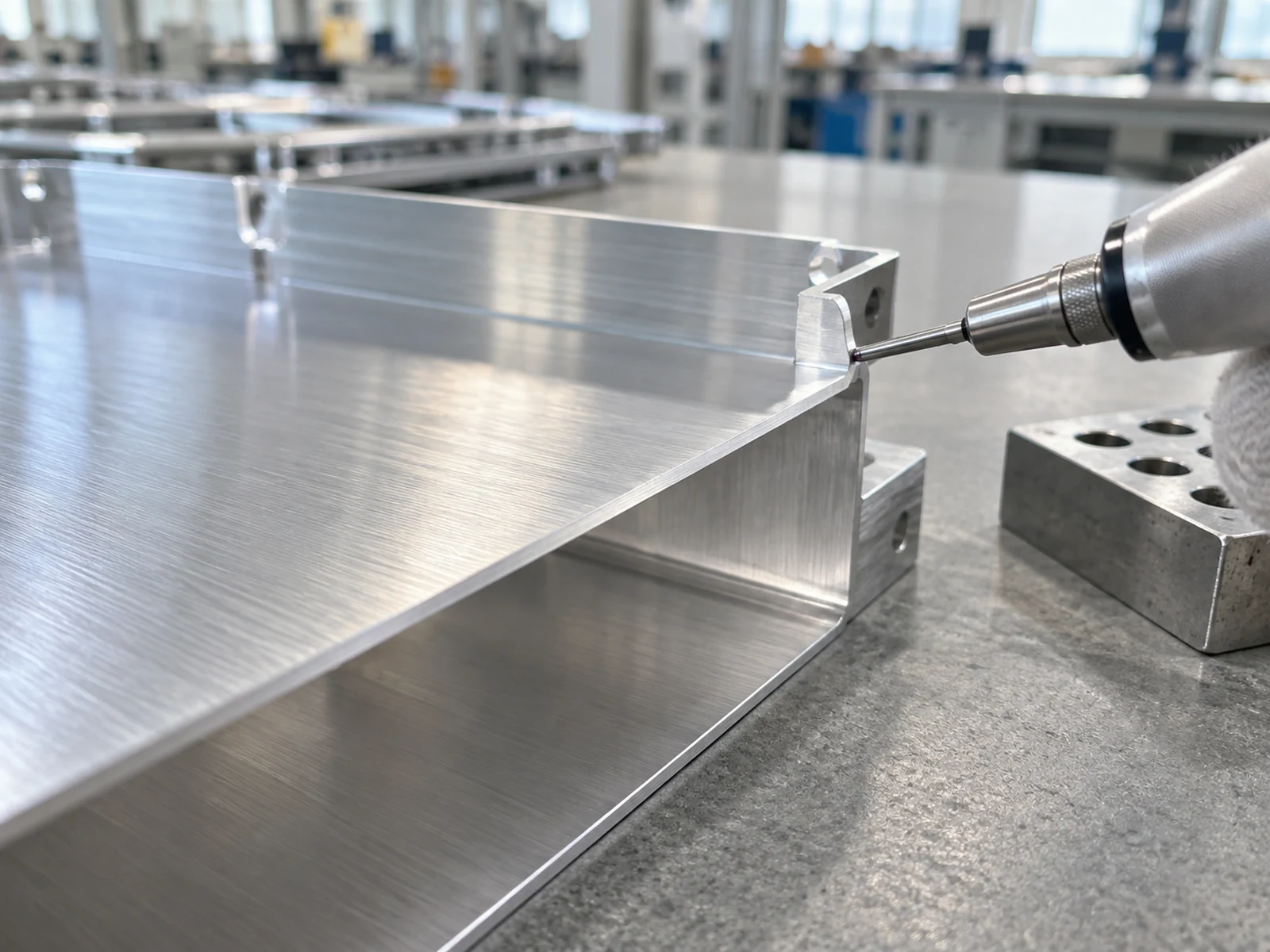
Automatic drop seal cutting starts with scope
An automatic drop seal is a small system, not merely a length of extrusion. A typical product may combine an outer aluminum casing, an inner rail, a soft gasket, an actuator, springs and end plates. The parts do not necessarily finish at the same length. If the buyer only needs bare carrier blanks for its own assembly line, the aluminum section drawing, cut length, end condition and quantity can define a saw trial. If the buyer needs a shortened complete seal, the chosen seal maker’s fitting guide controls the allowable end, cut-back range and reassembly. If the deliverable is a fitted door, closing, latching and sealing remain door-system checks beyond a bare aluminum cut.
For example, Lorient’s LAS8001M fitting guide directs cutting the aluminum sections at the end opposite the actuator after pulling back the gasket, then removing debris and refitting the gasket. It also gives model-specific minimum cut-back lengths. A different Lorient guide for LAS8040 describes removing the inner assembly and shortening multiple components, with limits on how much can be removed from each end. These are examples of why a generic “cut 100 mm off” instruction is unsafe as a purchasing specification. They are not instructions for another make or proof that a Jiurun saw can cut either assembled product.
Use a three-column release brief
Before a quotation, ask the buyer, seal OEM and cutting supplier to sign off on three different records:
- Metal blank: exact carrier profile revision, alloy/temper if specified by the OEM, starting length, cut datum, allowed end condition, and the surface or slot that must remain intact.
- Seal assembly: product and revision, actuator end, permitted shortening direction and limit, gasket/inner-rail treatment, swarf removal and end-plate refit. Obtain these from the actual seal OEM’s current instructions.
- Installed door: target door width and clearance, hardware and threshold combination, installation responsibility, and a functional opening/closing check. Any fire, smoke or acoustic claim belongs to the approved door-and-seal system documentation, not to a saw-cut photograph.
If one column is missing, quote that stage conditionally. A saw supplier can assess a representative bare carrier without accepting responsibility for the full mechanism or the door’s certification. Conversely, the seal OEM may permit field shortening of a complete unit without implying that production sawing of its assembled internals is approved.
Trial the bare carrier without hiding the end detail
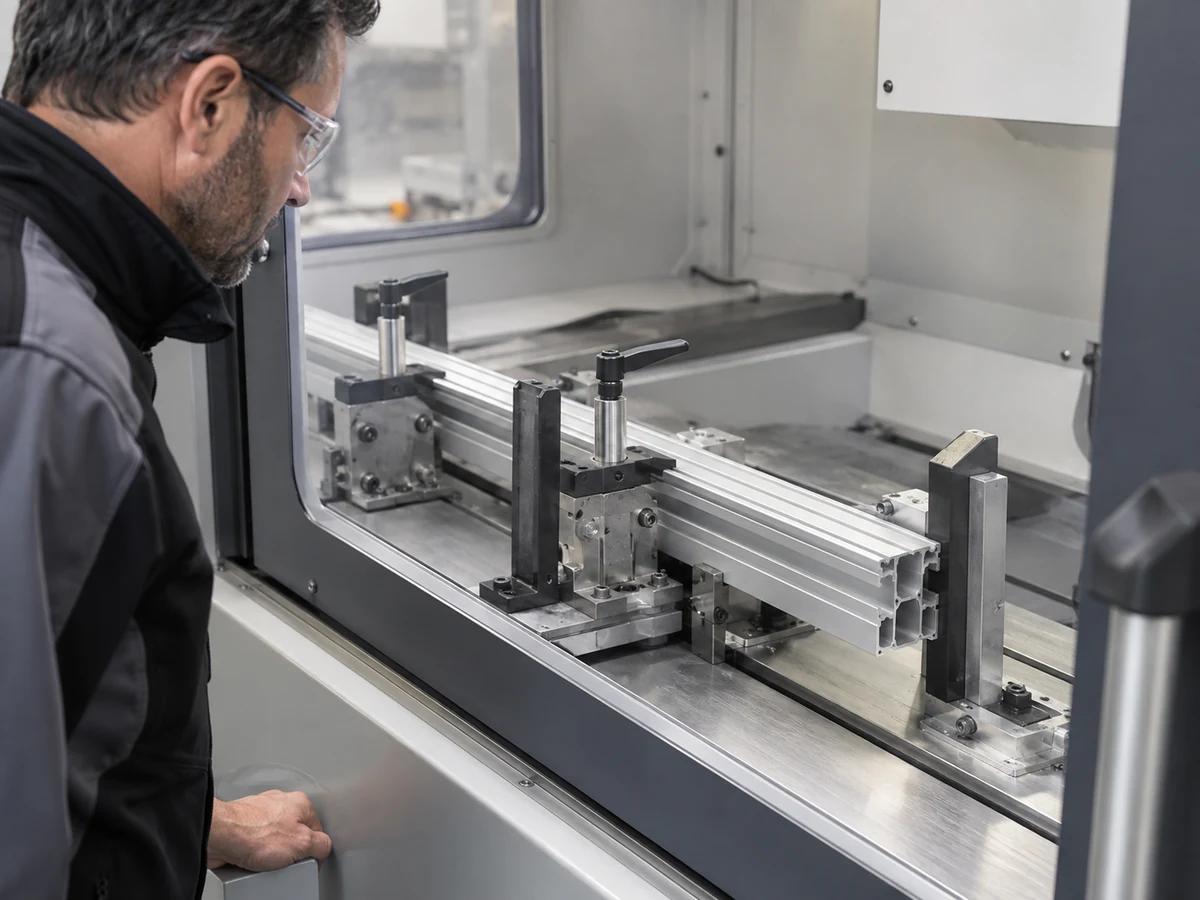
For automatic drop seal cutting of bare carriers, send actual stock and a marked cross-section to the saw supplier. A narrow open or hollow section can present a different support and clamping problem from the generic profile in a machine brochure. At a witnessed trial, identify the face used as the datum, contact points, orientation, protected groove or lip, and the end features that later receive an end plate or moving component. Inspect the released part, rather than treating a displayed length alone as acceptance.
Agree how to check length, end squareness, edge damage, burrs and chips in a mechanism path. Use the actual drawing or approved sample for limits; this article supplies no universal tolerance or machine setting. If a cut end needs deburring or cleaning, name who performs it and whether that operation changes the final length. Compare more than one representative carrier and keep the accepted setup with the quote. The garage-door bottom-seal retainer guide concerns a simpler retainer supply route; an automatic mechanism adds OEM-specific shortening and functional questions.
Do not transfer a cut-back rule between seal models
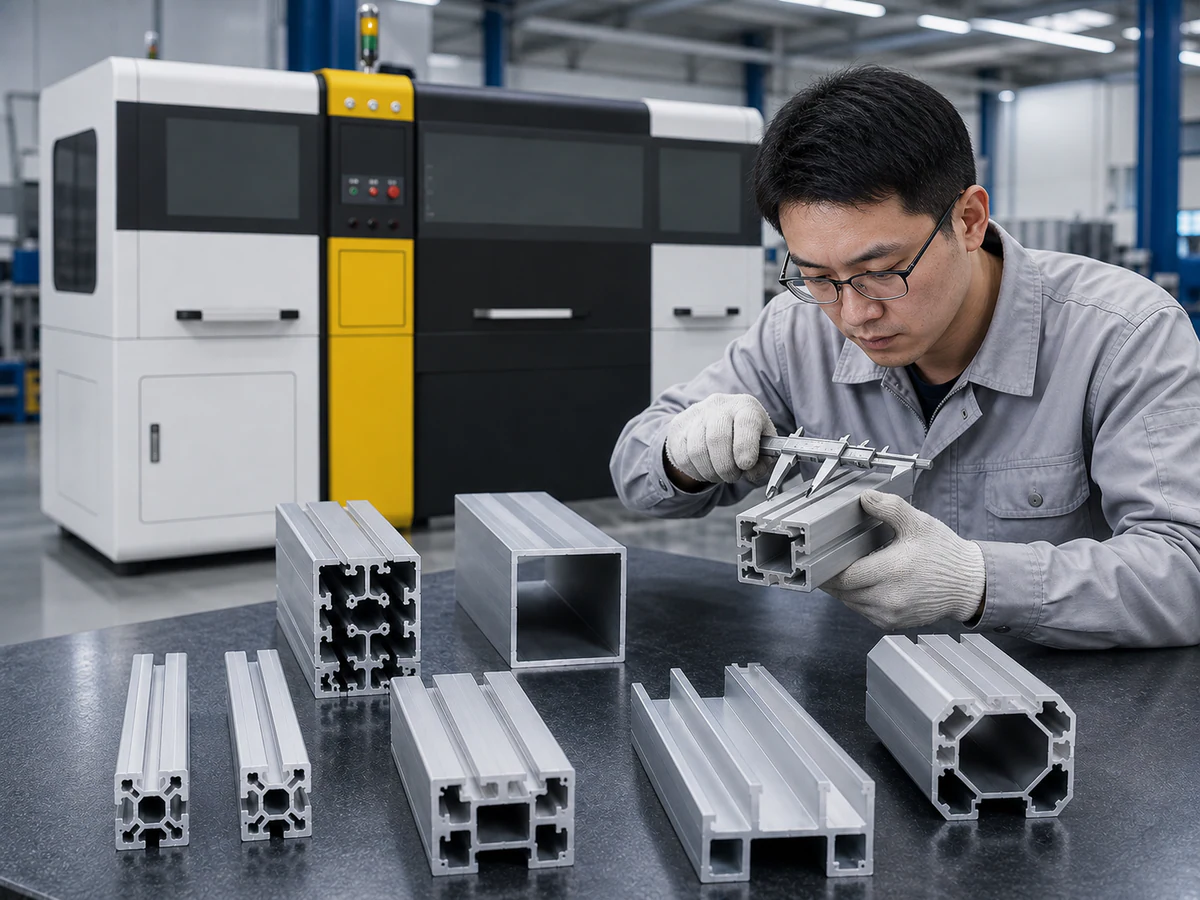
The Lorient examples demonstrate a practical purchasing trap: the “same” requested door width can require different original stock lengths, different components to shorten and a different protected end. One guide’s cut-back table cannot be copied to another model, even within one brand. The quote therefore needs the exact seal identity and current fitting instruction, not only a photograph of a silver aluminum strip. If the buyer changes the seal model after machine selection, reopen the cut method and fixture review before production approval.
For an assembled seal, obtain the OEM-approved work sequence and have the responsible assembler verify actuator travel, gasket seating and end-plate fit after shortening. Keep a record of which end was cut and the resulting finished length. Do not infer fire, smoke or acoustic compliance from that functional check; the applicable system approval must be confirmed separately by the responsible door or seal specialist.
Ask for a quote that states its boundary
A useful RFQ says either “saw-cut bare aluminum carrier blanks” or “shorten and reassemble the named automatic drop seal under the current OEM guide.” It lists the profile drawing or complete product code, actual sample, intended lengths and mix, cut-end acceptance, chip-cleaning responsibility, and who approves the finished mechanism. Request a trial only for the scope the supplier can actually demonstrate. For broader door-frame work, see our window manufacturing saw-scope guide.
Related equipment footage
The video below is from Jiurun Machinery’s YouTube channel. It shows a related aluminum cutting equipment view only. It does not show a drop seal, this carrier profile, a specified fixture, a customer sample, or a verified cut-back or door-performance result.
Send the exact part before selecting the saw
For an automatic drop seal cutting inquiry, send JiurunCut the bare carrier drawing and samples if that is the proposed job. If a complete automatic seal is involved, include the seal maker’s current product code and fitting guide and name the party responsible for assembly and door acceptance. Ask for a written, witnessed cut-stage result against that brief. That evidence can support a machine quotation without turning a generic equipment demonstration into approval of the finished seal.