
Garage door bottom seal retainer cuts look simple on a purchase order: one long aluminum extrusion for each door. The finished result depends on more than a saw length. The approved door section, seal-foot shape, mounting arrangement, end condition and service route all affect whether a cut retainer belongs in a usable kit. An RFQ should separate the cut blank from the seal, bottom bracket, installation and finished weather performance.
This guide is for a manufacturer or authorized parts supplier ordering straight aluminum retainer blanks for a released garage-door system. It is not a retrofit instruction, seal-design specification or approval to replace a manufacturer’s controlled component. Do not use it to remove bottom brackets or work on door springs and cables; those decisions belong to the door maker and qualified service personnel.
Define the part before the cutting operation
Clopay describes a replaceable vinyl bottom weather seal held in an aluminum retainer on one of its door families. Its seal guide distinguishes bottom seals, threshold seals and perimeter weatherstripping, and notes that track or retainer geometry must suit the replacement seal. Those examples establish a useful purchasing distinction; they do not establish dimensions for a different maker’s door or authorize interchangeable parts.
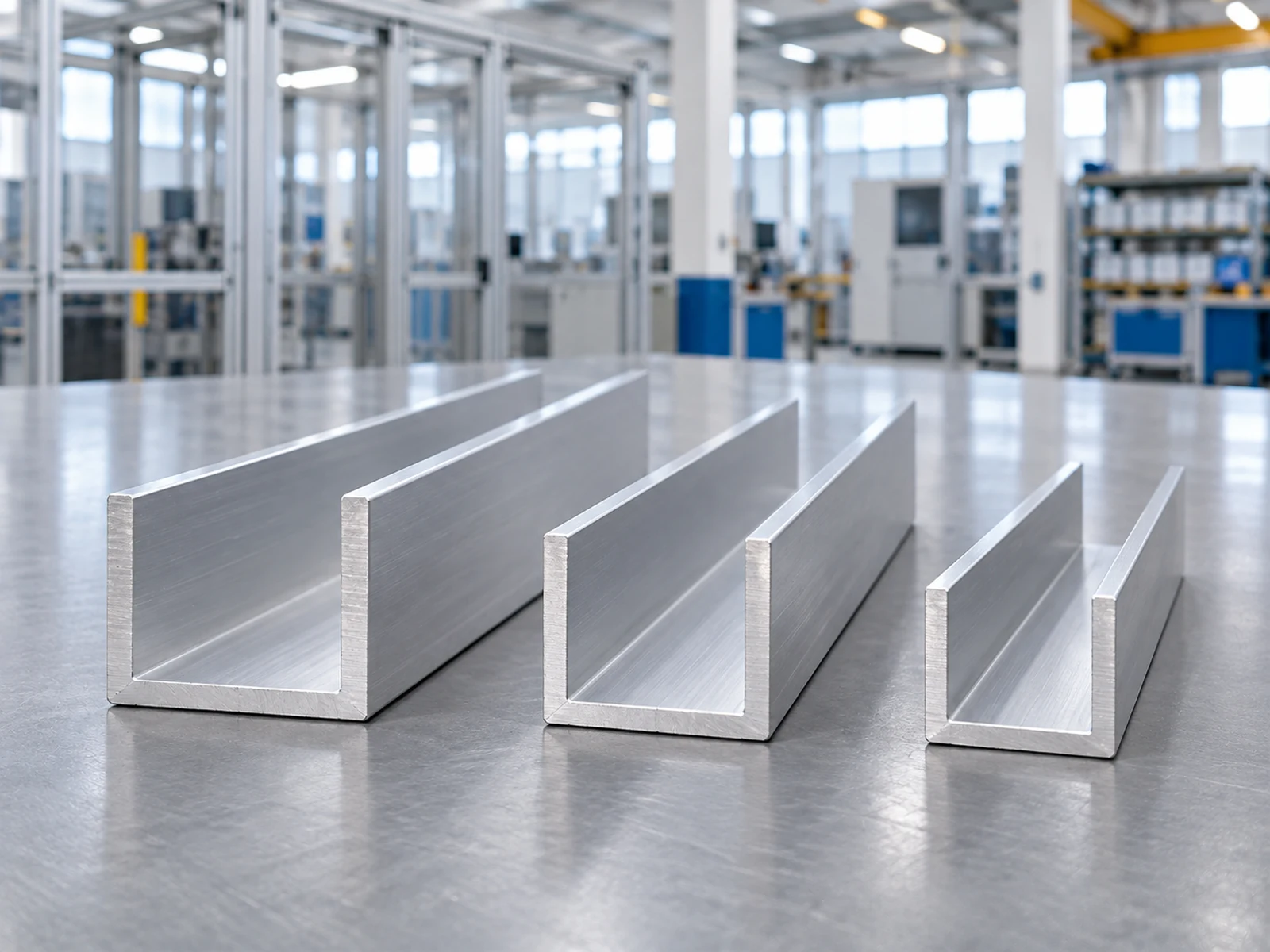
Seven RFQ checks for garage door bottom seal retainer cuts
1. Name the approved door and retainer section
Give the door family, model or project reference, released drawing revision and exact aluminum retainer section code. Provide the mating bottom-seal identification separately. A generic U-channel photo cannot prove that a bulb, T-end or other seal foot will stay in a specified channel. If the supplier receives customer-owned extrusion, identify its lot and surface condition; if it supplies material, state the authorized section, alloy, temper, finish and certificate expectations from the approved drawing.
2. Define the purchase unit and excluded work
Is the unit one straight saw-cut blank, a drilled and deburred retainer, a retainer with seal inserted, or a complete bottom-door service kit? State who provides the flexible seal, fasteners, end caps, brackets and packaging. A cut-only price should not silently include drilling, installation, replacement of worn door parts or an in-service water test. A buyer comparing quotes should ask every supplier to price the same accepted unit and operation list.
3. Release the length datum and end treatment
Specify the cut length from a named datum on the extrusion, with tolerances from the system owner. Identify whether the order calls for a square end, angled end, end notch or later field trim. Show left and right orientation if the ends differ. The nominal door width is not automatically the aluminum cut length: end clearances and mounting details are design inputs, not assumptions for the saw operator. State whether the installer or factory assembly team will make any final adjustment.

4. Protect the seal channel and visible finish
Mark the seal-engagement channel, mounting face and any visible surface on the actual profile drawing. Agree which edges need deburring and how chips, burrs or deformation will be judged. The saw clamp must support the supplied section without crushing a narrow lip or marking a finished face. Ask for a representative trial on the released extrusion and finish; a general machine video does not validate this channel or its retention features.
5. Separate inspection from seal-performance claims
Define first-piece and batch checks for length, end squareness or specified angle, burr condition, channel damage and finish. Use the buyer’s approved gage or measurement method at the named feature; avoid inferring a seal fit from an outside-width caliper reading alone. A sample seal engagement check may be useful if the system owner authorizes it, but the saw supplier’s passing cut does not certify water resistance, air leakage, door closing or installed safety.

6. Assign the later door-system work
Record who drills mounting holes, inserts the flexible seal, fits any end caps, controls bottom brackets and checks the completed door. Keep garage-door service and installation out of a cut-blank acceptance statement. The finished door’s safety and weather behavior depend on the original system and installation conditions; neither a straight extrusion blank nor a cut trial proves those outcomes. If the maker controls replacement parts, obtain its approval before substituting a different retainer section.
7. Label and pack by door order
Set whether retainers ship individually, by door pair, or as labeled sets for a multi-door project. Label the approved section, drawing revision, cut length, order or door position, finish and lot. Protect long lengths from bending and keep the seal channel free of loose chips and packing debris. At receiving, compare each label and first-piece report with the released schedule before sending material to assembly or service.
Example quote line and evidence request
For garage door bottom seal retainer cuts, the approved section and receiving unit should stay visible on the quote, trial record and package label.
“Supply straight saw-cut aluminum bottom-seal retainer blanks from buyer-approved section GDR-12 Rev C. Cut to the attached door-position schedule using the marked length datum, deburr specified ends without damaging the seal channel, and label each blank by door order. Flexible seals, drilling, bottom brackets, installation and finished-door performance checks are excluded.” The identifiers are illustrative; replace them with your real approved documents.
Request the actual profile drawing, incoming-stock condition, member schedule, acceptance sheet and a representative first-piece trial. Ask the supplier to record its operation scope and receiving unit so a cut-only quote remains comparable with a completed kit quote.
General aluminum saw equipment view
The video below is from Jiurun Machinery’s own channel. It shows a general aluminum saw, not this garage-door retainer, approved setup, customer order, trial or seal performance.
For a cutting-scope review, contact JiurunCut with the approved profile and cut list. A suitable saw trial should use the real section and acceptance criteria, with door-system installation and performance verified by the responsible parties.