
Aluminum tube end caps need a fit review based on the actual tube section and the selected cap or plug. The tube’s outside size is a useful starting field, but it does not identify its wall thickness, internal shape, cut-end condition or available insertion space.
Keep four checks in the order: product type, tube geometry, end and finish condition, and installed delivery requirement. Confirm the selected product with its supplier on representative supplied tube. A plain end cover, a tube insert and a load-carrying foot should retain their separate identities.
On this page
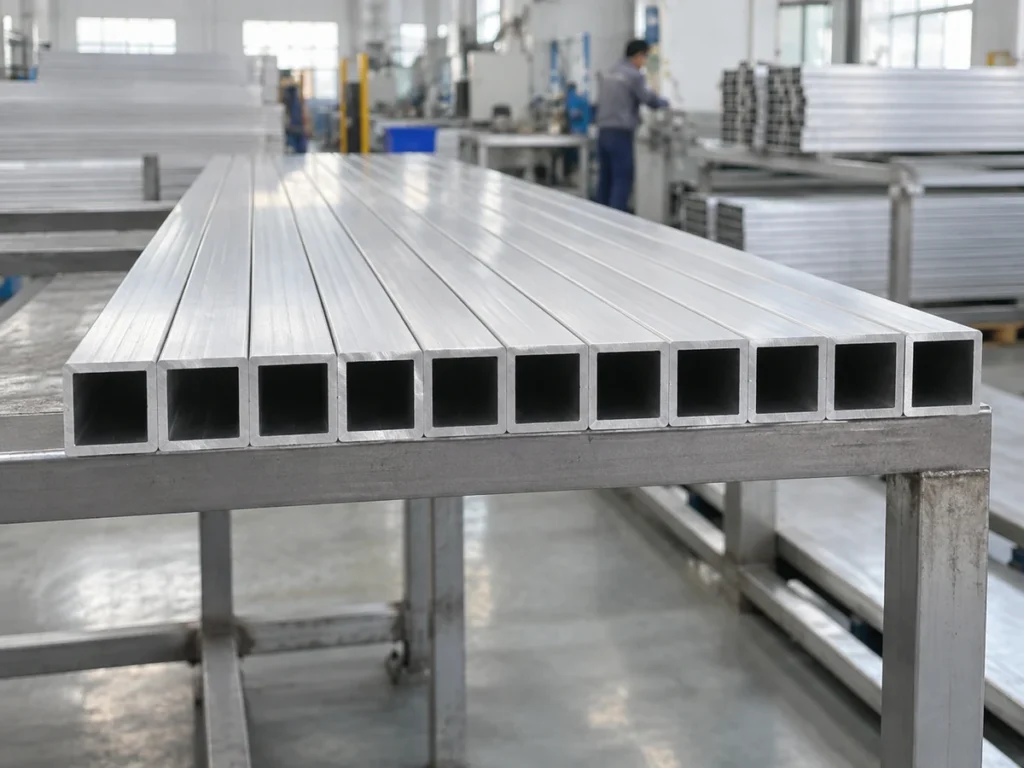
Aluminum tube end caps: identify the component’s function
State whether the end component is for temporary protection, a permanent visual finish, a furniture contact surface or another defined function. Identify whether it fits over the tube, enters the opening or uses a different interface. Keep the intended service requirement with the responsible product owner.
The Caplugs SQR series page describes square plugs with tapered external ribs that grip inside the tube and accommodate specified variation in tubing gauges and internal dimensions. This describes that product family; it is not an approval for every aluminum tube or every end-cap function.
Essentra’s square tube insert glide range includes ribbed and straight-wall designs. It lists furniture and appliance glides alongside compatible tube size and wall-thickness fields. Retain the actual selected product’s identity and relevant fit information.
A plain cosmetic cap should not be relabeled as a rated foot or a sealing component. If the application needs load support, environmental sealing or another specific behavior, request the appropriate product and evidence. A visually closed end does not establish that performance.
Check tube size and internal geometry together
Provide the full section drawing, not just “square tube” or “round tube.” Retain the outside dimensions, wall requirement and relevant internal features. For a rectangular section, keep both dimensions and the cap orientation visible.
Essentra’s range provides separate fields for compatible tube size, maximum wall thickness and compatible tube gauge. Those separate fields are a useful reminder that outside size alone does not complete the selection. Use the selected product’s actual drawing and fit range rather than borrowing a value from a nearby catalog row.
Consider a fictional square tube with 40 mm outside width. If opposite walls are uniformly 2 mm thick, the simplified distance between the inside flat faces is 36 mm. With 3 mm walls, that distance becomes 34 mm. These invented dimensions explain the geometry only; they do not select a cap or describe an actual product’s tolerance.
That arithmetic does not describe the internal corners or a ribbed profile’s available cavity. Provide the actual corner geometry and any internal webs, bores or other features. A plug designed for a plain hollow section should not be assumed to fit a multi-feature extrusion with the same outside outline.
For round tube, keep the specified diameter and wall requirement with the relevant actual section information. The tube-dimensions guide explains the separate identification of outside, inside and wall dimensions. Do not select a plug from a pipe-size name without resolving the actual tube dimensions.
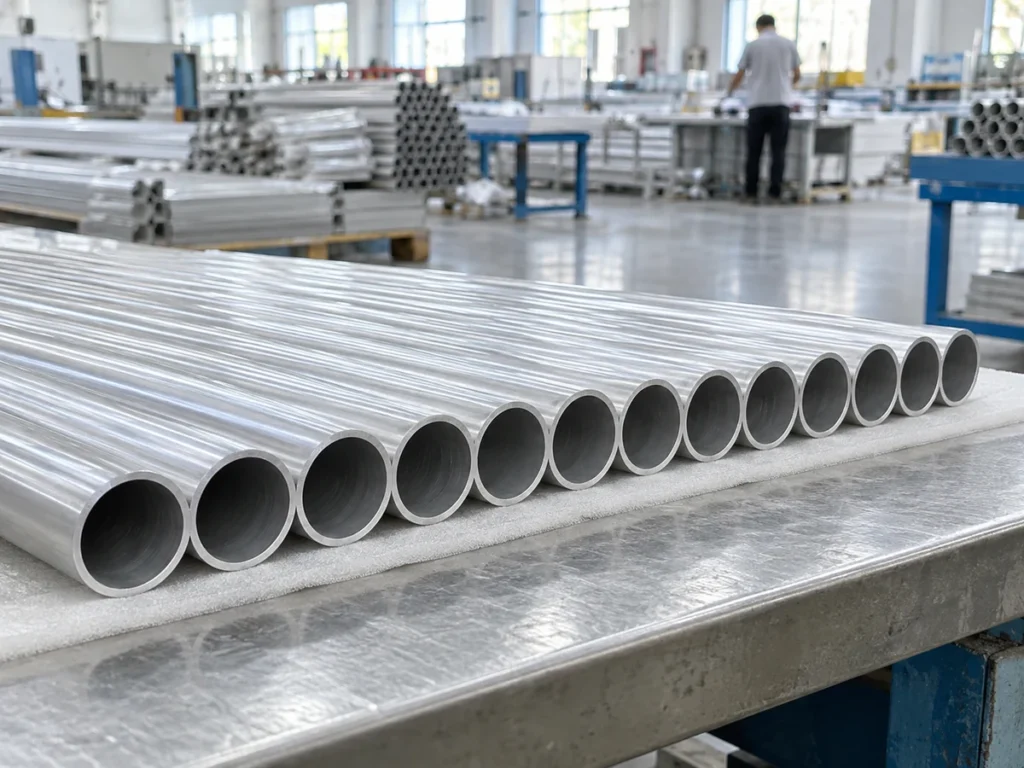
Retain cut-end and finish requirements
Specify the cut-end condition required before fit evaluation. Identify the relevant end angle, edge treatment and acceptance reference. Keep any later end machining visible in the route. Do not assume a cap conceals every cut-end difference acceptably.
The selected cap may contact the end face, enter the cavity or cover outside surfaces. Ask its supplier to identify the relevant interface and installation requirements. Provide representative tube in the actual supplied finish and processed state.
Keep the finish stage in the record. A sample reviewed before finishing may not represent the delivered condition. If the tube will be anodized, painted or otherwise treated after cutting, identify which stage applies to the required fit check.
Use the deburring and chamfer guide for the separate definition of edge requirements. Do not prescribe an unapproved chamfer just to force a plug into an uncertain opening. Resolve the selected product and actual geometry first.
If insertion meets unexpected resistance, retain that observation and ask the responsible supplier to review it. Avoid treating increased force or an improvised installation method as evidence of correct fit. Use the product’s applicable instructions and the agreed component requirement.
Define what installed delivery means
State whether the customer receives uncapped tube, tube and loose caps, or caps fitted to the specified ends. Identify the number of capped ends per component and any difference between end A and end B. Keep an orientation or handed requirement visible.
| Order field | Information to agree |
|---|---|
| Product | Selected cap or plug identity and intended function. |
| Tube | Full section, wall requirement, finish and drawing revision. |
| End interface | Specified cut end, insertion space and applicable preparation. |
| Delivery | Loose or installed, required ends and agreed fit-review evidence. |
Keep any projection beyond the cut tube in the assembly drawing. If the installed cap changes the completed component’s outline, retain that relationship when defining the saw-cut blank. The furniture-frame cut-list guide explains why accessories and overall dimensions need separate references.
Assign fit acceptance to the agreed specification or supplier confirmation. State the observations or measurements required for the particular function. This article supplies no universal insertion force, retention load, gap or sealing limit.
A fictional same-size comparison
Suppose tube order P24, revision C, has two section variants with the same nominal outside width and different wall requirements. The buyer requests one cap type for both. These are invented purchasing conditions, not a catalog selection or an accepted batch.
Retain each section’s actual identity and ask the cap supplier to review both. A product may have an applicable fit range, but do not assume that range from its name or appearance. Keep the supplier’s product-specific confirmation beside the corresponding section.
Now suppose the order needs 50 components, capped at both ends. That requires 100 installed positions. A quotation for 100 loose caps includes the same component count but a different delivery stage. Identify who installs them and what finished condition is reviewed.
If revision D changes the wall or adds an internal feature, review the cap interface again. Keep earlier stock and any previous confirmation tied to revision C until the change is resolved. A matching outside width does not make the new section identical.

Keep a useful fit-review record
Record the tube section and revision, supplied material and finish, cut-end preparation, selected cap code and the stage at which it was evaluated. Retain the applicable product information and the agreed acceptance reference.
Photograph the actual reviewed interface when useful, with its identity attached. A photograph helps communicate the visible condition, but it does not establish a hidden dimension, rated foot capacity or environmental seal. Keep the relevant evidence for the required function.
Preserve any change in cap material, product code or tube finish. Ask whether the previous review still applies to the changed combination. Do not overwrite the old identity with the new one in the same sample record.
Prepare the cutting inquiry
Send the approved tube section, cut list, required end condition, finish stage and representative incoming stock. Include the selected cap drawing where it affects the blank or end interface. Identify which cap questions remain with the component supplier.
Ask JiurunCut to review the tube-cutting and handling requirement. Use the contact page to share the section and end requirements. Keep cap selection and application approval with the responsible supplier and design team.
Buyer questions
Does the same outside tube size guarantee the same end cap?
Retain wall thickness, internal geometry and the selected product’s fit information. Outside size alone is incomplete.
Can a decorative plug be used as a furniture foot?
Identify the intended function and obtain the appropriate product information and approval. Do not infer a load-support requirement from appearance.
Should the cap fit be checked before or after finishing?
Use the agreed delivered condition and the relevant processing route. Identify the actual stage in the review record.
Are a hundred loose caps equivalent to fifty capped tubes?
They represent the same count only if two ends per tube are specified. Installation, tube scope and completed acceptance still differ.