
An OEM asks for aluminum squeegee channels cut to the catalog length. The metal pieces arrive at that number, but the rubber is trimmed on a different bench and the assembled tool is checked by yet another measure: the width that actually wipes glass. A saw quotation cannot settle those three dimensions with one line saying “cut to length.”
Aluminum squeegee channel cutting is a plausible stock-preparation job for an industrial circular saw only after the buyer identifies the approved extrusion, the cut-stage output and the part that will be accepted after assembly. The channel on a commercial squeegee is one component of a tool. Ettore’s aluminum channel with rubber, for example, combines a grooved aluminum member with a replaceable rubber blade and a handle. That product illustrates the interfaces a buyer must investigate; it does not establish the dimensions or saw setup for another manufacturer’s channel.
Define three aluminum squeegee channel lengths
First define the metal blank length between its two cut faces, including the datum and any permitted end variation. Next define the rubber strip length and how it is positioned relative to those faces. Finally define the assembled wiping span or another functional measure that the finished-tool drawing actually uses. The three values may be related, but the purchase order must not assume they are identical.
- Metal channel: the saw operator can measure this directly on an approved cut blank.
- Rubber insert: the assembly operation owns its cut, seating position and replacement rule.
- Finished tool: the product team owns the acceptance of the handle, rubber and channel together.
A nominal size on a sales page is not a substitute for those drawing dimensions. The buyer should request the actual component drawing and one approved assembled sample before setting a saw tolerance. If only a complete squeegee is purchased, a dedicated saw quotation may have no relevant in-house cutting job.
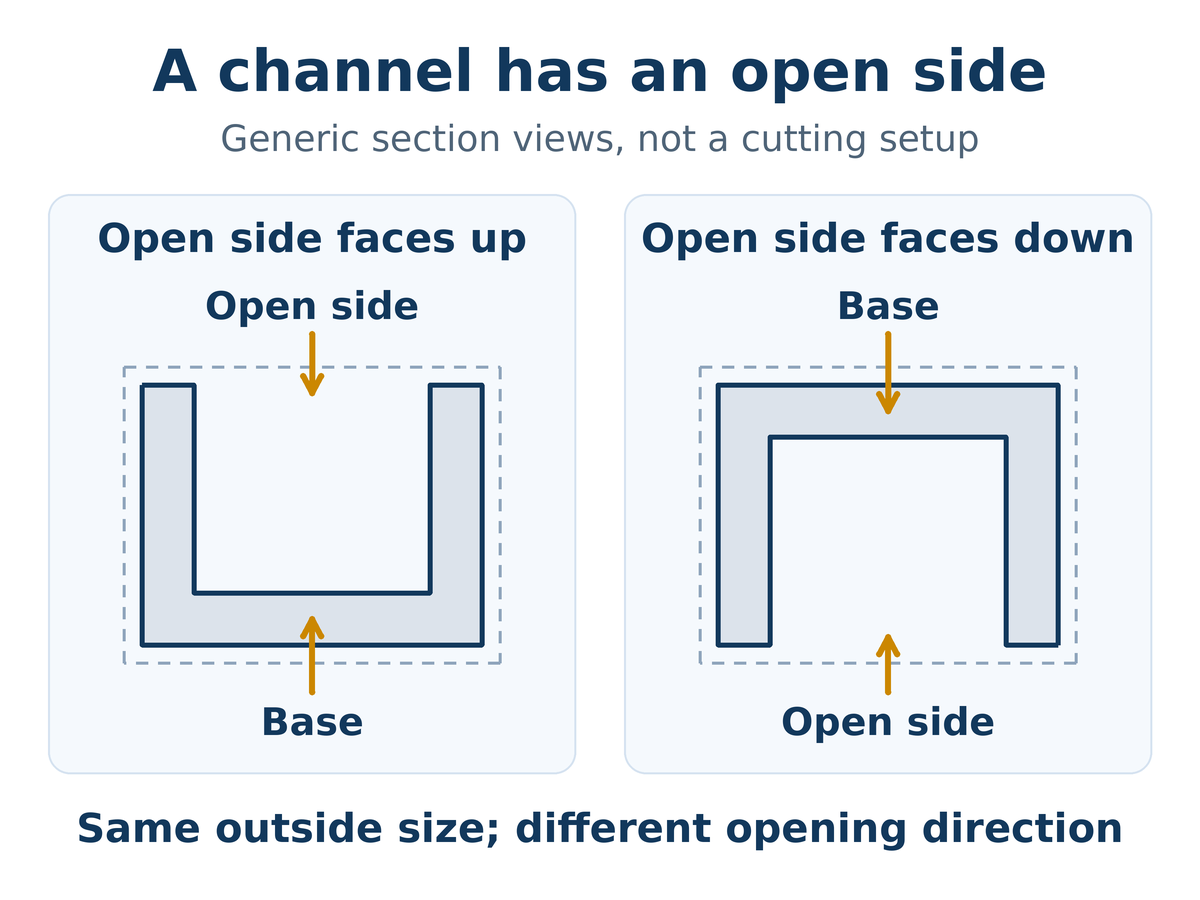
Lock the channel family before discussing clamping
Different commercial designs use different channel and handle interfaces. Ettore describes its Super Channel as a wider aluminum design and identifies a quick-release conversion kit for handle use. Its end-clip instructions show another possible way of retaining rubber. These are examples of product architectures, not a claim that all squeegee channels have clips or use the same groove.
Give the saw supplier a section drawing for the exact extrusion to be processed. Mark the surfaces that may contact a clamp and the faces that must remain free for the rubber, clip or handle. An open lip may require support so the saw does not deform it, but the support method has to be proven on the actual stock. A generic U-channel photograph cannot define that fixture. For a related profile-geometry discussion, see JiurunCut’s J-channel cutting guide; its return-lip example is a different product.
Separate a clean metal cut from an assembled-tool result
A first-off inspection should check the metal blank against its drawing: length from the named datum, end condition, visible damage to the groove or lip, and the stated finish requirement. The assembly team then inserts the specified rubber, fits any actual retention parts and attaches the intended handle. It should record whether those parts seat and can be replaced as designed. If a wiping-performance claim matters, the product owner needs a separate functional test and acceptance method; an aluminum-saw video cannot supply that evidence.
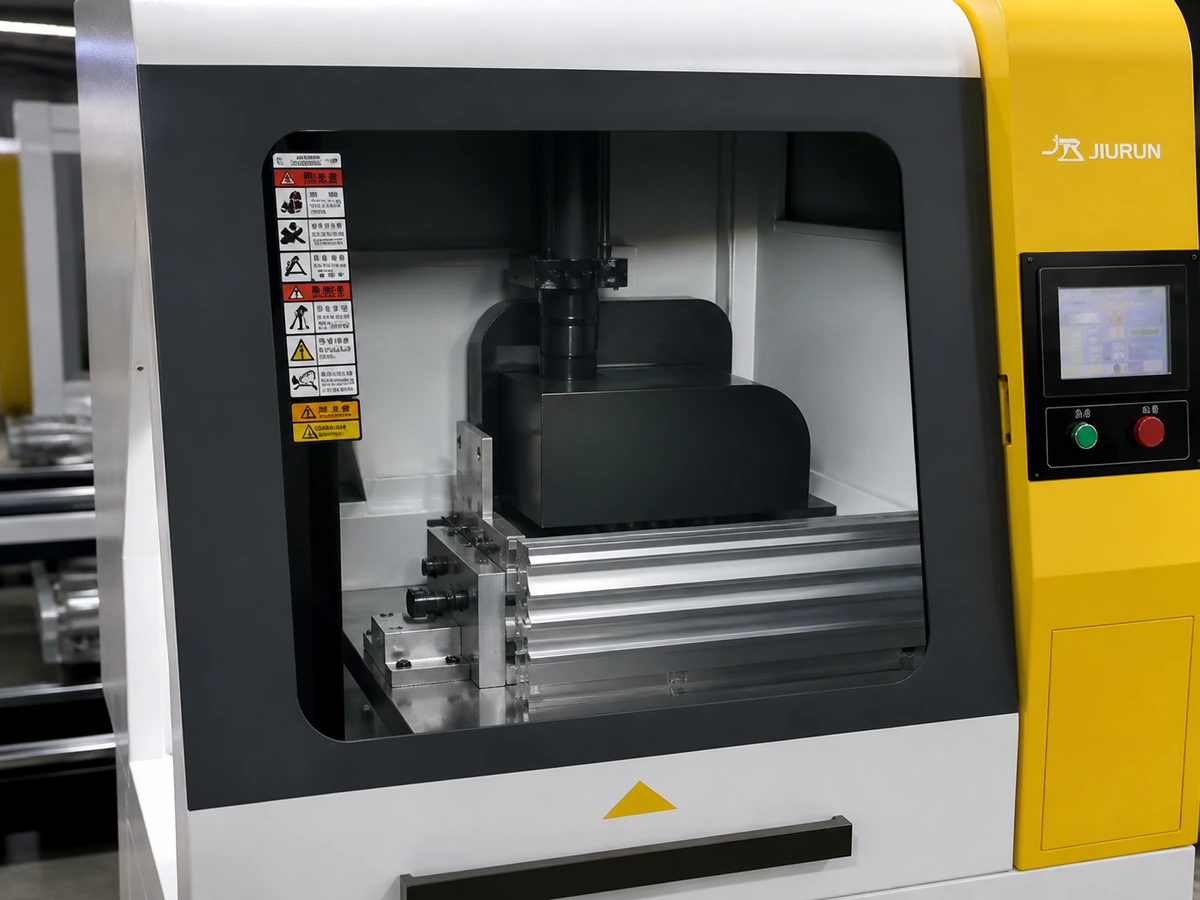
The saw trial must use representative stock, including the shortest approved piece if it is the hardest to hold. Record where the operator supports the channel, what happens at the open edge and how the cut piece leaves the machine. A trial on a heavy structural extrusion may demonstrate a saw motion but cannot qualify a thin squeegee member. Jiurun’s listed equipment is for industrial aluminum and nonferrous-metal sawing; fit to this section and finish is subject to a real sample review.
Compare quotations at the same release point
Ask every supplier to price the same output: either an inspected metal blank or a later assembly. If the supplier quotes only cut blanks, keep rubber trimming, clip fitting, handle assembly, rejects and rework outside that price and add them to the internal route comparison. If a supplier quotes a completed channel assembly, define the exact rubber and handle parts and the functional acceptance test. A low cost per metal cut can be misleading when assembly has to sort damaged grooves or recut pieces.
Before buying capacity, compare the expected range of approved lengths and section variants with the changeover and inspection work. Provide a realistic mix, not just the longest easy-to-clamp bar. Ask for a witnessed sample cut and the resulting inspection record. A claimed cycle time or yield should come from that agreed trial, not a general catalog figure.
Send a two-layer specification
The inquiry needs a metal-layer package and an assembly-layer package. The first contains the extrusion drawing, material and finish, stock form and length, cut-blank datum, required lengths and quantities, edge acceptance, and any protected contact surfaces. The second names the rubber, clips if used, handle interface, assembly sequence, and the finished-tool acceptance test. Include physical samples where possible. Mark each requirement as verified, proposed or still open so a supplier can price the work it will actually do.
To discuss a possible industrial saw trial, send JiurunCut the section drawing and target cut-stage output. The team can review whether the proposed aluminum member falls within a suitable machine and fixture configuration. Do not treat the equipment footage below as proof of a squeegee-channel result.
Related equipment footage
The video from Jiurun’s own channel shows a JR-455CNC aluminum-profile cutting machine and its general feed and clamp area. It does not show this article’s squeegee stock, rubber assembly, specified configuration, measured cut or wiping performance.
Sources: Ettore aluminum channel with rubber; Ettore Super Channel; Ettore end-clip instructions. Product examples are used to explain the component interfaces, not to establish a Jiurun machine qualification.