
Short answer: For aluminum J channel cutting, approve the exact extruded section and the panel it captures before specifying a saw cut. The short return and the visible long leg make orientation, support and the accepted end condition part of the purchase decision. Ask for a first-off cut and a fit check using the real mating material; a nominal outside width alone cannot release the job.
This guide is for an OEM or fabricator buying cut blanks from an approved extruded J cap or J edge trim. It is not a specification for roll-formed siding trim, a finished glazing system or a complete installed assembly. Suppliers use names such as J cap, J channel and J edge trim for different profiles and finishes, so the drawing and sample must identify the actual section. Eagle Aluminum’s J-channel range and Extrude-A-Trim’s J-channel range illustrate that variation; neither catalog establishes a Jiurun machine setting for your part.
1. Aluminum J channel cutting starts with the pocket and return lip
Start with a cross-section drawing showing the inside pocket opening, insertion depth, long-leg height, short return, wall thickness, inside radii and the side that remains visible after assembly. State the approved alloy, temper and finish for the purchased stock. Supply a short physical sample when the profile is proprietary or the drawing cannot fully show the edge shape. A profile sold under the same family name can still have a different panel capacity, finish or lip geometry.
Measure the mating panel or insert at its specified condition, including any coating, gasket or protective layer that stays in the assembly. Decide who owns the fit clearance. If the panel is intended to slide into the pocket, document the insertion direction and whether the end remains open. If the J cap is pushed onto an edge, document the contact faces and the allowable appearance of the exposed long leg. Those decisions determine what an acceptable cut end must preserve.
Do not substitute a U channel or H joiner just because its nominal width looks similar. A U-channel panel-edge guide addresses two comparable legs; the H-channel joiner guide deals with two opposed pockets. The asymmetric J return needs its own orientation and end-fit approval.
2. Define what the saw is expected to deliver
Separate a bare cut extrusion from a ready-to-install part. For each part number, state the cut length, quantity, end type, finish condition and any downstream work. A square-cut blank may still need drilling, notching, deburring, anodizing, assembly or site trimming. If the buyer expects these operations, list them in the RFQ instead of hiding them in the phrase “cut to size.” A fabrication supplier may combine cutting with later machining and finishing; Extrusions Inc. describes cutting as one step before other fabrication operations.
Identify whether the length applies before or after coating, deburring or a miter. For a square end, say where end-to-end length is measured. For a miter, provide the angle convention and whether the dimension is to the long point, short point or a named datum. If several members form a frame, provide a member schedule and the joint drawing. The saw operator cannot infer a finished assembly dimension from a panel opening alone.
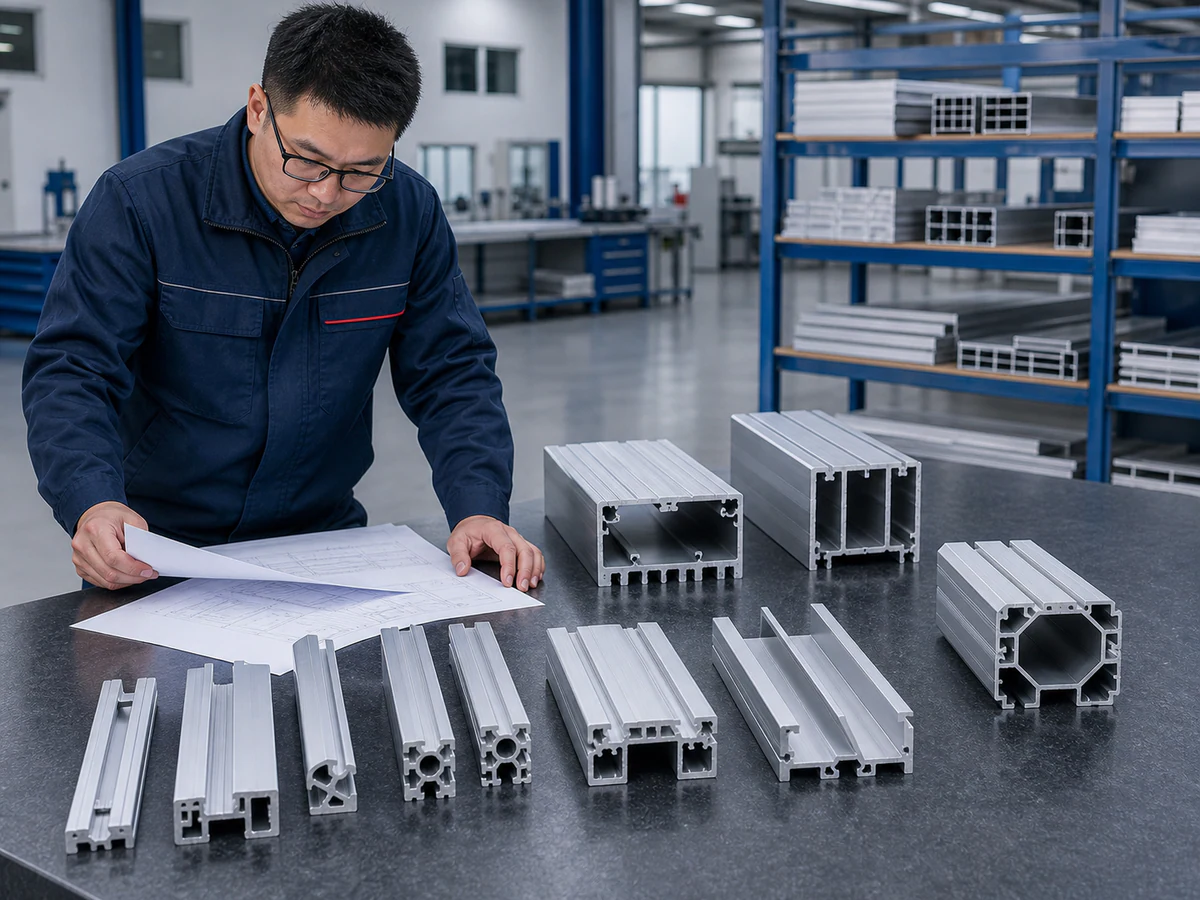
3. Choose a stable datum and protect the exposed face
The RFQ should identify the base or other approved locating face and the side that must not be marked. A narrow return lip may be a poor stop or clamp contact if the released section does not support it. Ask the machine supplier to propose a fixture from the actual section drawing and sample, then approve its contact map. The trial should check that the profile sits consistently, the long leg is not distorted and the cut end still accepts the mating material. These are trial questions, not claims that every J channel is fragile or that a particular machine has already passed.
Record feed direction, pocket orientation and whether the visible face points toward a clamp, fence or blade exit. If turning the section over changes the contact points, treat that as a different setup until checked. The process plan should also state how a long length is supported at entry and exit, where a short offcut is caught and how chips are kept away from a finished visible surface. The suitable support arrangement depends on the real cross-section and stock condition.
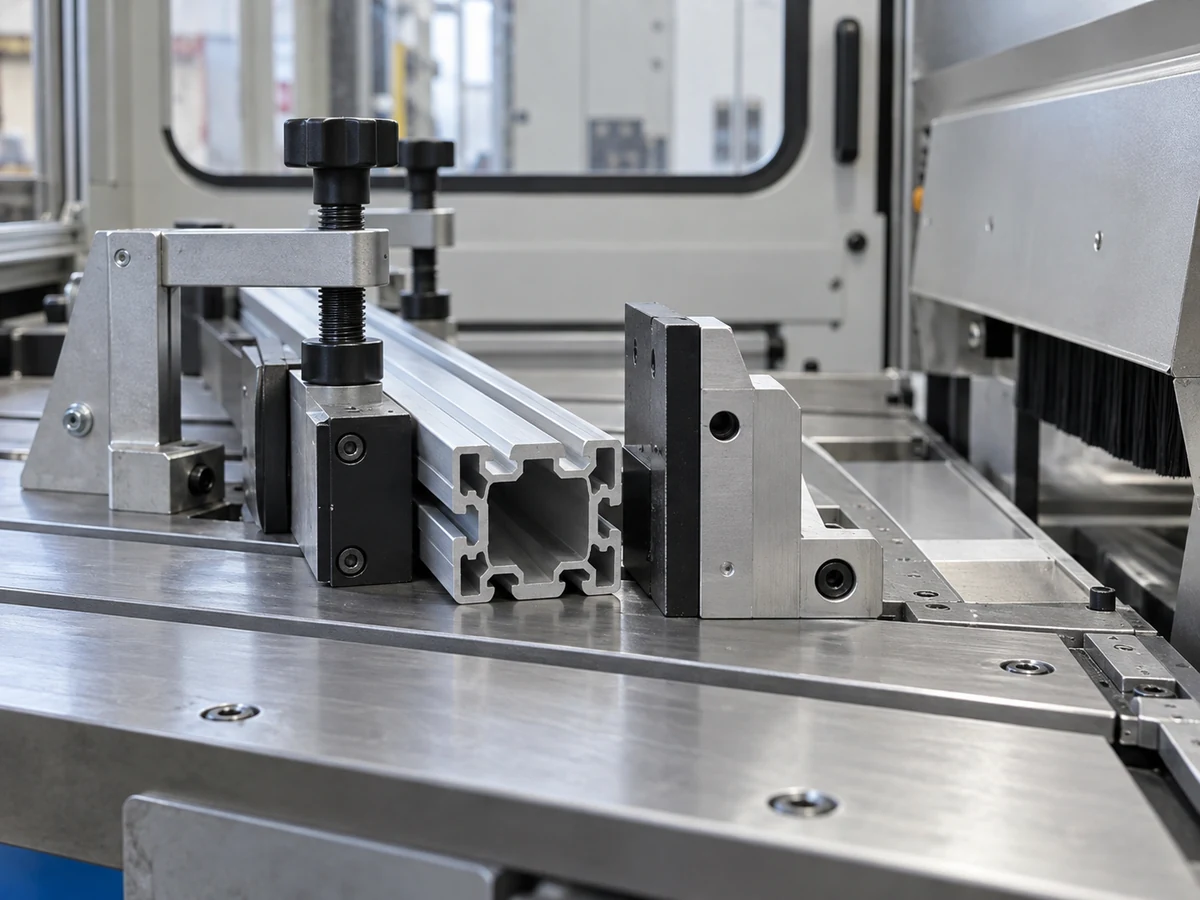
4. Use a first-off test that checks assembly fit
Before a batch run, agree on a small first-off sample from the released stock. The buyer should supply the inspection method and the mating panel or insert. Record the measured cut length at the defined datum, end angle where relevant, burr direction, visible-face condition, pocket opening and any lip movement. Then try the sample in the intended assembly sequence. A clean-looking end face alone does not prove that the panel will fit.
Keep the test evidence tied to part number, drawing revision, stock condition, blade/setup revision and the sampled pieces. If the end will be covered by another component, define the acceptable burr and cosmetic zone accordingly; if it stays exposed, define the appearance criterion on the drawing or sample. Agree who signs the first-off and what change requires a new check. This makes a production release more useful than a general promise of “precision cutting.”
For repeat batches, decide whether to inspect every piece, a defined sample or a first-and-last-piece set. Set the method before quoting so that inspection time is visible in the price and production plan. A supplier’s default cut tolerance may not match a tight assembly need: Extrude-A-Trim explicitly asks buyers to forward nonstandard tolerance requirements in writing. That published supplier policy is an example of RFQ discipline, not a Jiurun accuracy claim.
5. Compare three buying routes
- Buy stock J cap and cut it in-house. This suits a team that already controls the section, finish, fixture and inspection. Include operator setup time, scrap from trial cuts and packaging damage when comparing costs. A saw should be evaluated on your released sample, not on a generic catalog profile.
- Buy outsourced cut blanks. Give the cutter the drawing, stock and acceptance plan. Keep assembly fit approval with the party that owns the panel and installation. Confirm whether the quote includes deburring, protective packing and any second operation.
- Buy a prepared trim kit or complete assembly. Use this route when corner work, drilled holes, matching parts or finish continuity dominate the risk. A loose saw-cut blank quote should not be compared directly with a ready-to-install kit price.
If annual volume is uncertain, ask suppliers for a small qualified batch and a later repeat-volume price. If several J-cap sizes share a line, provide the changeover schedule and each section’s support drawing. Volume alone does not settle whether automation is economical; profile variation, handling and inspection also matter.
6. Send a quote package that can be tested
- Released section drawing and revision, physical sample, alloy/temper, finish and incoming stock length.
- Panel or insert thickness range at the specified condition, pocket-fit requirement and insertion direction.
- Part number and member schedule, square or mitered end definition, datum, length and accepted tolerances.
- Visible face, clamp/stop no-contact zones, burr direction and finish-protection requirement.
- Operations included in the quote: saw cut, deburr, notch, drill, finish, label and pack.
- Batch size, expected mix, first-off quantity, inspection plan and approving party.
- Delivery unit: loose cut blanks, labeled member kit or completed assembly.
When requesting a machine trial, send both the section sample and the accepted-unit definition. A vendor can then discuss capacity, feed, clamping and a test plan for the actual stock. Do not transfer a brochure value from one model or configuration into a guarantee for this J cap. Jiurun manufactures circular-saw equipment for aluminum profiles and other nonferrous metals; the appropriate model and options require a drawing-led review.
Related equipment footage
The following video from Jiurun’s own YouTube channel shows a separate automatic aluminum saw feeding a profile. It is equipment/process context only: the visible stock is not identified as this J channel, and the clip does not prove this article’s material, setup, cut quality or finished-part tolerance.
Ask for a section-led review
If you have a released extruded J-cap drawing, an actual stock sample and a defined panel-fit requirement, contact JiurunCut with the quote package above. State whether you need cut blanks or are evaluating an in-house circular saw. We can discuss a suitable machine and trial scope against that information; final acceptance belongs to the agreed first-off and inspection record.