
An aluminum saw trial with substitute stock can be useful, but only if the buyer and supplier agree exactly which purchasing question it answers. A smooth demonstration on a convenient bar or profile does not establish how the proposed saw will handle a production extrusion with a different alloy, temper, wall pattern, finish, or support arrangement. Treat the demonstration as bounded evidence. Then decide which differences can be justified on paper and which need a witnessed cut on representative stock before you release an order.
Use three buying gates: identify differences between target and trial stock, classify each claim the trial can support, and contract for a representative retest where proof is still missing. This guide gives procurement and production teams a practical way to record those differences, interpret a substitute-stock result, and write the remaining test into the purchase acceptance plan. It does not assign universal tolerances or claim that one machine setup suits every aluminum section.
Start with the production decision, not the available sample
Before choosing a substitute, write down the target job: drawing revision, alloy and temper, section drawing, incoming length range, surface condition, cut length, downstream fit requirements, planned output pattern, and how the stock will be presented to the saw. Identify which configuration is being quoted, including the feed, clamping, blade, guarding, chip handling, and any infeed or outfeed support that affects the cut. Separate a general question such as “can this equipment cut aluminum?” from a purchasing claim such as “will this quoted configuration meet our acceptance criteria on this extrusion?” The second claim needs much closer evidence.
If the actual production material cannot be supplied for the first visit, name the substitute honestly in the trial record. Keep its certificate or supplier description, section drawing, measured dimensions, and surface condition alongside the target drawing. A shared description such as “aluminum profile” is too broad to establish equivalence. For designation terminology, the Aluminum Association explains its alloy and temper designation systems; those designations help identify the input material, but they do not prove a machine result.
Compare the variables that can change the result
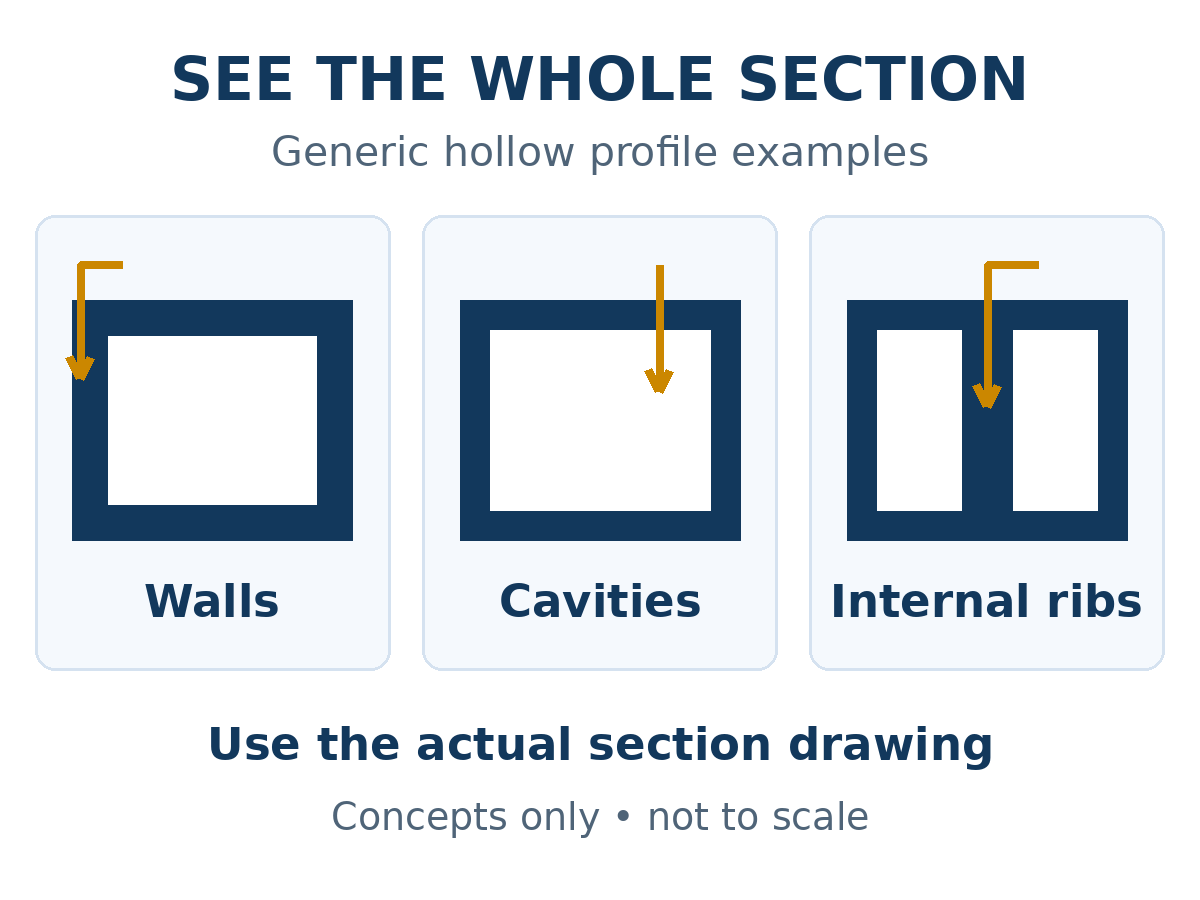
Use a difference register with one row per variable and three columns: target stock, trial stock, and the consequence for the decision. Start with alloy and temper because they can change how a cut behaves; do not infer equivalence from the alloy family name alone. Compare the actual section, wall thickness, cavities, ribs, width, height, and the orientation in the clamp. A hollow extrusion and a solid bar can require different contact points and support even when their outside dimensions look similar.
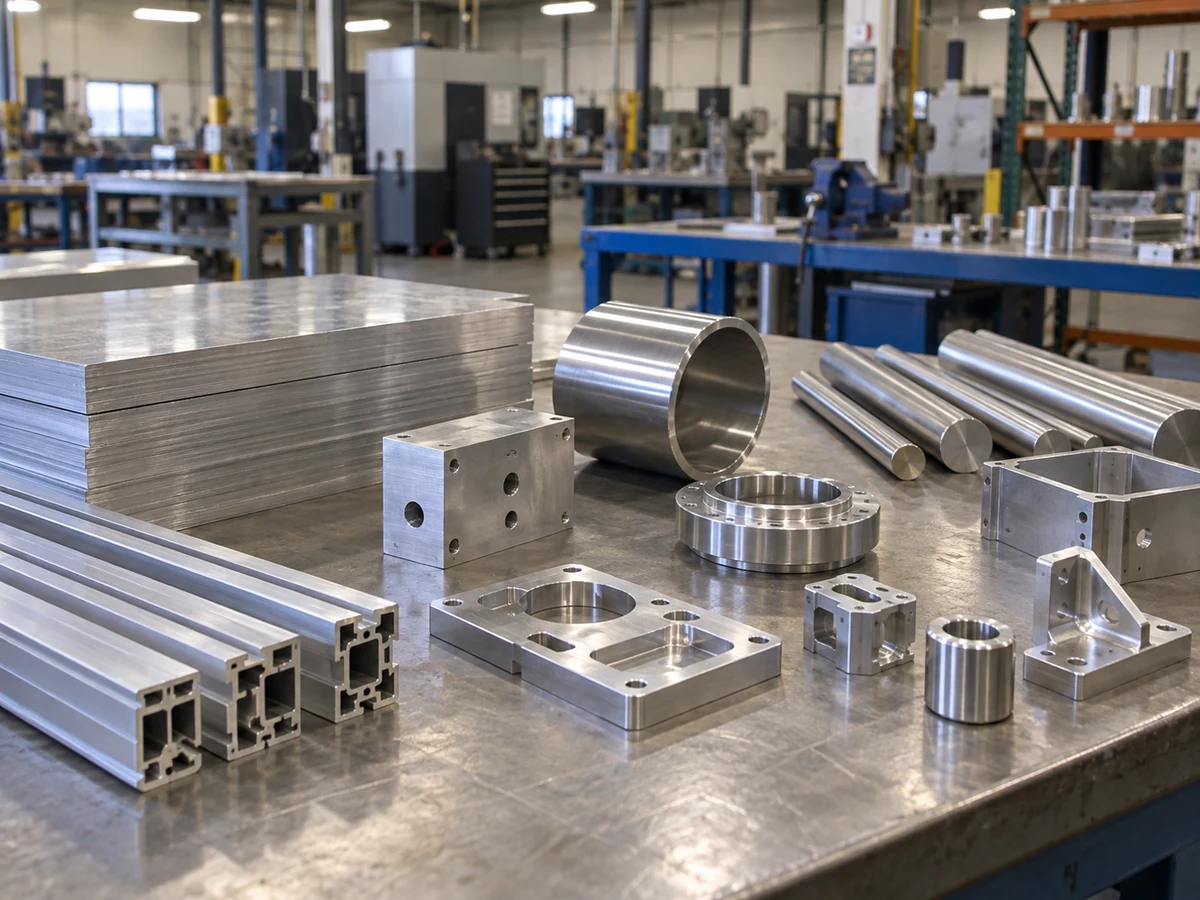
Next compare finish and handling. A coated or anodized production face may have a damage limit that an unfinished demonstration piece cannot test. Check whether protective film, residual lubricant, straightness, extrusion bow, and batch variation matter to the receiving or downstream process. Finally compare stock length and support: a short sample held close to the cutting zone does not necessarily represent a long profile with a production infeed and outfeed path.
How to judge an aluminum saw trial with substitute stock
Give each proposed conclusion one of three labels. Transferable means the relevant material, geometry, finish, support, machine configuration, measurement method, and acceptance limit have been shown to be equivalent for that conclusion. Conditional means the trial demonstrates a useful function, such as a feed sequence or operator interface, but a named production-stock check remains open. Not transferable means a difference directly affects the claim, so the substitute result cannot be used as acceptance evidence.
These labels apply to individual claims, not to the trial as a whole. A supplier might show the loading sequence successfully on available stock while cut-face quality on a thin, finished production extrusion remains unproven. The buyer can use the first observation without treating it as proof of the second. This is a more useful answer than declaring the entire demo either passed or failed.
Three common substitution traps
Bare stock for a visible finished profile: The trial may show the basic cutting and feed sequence. It does not settle whether clamp contact, chips, or handling will mark the finished surface. Keep a finished-stock cosmetic check in the acceptance plan. Solid bar for a hollow extrusion: Both may be aluminum, but the wall and cavity pattern can alter support and contact at the cut. Do not transfer a cut-face or deformation conclusion without testing the actual section. Short hand-fed piece for long automatic production stock: The blade may cut the short sample, yet that says little about the proposed loading, support, indexing, and outfeed sequence. Witness those functions on the intended line arrangement.
These are decision examples rather than predictions of a particular machine’s performance. The decisive facts are the released drawing, the quoted configuration, the stock actually tested, and the buyer’s agreed acceptance criteria.
Write a trial record that a later buyer can audit
Record the machine model and configuration as observed, blade specification if available, clamp and support arrangement, programmed cut length, feed sequence, operator, date, and identification of each stock piece. Note what was adjusted during the run and whether the final settings are included in the quoted supply. Keep photographs or video of the setup and the measurement method, not just the best-looking cut. Retain the inspected pieces or a traceable sample log where practical.
Agree on measurement points before the demonstration. Length, squareness, surface damage, burr condition, and downstream fit may be separate checks; the right set depends on the drawing and use case. Record the instrument and method for each. A feed-position figure is not automatically a finished-part accuracy result. If repeatability matters, agree on a representative sequence and review every recorded result rather than selecting one favorable piece. Do not replace the buyer’s drawing tolerance with a supplier’s generic brochure value.
Turn open differences into a contract test
When a substitute-stock demonstration is only conditional, put the open items into the quotation and acceptance documents before purchase. State who provides production stock, when it will arrive, whether the test occurs before shipment or after installation, which machine configuration must be present, and who witnesses and signs the record. Include the drawing revision, sample identification, measurement method, pass criteria, and an agreed response if the representative test does not pass. Avoid the vague phrase “final performance to be confirmed later” when that performance drives the buying decision. If the test is split across locations, agree on the separate roles of factory and site acceptance before the order.
If the buyer cannot release production stock until after order placement, make that dependency explicit in the commercial decision. The first trial can support a limited equipment review, while acceptance of the production job stays conditional. This distinction protects both sides: the supplier knows what remains to prove, and procurement knows which risk it is accepting.
When should you insist on a representative retest?
Require a representative retest when a changed section alters clamp contact or support, the production finish has a damage limit, the stock is longer or less straight than the sample, the quoted loading or outfeed differs from the demonstration, or the buyer needs cut-part dimensions or appearance that the substitute cannot validate. A retest is also warranted if blade, clamp, software sequence, or another relevant component changed between demonstration and delivery. Document the trigger at quotation stage so it does not become a dispute at acceptance.
Equipment video: a general process example
The Jiurun Machinery channel footage below shows a JR-455CNC automatic saw as a general equipment and feed-cut sequence example. It is not a trial of the substitute stock or the buyer’s production material, and it does not establish the quoted model configuration, customer application, cut tolerance, cycle time, or acceptance result discussed in this article.
Questions to send with the RFQ
Ask the supplier which trial observations are transferable to the production job and why; which remain conditional; which stock and drawing are needed for final acceptance; whether the demonstration used the exact quoted feed, clamp, blade, and support configuration; and how test changes will be recorded. Request a trial plan with sample ownership, measurement responsibility, witness access, and a clear disposition for a nonconforming result. A supplier who can answer these questions plainly gives you a stronger basis for a purchase decision than a demonstration clip alone.
For a JiurunCut quotation, send the released part drawing, target material and finish, stock lengths, output and handling requirements, and the acceptance checks that matter most. Ask for the proposed configuration and a representative test plan before treating any substitute-stock demo as proof of your production job.