
Aluminum saw trial sample quantity: how many cut samples should you request before buying? There is no useful universal number. A pile of identical cuts may look reassuring while missing the one stock family, clamp contact, restart, or finished-part interface that determines whether the saw fits your job. Plan the trial around the purchasing decision first, then choose a sample quantity that covers the agreed conditions and the strength of claim you need.
This guide is for a buyer arranging a supplier saw trial. It separates an exploratory demonstration from a formal statistical claim, shows how to build a sample matrix, and gives you a record format you can send with your RFQ. A successful demonstration on one setup is evidence for that setup only; it does not guarantee future output or the capability of a different configuration.
Begin with the decision the samples must support
Write the decision as a question: “Can the proposed saw, blade, fixture, feed, operator method, and inspection plan cut the released stock and part families within our agreed acceptance limits?” List the drawing revision, material form, cross-section, wall thickness, longest and shortest blank, cut angle, visible face, and downstream assembly interface that matter to that decision. Separate mandatory cases from optional development cases. If any item is still unknown, record it as an open condition instead of letting one convenient profile stand for the entire production mix.
Ask the supplier to identify the exact machine, blade, clamp inserts, stock supports, feed settings, coolant or lubrication method, and measurement tools used. A trial on substitute stock can answer a narrower question, but it cannot silently become approval of your released material. See our substitute-stock trial decision guide for that boundary.
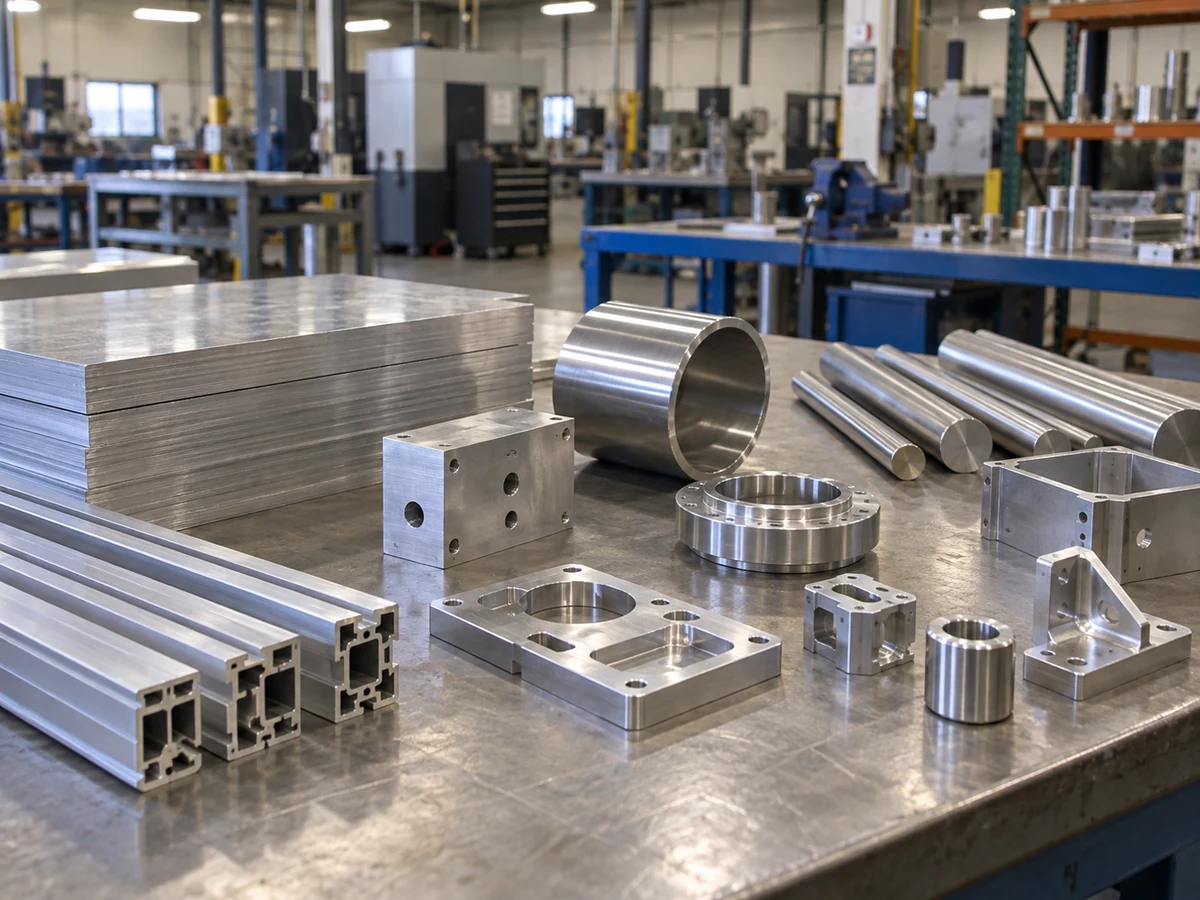
Related equipment footage
The following video is general Jiurun saw equipment footage from the Jiurun Machinery channel. It is included to show a general equipment/process example. It does not document the material, model configuration, customer, buyer-witnessed trial, sample quantity, measurement, or performance discussed in this article.
Count conditions before counting pieces
For an aluminum saw trial, build a matrix with one row per materially different cutting condition. Common row boundaries include a change in stock form or profile family, wall or section size, cut angle, clamp contact, support span, blade or machine setup, and the downstream feature that will be checked. Do not multiply every variable mechanically into an impractical grid. Choose the limiting and high-risk combinations that could change the buying decision, and explain why each remaining combination is represented by another row.
For each row, specify the number of accepted parts needed for inspection or assembly, the number of repeat cuts needed to observe the process state, and the expected setup or destructive-check pieces. Keep rejects and setup pieces in the record rather than quietly replacing them. A buyer may need more than one observation of a condition to see a repeatability issue, yet the required count depends on the claim, variation, and risk. A fixed “five samples are enough” rule would be misleading.
Include changes over time when they matter: first cut after setup, steady running, blade change or adjustment, shift handoff, stop and restart, and changeover back to an earlier profile. These are separate test conditions only when the proposed production method actually includes them. If the saw will be purchased for a single stable batch, do not invent a mixed-order trial solely to increase sample count.
Distinguish demonstration coverage from statistical confidence
A buyer-witnessed trial can establish that a specified part and setup were demonstrated and measured under observed conditions. It cannot, by sample count alone, establish a future process capability index, a universal scrap rate, or acceptance of every incoming lot. The American Society for Quality explains that sampling must consider representativeness, the population, the type of data, and the acceptable risk. The NIST Engineering Statistics Handbook describes acceptance sampling as a defined lot-disposition method using samples from a lot. Neither concept supplies a blanket number of cuts for a machine-purchase demonstration.
If your purchasing contract needs a statistical statement, define the population, randomization or collection method, confidence and error target, attribute or variable measurement, and decision rule with your quality team before setting the count. If the aim is only to eliminate obvious fit and handling failures, call the exercise an exploratory trial. Do not label a short, convenient demonstration “Cpk proven” or “AQL passed.”
Write a sample matrix the supplier can quote
| Trial row | Stock and setup | State to observe | Required evidence |
|---|---|---|---|
| Released reference part | Drawing revision, actual stock, blade and clamp recorded | Setup and steady cuts as applicable | Identified cut parts, dimensions, end-face and assembly check |
| Limiting section | Highest-risk wall, section or support condition in scope | Feed, support and clamp contact observed | Part-level measurements and any deformation or burr notes |
| Changeover or restart | Only if the planned production route includes it | First cut after the transition plus subsequent cuts | Settings, rejected pieces and recovery action retained |
| Downstream fit | Actual mating part, fixture or assembly datum | Parts from the relevant row above | Fit result tied to cut sample IDs and drawing limits |
Replace these example rows with your actual part numbers. In the RFQ, add a quantity column to each row after deciding how many parts the inspection method consumes and what repeated observations are needed. This makes the quantity auditable without claiming a universal minimum.
Measure every sample against a declared method
Agree on the measured characteristic and datum before cutting. Length, angle, squareness, burr, end-face condition, surface marking, and mating fit answer different questions. Identify the instrument and its resolution or inspection fixture, the measurement location, environmental or part-restraint condition if relevant, and who records the result. Feed positioning accuracy on a machine specification is not the same as finished-part accuracy; assess the cut part against its drawing and the agreed measurement method.

Assign an ID to each piece linking it to matrix row, sequence, setup state, blade condition, stock lot, drawing revision, and inspection record. Keep the first failed cut, adjusted cut, and accepted cut distinct. If an adjustment changes the process, restart the affected trial row or document why the earlier data remain comparable. Photograph only what the image truly shows and retain the measured values separately.
Agree on stop, retest and ownership rules before the visit
Define which result is an immediate stop, which calls for a documented adjustment and retest, and which is an acceptable variation within a drawing limit. A supplier should not discard an out-of-limit sample and present a later good piece as the first result. Record who supplies released stock, mating parts, blade, tooling, measuring equipment, operator, travel, and shipment; those choices affect the practical sample quantity and quotation. If representative stock is unavailable, mark the result provisional and schedule the missing row before purchase approval.
Ask for the physical sample set or a traceable shipment record and a compact trial report: matrix revision, machine and configuration, sample IDs, all observed results including scrap, settings and changes, photos with honest captions, and unresolved items. Our retained cut-sample guide explains how to preserve comparison evidence for a later repeat order.
Send a testable RFQ rather than a bare number
Give the supplier your drawing revisions, actual material and profile list, required cut and assembly checks, proposed matrix rows, provisional count and reason for each row, repeat/transition states, acceptance limits, measurement method, and report format. Ask them to identify any row they cannot demonstrate and to price or schedule the missing evidence. A clear sample plan lets you compare quotations on the same scope and decide what still needs proving before you commit to a machine.
Planning a saw trial? Contact Jiurun with your part drawings, stock range and planned production mix. We can discuss a trial scope and quotation; confirm the exact configuration, limits and evidence in writing before treating any demonstration as acceptance.