
An aluminum saw trial chatter complaint is a purchasing question, not a verdict on a single blade. A noisy cut, a repeating mark on one face, or a visibly moving profile tells the buyer that the trial has not yet established the promised output. The useful next step is to hold the result, identify the exact stock and machine state, and ask the supplier to show which cause it investigated before changing the offer. A quieter second cut on different material is not evidence that the original job is solved.
This guide is for a factory comparing saw quotations for aluminum extrusions and other approved stock. It explains how to request a controlled supplier trial and judge the offered machine, blade, support and inspection package together. It is not a troubleshooting procedure for an operator to keep running an abnormally vibrating saw. Stop the trial under the site’s safety rules and have qualified personnel assess the equipment before another cut.
The featured blade image is an AI-generated editorial illustration. It does not show the tested blade or prove this trial’s condition.
1. Define the rejected result before discussing a remedy
Ask the receiving team to describe what failed at the saw handoff. Was the issue an unusual sound, a periodic mark on the cut face, a dimension that varied between parts, burrs, a displaced workpiece, or damage to a visible face? Preserve representative accepted and rejected pieces, their part and stock IDs, the drawing revision, and the agreed inspection method. If the team only says “vibration,” the supplier cannot know whether it is responding to a machine condition, a holding problem or an output specification.
Record the particular profile section, wall and cavity pattern, alloy and temper if released, stock length, finish, cut angle, finished blank length and batch position. Separate the startup piece from a later piece after repeated cuts. A different section or support span can behave differently on the same machine. Do not generalize from the most convenient sample to the full approved portfolio.
2. Separate no-load machine behavior from cutting behavior
The supplier should first establish that the offered machine and installed tool are fit for the trial under its own instructions. For example, Kanefusa’s saw-blade instruction manual calls for checking abnormal noise and vibration during an unloaded test, and separately addresses flange condition and secure material clamping. Those instructions apply to that manufacturer’s tool; they do not identify the cause of a Jiurun trial or authorize an unqualified operator to adjust a saw. Ask the supplier to document the checks required for the actual blade and machine.
If the abnormal behavior exists without cutting, do not label the workpiece the cause. If it appears only when a specific extrusion is engaged, examine the entire cut condition with the supplier: the supported stock, clamp contact, blade selection and condition, programmed cut, lubrication arrangement if present, and removal of the short piece. A visual mark alone cannot establish which one is responsible. The trial record should show what changed between runs and who approved that change.

3. Test the contact and support that the real section needs
For a hollow, thin-wall or asymmetric extrusion, outside width alone is a poor description of the clamping problem. Send the cross-section drawing and mark protected faces, unsupported spans, ribs and cavities that may affect contact. Require the supplier to show its proposed contact locations and the longest and shortest stock states in the job mix. Confirm that the offcut and finished piece remain controlled as the cut completes.
Do not ask for an arbitrary clamp pressure or homemade packing method in the RFQ. Ask instead for a documented fixture proposal and a trial on the released stock. The supplier’s qualified team should establish and record the configuration. If a modified pad, side guide or outfeed support removes the symptom, include that exact item, changeover work and maintenance access in the quotation. A successful trial with a special fixture cannot justify a price that excludes it.
4. Check the blade as an identified part of the tested system
Record the installed blade’s maker, part number, diameter, bore, tooth form and condition as supplied for the test, together with the machine and material it was used on. A separate Kanefusa non-ferrous blade page describes a vibration-damping blade design for aluminum or brass. This shows that blade construction can be a meaningful selection variable; it does not prove that a different blade will cure a particular trial, nor that the named product is suitable for the offered machine.
Ask whether the initial blade is included with the machine, who supplies replacements, and whether the same approved blade can be obtained for the production mix. If a different blade is tried, retain the before-and-after part samples and the rest of the test conditions. Do not compare a worn blade on one setup with a new blade on a different section and call the difference a machine improvement. Also keep blade maintenance and replacement planning separate from a claim that the saw itself has passed acceptance.
5. Judge the cut by the buyer’s released measurements
Noise reduction is useful but is not the acceptance result. Inspect the actual cut blanks against the released dimensions and cut-face criteria. Specify which end and physical datum define length, whether angle or squareness is checked, where a periodic surface mark matters, and whether visible-face damage, burrs or section deformation are disallowed. Agree the instrument, part condition, sample count and decision rule before the repeat trial. The site’s measurement owner, not the saw vendor’s marketing image, should define the limits.
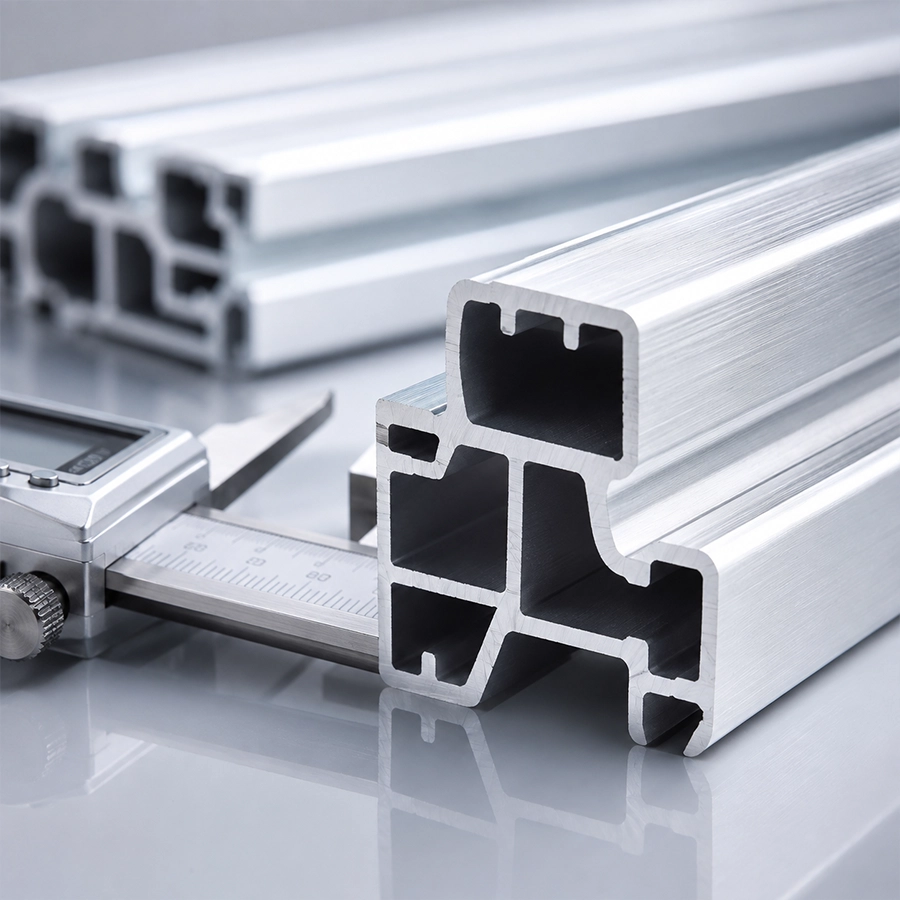
Compare the first piece, representative mid-batch pieces and the difficult end of the run. For mixed production, include a second released profile and a return to the original setup when changeover is part of the purchase case. Preserve rejected pieces as well as accepted ones. The measurement-method guide explains why datums, instrument suitability and the agreed acceptance rule belong in the RFQ rather than being improvised after the demonstration.
6. Compare correction options at the same accepted-output stage
A buyer may be offered a blade change, a new support or fixture, a different machine configuration, or outside cutting for the problematic family. Compare each option using the same approved stock, output definition and production period. Include the added tooling, inspection, operator attendance, changeovers, rejected material, maintenance and part availability. A lower machine price has little value if the quoted route cannot repeatedly produce the accepted parts.
Ask the supplier to name every job family that remains unproven. If the trial is stopped for safety, an unresolved vibration or tooling condition is an open item, not a pass. If a floor or installation condition is suspected, document the site’s actual foundation and installed state separately; the floor-vibration buying guide addresses that facility boundary. Do not transfer a favorable result from another site to the proposed installation without checking what changed.
Aluminum saw trial chatter: RFQ and acceptance checklist
- Released stock and blank drawings, section and material condition, protected faces, cut angles and representative batch sizes.
- Machine configuration and installed blade identity, including the supplier’s required safety and unloaded checks before cutting.
- Observed symptom and rejected-part evidence, with the specific cut stage and part identities recorded.
- Proposed stock supports, fixture contacts, outfeed handling and any special accessories included in the price.
- Controlled trial matrix covering the difficult profile, normal production mix and required changeover.
- Buyer-approved dimensional, cut-face, burr and visible-face criteria, instruments and sampling rule.
- Open items, supplier actions, repeat-test conditions, replacement-blade supply and final receiving decision.
Send this package to the supplier before accepting an equipment recommendation. Contact JiurunCut with the affected profile drawing, stock state, rejected cut evidence and target output, and request a documented sample-cut plan for the offered configuration. If the symptom remains unresolved, keep the decision open or compare an alternative route. The purchase gate is a repeatable accepted cut on the released job, with the complete tested equipment scope named in the quote.