
Aluminum saw spindle motor replacement is a machine-level decision. A motor marked with the same kilowatt rating as the failed unit can still be the wrong part. Its shaft or mounting face may not fit the blade drive, its electrical rating may not suit the installed starter or inverter, and its stopping behavior may change the machine’s release test. The buying question is therefore not “Can we find the same power?” It is “Can the proposed motor be identified, fitted, controlled and accepted on this particular saw?”
This guide is for an owner requesting a replacement motor or evaluating a supplier’s proposed substitute. It does not diagnose a live electrical fault or authorize a change to a guarded machine. Ask the saw manufacturer or a qualified service provider to confirm the actual machine configuration and perform the work.
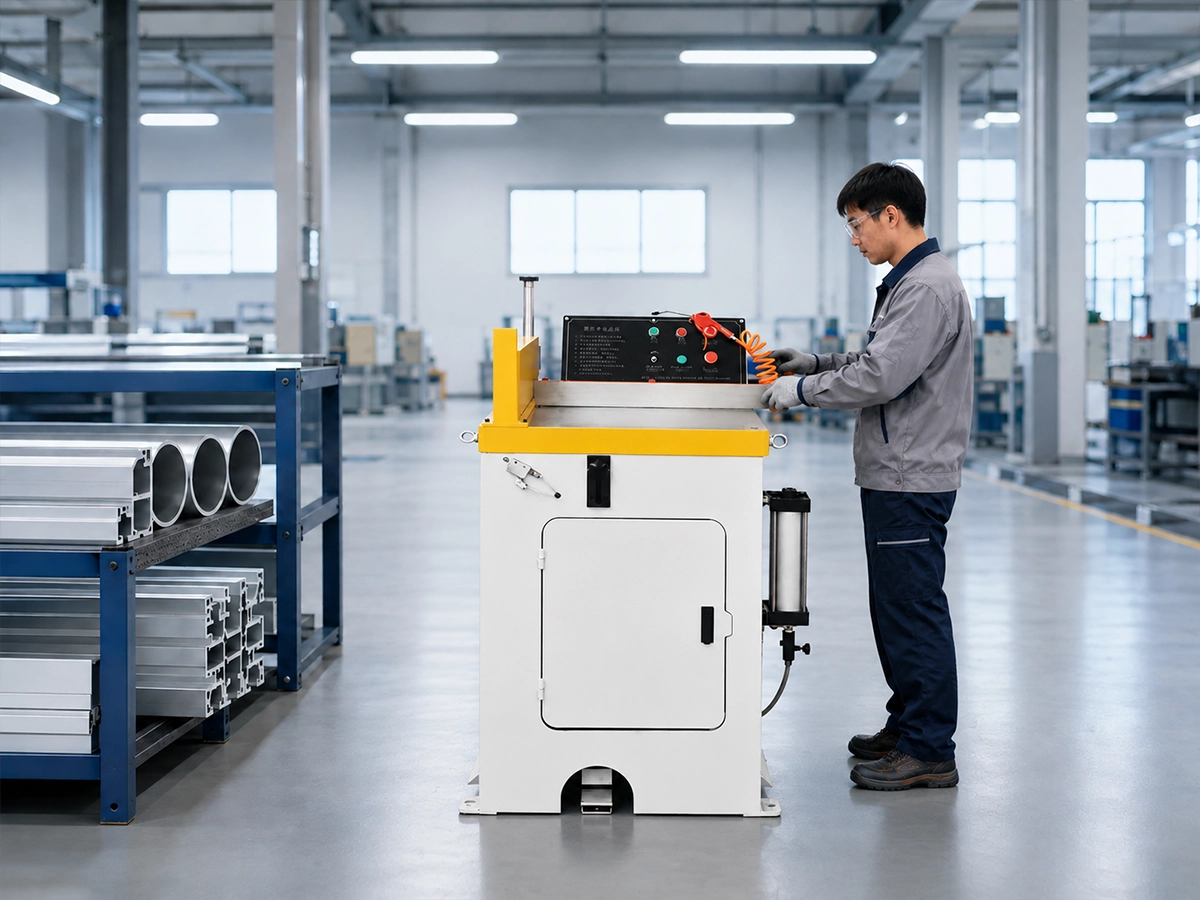
Aluminum saw spindle motor replacement starts with identification
An aluminum saw may have separate motors for the blade, a feed or positioning axis, a conveyor, and auxiliary equipment. A fault message mentioning “motor” does not by itself identify the failed component. The purchase request should state whether the proposed part drives the blade spindle, a feed axis or another function. Include the machine’s serial number, the installed motor’s manufacturer and complete nameplate, and photographs of its mounting and connections taken under an approved service procedure.
Before ordering a larger motor to cure a trip, preserve the fault record and determine the cause. An overload can follow a mechanical jam, blade condition, drive setting, supply issue or a genuine motor problem. Replacing capacity without that distinction can leave the original fault in place. Our separate motor overload guide explains the diagnostic evidence; here the decision starts after the replacement scope has been justified.
What must match beyond kW or horsepower?
Ask for a written comparison of the installed and proposed units. An equivalent rating on one line is not an interchangeability decision. The ABB motor-nameplate guide explains why frame, voltage, frequency, current, speed and other markings matter when selecting or replacing a motor. Which fields apply depends on the actual motor and its control arrangement.
| Check | Evidence to request before approval | Why a mismatch matters |
|---|---|---|
| Identity and mounting | Full part number, serial or revision, frame and mounting drawing for both units | “Same frame” or similar appearance may not establish clearance or fixing fit in the saw. |
| Output interface | Shaft dimensions, key or coupling details, pulley or arbor interface, and the approved assembly drawing | The blade drive cannot be qualified from motor power alone. |
| Electrical rating | Nameplate voltage, frequency, phase, current, speed and duty, compared with the installed supply and controls | Motor and control settings may not be compatible. |
| Control and stop | Starter or inverter identification, approved parameter set and any brake or feedback arrangement | Start, speed and stop response can change even when the motor runs. |
| Environment and access | Enclosure, cooling arrangement, terminal-box position and service clearances | A physically fitting motor may still be unsuitable for its installed location. |
Do not treat this table as a universal specification. A direct-drive arbor motor, a belt-driven spindle and a controlled axis can require different evidence. The saw supplier should identify the applicable drive route. For the purchasing distinction between drive routes, see our belt-versus-direct blade-drive guide.
Check the actual blade-drive interface
For a belt-driven saw, compare the proposed motor mounting, shaft and pulley interface with the installed assembly, then ask who confirms alignment and belt setup. For a direct-drive saw, the motor and arbor interface may be more specialized; a generic motor catalog match is especially weak evidence. Do not infer that the yellow guard or a photograph of a cutting area exposes the internal spindle arrangement.
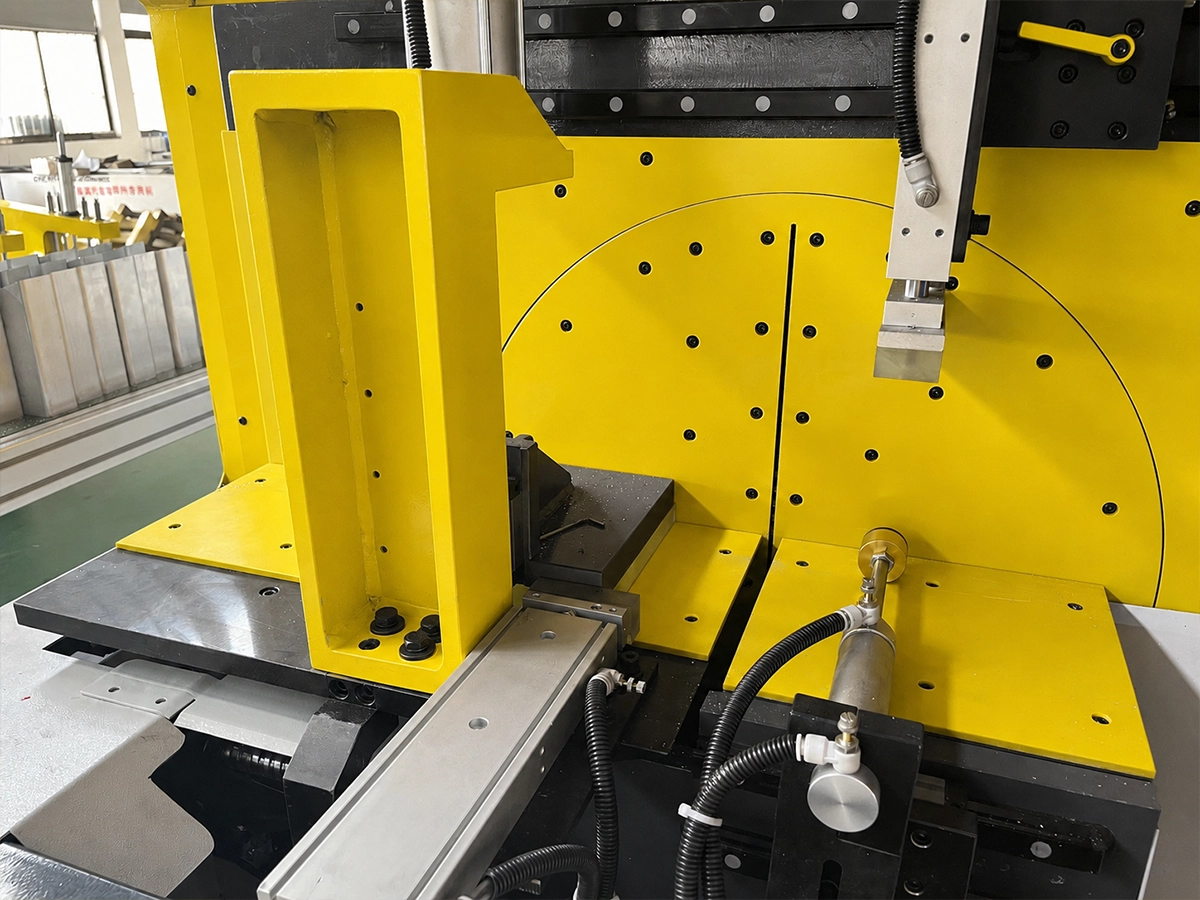
Ask the supplier to state exactly what is included: motor only, pulley or coupling, mounting adapter, wiring components, parameter changes, installation, and witnessed restart. A “drop-in replacement” claim should name the installed saw serial number and the interfaces it covers. If a bracket or drive component must be changed, that is a configuration change with its own approval and release evidence.
Do not assume the drive will accept the substitute
A saw with an inverter or electronic starter needs a motor-to-control review. Compare the motor’s rated data with the controller’s installed hardware and approved settings; ask the responsible service engineer what must be recorded or changed. If the motor uses feedback, a brake, thermal protection or a dedicated connection, include those interfaces explicitly. ABB notes that nameplate information is relevant to matching a variable-speed drive, while the WEG electric-motor manual directs receiving personnel to compare nameplate data with the purchase order.
A working no-load spin is only one observation. The motor must be assessed as part of the saw: commanded start and stop, the approved operating range, protective responses and a representative cutting duty. Do not use a generic suggested frequency, current limit or braking setting from an article to commission a particular machine.
Compare the three purchasing routes
Exact approved spare: request a supplier confirmation that the identified part number and revision apply to the saw serial number. Include any supersession note, scope of supply and lead time. This is often the easiest comparison, but the buyer still needs receiving and restart checks.
Approved substitute: obtain a side-by-side interface comparison and a named owner for any adapter, parameter or drawing revision. Ask whether the supplier accepts responsibility for the complete motor-and-drive result, not merely the loose component.
Repair of the installed unit: compare downtime, inspection findings, repair scope, warranty position and the evidence needed to return the same unit to service. A repair quote should identify what was tested and what remains for on-machine acceptance. None of these routes is automatically best; choose against the actual fault, machine condition and production deadline.
Where the failed motor is no longer available, do not let a substitute silently become an undocumented new machine configuration. Record the approved part identity, drawings, controller record and future spare-parts reference so the next replacement is not based on guesswork.
Write a purchase order that can be received and tested
Send the supplier a compact evidence pack: saw make and serial number; photos of the installed motor nameplate; original part number and machine drawing; drive or starter identification; mechanical interface drawings; fault description and service finding; required production profiles; and the site’s supply information. Remove private plant data you do not need to share. Ask the supplier to return a comparison table, included items, exclusions, responsible installer, documentation, delivery basis and acceptance plan.
At receipt, compare the delivered motor’s nameplate and physical identity with the approved order before anyone fits it. Check for shipping damage and keep the supplier’s installation instructions with the machine record. The WEG manual explicitly calls for checking nameplate data against the order and inspecting receipt condition. These are receiving gates, not proof that the saw will cut acceptably.
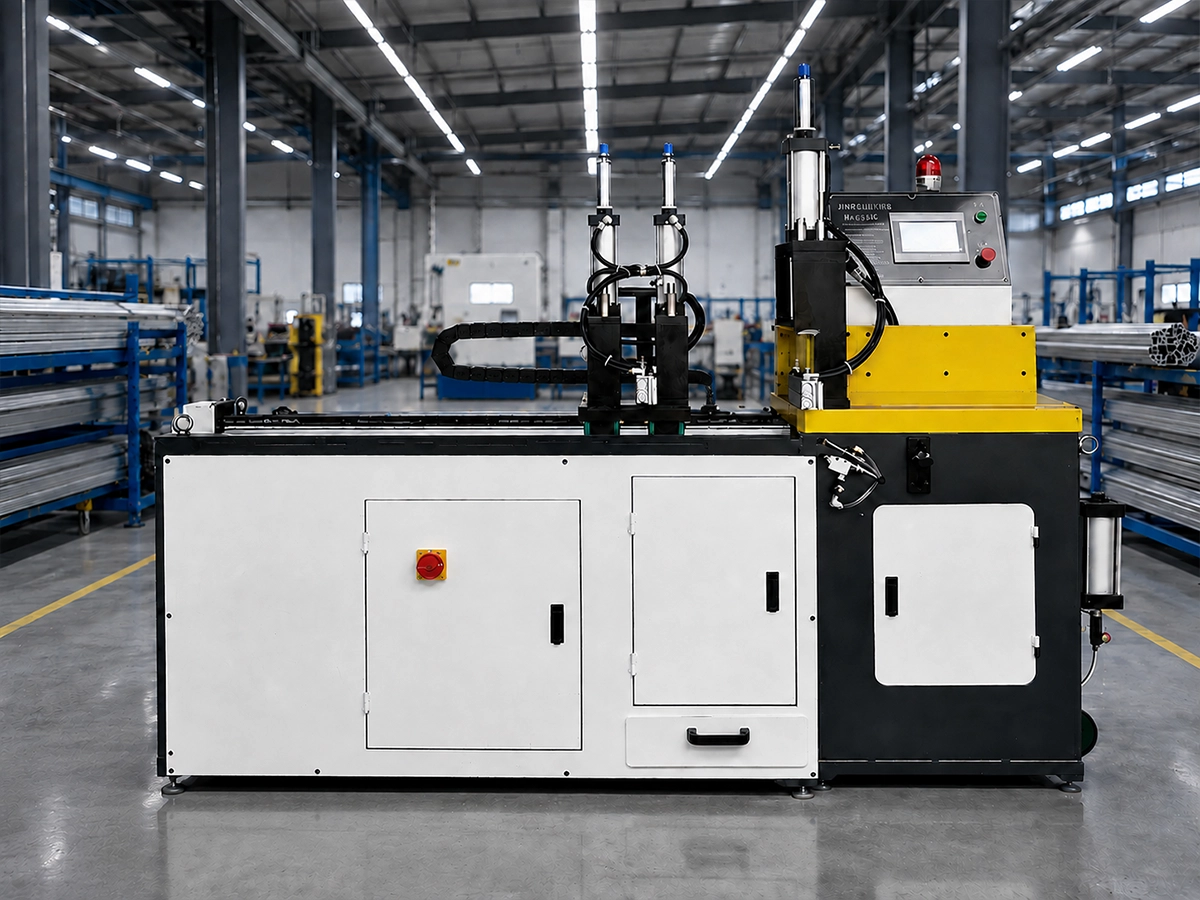
Release the saw on machine evidence, then on cut parts
Agree two acceptance stages before installation. First, a qualified person verifies the installed assembly and its electrical and control behavior against the machine maker’s approved procedure, including guards and stop response. The WEG manual warns that motor installation and maintenance require the motor to be disconnected and stopped, with precautions against unintended starting; it calls for qualified personnel. This article does not replace those procedures.
Second, run a representative job with the actual blade, stock and setup. Record first-off length and end geometry against the released drawing, then inspect a suitable run for repeatability, surface condition and abnormal behavior. If the motor, pulley or control settings changed, retain the before-and-after configuration and cut evidence. The acceptance criterion should come from the buyer’s part drawing and agreed machine test, not an unverified universal tolerance.
A video of a different saw cutting aluminum cannot certify a replacement motor. The following Jiurun channel clip shows a related saw operation only; it does not identify the motor, its wiring, the material in this article, or an accepted post-replacement test.
What to send for a meaningful quotation
Ask for an identified replacement route, not a motor selected from a power rating. Send the saw serial number, motor and controller nameplates, the mechanical interface drawing, approved duty and a short fault record. Request a written compatibility statement, included parts and service scope, lead time, and separate machine and cut-part release criteria. If those inputs are missing, request a site or remote identification review before a binding parts order.
Need to review a Jiurun aluminum saw configuration? Send the machine identity and production requirement to Jiurun for a configuration-specific discussion. A quotation and trial plan should be confirmed against the actual saw and approved workpieces.