
An aluminum saw can arrive safely on a truck and still be unready for its first powered movement. Packaging, lifting fixtures, transit brackets, cable ties, and genuine machine guards serve different purposes. The receiving team needs a documented way to identify which items, if any, are temporary transport restraints on the actual supplied machine. This aluminum saw shipping restraints checklist helps a buyer define that handover before commissioning; it is not a removal procedure for a particular model.
Use the supplier’s installation manual and shipment-specific packing list as the authority. Do not infer a bracket’s function from its color or location, and never remove a guard, interlock, clamp, or structural member because it resembles packing hardware. Where the machine configuration is unclear, keep the unit out of service and ask the manufacturer to identify the item in writing.
Why aluminum saw shipping restraints need a separate handover
The unloading plan answers how to receive, lift, and position a machine. The restraint handover begins after it is stable at its intended location and ends when the installation lead has confirmed that any manufacturer-identified transit devices have been dealt with in the specified order. The later cut requalification addresses installed cutting results. Keeping those decisions separate prevents a successful unload or a running spindle from being mistaken for an accepted installation.
A published HSE work-equipment inspection guide says that equipment whose safety depends on installation conditions should be inspected after installation and before first use. A Haas lathe installation manual provides an example of model-specific shipping-bracket removal instructions. That example is for a different machine and does not establish what is fitted to a Jiurun aluminum saw. The applicable local rules and the supplied machine manual control the job.
1. Request the machine-specific restraint inventory before delivery
Ask the supplier for an installation document that identifies each temporary shipping device by location, purpose, and removal stage. Request marked photographs or drawings when labels are hard to see inside an enclosure. The list should distinguish items to remove, items to retain, and items that must be reinstalled for a later move. It should also say who is authorized to perform the work and what equipment, if any, must be supported before a restraint is released.
A useful purchasing question is: “Does the quoted configuration ship with any fixed transit brackets, axis locks, clamp restraints, or protective transport spacers? If yes, please identify each one and provide the approved release sequence.” A “no restraints fitted” answer should also be tied to the actual model and shipment, rather than assumed from a brochure photograph.
2. Preserve the received condition and assign custody
Before unwrapping or moving parts, record the crate or pallet condition, shock or tilt indications if supplied, visible fasteners, tags, loose accessories, and any damage. Match serial and packing identifiers to the purchase order. Put the photographs, packing list, and installation instructions in one handover record. A missing or damaged restraint is a discrepancy for the supplier to assess; it is not evidence that the machine is ready to run.
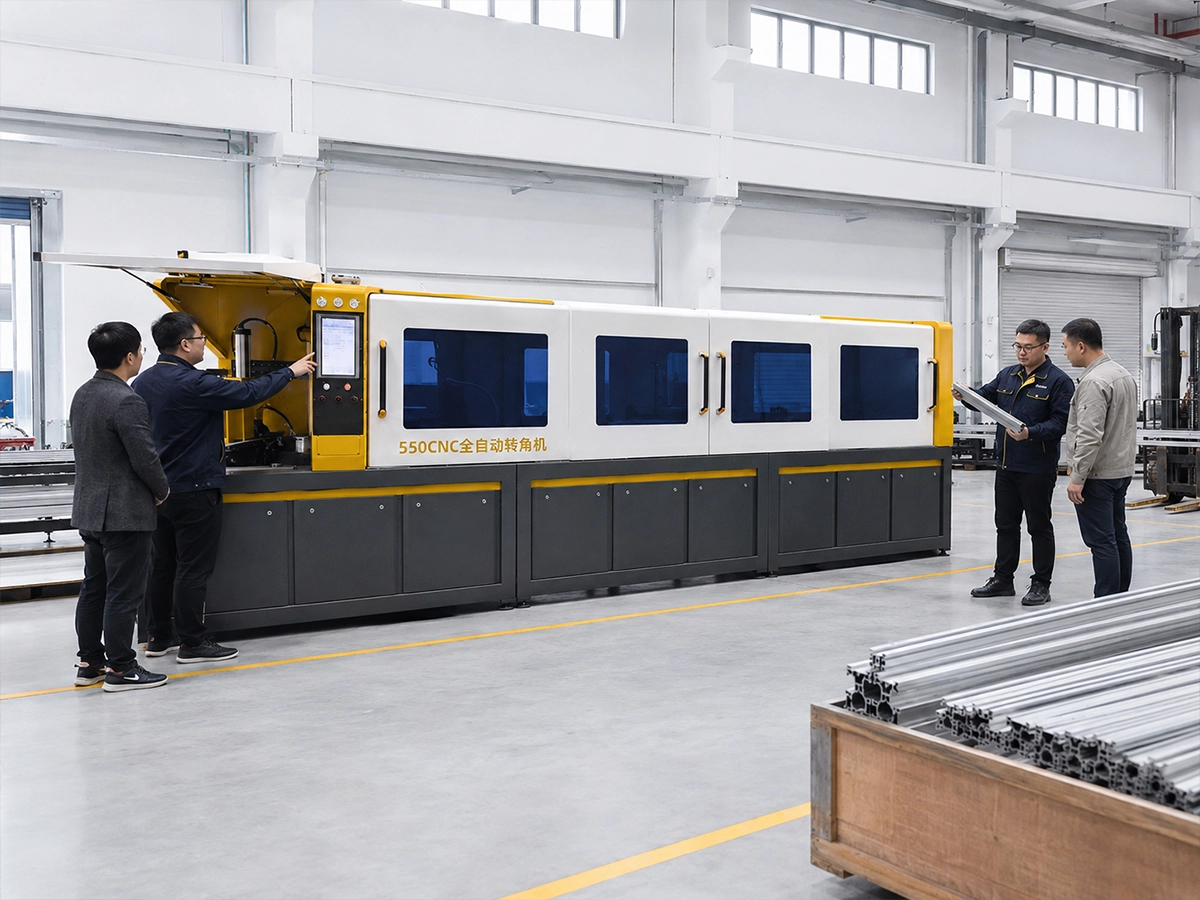
Name a receiving owner, a qualified installation lead, and the person who accepts the completed record. This avoids a gap in which the carrier considers delivery complete while the production team assumes commissioning has already been signed off. If a contractor handles placement, write down where responsibility transfers from rigging to installation.
3. Confirm the installation stage before touching hardware
For aluminum saw shipping restraints, the release stage matters. A device that stabilizes an assembly during lifting may need to stay fitted until the machine is on its supports; a different item may need removal before any powered axis movement. Only the supplier’s instructions can resolve that sequence. Confirm the machine is stable, lifting gear is cleared as directed, and the assigned person has reviewed the isolation and stored-energy requirements for the work. These are planning checks, not instructions to energize or dismantle the saw.
A buyer should ask whether guarding or service panels must be opened to reach a restraint, and how the machine will be secured and verified afterward. If the installation document omits the sequence or leaves an ambiguous “remove before use” sticker, obtain written clarification before work starts.
4. Identify each item against the approved list
Walk the accessible areas with the supplied drawings and tags. Record the identifier, observed location, condition, and intended action for every listed device. Check that the count found equals the count in the shipment document. Do not substitute an unlabelled tie, spacer, bolt, or bracket for a listed part on appearance alone. Conversely, an unlisted fixed part should not be removed merely to make a count match.
If the saw has more than one moving assembly, feed section, or optional accessory, make the supplier confirm which locations apply to the delivered configuration. A “not fitted” result should be recorded explicitly. This turns an uncertain visual search into an auditable exception instead of a silent omission.
5. Release only under the manufacturer’s procedure
The qualified installation lead should follow the manufacturer’s sequence, support requirements, isolation method, and any inspection instructions. Keep personnel outside potential movement paths. Stop if a component binds, shifts unexpectedly, or the observed hardware differs from the drawing. Avoid improvising with a powered jog to “see if it is free”; a failed movement test can damage equipment and does not identify the cause.
Bag or label removed transport hardware by location when the supplier says it should be retained for relocation. Record the removed quantity and the person who performed the work. Do not discard items until the supplier has confirmed their future use and the acceptance record is complete.
6. Close the pre-run acceptance record
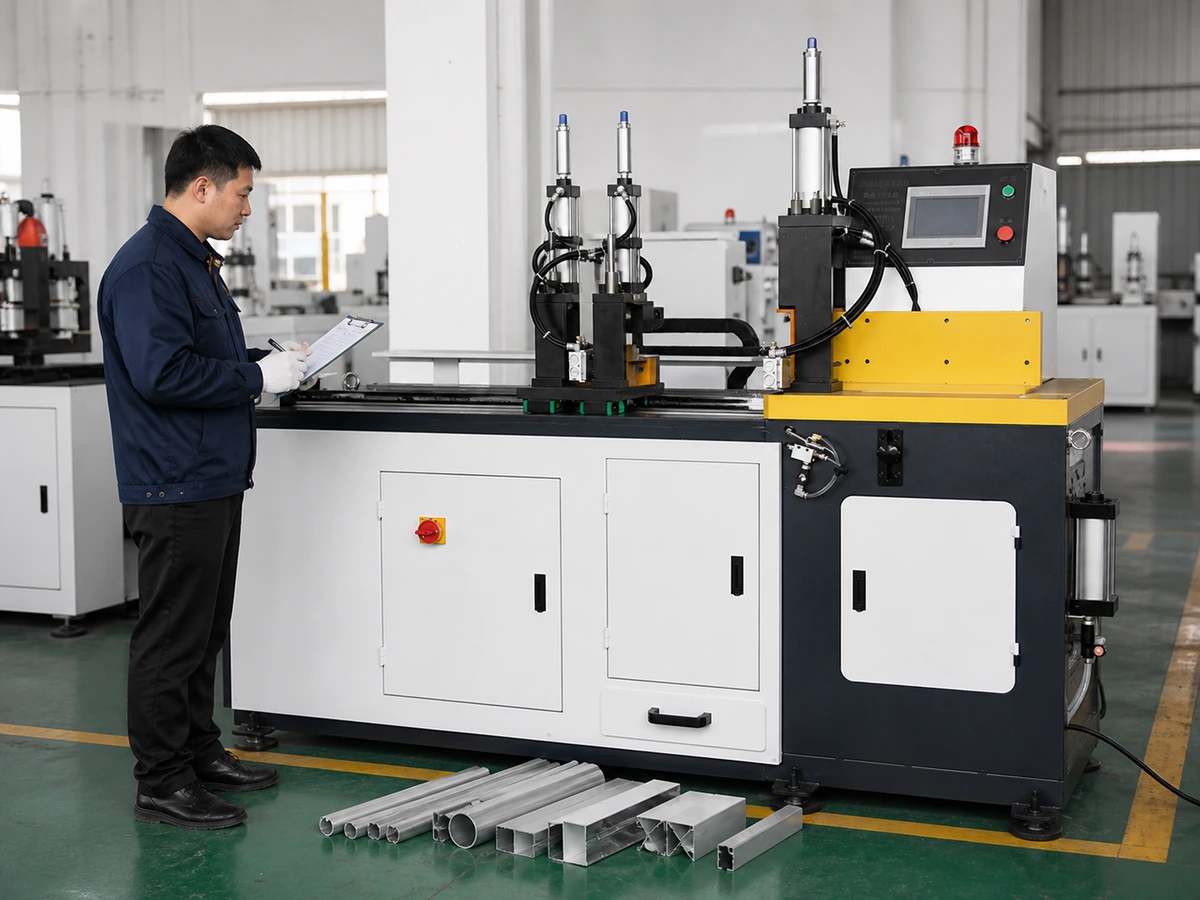
Before production, reconcile the aluminum saw shipping restraints inventory: each temporary item is either removed as instructed, retained intentionally with written justification, or escalated as unresolved. Restore panels and guards that were opened as the manual requires, account for tools and loose parts, and complete the manufacturer’s installation and safety checks. The acceptance signature should identify the machine, document revision, date, installer, exceptions, and the person authorizing the next stage.
A no-load or first-off check belongs only after the installation lead has released the machine and the applicable controls are in place. The post-transport requalification guide covers the later question of whether the installed cutting process meets the buyer’s specification. An intact transport record cannot substitute for a measured cut, and a measured cut cannot retrospectively prove the restraint release was correct.
A concise supplier handover table
| Decision | Evidence to request | Hold point |
|---|---|---|
| What was fitted? | Configuration-specific list with location images and identifiers | Unknown or unlisted hardware |
| Who releases it? | Named qualified installer and manufacturer procedure revision | Responsibility or sequence unclear |
| What remains? | Removed-part count, retained-part list, photographs | Count or condition differs from instructions |
| When can commissioning proceed? | Signed installation inspection and resolved exceptions | Open safety or equipment discrepancy |
Use this as a purchase-order or site-acceptance prompt, then adapt the fields to the actual saw and jurisdiction. It deliberately avoids universal bolt locations, torque values, axis moves, or release order: those details vary by design and belong in the manufacturer’s instructions.
Video: general saw context
The following video from Jiurun’s own channel provides a general view of aluminum cutting equipment. It does not show shipping restraints, their removal sequence, this article’s shipment, a customer installation, or an acceptance result.
Questions to send with an RFQ
Ask the supplier to confirm whether the quoted saw and its optional feed equipment have transport devices, provide the exact installation revision and marked location views, state who may release them, and specify the signed record required before first powered operation. Include your intended unloading route, final location, and any planned relocation so the supplier can distinguish one-time packaging from reusable transit hardware.
For a Jiurun aluminum saw inquiry, send the model or quotation reference, destination, handling plan, and a photograph of any ambiguous item through the JiurunCut contact page before removal. Request a configuration-specific written reply and keep it with the commissioning file.