
Aluminum saw for whiteboard manufacturing is a useful procurement search only when the buyer first separates cut aluminum frame members from the finished writing board. A whiteboard may also need a writing panel, backing, corner joiners, marker tray, end caps and wall-mounting hardware. A circular saw can prepare specified aluminum members; it cannot establish the writing surface’s erasability, magnetic behavior, mounting strength or finished-board dimensions. This guide turns a board drawing into a defensible frame-cutting inquiry.
The intended reader is a whiteboard manufacturer or a supplier of prepared frame kits. The examples below explain purchasing boundaries, not a Jiurun-made whiteboard or a guaranteed saw setup. Confirm the actual extrusion, joint and assembly design before choosing a machine.
Separate the aluminum frame from the writing panel
There is no universal whiteboard frame. A Quartet aluminum-frame board lists a melamine writing surface, tray and hanging system as distinct product features. A Ghent whiteboard-wall example describes an aluminum frame with mitered corners around a separate porcelain surface, plus joiners and an accessory tray. These manufacturer examples show why a finished-board requirement cannot be translated into one cut length or one saw capability. Their materials, dimensions and guarantees do not describe Jiurun equipment or your board.
Write down the purchase stage: raw extrusion, square or miter-cut members, a labeled frame kit, an assembled empty frame, or a complete mounted board. If the quotation is for a saw, define only the members to be cut and the equipment and handling needed for them. Surface fabrication, lamination, panel retention, joiners, tray attachment and installation belong to their own process owners unless a contract explicitly includes them.
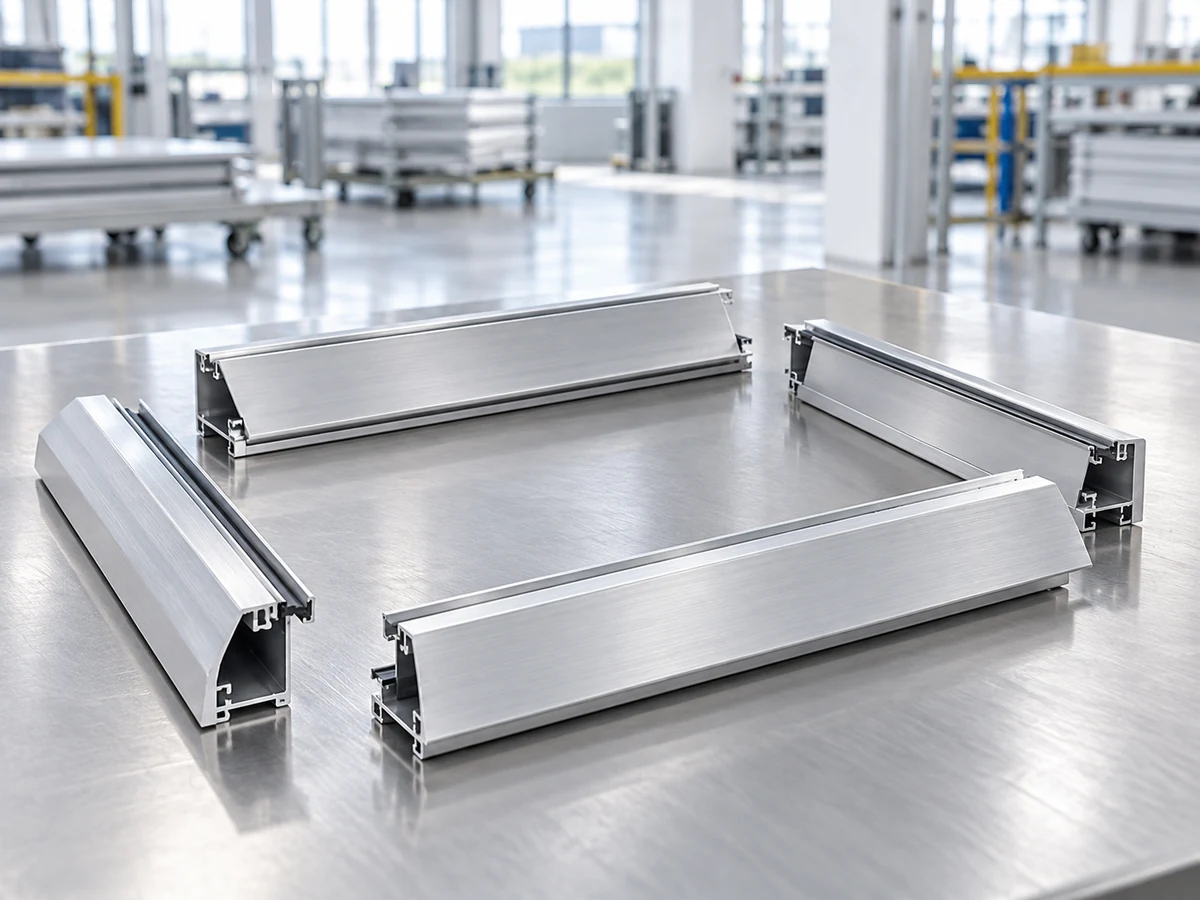
Translate the board drawing into a member schedule
Begin with the physical datum on the approved drawing. “Four feet by three feet” may mean the outside of the frame, the panel blank or the visible writing area. Those are not interchangeable. Ask the board designer which dimension controls, where the extrusion overlaps the panel, which side faces outward and which end is the length reference. Do not invent a miter allowance from the nominal board size. Confirm corner-joint geometry with a drawing or measured sample.
For every rail or upright, record the section identifier, alloy and temper if known, profile width and height, wall or lip features, finish-sensitive faces, stock length, finished length, end angle, quantity per board, drawing revision and kit label. Include separate rows for marker-tray stock and joiner-cover stock if those pieces are cut on the proposed saw. Purchased plastic caps, screws or hanging brackets should remain separate line items. A revision-controlled schedule prevents a technically sound cut from becoming a mixed or incomplete frame kit.
Profile orientation matters. A thin front lip, panel-retaining groove or asymmetric cavity may leave few safe clamping faces. Show the supplier the real extrusion, including protective film or visible finish requirements, rather than supplying a generic rectangular section. The saw configuration must be assessed against the smallest and largest sections and the longest and shortest authorized pieces. Ask how infeed, clamp and outfeed support will hold the functional faces without distortion or marking.
Aluminum saw for whiteboard manufacturing: seven RFQ checks
- Define the purchase boundary. State whether the inquiry is for a saw, cut-member service or complete board. Keep the writing panel and final assembly outside a saw trial unless separately contracted.
- Provide controlled sections. Send an extrusion drawing or actual sample for each frame, tray and joiner section. Identify grooves, thin lips and cosmetic faces that affect holding and blade entry.
- State the dimension datum. Distinguish outside frame, panel blank and visible writing area. Specify the reference end, cut length and which dimension will be inspected after cutting.
- List every end form. Mark square, mitered or otherwise prepared ends by part number. Corner fit must be evaluated on the approved joint, not inferred from a generic angle setting.
- Check handling across the range. Ask what support, stop, feed and collection arrangement the proposed configuration uses for long perimeter members and shorter tray pieces.
- Write a sample acceptance plan. Name sample count, measuring method, length and angle criteria, burr and deformation review, finish protection and the person who will approve the result. Catalog feed-repeatability figures are not finished-member measurements.
- Require traceable kits. Specify part labels, revision, orientation, quantities and separation at packing. This is especially useful when one order contains several board sizes or left/right components.
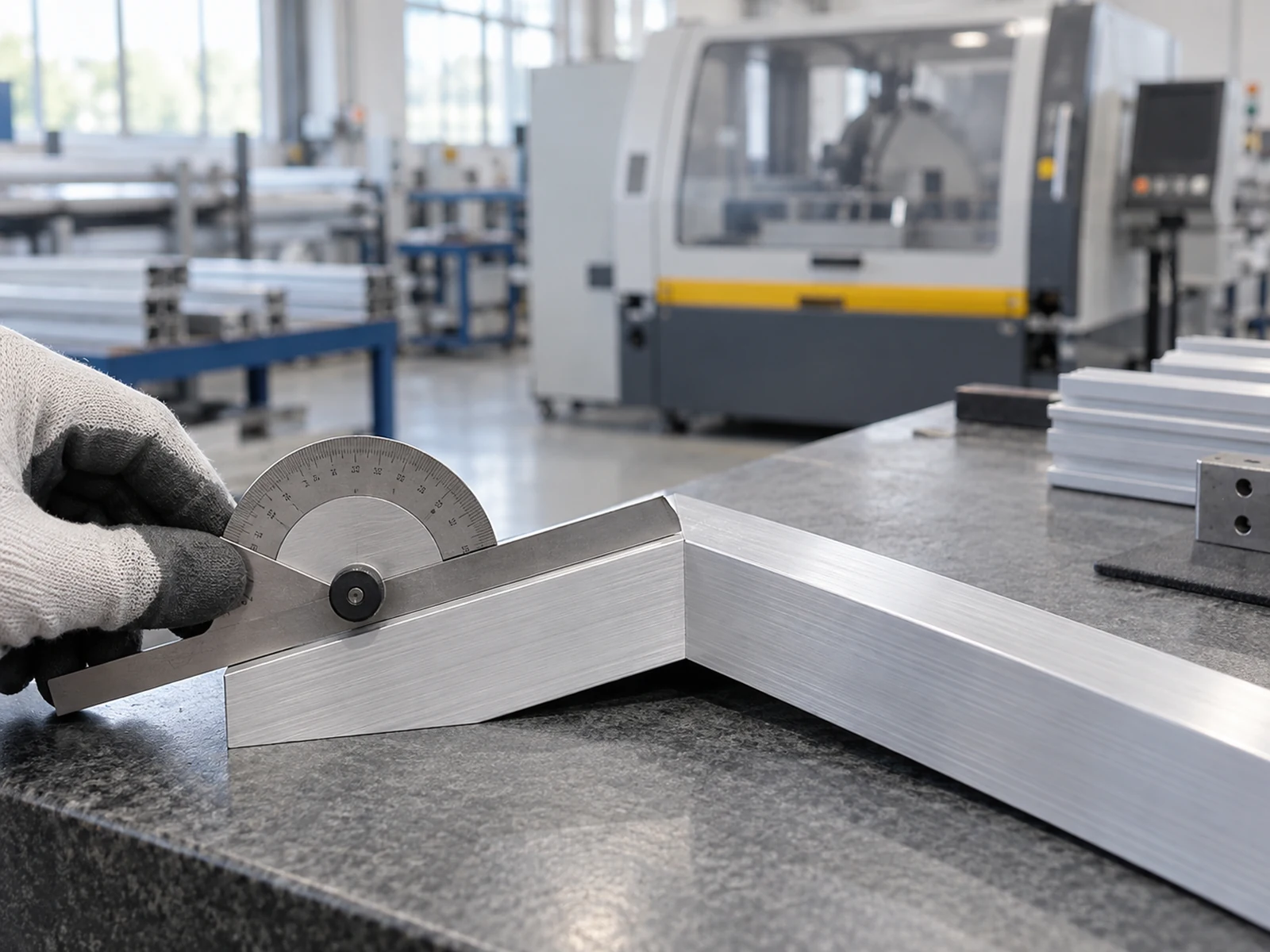
Trial the difficult members and the downstream joint
A sample run should include more than the easiest straight rail. Select a long perimeter member, a short piece, a finish-sensitive profile and an end form used at the corner. If tray and frame sections differ, include both. Record the real material, extrusion drawing revision, blade, fixture, clamp contact, support positions and machine configuration used. A general video or a demonstration on another profile cannot qualify your production blank.
Measure each sample from the datum in the drawing. Check length, relevant angle or squareness, burrs, lip deformation and cosmetic damage. Then make a representative corner or panel-retention check with the responsible assembly team. A well-cut miter can still fail to fit if the panel allowance, joiner or extrusion geometry is wrong. Conversely, a poor corner fit is not automatically a saw error. Keep measurement results and assembly observations separate so the cause can be resolved.
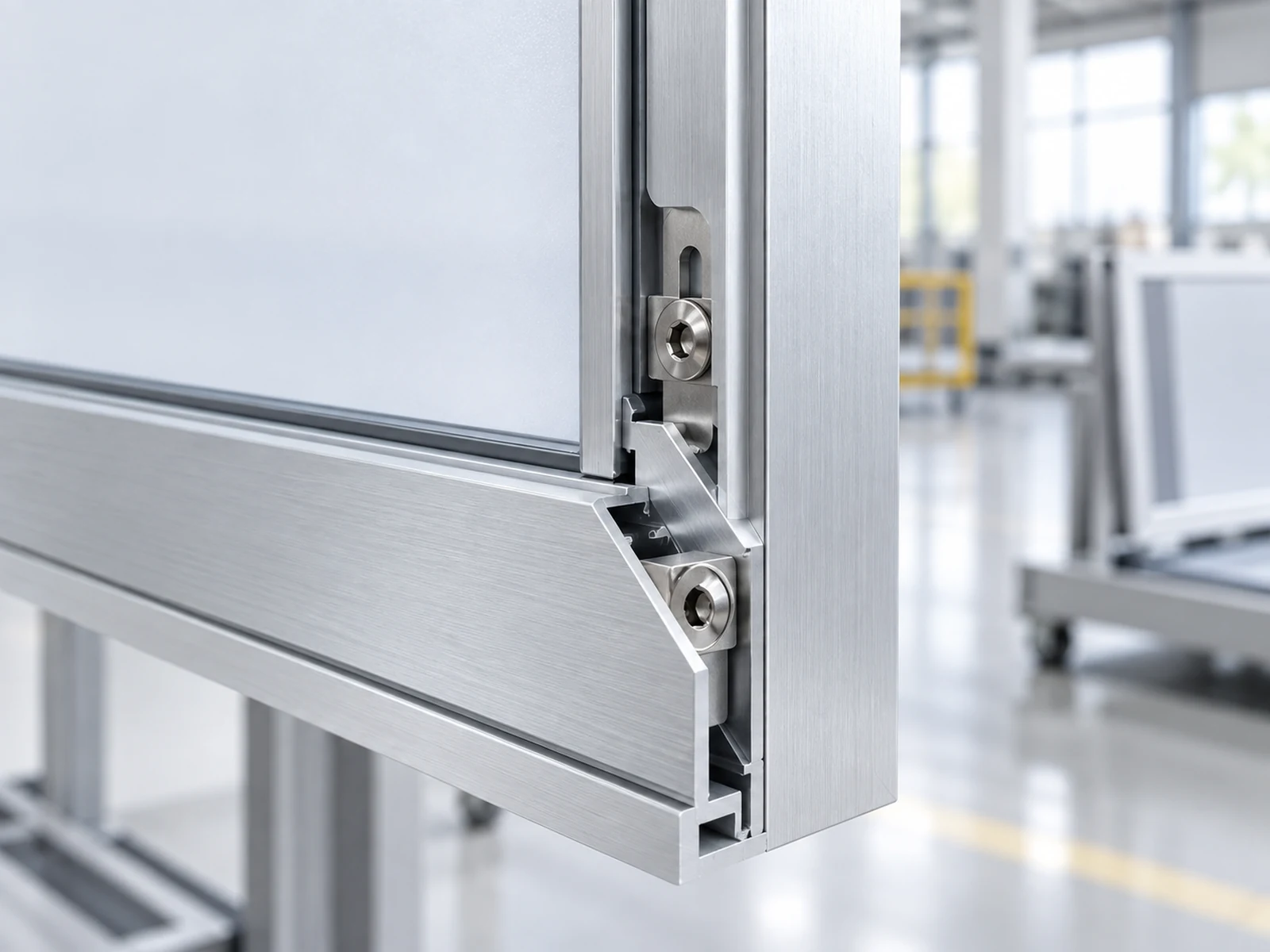
For a deeper look at cut-end diagnostics, see our mitered frame corner-gap guide. The board manufacturer’s actual panel, corner connector and attachment method still govern acceptance.
Compare quotations at the same manufacturing stage
One quotation may include only a saw. Another may include an infeed table, outfeed support, alternate clamps, angle fixture, blade, sample program or operator training. Ask each supplier to itemize what is included, what section range and end forms were actually assessed, what the trial used and what remains for the board maker. Compare like with like. A lower machine price does not resolve a missing support arrangement or a damaged visible face.
Do not transfer whiteboard product claims from Quartet or Ghent to Jiurun. Their surface materials, warranties and accessories are examples of different board systems. Likewise, a circular saw supplier should not promise magnetic performance, ghosting resistance, wall anchorage or panel durability. Those require separate product and installation evidence. Jiurun’s corner-cutting equipment overview can start a configuration discussion, but the machine offer must be checked against your actual profiles and drawing.
Video: a general aluminum-profile cutting view
The following clip is from Jiurun Machinery’s YouTube channel. It shows a general saw and aluminum-profile cutting context. It does not show a whiteboard frame, this article’s extrusion, a customer project, a validated configuration or a performance trial.
Questions before placing an order
Can the same saw cut every frame and tray member?
Only a review of the actual sections, lengths, end forms and proposed configuration can answer. A board family may contain different extrusion profiles that need different clamping or support. Send representative samples rather than assuming one result covers the full bill of materials.
Does a clean frame cut prove the finished board quality?
No. The trial can evaluate recorded cut members under stated conditions. Writing-surface performance, panel retention, corner assembly, tray fit and mounting need their own checks.
What should accompany the inquiry?
Provide the approved board drawing and revision, the controlled extrusion sections, a member schedule, expected output stage, representative samples, finish-sensitive faces and an acceptance method. State which downstream operations you will perform. Send Jiurun the drawings and cutting requirements for a configuration-specific discussion and a realistic sample plan.
Next step: choose one board family and its most demanding frame, tray and corner members. Request a cut-member trial against that drawing, then separately approve the complete board’s panel, assembly and mounting performance.