
An aluminum saw for tripod manufacturing should be specified around the parts your factory actually releases, not around a generic tube diameter or a finished tripod shown in a catalogue. A three-section camera support with a center column can create a different cut-part mix from a video support with a bowl, spreader and no center column. The saw buyer has to connect those product decisions to the extrusions, cut lengths, end conditions and accepted-part handoff that the cell will own.
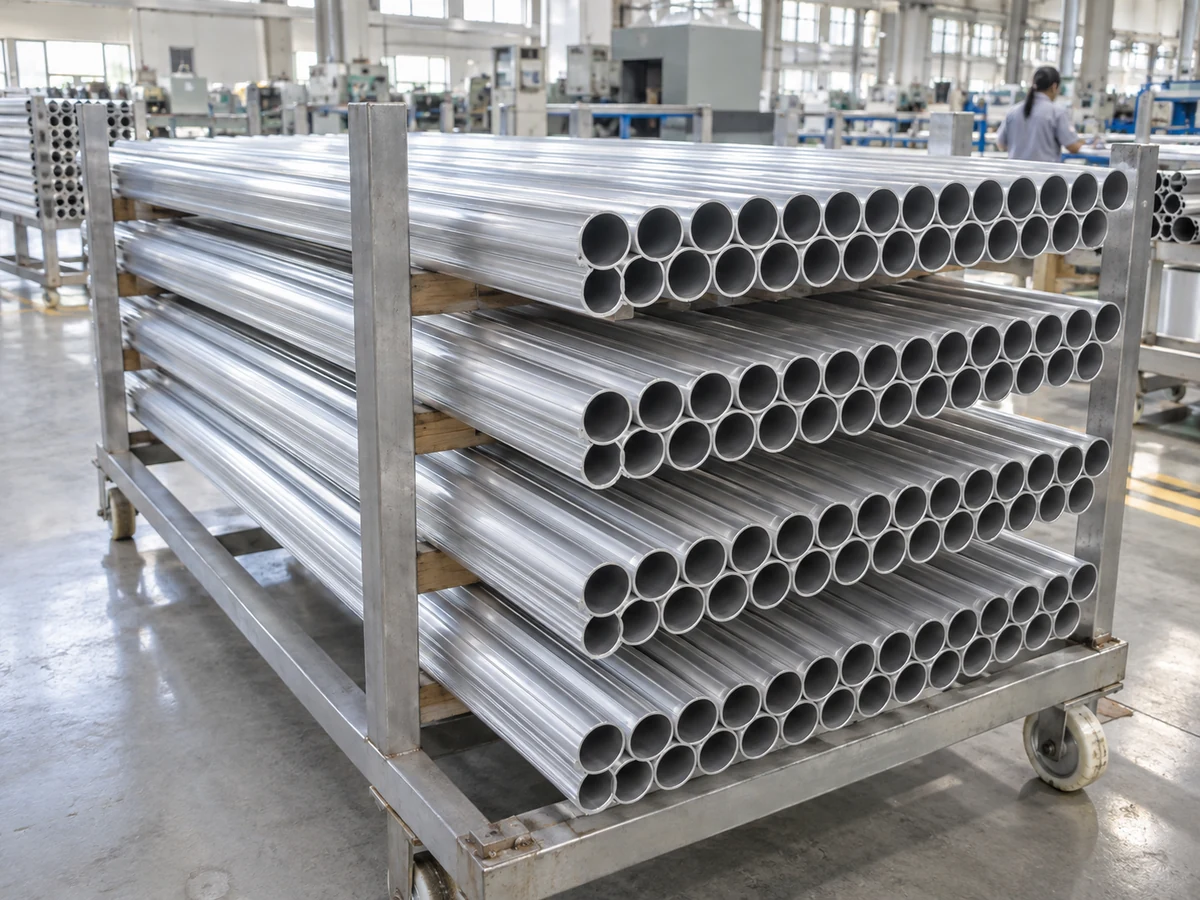
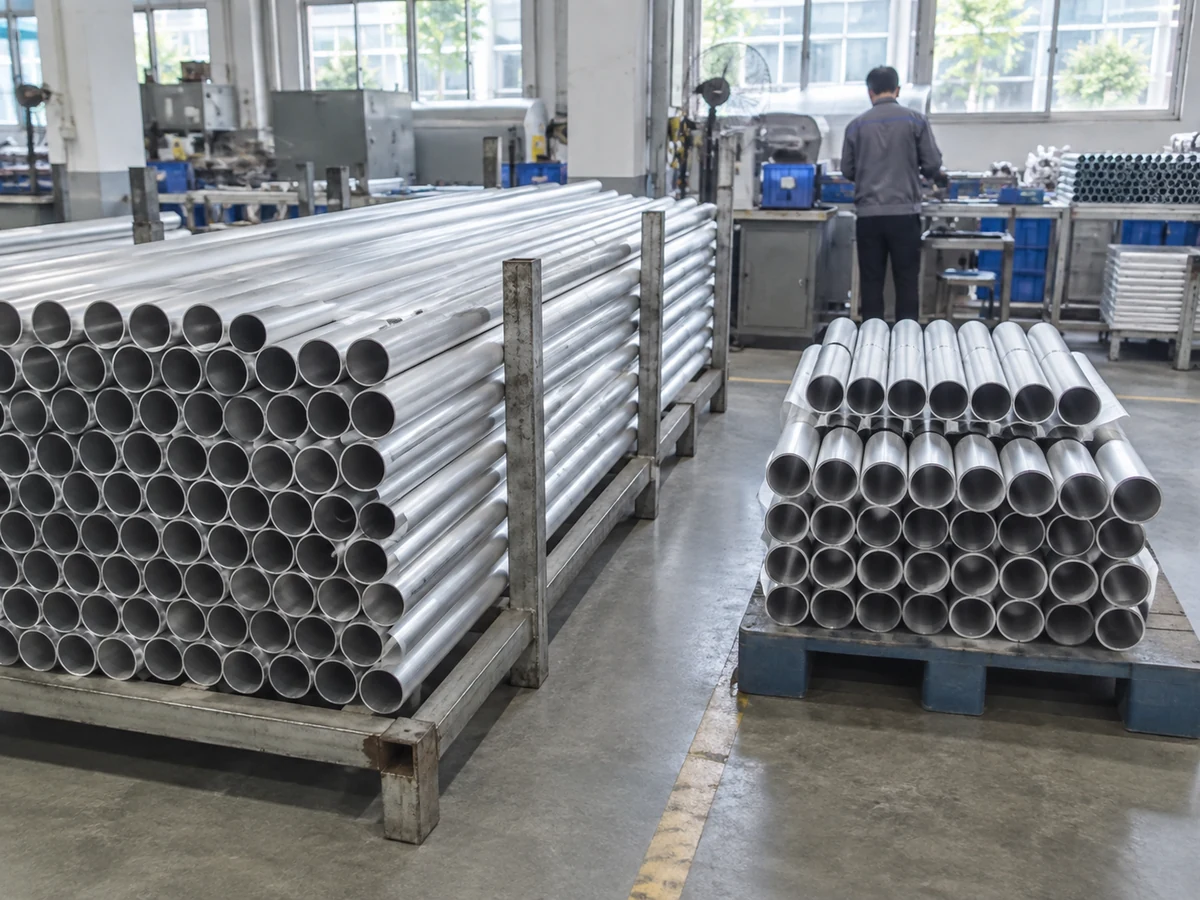
Start with the drawings and order mix. The questions below help a tripod maker decide what belongs in a saw trial, what may stay with an outside cut-part supplier, and which claims must be proven later at assembly. The photographs illustrate related aluminum tube stock and shop handling; they are not a record of any specific tripod project, machine configuration, customer or witnessed trial.
1. Freeze the retained leg and column portfolio before choosing capacity
Make a part-family sheet from released drawings, not marketing names. List each retained leg section, center-column section, brace or other aluminum member that the saw will cut. For every drawing revision, record profile or tube cross-section, stock form, supplier, finished cut length, allowable length variation, end-face requirement, annual and batch volume, and the next operation. Mark which members are bought already cut. A three-stage leg set may require different section sizes and quantities even when all sections are called “tripod legs.”
Keep whole-product features separate from saw scope. An official Manfrotto aluminum tripod example illustrates a product with three-section legs and a center column. An official Benro video-tripod example illustrates a different leg, bowl and spreader arrangement. These public examples show why a buyer should verify the product architecture; they do not provide specifications for Jiurun equipment or for your cut parts. Your released drawings and physical stock samples govern the trial.
If the current mix includes both column and columnless designs, do not assume one trial tube represents them all. Group parts by how they feed, clamp and leave the blade, then select the limiting samples in each group.
2. Decide which cuts your factory will actually own
The purchase case changes if the plant receives full-length tube, pre-cut blanks, or finished leg sections. On an owned cut operation, measure how bundles are received, separated and identified. On outsourced families, specify how incoming cut parts are checked and what capacity would justify bringing them inside later. Do not count outsourced pieces as current saw load merely because they appear in the final tripod bill of materials.
For retained cuts, identify the shortest and longest released blanks, the largest approved stock cross-section, the smallest member that still needs reliable clamping, and the mix of production runs. These are sample-selection facts, not a promise that one machine handles every future product. Ask whether nested stock lengths and the planned cut sequence leave enough usable material; a feed length quoted in a brochure does not settle the yield for your actual nesting plan.
3. Specify the end condition at the cut stage
A tube end may be hidden by a cap, joined to another part, or machined after sawing. Each route puts a different burden on the saw. Give the supplier the drawing revision and state which features are accepted at the saw: blank length, cut-face squareness, burr condition, surface protection, and any angular end cut that the saw must make. If drilling, slotting, turning, deburring or coating follows, assign those features to the correct operation instead of attributing final assembly quality to the saw.
For thin-walled leg sections, the trial should check whether the clamping method dents or marks the visible surface and whether the cut edge needs a separate finish step. For a telescoping section, also check whether the cut end interferes with insertion or a later bushing operation. The acceptance method should name measuring tools, datum and sampling frequency. A feed-position repeatability figure is not the finished-part length tolerance, and neither alone proves assembled tripod stability.
4. Build the mixed-order changeover into the quote
Tripod production may alternate between compact legs, taller support legs, column tubes and occasional braces. Quote the usable output across that mix, including setup pieces, first-off inspection and part-number changes. A headline cycle time measured on a single easy section does not tell purchasing how a mixed order will move through a shift.
Ask the vendor to describe the infeed support, clamping contact, length stop or servo feed, blade choice, guarding, swarf collection and outfeed arrangement for each representative family. Request a changeover sequence: which settings move, which components are exchanged, who confirms the first accepted blank and how mixed bundles are prevented from entering the wrong program. If the existing aisle must also carry people or material carts, use the actual footprint and stock length to review access before ordering; the site’s infeed layout guide gives a separate buyer checklist.
Segregate setup and reject pieces from production bins. Record the changeover loss and whether short trial pieces represent normal-length stock well enough. A short offcut may prove end quality but fail to test full-length feeding, support and outfeed.
5. Aluminum saw for tripod manufacturing: witness the hardest retained samples
Send or bring identifiable stock from the approved suppliers, with drawing revisions and a written trial sheet. Include the slender section most vulnerable to marking, a larger or less stable member, a longest planned blank, a shortest production blank, and at least one real changeover. If a column and leg use different material or extrusion geometry, test both. Do not extrapolate a pass on one stock form to every product line.
During the witnessed run, measure parts against the released cut-stage drawing. Check length from the specified datum, cut-face condition, burrs, visible surface marks, handling damage and part identity at outfeed. Run enough consecutive pieces to expose feeding and sorting issues, then recheck after a changeover. If the machine cannot complete a sample, record whether the cause is machine envelope, holding method, stock condition, blade/process selection or an unresolved drawing requirement. The result should be a dated accepted/rejected sample set and an agreed corrective action, not a broad “tripod capable” label.
Trial pieces should not quietly enter released batches. The site’s setup-cut segregation guide explains that handoff issue in more detail.
6. Define cut-part acceptance separately from finished-tripod acceptance
The saw-cell handoff is a labeled, countable cut-part lot that meets the cut-stage drawing and is protected for the next operation. The finished tripod is qualified later through machining, joining, surface treatment and assembly. A saw trial cannot establish leg-lock retention, telescoping smoothness, stability, payload or service life. Keep those tests with the product team and do not use a generic equipment video as evidence of them.
Before placing an order, align purchasing, production and quality on a short acceptance document: approved part families; exclusions; supplied sample lots; required cut-stage checks; throughput method; setup and scrap accounting; operator training; spares and service scope; and the process for evaluating a new leg design. That document makes the quote comparable and gives the final factory acceptance a clear boundary.
What the equipment footage shows
The video below is general Jiurun saw-equipment footage from the Jiurun Machinery channel. It illustrates equipment motion only. It does not show the tripod leg or column sections discussed here, prove a model configuration, identify a customer, document a witnessed cut, or establish performance for your parts.
Request a drawing-led saw review
Send your released leg and column cut-stage drawings, stock samples, expected batch mix, and the operations that follow sawing to JiurunCut. Ask for a machine review and a witnessed trial plan tied to those parts. Keep final tripod qualification with your product acceptance process.