
An aluminum saw for roller manufacturing should be purchased against the work your factory actually retains. Buying complete rollers, buying prepared tubes and cutting raw aluminum tube are different production routes. A saw that makes the required tube blank does not automatically supply the end preparation, shaft manufacture, bearing installation or finished roller checks your product needs.
Start with a route map for the roller families you intend to manufacture. Decide which aluminum tube work belongs at the new station, what condition that station must hand over and which later operations have their own equipment and acceptance responsibility. Then compare quotations against the same retained scope rather than choosing from a photograph of a roller or an isolated cutting demonstration.
This guide concerns the industrial purchase of aluminum circular-saw equipment for roller tube production. It does not establish a Jiurun model’s capacity, authorize bundle cutting, approve a bearing fit or qualify a finished conveyor roller. Actual drawings, materials and the offered configuration must be reviewed before application approval.
1. Map the roller families before selecting the cutting route
A roller family is more than a tube diameter. A bought-in finished roller and an internally assembled roller can appear similar while creating very different equipment needs. List each family, its order volume, the aluminum tube work retained by your factory and the state in which its components arrive. Keep steel tubes, polymer tubes and steel shafts separate from the aluminum saw inquiry.
Ask production and purchasing to reconcile this map. Purchasing may buy a prepared tube for an established family while a development team expects to machine another family from raw tube. A quotation based only on the established family could miss the new retained operation. Conversely, buying a saw for work that is already included in a bought-in roller can create duplicated investment.
The Interroll Series 1500/1520 catalogue illustrates why roller identity needs several fields: its family selection includes tube material, tube diameter and wall thickness, alongside end-cap, bearing and spindle choices. Those catalogue choices belong to the manufacturer’s product family. They are not Jiurun cutting capacities, and they do not mean every displayed combination is available or interchangeable.
Use your released roller bill of materials and drawings as the controlling records. Where a component choice is unresolved, mark the family conditional. Do not replace an unresolved production decision with an assumed tube specification simply to complete a machine inquiry.
| Incoming purchase | Potential retained aluminum work | Purchase decision |
|---|---|---|
| Complete approved roller | No retained tube manufacture for that order | Do not count it automatically as saw demand |
| Prepared aluminum tube | Assembly or later work defined separately | Confirm whether a new saw has a role |
| Raw aluminum tube | Tube blank production and specified later operations | Assess the retained cutting station and handoff |
| Mixed or unresolved supply | Family-dependent work, not yet released | Resolve the route or quote it conditionally |
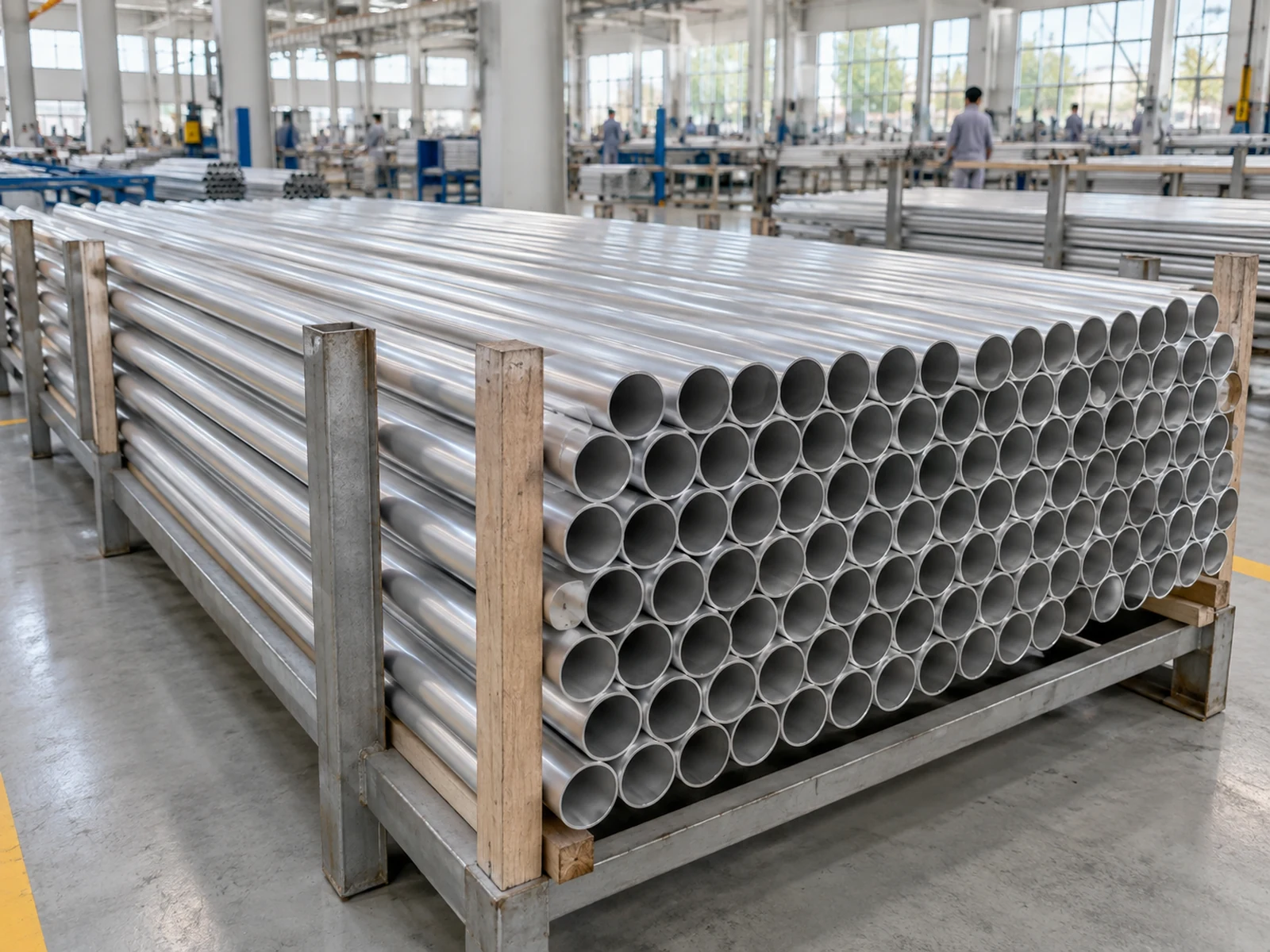
2. Separate saw-only supply from the complete manufacturing route
For each retained family, draw the route from incoming tube to the output your customer buys. Identify the saw operation and every later step required by the drawing. End preparation, deburring, cleaning, coating, component installation and completed roller checks may belong to different owners. A supplier’s saw offer should state which of these operations, if any, are included.
There is no need to force every process into one machine purchase. A saw-only station can be appropriate when the factory already has suitable downstream equipment. The important requirement is that the saw’s output state and the downstream receiving condition agree. If they do not, the missing work needs an identified method, owner and cost before the offer becomes comparable.
Do not describe a saw-length setting as a completed roller acceptance. The tube blank, prepared tube, installed components and completed assembly can have distinct acceptance requirements. Feeding accuracy, where documented for a particular model and configuration, must not be substituted for finished tube or roller accuracy.
Request three boundaries in the offer: supplied equipment, buyer-provided equipment and excluded operations. Where a later operation is quoted by a separate supplier, preserve its relationship to the same roller family and drawing revision. This prevents a low saw price from concealing a required process that neither party priced.
The scope decision should also distinguish tube cutting from shaft cutting. A roller that uses an aluminum tube can still use a shaft made from another material. Confirm the shaft route independently. Nothing in this article establishes that an aluminum cutting saw should cut those shafts, or that an aluminum application approval extends to other materials.
3. Translate the product mix into a real production campaign
Use an actual planned campaign containing the families the proposed station must serve. Give each row a family code, approved material and condition, incoming stock identification, required blank output, quantity and due date. Identify frequent families, occasional families and families that will remain outsourced. Total roller orders alone are a poor substitute for retained tube-cutting demand.
Keep product changes visible. A campaign with one long run and a campaign with several short families can have the same nominal number of pieces but different preparation and handling work. Ask the supplier to explain how the offered configuration changes between your families, which work is manual and what checks are needed before the next family is released.
A demonstration should therefore include meaningful boundaries rather than only the easiest repeated cut. Observe incoming stock introduction, family preparation, the cutting stage, output removal and any required checks. Record the start and end of the observation. A filmed cutting cycle is evidence for the filmed stage, not automatically the elapsed time for your entire manufacturing campaign.
If the factory proposes cutting several tubes together, declare that request explicitly. The supplier must assess the actual tube families, quantity, handling, locating and supplied configuration. A photograph showing multiple tubes on a table is not approval for bundle cutting. A demonstration involving one approved family does not approve a different wall condition or batch arrangement.
Use output that meets the agreed receiving state when assessing the campaign. Keep held, damaged and unfinished items separate. Do not compensate for an unexplained disposition by treating all pieces leaving the saw area as accepted production.
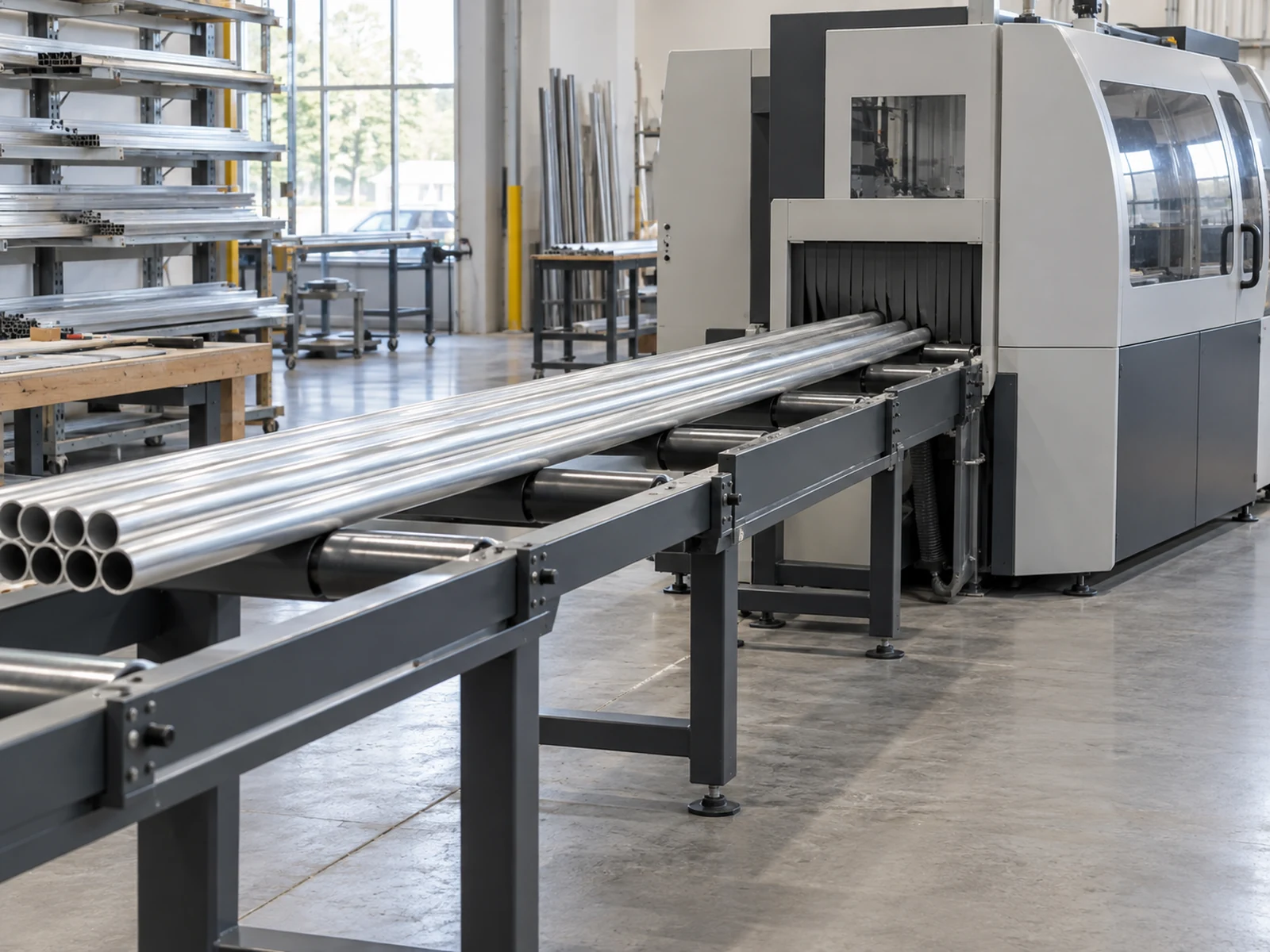
4. Match stock handling to the actual tube condition
The purchase specification should connect the material arriving from your supplier with the input the cutting station can receive. Describe the actual storage and delivery form, identification method and condition of the stock. Where preparation is required before loading, state who performs it and whether the proposed equipment price includes the relevant work.
Round tube can roll or change position during handling. Ask for the proposed support, loading, locating and output collection arrangement for your actual stock. The response should name the included equipment and explain the operating boundary. Do not derive a safe holding method from a generic image, or assume the factory’s existing tables are suitable for a new station.
Surface condition matters when it is part of the released roller requirement. If the tube is supplied with a finish or protective material, identify that condition in the assessment. The supplier should review it with the actual cutting task. The buyer should define unacceptable handling marks and how receiving inspection will identify them, rather than assuming that a visually clean demonstration covers every supplied condition.
Keep stock and output identity through the station. Two roller families may look similar while belonging to different tube specifications, finish states or orders. A shared collection bin can create a sorting task the quotation never mentioned. Ask how family changes, partial lots and held outputs remain identified until the downstream owner accepts them.
Review available factory space against the proposed arrangement, including the incoming and outgoing material routes. Confirm utilities and access from the actual supplier requirements. Generic dimensions or a general product video cannot establish that the quoted station will fit your floor plan.
5. Define the handoff to end preparation and assembly
Define the receiving state for the next retained operation in plain language and on the applicable drawing. It may be a cut blank for further machining, a cleaned tube for component installation or a prepared tube from an outsourced operation. Do not combine these states under a single label such as finished tube unless everyone uses that label consistently.
Where end preparation is retained, ask its owner what input condition it accepts from the saw. Identify requirements for length references, remaining work and surface condition using the actual drawing. The saw supplier should respond to the cutting task; the later process owner should confirm its own method and acceptance. A machine offer becomes incomplete when a necessary handoff has no responsible owner.
Bearing or end-cap installation belongs to the relevant component and assembly specification. Do not infer a valid fit from an apparent diameter in a catalogue picture. If the assembly team requires a particular prepared end condition, include that requirement in the retained route and allocate the operation that produces it. Component design approval remains separate from equipment selection.
Agree how held outputs move through the route. A tube waiting for a disposition should remain distinguishable from released input. If a replacement blank is cut, associate it with the original requirement so both do not become additional demand. This is especially important when a campaign is split between internal production and an outsourced prepared-tube supply.
Finally, identify what the factory actually sells. A tube supplier may stop at the approved component boundary. A roller assembler may retain additional operations and completed product checks. The equipment inquiry should reflect that business boundary without imposing processes the buyer does not retain.
For the individual tube drawing stage, use the roller tube fit-check inquiry as a separate reference. The manufacturing-route decision still needs the retained operations, owners and accepted handoffs described here.
6. Ask for evidence tied to the offered configuration
Prepare representative material and released documents for the families whose assessment affects the purchase. Ask the supplier to associate its response with the offered model, tooling, support, handling arrangement and output state. Evidence should identify the assessed family and configuration clearly enough that a buyer can distinguish it from a general promotional demonstration.
Record what was actually observed and what remains open. If a demonstration shows cutting but omits a family change, replenishment or output collection, mark those stages unobserved. If prepared ends or installed bearings appear in a later image, ask which process produced them. Their presence does not prove the saw supplies that operation.
Evaluate the observations against buyer-defined acceptance requirements. A sample appearance, a length observation and a completed roller inspection answer different questions. Keep their methods, references and responsibility distinct. Do not transfer a result to another tube family merely because the outside diameter looks similar.
Where full evidence is unavailable before quotation, request a conditional offer with an explicit assessment plan. The plan should state the unresolved family or operation, the representative input required and the decision it will support. This is more useful than an unrestricted assertion that the machine handles roller production.
Compare offers row by row. A family may be confirmed, conditional or excluded. Missing evidence should remain visible instead of being absorbed into a blanket capability claim. This makes it possible to decide whether to retain one route, outsource a difficult family or pursue a different equipment scope.
7. Compare accepted production and ownership cost
Include the equipment and work necessary to deliver the same retained output when comparing purchase routes. Separate the saw price from tooling, support and collection equipment, later operations, buyer-provided work, commissioning and continuing service items. Request the actual supplier terms and prices; do not insert invented market costs into a purchase justification.
Consider the consequence of a family change or service event for the retained route. Identify who prepares a changed family, who verifies its first output, what assistance is included and which parts or tools belong to the quoted configuration. A general service statement does not resolve a dependency that stops your downstream assembly process.
The following example is invented only to explain production records. It is not a customer result, a trial or a Jiurun performance figure. A campaign calls for 50 rollers of family A and 30 of family B, each requiring one retained aluminum tube. The saw produces all 80 blanks. End preparation releases 46 A tubes and 30 B tubes while four A tubes remain held.
The released tube output is 76, not 80 completed rollers. Suppose the A assembly uses two matching end components per roller and only 90 approved components are available. That supports 45 complete A component sets, leaving one released A tube waiting for two components and four A tubes held upstream. The B component route must be assessed separately.
This distinction prevents a misleading investment conclusion. More blank cutting will not resolve the A component shortage or establish the disposition of held tubes. Compare the retained route using its accepted output and actual causes of delay. Where your business sells tubes rather than assemblies, stop the record at the agreed tube-delivery boundary.
8. Send an inquiry that supports a purchase decision
Send the roller-family route map, released tube and part drawings, incoming stock conditions and representative production campaign. State which families are bought complete, bought prepared, outsourced or retained internally. Identify the aluminum tube cutting work for the proposed station and keep other materials and shaft routes separate.
Include the required handoff condition and the owners of later operations. Ask for a quotation naming the proposed model and supplied configuration, assessed families, support and collection scope, tooling, buyer-provided work and exclusions. Request the evidence needed for conditional families and the actual terms for commissioning and continuing support.
Use the next exchange to close the uncertainty that affects the purchase. It could be an unassessed tube family, an unresolved end-preparation handoff or an observation missing a material change. Another video of the easiest cut does not answer those questions. Preserve the family and drawing references so replies from different suppliers can be compared.
Contact Jiurun with your retained roller tube production route to request an aluminum circular-saw assessment. Send the actual aluminum work your factory must perform and the output it must deliver. Confirm application and configuration before selection, while keeping component fit and finished roller qualification with their responsible processes.
See the aluminum cutting stage in context
This Jiurun video shows a general aluminum cutting-stage context. It is not a roller qualification, a bundle-cutting approval or evidence for the invented campaign. Your actual tube families and retained manufacturing route require a separate assessment.