
Aluminum saw for pallet manufacturing is a capital purchase question only after the manufacturer knows which pallet components it will actually make. A finished pallet, a prepared set of aluminum members and raw extrusions are different inputs. A profile saw can cut approved straight metal stock to a specified blank; it does not turn those blanks into a qualified pallet or establish its load, joining, handling or regulatory performance. Build the saw request around released member demand, then compare the complete supply routes at the same accepted stage.
This guide is for a pallet OEM or its authorized component fabricator. A warehouse choosing finished pallets should obtain a product specification from the pallet supplier. It should not derive a fabrication plan from a photograph, a nominal pallet footprint or a saw quotation.
Start with the product families the factory has released
Aluminum pallet designs are not one universal cut list. Hurtz’s aluminum pallet range distinguishes standard Euro and industrial formats, custom pallets and stacking frames. Its Euro-format product listing shows examples with different numbers and orientations of rungs and runners. Those are examples of finished products from another manufacturer, not Jiurun projects, interchangeable designs or permission to copy their dimensions. They demonstrate why even a repeated overall pallet format does not prove an identical set of saw-cut members.
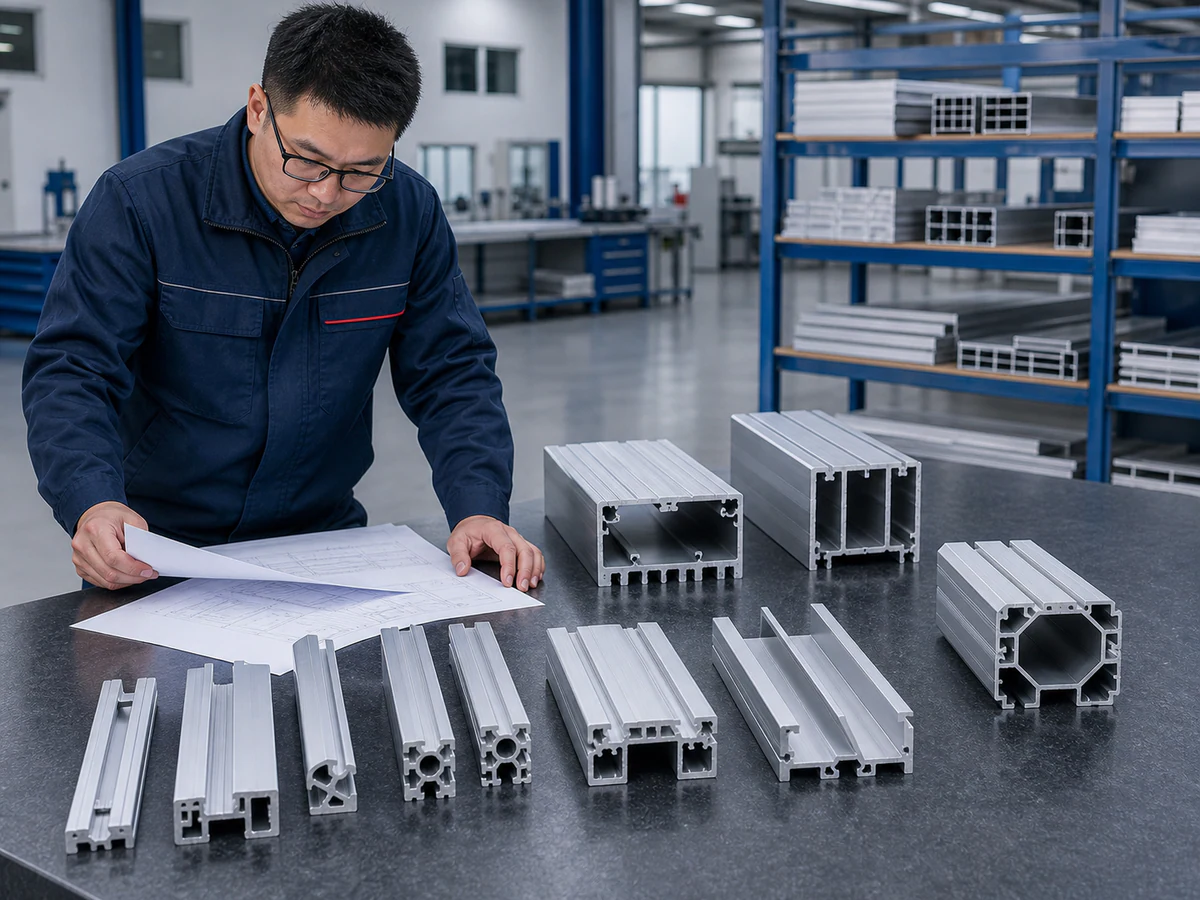
List the factory’s released pallet families and revisions first. For each, identify deck members, cross or longitudinal rungs, runners, edge members and any frame pieces by the actual drawing. Separate bought or separately produced feet, formed sheet, plate, castings and fittings. If a part requires machining, forming, welding or another operation after sawing, show that handoff explicitly. Do not label every visible part “extrusion work.”
Choose the receiving stage before pricing a saw
There are three materially different buying routes. The factory can buy a completed, supplier-qualified pallet; buy a prepared member set while retaining joining, finishing and product verification; or retain approved stock and perform the eligible cuts in-house. A “member set” quote must name its exact contents and the operation completed on each part. A “finished pallet” quote must name the finished product and the supplier’s acceptance responsibility. The saw route must include all downstream work needed to reach the same accepted pallet, rather than stopping its cost calculation at a cheap cut blank.
Put one receiving definition in the RFQ: individually labeled square-cut members to a drawing; a full identified cut-member kit for one pallet; or an assembled pallet meeting the product owner’s released specification. Record what the quote excludes. A pallet height, deck width or fork-entry geometry is not automatically a saw length or setup instruction. The drawing must give each blank’s length reference and later joint or feature location. Our finished-length datum guide explains why the measuring faces must be named before the trial.
Convert sales volume into real saw-member demand
Do not multiply a total pallet sales forecast by one assumed profile count. Build a family-by-family matrix: released product, revision, receiving stage, eligible aluminum section, blank length and end condition, pieces per accepted pallet, planned pallet quantity, stock condition and batch frequency. Subtract completed pallets and member kits already bought. Keep an unapproved repair request out of production demand until the product owner has released a replacement part and acceptance route.
The useful comparison unit is an accepted member set, not cycles per minute in isolation. A one-cut demonstration might omit several members, setup changes, sorting or first-off inspection. For each representative family, time the complete route from approved stock presentation to labeled accepted blanks, including changeovers and handling. Our cut-part demand guide shows why product demand and required saw-part quantity must use the same time period.
Trial the limiting sections and protect their identity
Ask the saw supplier to evaluate real stock from the released portfolio: the longest relevant member, the shortest member that still needs a stable setup, and the most difficult profile to support or clamp. Identify hollow chambers, thin faces, surface finish and the face used as the datum. Agree how the stock is supported, where clamps may touch and how the accepted end condition is checked. A nominally similar test bar may conceal contact, burr or squareness problems in the real section.
For each trial member, preserve the source lot, drawing revision, section orientation, program or stop setting, blade identity and measurement points. Measure the first-off pieces to the buyer’s specified length and end criteria, then inspect burrs, crushed slots, visible-face damage and handling marks. Continue with a complete member set for one released pallet family. The pallet owner must separately approve joining, deck geometry, handling interface and finished-product qualification; a neat cut face is no evidence of a load rating or hygiene certification.
Keep the mixed-family trial honest. If one design uses a different extrusion, finish or length range, record the new setup and its result. Do not combine unlike sections into an average that appears to prove all pallet models. Trial any requested automatic feeding with actual stock and downstream receiving capacity, rather than assuming the presence of a loading rack makes the overall line automatic.

Compare full-route cost and release responsibility
For the retained-cutting route, include the saw, material presentation, fixtures, blade and pad consumption, setup and first-off work, operators, inspection, scrap, labeling, storage, packaging and the remaining joining and product verification. For bought kits or pallets, include the supplier’s actual accepted stage, freight, incoming checks, changes and the cost of any work the buyer still performs. Compare all routes over the same released family mix and demand period. An unresolved custom design or occasional repair is a separately priced scenario, not free volume to justify a machine.
The result is a decision, not a promise that in-house sawing will always win. Buying finished pallets may be the correct route when product qualification and assembly are outside the buyer’s factory. Buying member kits can fit a factory that controls the finished product but does not want to saw every extrusion. Retaining stock cutting only makes sense when the approved member portfolio, trial evidence, capacity and full-route economics support it.
Send a machine RFQ that can be tested
- Released pallet families, revisions and demand by the same time period; flag bought finished pallets and bought member sets.
- Actual extrusion drawings and sample lengths, finish condition, protected faces, blank length datums and end criteria.
- One full accepted member set per representative family, with labels linking cut parts to the correct pallet revision.
- Longest, shortest and hardest-to-clamp sections for a witnessed trial, including changeover and first-off checks.
- Named owners for feet, formed parts, joining, finishing, inspection, final product qualification and any replacement-part release.
- Cost boundary from incoming stock to the same accepted stage as the competing bought route.
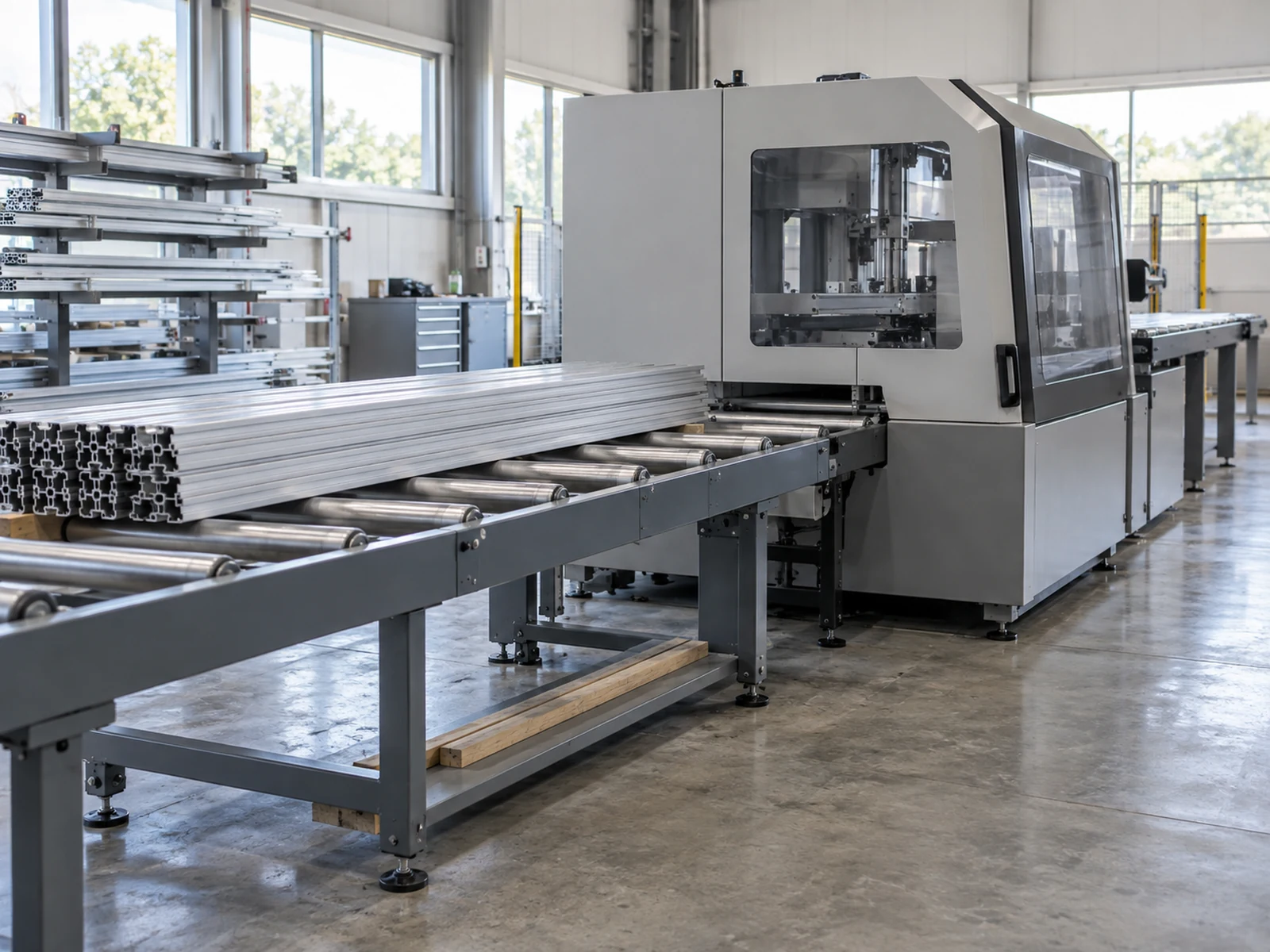
Video context: This Jiurun Machinery channel video shows a separate automatic aluminum-profile cutting machine scene. It is a related equipment example, not a pallet manufacturing project, selected saw configuration, customer order, representative trial or performance evidence for this RFQ.
If you make approved aluminum pallet components, send Jiurun your released member drawings, actual extrusion samples and planned accepted output. We can discuss the saw-cut stage while your pallet team retains responsibility for the finished product.