
An aluminum saw for charging stations should be selected from the mechanical parts your factory actually makes. A charging unit can combine an extruded shell, a support column, separate cooling components, sheet-metal panels and bought electrical assemblies. A profile saw may prepare defined extrusion members within that route. It does not replace the other manufacturing operations or establish that the finished charging equipment meets its electrical, enclosure or thermal requirements.
Before requesting a model, decide which mechanical inputs you buy prepared and which you intend to cut in-house. Then follow each retained extrusion from its incoming state to the operation that receives the cut piece. The purchasing question is the complete supply route for the product family, rather than the presence of aluminum somewhere in a charger.
Define the workload of an aluminum saw for charging stations
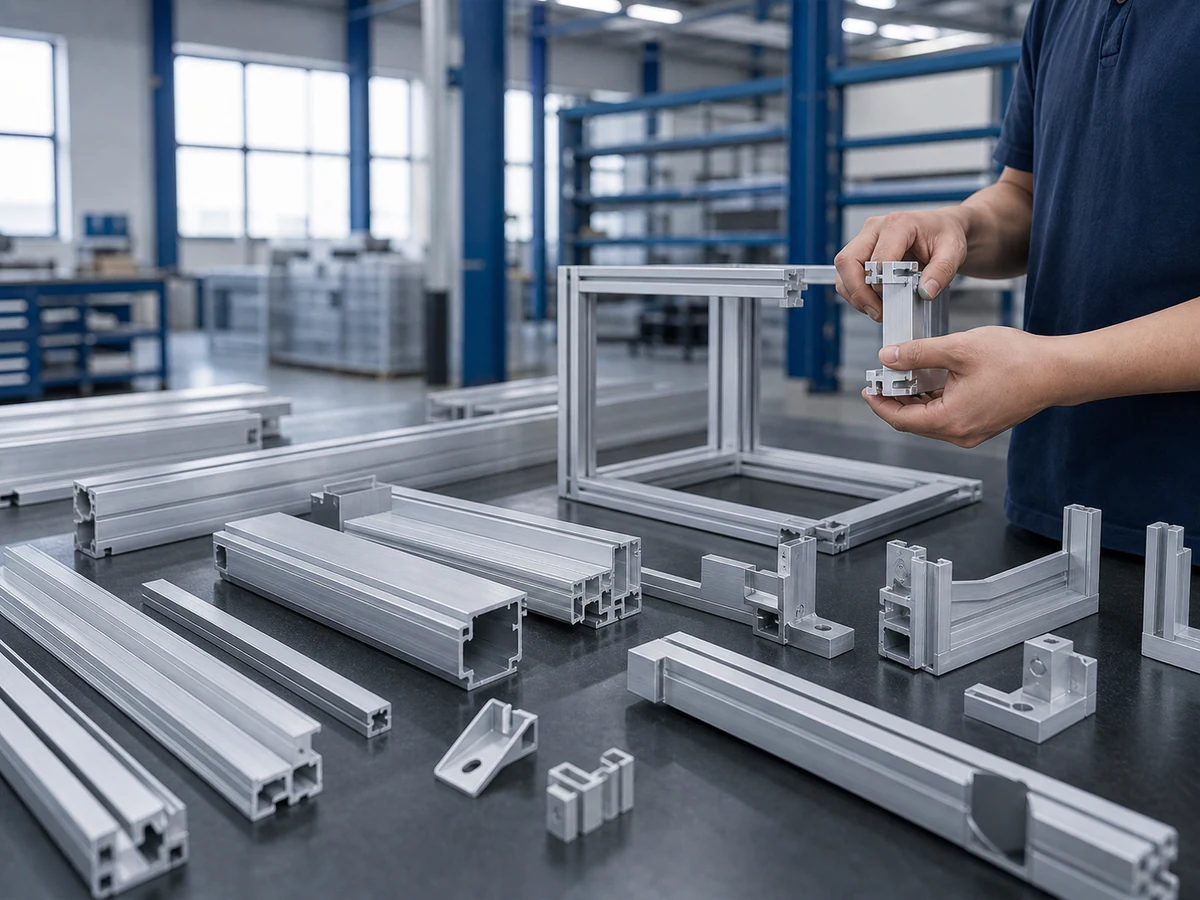
Start with the released mechanical bill of materials. Identify each retained profile by part number, drawing revision and processing stage. Keep complete bought housings, ready-made support assemblies, separate heat sinks and sheet-metal parts outside the profile-cutting workload unless you have a defined reviewed cutting task for them.
Hydro’s e-charging application overview shows extrusion concepts for outer shells, support feet, main station elements and structural profiles. Its examples include grooves, mounting interfaces and integrated fins. These are application-design examples, not proof that a JiurunCut machine processes those particular sections or that a cut part delivers the completed unit’s required performance.
Use that range of possible inputs to ask a practical question: which part is a length-cut extrusion at your factory, and which is already a finished assembly or another stock format? Request the proposed cutting configuration against the retained profile drawings and actual incoming material. Avoid selecting the saw from a photograph of the completed charger.
Compare the purchased object with the retained manufacturing route
Three distinct supply choices can place different demands on a cutting station. Define the purchasing alternative first, then compare equipment and prepared-part quotations on the same deliverable scope.
| Purchased input | Possible retained work | Boundary to confirm |
|---|---|---|
| Finished enclosure or support assembly | Receiving and approved final assembly | Any separate local cut work must be identified; bought finished members are not saw demand |
| Prepared extrusion components | Remaining member work and separately arranged assembly | Delivered preparation state, finished references and excluded machining or finishing |
| Extrusion stock | Defined cuts plus the actual downstream preparation route | Reviewed sections, contact surfaces, end requirements, handling and trial evidence |
A low saw price can be misleading if the comparison omits the machining, finishing or identification needed to reach the same prepared component. Equally, buying a complete housing may remove most of its extrusion cutting from your retained work. Use the actual sourcing decision rather than treating every supplier option as the same volume of aluminum to cut.
Treat an extruded shell as a specific input object
A shell profile can have a broad outline together with internal grooves, thin walls, screw channels or projecting features. Provide the actual cross-section and material condition. Ask how the proposed supplier reviews its support and contact arrangement during feeding, holding and cutting. A nominal rectangular capacity comparison is only one part of that assessment.
Identify the output required at the cutting stage. If the shell receives end plates or later machining, use its approved component drawing to define the length reference and end condition. A finished enclosure’s outside height is not automatically the saw length of its extruded portion. Do not add a universal allowance or assume that every later operation leaves the reference unchanged.
The extruded aluminum enclosure cutting guide supports component-level checks. For the complete charging-station purchase, add the retained supply scope, other extrusion families and separate stock formats. Demonstrating one shell cut does not establish the whole equipment investment case.
Keep the support column and its cover as separate members
If the approved support design uses a column and a separate closing profile, give each its own input and output record. They can differ in cross-section, finished surface and end processing. State the approved relationship between their lengths and the receiving assembly. Do not assume they share a cut setting merely because they appear beside one another in the product.
Describe the actual connection stage for the base, end cap and other attached parts. Where drilling or machining establishes an interface, identify the required blank condition and the department or supplier responsible for that operation. Ask the saw supplier to review only the cutting work you retain. An illustration of wire routing inside a support is not an instruction to modify the electrical design.
Include support-member handling in the quotation discussion. Clarify how incoming lengths are presented, what is supported during the reviewed cut and how outputs are transferred without losing their identity or required surface condition. These are separate functions; a description of automatic feed should not silently include all handling and collection work.
Distinguish integrated fins from separate cooling components
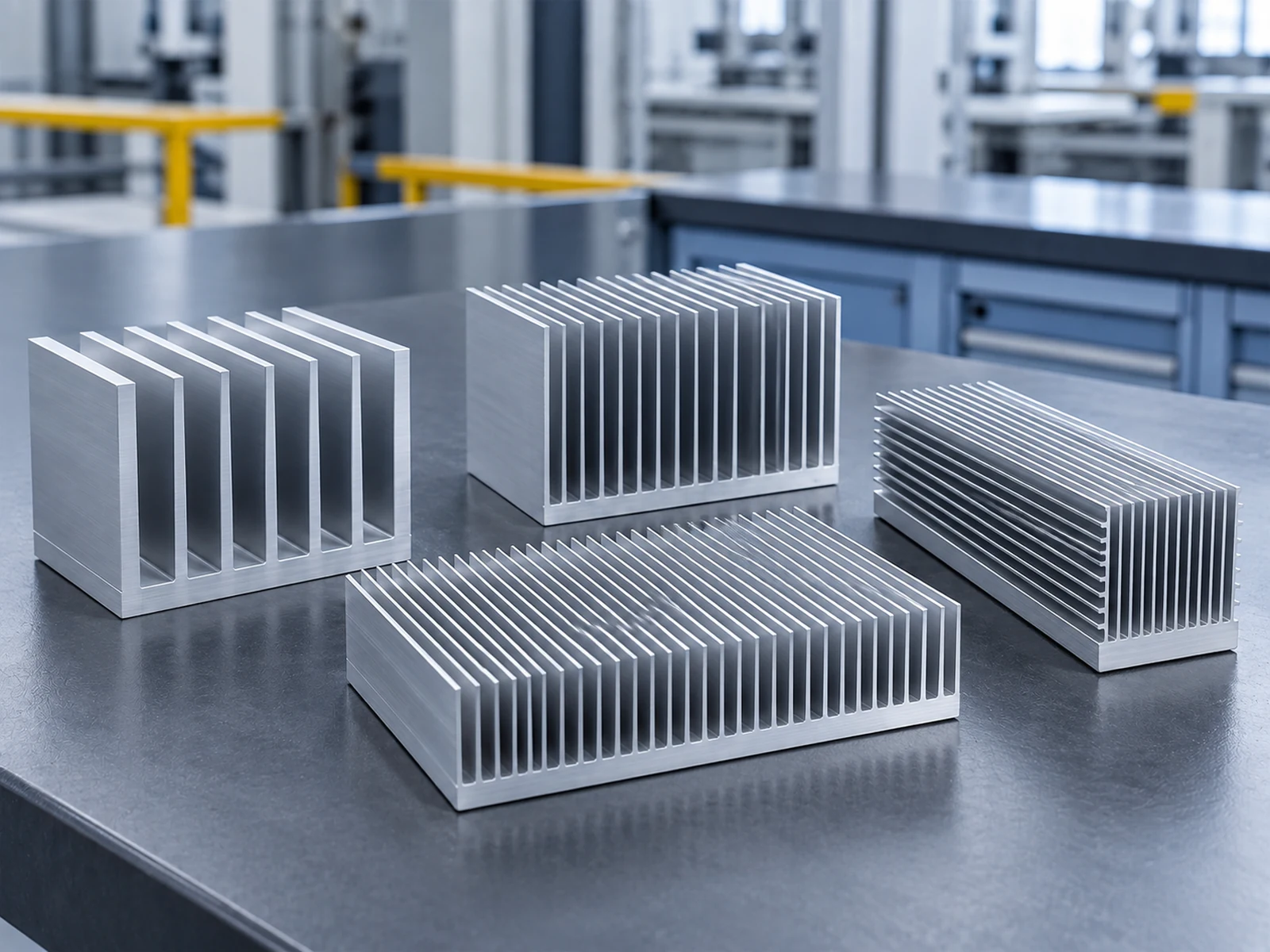
A product design may use a profile that combines a mechanical body and fins, or it may buy a separate cooling component. Identify the actual architecture before adding heat-sink work to the saw workload. If the cooling part arrives finished, its upstream preparation belongs to its supplier unless your contract specifies retained cutting.
For a retained finned extrusion, provide the complete section, material condition and approved contact restrictions. Ask the proposed supplier to review how the section is supported and held without relying on a smooth rectangular envelope alone. Include the end condition needed by the next operation. Keep the actual drawing requirements visible rather than prescribing an improvised cutting fixture in the inquiry.
Saw acceptance should record the agreed cutting output. It cannot establish heat dissipation, cooling-system capacity or the permitted operating condition of the charging unit. Those requirements need their own product-design and verification route. Neither a generic finned-profile image nor a sample cut should become a thermal-performance guarantee.
Separate sheet, plate and assembled objects from profile work
The mechanical bill of materials may include flat panels, formed covers, mounting plates or joined frameworks. Identify their stock format and delivered state separately. If the profile saw quotation excludes them, state where they are processed or bought. A complete manufacturing plan can contain deliberate exclusions; an unclear exclusion becomes a procurement risk when another route has not been arranged.
Where a wider or assembled object is proposed for cutting, request an assessment for that actual object and required result. Do not transfer suitability from one loose extrusion to a joined enclosure or frame. Confirm whether the proposed configuration covers the task and what evidence remains necessary. Keep a declined or unreviewed task outside the accepted scope.
Track the independent routes when comparing complete prepared sets. A set can await a sheet cover or mounting plate even when its profile members are finished. This is a supply dependency rather than an achieved or failed saw capacity. Use the same bill of materials when comparing in-house cutting with bought prepared mechanical parts.
Locate cutting in the material and finish sequence
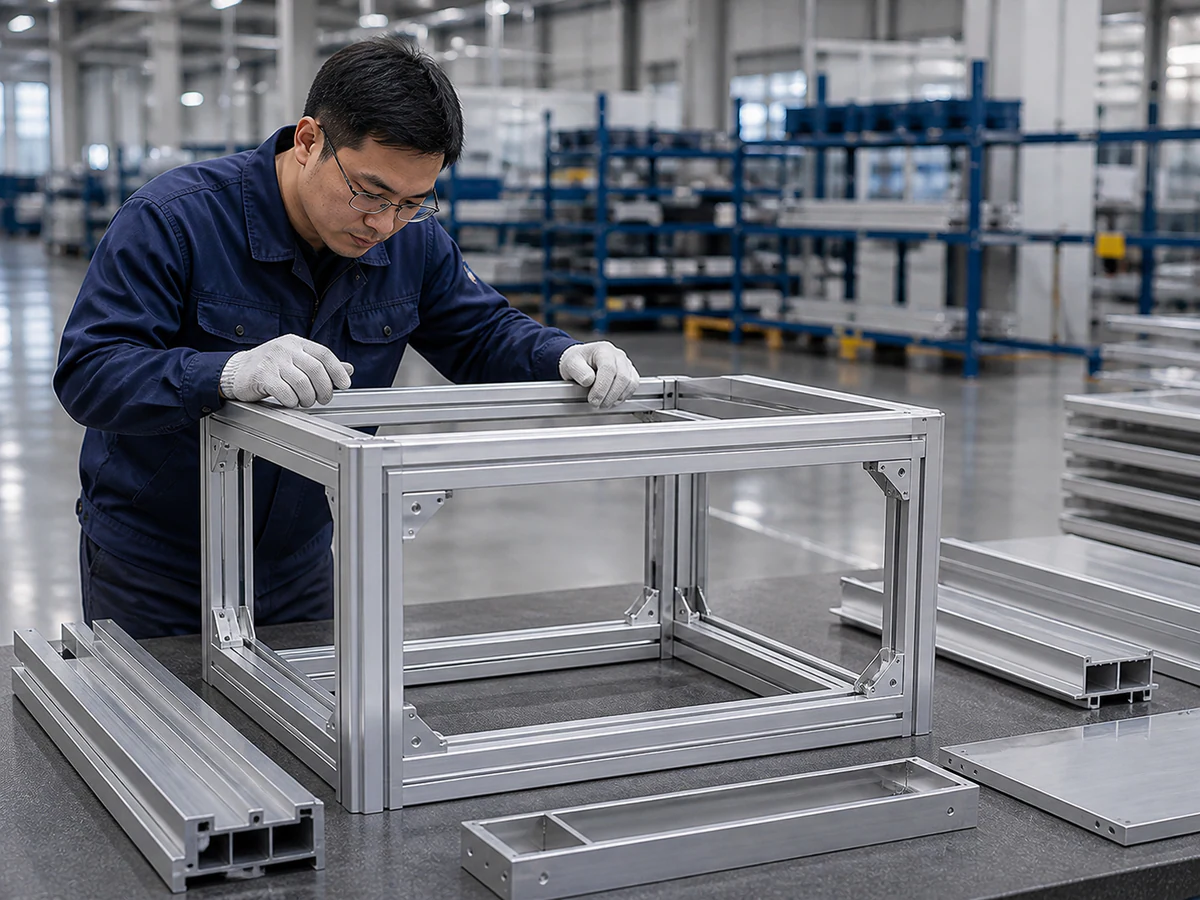
State whether each retained profile is cut before finishing or arrives with a finished surface. Record the approved material designation, temper and surface condition. The product’s outdoor use does not establish a default alloy, coating or machining allowance. Use the actual component specification and identify what the proposed cutting supplier has reviewed.
For finished incoming material, show the surfaces your factory must protect and the acceptance condition passed to the next operation. Ask for a reviewed support and contact response. Where finishing follows cutting, distinguish the saw output from the condition delivered after that later process. Do not count uncompleted finishing work as a ready mechanical component.
Keep end treatment, hole preparation and any other later work assigned to the approved manufacturing route. Another manufacturer’s coating certifications, enclosure-design services or environmental claims must not be added to a JiurunCut saw offer. Request actual included equipment and functions rather than transferring capabilities from the application source.
Build the product-family comparison from released parts
For an aluminum saw for charging stations, list the product variants and the retained member families that materially change the work. An exterior style change can leave the same cutting task, while a different shell section or support construction can create a different one. Use drawings and actual input conditions to determine the relevant cases rather than counting every sales model as a machine changeover.
Compare a representative production mix containing the retained shell, support and other profile cases you actually plan to make. Identify repeated cuts, short batches and relevant section changes. Keep forecast quantities marked as planning assumptions where orders are not released. This lets the purchasing team assess uncertainty without asking for a fictitious guaranteed output.
Review preparation, feeding, cutting, collection and transfer on that same mix. Record observed trial timing separately from production planning. Identify the demonstration configuration and any difference from the offer. A cutting-time observation for one easy section is not the elapsed time to supply a complete mechanical kit for every product variant.
Arrange the cut-piece handoff to enclosure assembly
Specify how the receiving operation identifies each member and revision. A blank for later machining, a finished support cover and a shell ready for end assembly need different handoffs. Define the information, output condition and handling requirements that the proposed station must support, then ask which functions are actually included.
Include a revision-change case if it is material to the purchase. Identify affected incoming stock, cut components and incomplete mechanical sets. Keep disposition and product release under the buyer’s existing responsibilities. Do not assume machine software provides those controls or that a diagram proves an included traceability function.
Separate mechanical readiness from the final assembly’s remaining dependencies. Electrical assemblies, bought fittings and product inspections may be necessary before a finished charging unit is released. Saw investment should be justified against the retained mechanical tasks and their actual handoff, without claiming to resolve unrelated product-development or supply problems.
Select trial cases that test the proposed purchase
Choose actual stock and approved component drawings for the purchasing questions that remain open. A broad shell case can resolve support and end-condition suitability. A different column or cover can test the required section change and transfer arrangement. A retained finned section deserves its own reviewed contact and end-condition case where it is included in the quotation.
Use the sample cutting trial checklist to connect each case to the required output, actual equipment configuration and recorded results. Preserve the measurement reference, surface and end observations, exclusions and open questions. Requested requirements must remain distinct from demonstrated results.
Use the JiurunCut aluminum cutting equipment range to begin the model discussion. Ask for the proposed model and configuration, supported reviewed inputs, included handling scope and a trial plan. A successful member trial does not certify the charging station’s electrical safety, ingress protection, structural installation or thermal performance.
See JiurunCut cutting equipment in operation
This JiurunCut equipment video provides inquiry context. It is not a charger-shell or cooling-component trial, proof of a quoted configuration or charging-product approval. Agree the retained input objects and acceptance evidence separately.
Prepare a complete charging-station manufacturing inquiry
Send the retained-versus-bought mechanical scope, separate shell, column, cover and cooling-part records, released drawings and revisions, actual incoming stock and finish condition, length and end references, the next processing operations and a representative product-family mix. Identify excluded sheet, plate and assembled objects together with their supply routes.
Contact JiurunCut with your charging-station profile cutting requirements and request a configuration-specific response for the retained tasks. A clear extrusion-to-enclosure boundary makes the complete equipment comparison useful while preserving the responsibilities and evidence needed for the finished charging product.