
A single foot-pedal press can look like a simple start command, but a semi-automatic saw may use that command to begin several linked actions. The buyer needs to know which action begins first, what permits the next one, and what happens if the cycle is interrupted. For an aluminum saw foot pedal, the label “foot operated” tells you far less than a witnessed sequence on the machine being quoted.
Jiurun’s brochure describes a foot-pedal action for the JR-455Q family in connection with clamping, oil spray and cutting. That is a useful starting point for a supplier conversation, not a wiring diagram for every JR-455Q or a promise that a particular unit behaves in one exact way. A control option, machine revision or fixture can change the sequence. Ask the supplier to identify the offered build before writing a pedal procedure into your production plan.
Aluminum saw foot pedal: follow the command through the machine
Stand at the intended operator position during a guarded demonstration. Record the machine mode, the stock loaded, and the visible position of the guard and clamps before anyone actuates the pedal. Then identify the first observable response to one deliberate press. Does a clamp approach the profile? Does the saw start only after a separate confirmation? Is lubrication commanded before or during blade travel? Which event ends the cycle?
The answers must come from the actual control description and demonstration. A video of a machine cutting cannot establish pedal contact type, interlock logic or what a particular delivery will do. Similarly, the position of a pedal in a photograph shows where a foot might reach it; it does not prove its electrical or pneumatic function.
Ask for a simple sequence chart with one line each for operator command, clamp motion or confirmation, spray command, blade motion, return and release. Mark which signals are observed and which are only assumed. This is especially useful when a brochure compresses several actions into one sentence. A clear chart makes it possible to compare a quoted machine with the receiving test without relying on memory of a quick demonstration.
Find out whether the pedal is held or tapped
A foot switch is a component, while the machine controller decides what that input means. Manufacturer literature shows that foot switches can be supplied with different contacts and functions. A press might command a momentary action, initiate one controlled cycle, or require continued actuation for a particular step. Do not infer one behavior from the shape of the pedal or from another saw in the workshop.
Have the supplier demonstrate a normal press and release using the specified procedure and guarding. Note when the input is recognized and what happens if the operator releases it at different permitted points. Does release stop an action, allow an already accepted sequence to finish, or request a controlled return? Those are configuration questions for the machine builder. Operators must not experiment with live controls or reach into the cutting zone to find the answer.
Also establish how a second press is treated while the first cycle is running or after it has ended. A buyer should request the intended one-cycle behavior and the documented reset or restart action, then witness the delivered implementation. Do not call a repeated cut “impossible” based on a marketing description alone.
Locate the stock before discussing speed
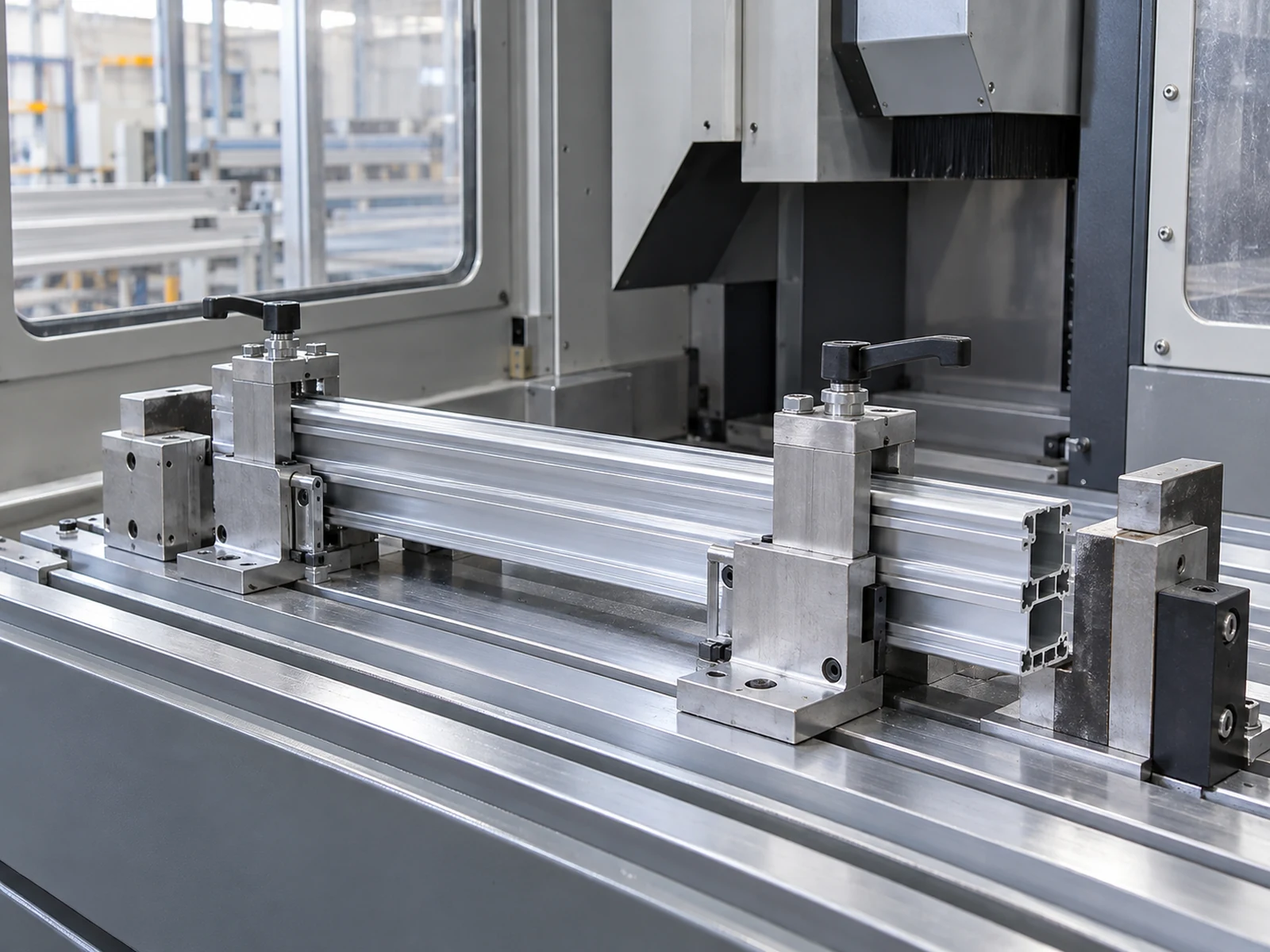
One pedal command is meaningful only if the extrusion is against the intended stop and supported at the clamp. For a hollow, tall or asymmetric section, the stock may rock or deflect as the clamp closes. If this happens, a quick pedal sequence may repeat the same locating error faster. Choose a representative difficult section, identify its datum face, and have the supplier show how it is positioned before the guarded cycle starts.
During a trial, compare the stock’s visible location before and after clamp closure from outside the hazard area. Inspect the finished part only after the machine is in the appropriate safe state. Keep clamp marks, end quality and part length as separate acceptance observations. A short clip showing a blade moving through aluminum proves none of those results for your own section.
Keep the pedal outside the safeguarding claim
A pedal frees an operator’s hands, which makes the point-of-operation boundary more important. OSHA’s machine-guarding discussion for presses warns that a foot control does not itself keep hands away from a hazard and can be actuated unintentionally. Those press-specific rules are not being presented here as aluminum-saw regulations. The transferable purchasing question is how the actual saw prevents an unintended command from creating exposure at its cutting zone.
Ask where the pedal sits during normal loading, whether it is protected against accidental contact, and how its cable or air line is routed away from stock, chips and traffic. Ask the machine builder to show the guard, interlock and stop behavior specified for the quoted configuration. A visible blade warning or housing is not a substitute for a verified protective function. The risk assessment and control validation belong to qualified people working with the real machine and its applicable requirements.
The guard photo below shows another semi-automatic saw family. It helps locate the physical cutting boundary for the discussion, but it cannot establish the guard design or interlock of the offered JR-455Q.

Make interruption and restart part of the acceptance run
A smooth normal cycle is only half a control demonstration. Agree with the supplier on safe, documented scenarios for a pause, a stop request, loss and restoration of the required utility, and a guard or mode change if the proposed configuration includes one. Qualified personnel should run those checks according to the machine maker’s procedure; a buyer should observe and record the results rather than improvise fault tests.
For each scenario, record what the machine does immediately, what state it retains, and what deliberate action is needed before another cut. The desired result is a documented restart path, not an assumption that restoring power or air makes the saw safe to cycle. If a machine has setup and production modes, ask which pedal functions are available in each and how the operator can tell the selected mode.
Write down any difference between the demonstrated machine and the offered build. The supplier can then identify whether that difference is an option, a control revision or a feature that is simply not included. This matters more than a generic statement that the saw is “automatic.”
Use the equipment video as a layout reference
The JiurunMachinery channel video below shows a JR-455Q semi-automatic aluminum saw and its surrounding support arrangement. Watch it to discuss operator position, stock approach and the guarded cutting area. The clip does not document a pedal press, the internal command sequence, a customer material trial or a verified protective function.
Put the observed sequence into the quotation
Before comparing prices, request the exact model and revision, pedal and control arrangement, guarding description, stock support, clamp arrangement, utilities and documented operating modes for the offered machine. Attach a short acceptance sequence for your representative section: starting condition, one intended pedal command, observed clamp and blade events, part removal, and the agreed interruption and restart checks. Identify who supplies the sample stock and who signs off the result.
If your main decision is between semi-automatic machine families, our JR-455Q and JR-455Y comparison covers the wider job and model choice. This article isolates the pedal command because it is easy to overlook while comparing capacity rows. For a JiurunCut inquiry, send the profile drawing, intended operator sequence and the specific points you want to see demonstrated. The supplier can then answer for the actual proposed build.
Source and scope: Jiurun product brochure, p. 6, for the JR-455Q family description; Schmersal foot-switch product information for component-function examples; OSHA foot-control guarding discussion for general hazard questions, with its press-specific rules kept separate from saw requirements. None establishes the delivered Jiurun unit’s wiring, conformity, cut quality or safety validation.