
The chip drawer is clean, the collector is running, yet material begins to gather at the saw outlet. The question for a buyer is not simply whether a duct can be connected. It is who can find and clear the first blockage without dismantling an improvised joint or reaching through a guarded cutting zone. An aluminum saw extraction duct cleanout is therefore an access and responsibility decision to settle before the saw and site extraction are ordered together. The situation here is a planning example, not a reported failure on a Jiurun machine.
Aluminum saw extraction duct cleanout starts with a path map
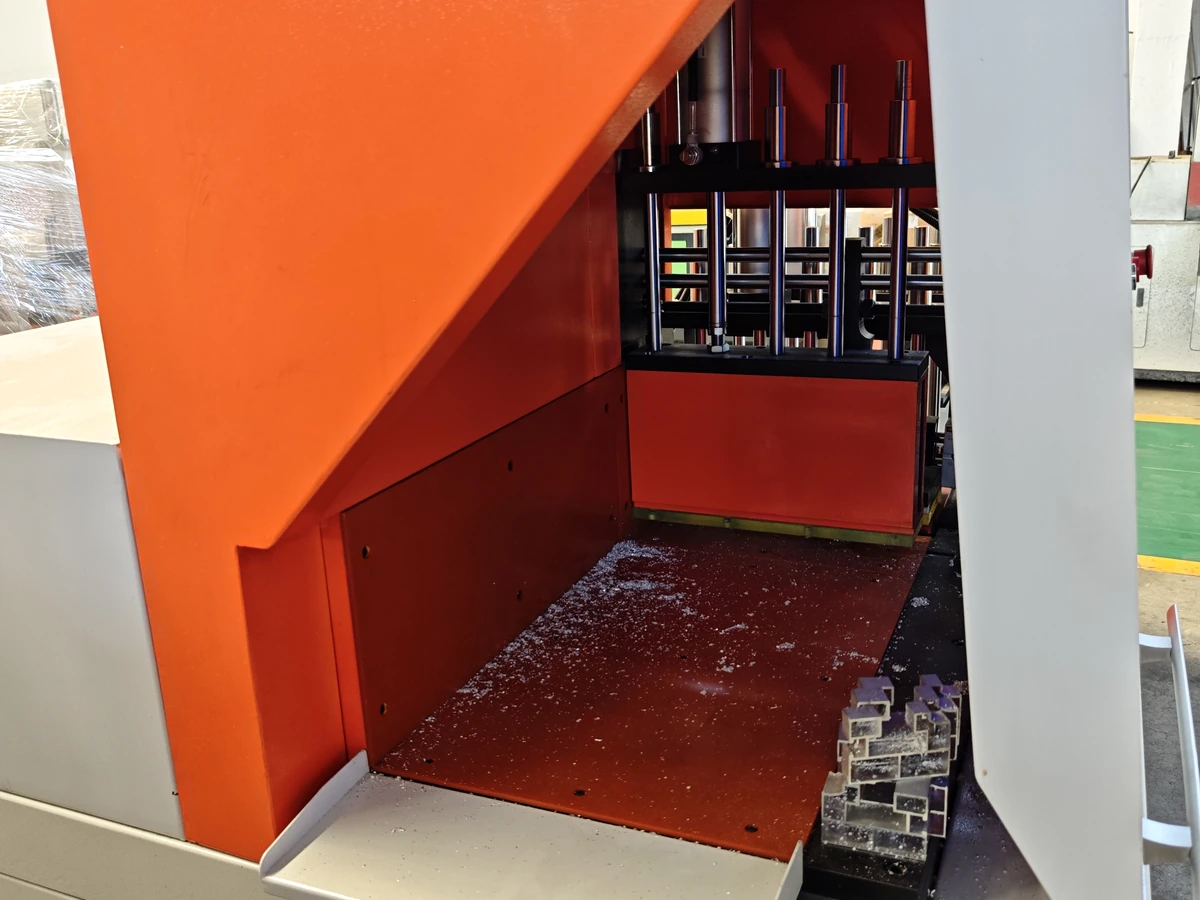
Ask both suppliers to mark the path on one drawing: the machine’s chip or dust collection point, its outlet, any adapter, flexible connector, first rigid duct section, bend, damper, branch and collector. Identify which pieces are supplied with the saw, which belong to the separate extraction package, and which the site installer must fabricate. The first place where chips could settle may be inside a machine enclosure, in a horizontal connector or at a change of direction. Its location cannot be inferred from a photograph of a connection port.
The purchase boundary matters because a cleanout fitted to the wrong side of the handoff can leave the actual obstruction inaccessible. A port size alone says nothing about the route a maintenance person will follow, the space needed to open it, or the condition of the connection after reassembly. The existing chip collection scope guide covers the overall equipment and responsibility split; this article tests one narrower interface: the first blockage-prone section and its return to service.
Decide who opens, cleans and reseals it
Two quoted systems can look identical at handover but differ during maintenance. One may include a documented access point in a fixed section. Another may use a removable connector that can be taken away under an approved isolation procedure. Neither arrangement is automatically right for every aluminum cutting cell. The responsible ventilation designer must review material, duct geometry, airflow, dust hazards, access space and the manufacturer’s instructions. The saw supplier must identify what is actually on the machine side. The buyer should not accept a generic sketch as proof of the installed arrangement.
For each proposed opening, ask where a person stands, what must be moved, which guards or panels remain closed, and how the joint is restored and checked. Will an access door open fully once a rack, wall or service aisle is in place? Can the removed section be supported and refitted without stressing the machine outlet? Are the fasteners, seals and replacement parts identified? These are design review questions, not instructions to open a running duct. The competent site team must approve the actual isolation and cleaning method.
The HSE guide to local exhaust ventilation calls for checking duct condition and cleanliness, examining for partial blockage, and keeping maintenance records. Its guidance helps frame the information to request; it does not supply a duct size or cleaning procedure for an unspecified Jiurun installation.

Make the return-to-service check part of acceptance
A satisfactory demonstration should end with the collection system operating again, not with a loose section on the workshop floor. Before trial, agree which representative profile and cutting sequence will produce the material stream being assessed. With the machine safely stopped and isolated under the approved procedure, the responsible team should demonstrate the agreed inspection and cleanout route. They should then restore the joint, verify the system’s documented operating indication and check the collection point during a subsequent permitted cut. This is a witnessed acceptance sequence for the proposed layout, not a request to create a blockage deliberately.
Record the installed location, access clearance, person or trade responsible, tools and replaceable seals, inspection interval proposed by the designer, and the result of the restoration check. If the site extraction system already exists, compare measured operating conditions at the proposed connection with the design benchmark. A clean-looking tray or a spinning fan does not establish adequate capture. HSE’s commissioning guidance describes benchmarks such as flow rates and pressures that can support later maintenance comparisons. For shared extraction, the buyer should also revisit the concurrent-airflow question.
Treat fine aluminum dust as a separate hazard review
Chip size and the amount of fine dust depend on the actual process. The buyer should characterize what the cell produces rather than assume that every piece entering a collector is a coarse chip. OSHA’s combustible-dust guidance lists aluminum among materials that can present dust explosion hazards and stresses properly designed, installed and maintained collection systems. This does not establish a universal collector choice for this saw. Have the competent site and extraction specialists assess the actual material and applicable requirements. Do not improvise a compressed-air blowout or substitute an ordinary vacuum for a documented cleaning method.
Write one answerable cleanout requirement
Put the access requirement in the request for quotation: “Show the first section between the saw collection point and the site extraction system, identify each supplier’s items, and demonstrate how the nominated service team can inspect, clean, reseal and verify it under the approved procedure after installation.” Attach the floor plan, machine orientation, expected profile family, material stream, proposed collector location and any known duct route. Request a marked interface drawing and the maintenance pages for the actual offered configuration.
Compare offers on the same installed boundary. A lower-priced saw with only an outlet may be perfectly suitable if the site’s extraction contractor supplies a documented, accessible connection. An apparently complete package may still need redesign if its service opening faces a wall. The acceptance evidence is the installed route, the safe access and a restored operating check. It is not a promise that no blockage will ever occur.
Equipment video: what it can and cannot show
The Jiurun Machinery clip below shows an automatic aluminum saw and feeding movement. It helps a buyer picture the machine-side operating context. It does not show an extraction duct, its first cleanout point, a blockage, the site collector or a measured capture result. Those details require the offered layout and a witnessed installation review.
Send the layout, not just the port diameter
Contact JiurunCut with the planned saw location, profile family, collection-system drawing and the service access you expect. Ask the machine supplier and your extraction specialist to identify the interface they will each deliver. A machine-specific quotation and site review should settle the cleanout arrangement before it becomes an installation problem.