
Two replacement belts on a maintenance shelf can look almost interchangeable until the saw is stopped and the actual drive is identified. An aluminum saw drive belt order should begin with the installed machine and its approved parts information, not with a belt that happens to fit over the pulleys. The distinction matters when a line must return to cutting: an unverified substitute can change a service task into an unexplained cut-quality or stoppage problem.
This guide is for a buyer or maintenance lead dealing with a saw that is confirmed to use a belt-driven blade system. JiurunCut supplies industrial aluminum cutting equipment, but the drive arrangement and belt specification must be checked for the particular installed configuration. A direct-drive saw has no blade-drive belt to reorder. For that earlier architecture decision, see our belt-versus-direct blade-drive guide.
Identify the aluminum saw drive belt before comparing numbers
Start with the machine identification plate, serial or configuration record, original parts list, and service instructions available to the owner. Then have an authorized maintainer confirm the actual drive path inside the correctly isolated machine. A belt on an infeed conveyor, coolant accessory or extraction unit is not automatically the blade-drive belt. Ask the supplier to name the driven function and location, especially when a machine has more than one belt.
Record the original belt marking if it is readable, but treat it as one identifier rather than complete proof. Worn printing, a prior non-original replacement and catalog substitutions can all complicate a reorder. The order should trace from the installed machine configuration to the approved spare number or an explicitly accepted equivalent, with the supplier stating who is responsible for that equivalence. Do not infer a Jiurun model’s belt layout from a photograph or from another machine in the same product family.

Make the spare order unambiguous
For an aluminum saw drive belt replacement, a useful purchase request names the saw, the drive position, the approved part reference and the reason for replacement. It also asks for the exact belt type and quantity applicable to that drive, because an individual belt and a matched set are different order decisions. If the supplier proposes a substitution, obtain a written cross-reference for the specific installed arrangement rather than treating similar length or appearance as acceptance.
Include the old belt’s readable marks, photographs taken under the owner’s safe service procedure, and the associated pulley references if the OEM requests them. Record whether the pulleys, tensioning device or guards are also being inspected or ordered; these are separate components, not automatically included with a belt. A buyer should not invent groove geometry, tooth pitch, tension or alignment limits. Use the installed machine’s instructions and the belt supplier’s approved method for those details.
Gates’ industrial power-transmission maintenance manual treats drive inspection, pulley alignment and belt tension as linked maintenance topics. That is general belt-drive guidance, not a Jiurun specification. It supports asking who will inspect the whole drive and document the approved settings for this particular saw.
A failed belt may be evidence of another problem
If the previous belt was damaged, avoid closing the purchasing case with a part number alone. Preserve the failure observation: where wear appeared, whether belts on the same drive wore similarly, whether dust or liquid reached the area, and what happened during start or cut. A replacement should not be assumed to cure a misaligned pulley, a damaged tensioner or an obstruction. The qualified maintainer should decide which checks apply under the machine’s service instructions.
Likewise, a slowed blade during a cut does not prove that a belt is slipping. Motor protection, feed loading, blade condition, stock support and controls can produce different evidence. Our motor-overload fault evidence guide explains why an observed trip should be recorded before changing the drive specification. The belt question begins only after the actual drive and fault path have been established.
Keep the service boundary safe and visible
Opening a guard to inspect or replace transmission parts is maintenance work, not an operator shortcut. The site must use its machine-specific energy-control and guarding procedure, with authorized personnel responsible for isolation, stored energy and return to service. OSHA’s machine-guarding safety considerations describe isolating energy, verifying isolation and restoring safeguards before equipment returns to operation. The local procedure and applicable law control the actual job; this article does not prescribe a step-by-step repair.
For procurement, establish who supplies the belt, who installs it, who verifies pulley and tensioning condition, and who records the accepted service result. A belt shipped to the site is not the same as a drive returned to production. Make guard reinstallation and the machine’s normal protective functions explicit release conditions. If access or a damaged component falls outside the agreed service scope, keep that item open instead of signing off the belt alone as a complete repair.
Release cutting output separately from the replaced part
After qualified service and safe return to operation, the production owner should check representative cutting output on the actual approved stock. Compare the same part features and measurement method used before the stoppage, then look for repeatable results across more than one piece where the process requires it. A belt that runs without obvious noise is not evidence that length, cut face and downstream fit are accepted. Conversely, one rejected part does not by itself identify the belt as the cause.
Define the scope of the release record: machine identity, replaced part reference, technician or responsible service party, approved inspection evidence, stock and program used for the cutting check, measured part features and disposition of any output made while the fault was developing. If the first acceptable part follows a belt change, that conclusion should be limited to the tested configuration and material family. A different extrusion, feed setting or saw program may need its own acceptance decision.
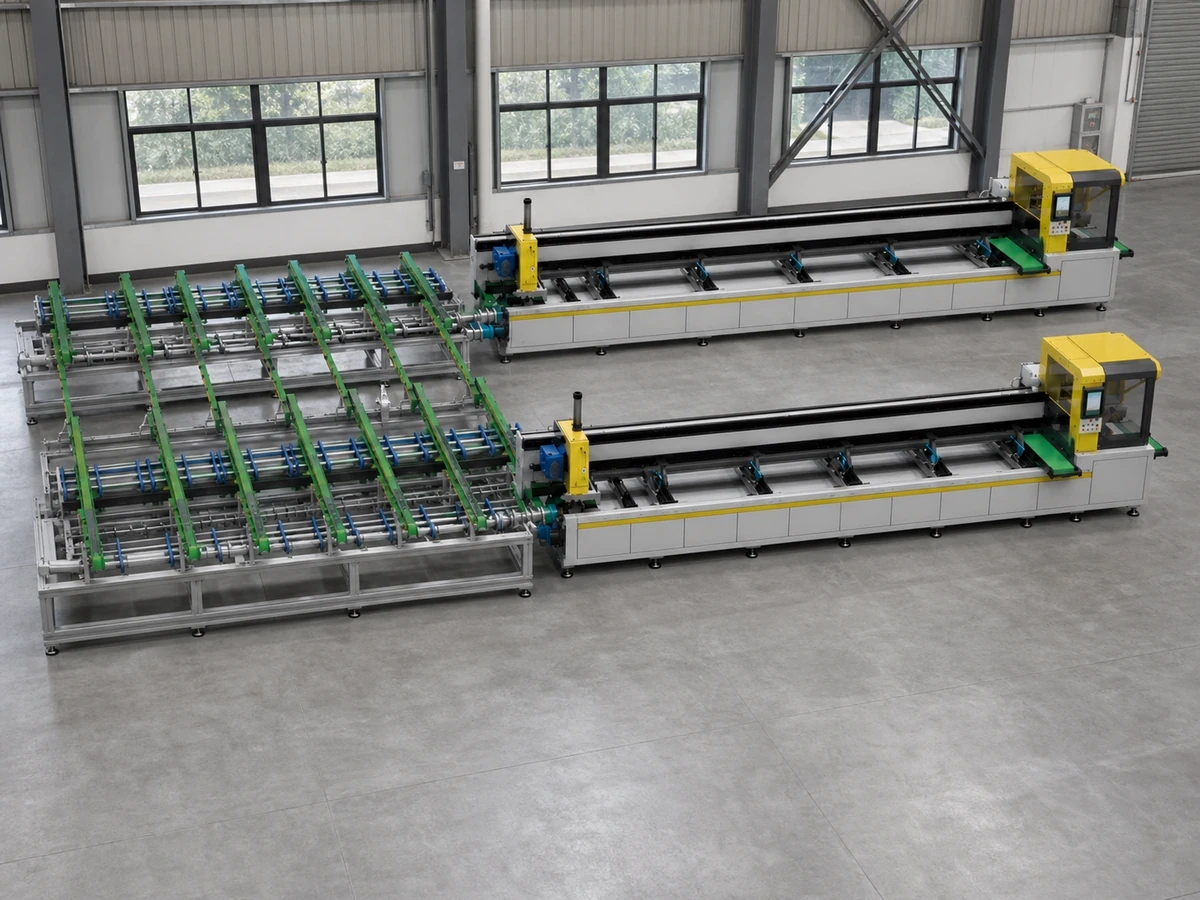
The own-channel clip below shows an automatic Jiurun aluminum cutting machine in a general feeding and cutting demonstration. It helps a buyer distinguish the visible production cycle from the separate, guarded drive-service task. The footage does not expose a belt, identify this article’s installed saw, or validate a replacement part.
Send a supplier a problem, not just a belt photo
A good inquiry includes the machine identification, confirmed blade-drive architecture, existing belt and pulley references, available service documents, observed failure and the installation responsibility. Ask for the approved spare or a documented equivalent, the scope of supply, any required companion components, and the evidence expected before the saw is returned to production. Keep the first cut inspection and any affected-part disposition with the site owner.
If you are assessing a Jiurun aluminum saw or a spare for an installed machine, send JiurunCut the machine identity and the specific drive question. We can discuss the applicable configuration and what information is needed for a responsible quotation. A general machine photo, a belt appearance match or the video above cannot substitute for the installed machine’s approved parts record.