
Aluminum saw cut-part ejection is a buying question about where a finished piece, remnant, or fragment can travel during the actual cut cycle. A guarded machine photograph cannot answer it. The buyer needs to identify the pieces that the proposed job creates, the intended path for each one, and the supplier evidence that material stays within the assessed arrangement. This guide sets out a practical request-for-quotation and witnessed-trial route. It does not prescribe a guard design or authorize an operator to test a hazard.
Why cut-part ejection belongs in the purchase decision
A cut may produce the accepted part, a usable remainder, a short offcut, and chips. These are not the same handling problem. The proposed saw may hold a long extrusion adequately while a short final piece behaves differently at the clamp or exit. The risk also changes when profiles, cut lengths, or discharge arrangements change. A quotation that only names blade diameter and cutting capacity leaves this interface undefined.
The UK Health and Safety Executive says work-equipment selection should account for the intended use and workplace risks, including parts or substances falling or being ejected, and that equipment should be stabilised by clamping or otherwise. OSHA likewise identifies flying chips among hazards addressed by machine guarding. These are source principles for asking better questions, not a statement that any pictured Jiurun machine meets a jurisdiction-specific legal requirement.
Define the actual pieces and handoff before asking for a safety claim
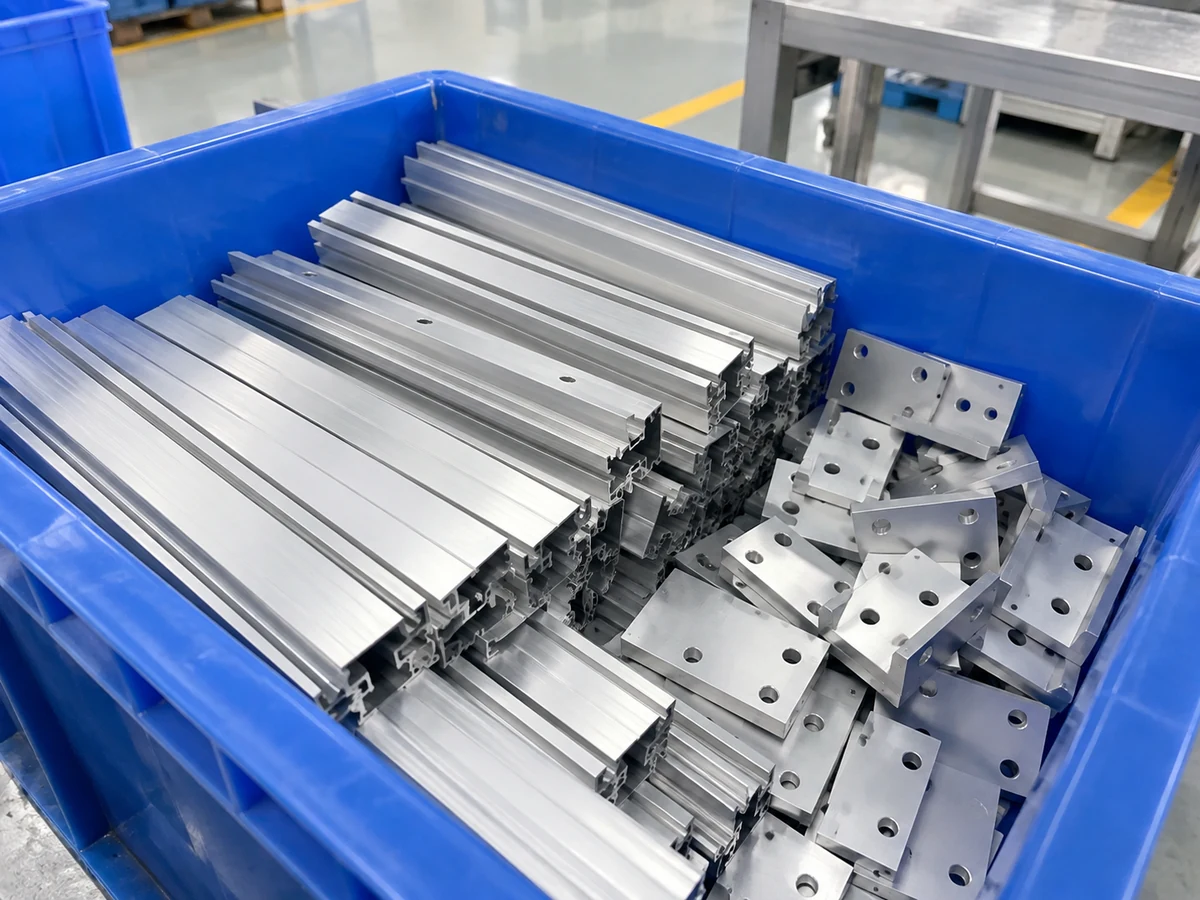
Send the supplier a part-family sheet that distinguishes the finished part from a short end piece and a remaining bar. Include section shape, material and temper if known, actual stock length range, finished cut length range, shortest expected cut piece, cut sequence, and downstream collection method. Add drawings or representative samples for hollow, asymmetric, or narrow-contact profiles. If several families will run, do not assume the largest profile is the most demanding ejection case.
Agree who receives every output: operator, outfeed conveyor, part bin, remnant rack, or chip collection. Ask what happens at the first and last cut of a bar, when a piece is too short for the ordinary support path, and when a rejected piece must be removed. This defines the configuration to evaluate; it is not a promise that any one arrangement will suit every part.
Examine retention at the cut, then every exit
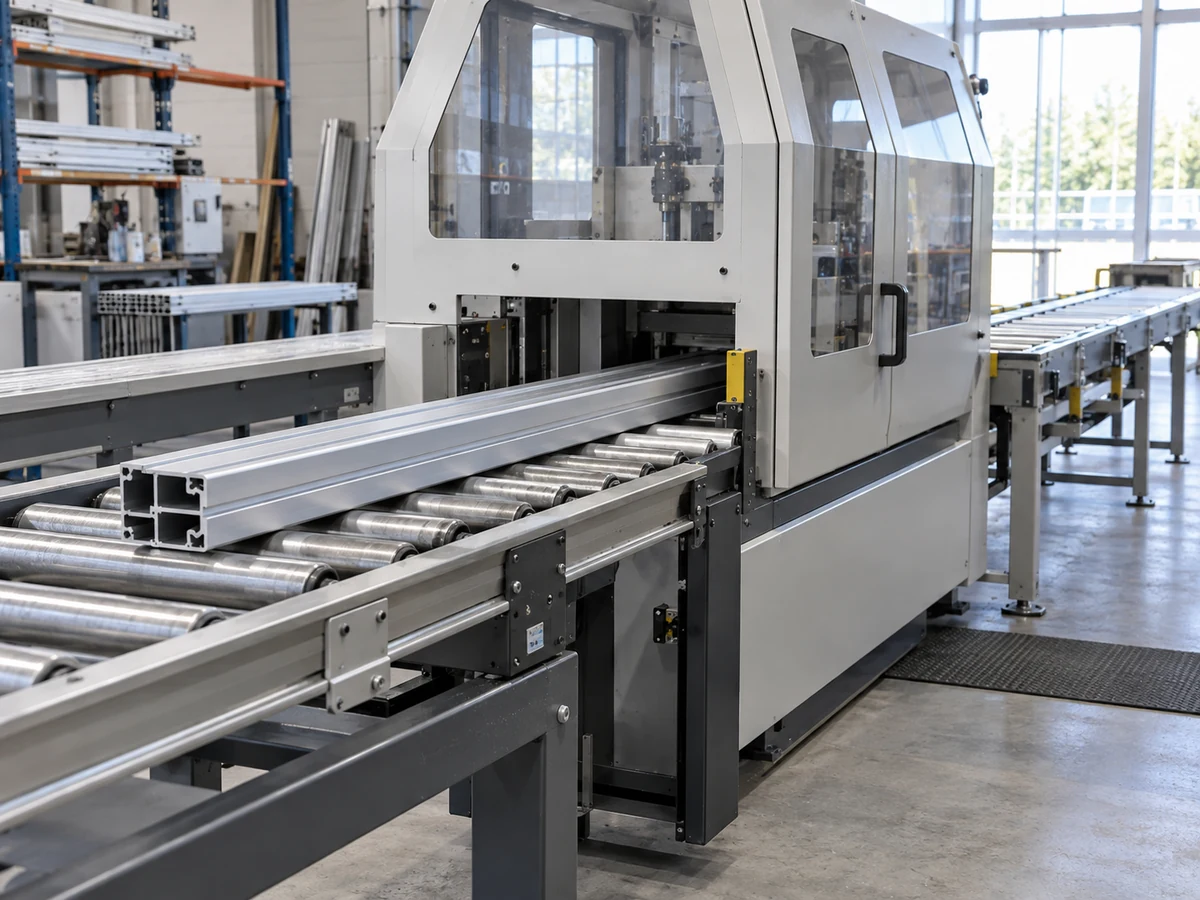
Ask for a configuration-specific drawing or annotated photographs showing the workholding area, blade enclosure, stock entrance, part exit, remnant route, and any access openings. The supplier should explain how the proposed clamp and support arrangement accommodates the actual profile contact faces through the cut. A close photograph can help identify questions but cannot establish holding force, interlock behavior, or containment performance.

Follow the part beyond the blade zone. A covered cutting head may still leave a stock slot or downstream transfer opening that deserves review. Ask where a short piece can travel if it does not enter the planned tray or conveyor, and who is responsible for the receiving equipment. If the quoted saw ends at a machine flange while the buyer must supply outfeed guarding, state that boundary in the offer and acceptance plan. See also our guard-opening fit trial for the separate issue of accommodating tall stock without losing an agreed access boundary.
Aluminum Saw Cut-Part Ejection: What Evidence Should the Supplier Submit?
- A drawing or marked layout for the exact offered machine, stock support, guard openings, part discharge, short-piece path, and customer-supplied interfaces.
- A documented risk assessment or equivalent design review for the intended product families, with the responsible party and revision identified. Ask which assumptions would invalidate it.
- A proposed acceptance protocol naming representative parts, observed outcomes, observers, safe operating boundaries, and how deviations will be recorded and closed.
- Operating and maintenance information that explains the approved method for retrieving retained pieces. Do not treat a normal stop command as energy isolation or an invitation to reach into the danger zone.
- A quotation schedule that separates included guarding, trays, discharge equipment, installation work, and buyer-provided items.
Keep photographs, demonstration footage, and manufacturer claims in separate evidence columns. A video of a different machine or an unloaded cycle may explain the concept but cannot prove the offered configuration controls the buyer’s pieces. An independent site assessment by competent people may still be required under the buyer’s local rules.
Plan a witnessed trial without creating a hazard
Have the supplier and the buyer’s qualified safety and production representatives agree the trial in advance. Use actual or truly representative profiles and piece lengths, including the first and last cut scenarios the purchase depends on. Observe from the approved protected positions. The record should identify the machine configuration, material, tooling, support and discharge setup, guard state, and result for each job family. The trial team should stop under its established procedure if the observed outcome departs from the approved plan; it should not improvise a deliberate ejection test or bypass a protective device.
Record where each accepted part, remainder, and short offcut ends up. If a piece is retained inside the machine, document the intended recovery route and the separate safe-access requirements. For stopping and access questions, use our blade run-down and access buying checklist. A clean sample of one length does not close the question for every length or section.
How to compare offers and close an open item
Compare offers on the same part-family sheet and output boundaries. A lower price may exclude the receiving conveyor, offcut container, enclosure adaptation, or witnessed acceptance work that another offer includes. Mark each item as included, buyer-supplied, subject to engineering review, or unresolved; attach the supplier document and revision that support the status. Do not convert “available on request” or a generic brochure image into acceptance evidence.
If the proposed trial reveals an unintended piece path, keep the issue open. Obtain a revised design and risk review from the responsible supplier, then repeat the affected part-family trial under the approved procedure. A changed clamp, guard, profile, or outfeed layout can change the basis of the original result. Acceptance should refer to the final configuration and the actual documented observations, rather than a verbal assurance or a score assigned to a photograph.
Questions buyers often ask
Can one demonstration cover all profiles? Only if the selected samples and configuration genuinely represent the range being purchased and the responsible reviewers document that basis. Different short pieces, hollow sections, or exit routes may require separate evidence.
Is a machine enclosure enough? An enclosure is one part of the assessment. The cut-part and remnant paths, openings, interfaces, workholding, and safe retrieval method still need to be understood for the quoted layout.
Do chips and solid offcuts need the same proof? No. The material forms and collection paths differ. Name each output in the RFQ and request evidence for the relevant path rather than treating a chip extractor as proof that a solid short part is contained.
General equipment footage
This video from the Jiurun Machinery YouTube channel shows general equipment footage. It does not demonstrate cut-part ejection, containment, this article’s material, the quoted configuration, a customer trial, or any safety or performance outcome.
Build a reviewable RFQ
Send Jiurun the part-family drawings, shortest and longest pieces, expected offcut and remnant routes, site layout, and which downstream handling equipment you will provide. Ask for a configuration-specific proposal and a safe, witnessed acceptance plan. Contact Jiurun to discuss the scope; any final safety decision belongs to the buyer’s competent team using the actual machine and local requirements.
Source context: HSE PUWER overview (suitability, guarding, ejected parts and clamping) and OSHA machine-guarding general requirements (flying chips and point-of-operation guarding). The buyer checks above are an application of these principles; neither source evaluates a Jiurun model.