
Aluminum saw critical spares deserve a decision before the first production shift, but the answer is not a box containing every replaceable item. A stopped cutting station can be hard to recover if a configuration-specific component must be identified, approved and shipped after the failure. An expensive part kept on a shelf can be equally unhelpful if it does not fit the installed machine or nobody is authorized to install it. The buyer needs a short, verified list tied to the actual saw and an agreed recovery route.
This guide is for a plant choosing initial non-consumable spare coverage for an industrial aluminum saw. It does not recommend a quantity or promise a JiurunCut part lead time. For blades, lubricant and other regularly used items, use a separate consumables supply plan.
Aluminum saw critical spares start with your interruption window
Write down the production consequence of one unavailable saw. Is there another approved station that can cut the same released profiles? Can approved parts be bought from an external cutter? Who can change the schedule while the machine is stopped? These answers set the time available to obtain and install a replacement. They do not identify a failed component.
For aluminum saw critical spares, ask the supplier for the installed part identity, current supply route and replacement conditions. A catalog photograph or a shared model name does not establish fit. If two machines may share inventory, check the serial and configuration cross-reference separately; the interchangeability guide explains that decision.
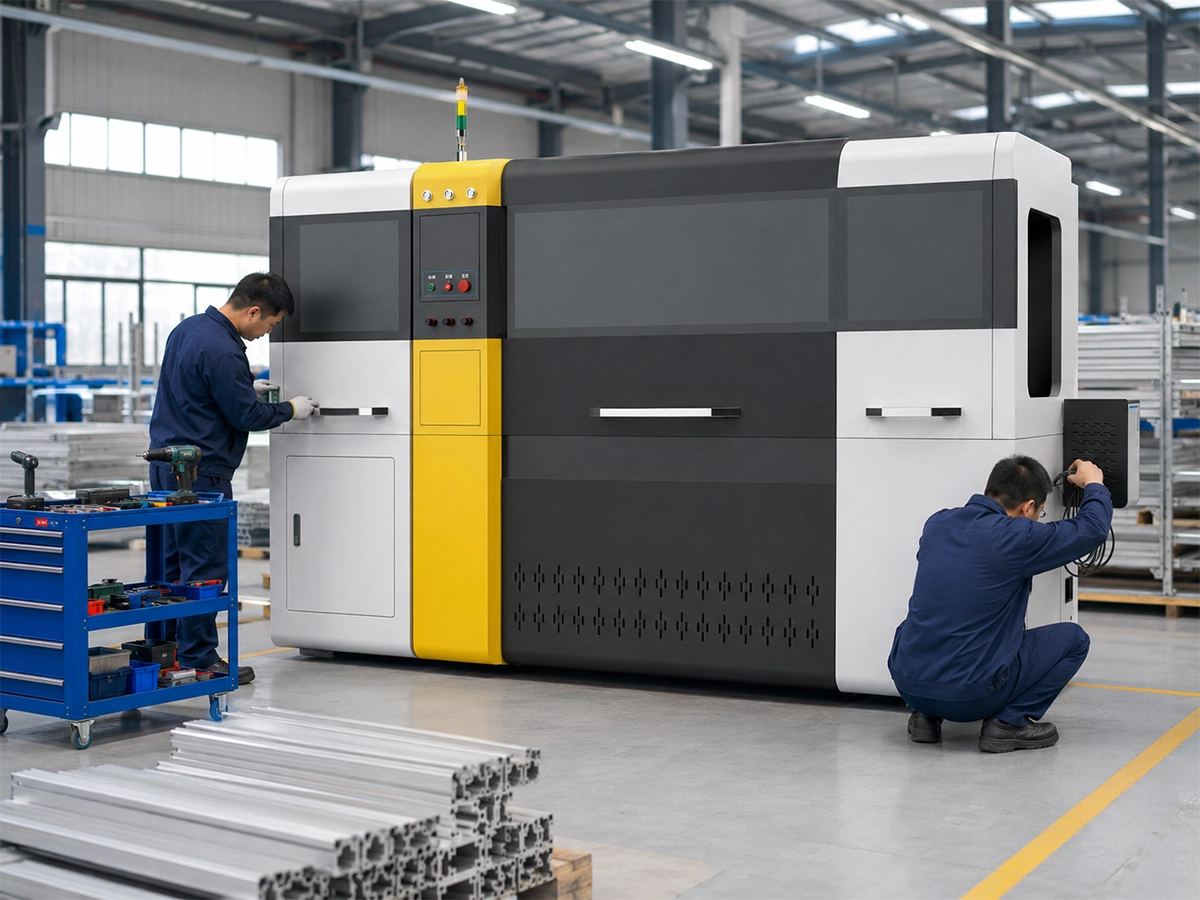
Separate critical spares from routine replacement
A critical spare is worth considering when loss of that function stops an important job and the approved repair route may exceed the plant’s recovery window. A maintenance spare supports planned service. A consumable is replaced through normal use. These categories can lead to different stock decisions. Rockwell Automation’s procurement specification distinguishes critical spares by operational importance or long lead time from regular maintenance spares. That is a planning principle, not a recommended list for a JiurunCut saw.
Do not infer a part’s criticality from its price or size. A modest sensor or actuator may stop a cut cycle; a costly assembly may have a safe, approved repair path. Control, electrical and safety-related items need the responsible supplier’s exact identification and qualified service instructions. Holding a component on site is not permission to bypass an interlock or substitute an unapproved part.
Use one decision card per candidate part
Ask the seller to fill the blanks below for the quoted configuration. Record an unknown as unknown. The blank row is intentional: no particular component has been verified for a reader’s machine.
| Field | What to confirm |
|---|---|
| Installed identity | Machine serial/configuration, part number, revision and any approved successor. |
| Failure consequence | Which released cutting jobs stop, and what approved alternate capacity exists? |
| Recovery work | Who may diagnose, replace, configure and requalify the machine? |
| Supply route | Where is the part held, who owns it, and what delivery commitment is written? |
| Storage and change | Any storage, version, shelf-life or obsolescence controls stated by the supplier. |
| Decision | Buyer-held, supplier-reserved, order on demand, or unresolved pending evidence. |
The card is useful only if the part can be traced back to the actual installation. Before placing a spare order, follow the machine-specific identification checks for that item. ABB’s parts inventory assessment also treats understock, overstock, lifecycle stage and obsolescence as separate risks. Its service offering is an external example, not a JiurunCut service commitment.

Choose where availability will come from
Buyer-held stock is sensible to examine when the interruption window is short and the buyer can store the approved item and arrange qualified installation. Put ownership, inspection and replenishment in the purchase record. Supplier-reserved stock may reduce local holdings if the supplier will identify the exact part, reservation terms and dispatch route in writing. Order on demand may be enough where approved alternate capacity and verified supply time fit the plant’s recovery plan. These are choices to compare, not service promises.
A stocked item is only one link in recovery. Confirm the diagnostic contact, access to instructions, any control revision or setup work, and the first acceptable cut after repair. If the supplier cannot confirm those conditions yet, mark the row unresolved rather than claiming the spare removes downtime.
Put the startup decision into the quotation
Ask for a configuration-specific proposed critical-spares list alongside the saw quotation. For each line, request the decision-card fields, price and supply location, whether the part is included or optional, and who approves a successor. Separate the list from the normal blade and lubricant replenishment schedule. When the actual machine identity is available, reconcile the list to it before treating the kit as ready.
The video below, from the Jiurun Machinery channel, shows a related automatic cutting machine and feed path. It is equipment context only. It does not show the spares discussed here, prove that a part is stocked, identify a quoted configuration or demonstrate recovery time.
A practical RFQ closing question
“For the exact saw configuration you are quoting, which non-consumable parts would you propose we hold on site, which would you reserve, and what evidence supports each choice?” Send the released profile and production schedule, required recovery window, available alternate capacity and plant location. Contact JiurunCut to request a machine-specific discussion. Final part compatibility, quantities, service scope and delivery terms require a written proposal for the actual machine.