
Aluminum saw clamp pressure rises at idle is a different observation from pressure sag during a cut. A gauge can move after air flow stops even when no one touches the regulator. The useful question is how far it moves, when it settles, and whether the rise is at the regulator outlet, the clamp branch, or both. A single photograph of a gauge does not answer that question.
Before changing a setting or ordering a replacement, ask the machine supplier to identify the actual regulator, its relieving behavior, the approved pressure range, and safe measurement points for the supplied configuration. The steps below form a buyer-facing evidence request for a qualified technician. They are not a pressure setting or a repair procedure for an unspecified saw.
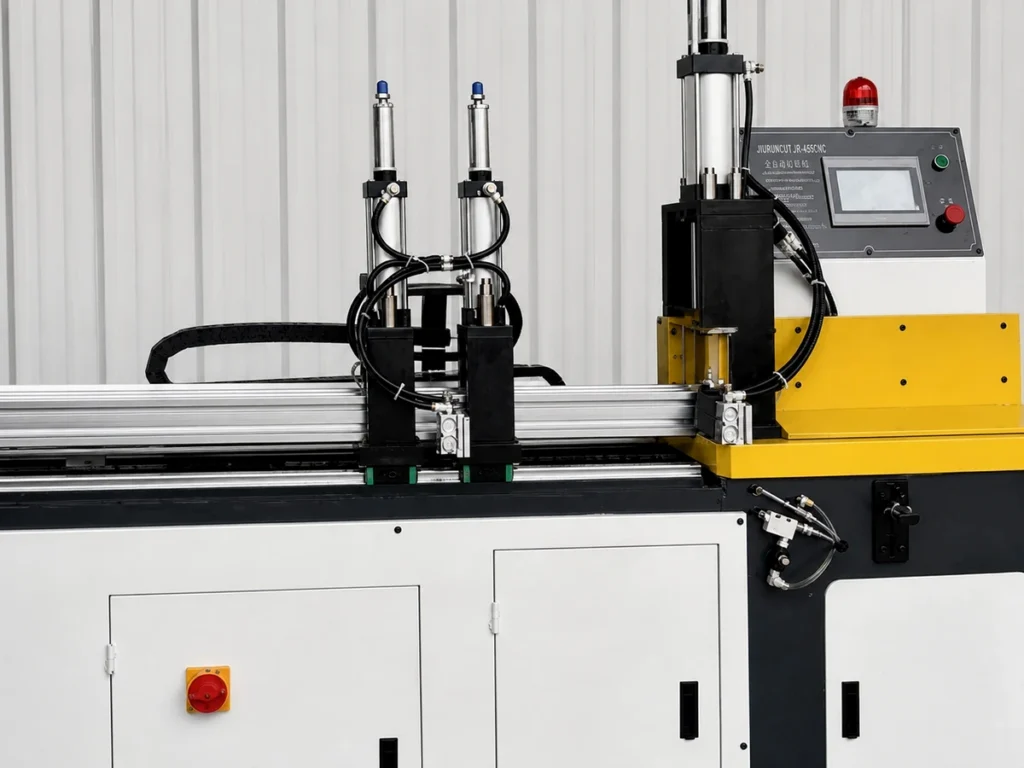
When aluminum saw clamp pressure rises at idle: brief lockup or continuing rise?
A regulator responds differently under flow and after flow stops. Parker’s pneumatic regulator operating guide describes the outlet sensing and valve action. Its precision regulator application guide lists inlet changes, flow, cycling, temperature, time and leakage among the variables that can move outlet pressure. A small change just as demand ends should therefore be documented separately from a pressure that keeps climbing after the system has settled.
Record both the amount and the shape of the change. For example, does the outlet gauge step upward once and hold, rise slowly for several minutes, or move only when another machine on the plant air line cycles? Do not label every rise a failed regulator. Equally, do not accept a continuing rise as normal merely because the saw still makes parts. The permissible behavior depends on the actual component and machine design.
Mark the air-path boundary before taking readings
Ask the supplier for a simple marked pneumatic drawing: plant-air connection, filter, regulator, gauge or sensor, isolation valve, clamp valve and cylinder branch. Identify whether the reading is before or after the regulator and whether the downstream volume remains connected during the idle interval. Note the clamp position and whether any other pneumatic device is consuming air. This prevents an inlet fluctuation or trapped downstream pressure from being mistaken for a regulator-outlet change.
Use the same calibrated or known-good measurement method at the agreed points and log time, inlet pressure, outlet pressure, clamp state and any valve actuation. Ask for a short stable baseline, a repeatable clamp cycle, and readings after flow stops. A second interval after the saw has been idle can show whether the pressure holds or continues to rise. The supplier should state its acceptance limit for the offered machine; a universal number copied from another regulator would be misleading.
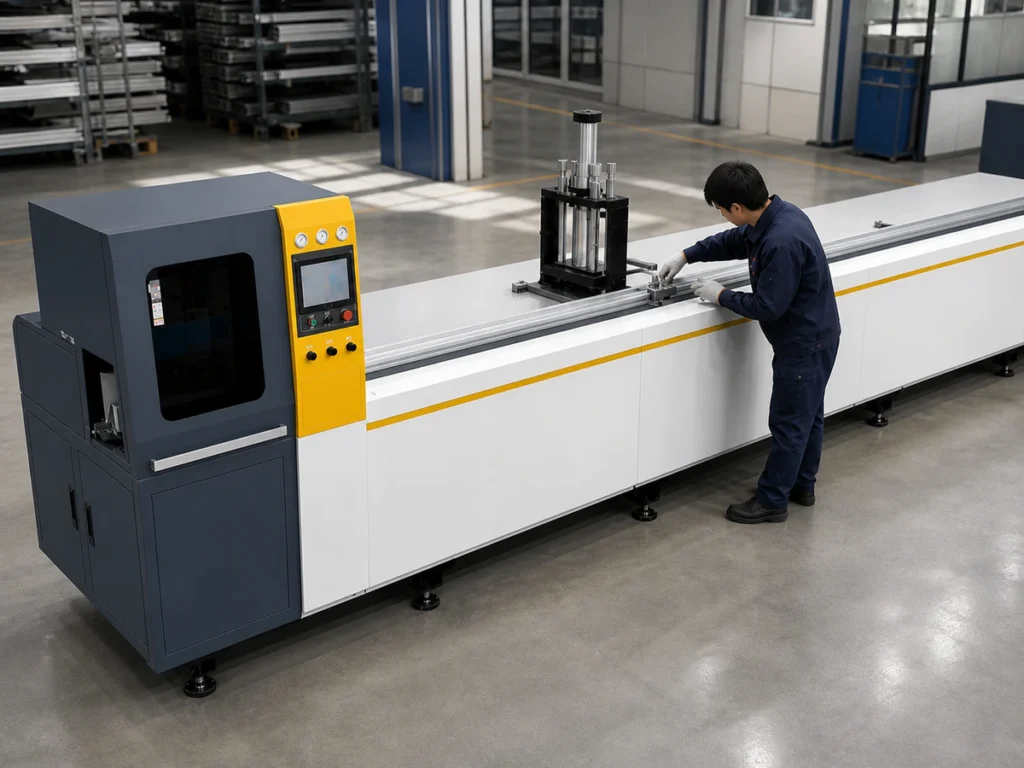
Interpret the trace with the regulator type and circuit
A relieving regulator can vent excess secondary pressure; a non-relieving version may retain downstream pressure until the circuit consumes or releases it. Festo’s explanation of air regulators describes secondary pressure and venting. Confirm the feature on the component actually fitted to the offered saw. A quotation that says only “air regulator” is insufficient evidence of how the entire clamp circuit will behave after a stop.
If outlet pressure keeps rising at no demand, the technician should examine the regulator and air quality against its manufacturer’s manual. The SMC regulator troubleshooting guide lists wrong flow direction, foreign material at the valve seat and damaged valve parts among causes of failed regulation. That list is a diagnostic prompt, not proof that any one cause exists on this saw. A change seen only at a remote clamp point may instead require checking the branch arrangement and measurement location. Avoid opening pressurized parts or bypassing protective controls to find out.
Link pressure behavior to clamp contact, then to the cut
Pressure alone does not certify holding quality. The profile section, contact pads and support can change whether a given clamp condition holds the part without marking or shifting it. Pair a documented air trace with the same representative profile, approved clamp contact, cut sequence and first-off inspection. If the concern is pressure falling during the active cycle, use our separate clamp pressure sag trial plan; that is a different time window from idle rise.

If a supplier reports a leak or a pressure drop, ask where it was measured and which valves were open. Our machine-side pneumatic leak check covers idle and cycling leak evidence. A leak survey, an idle-rise trace and an in-cut pressure trace answer different questions; the quote should specify which one was actually run.
Put the answer in the purchase record
For an RFQ or factory acceptance review, request five items: the supplied regulator model and pressure range; a drawing with inlet, outlet and point-of-use locations; the approved idle and operating pressure limits; a timed trace that includes the transition from cycling to rest; and the first-off part record for the agreed profile. Ask who will correct and repeat the test if the trace falls outside the supplier’s stated limit. If pressure exceeds an approved limit, stop the evaluation and use the machine’s documented isolation and service process with qualified personnel.
Related equipment video
The following clip is from Jiurun’s own channel and shows a general automatic aluminum saw. It illustrates machine and clamping context only. It does not measure idle pressure or prove the regulator, material, customer configuration, cut quality or acceptance result discussed above.
Send a clearer request to Jiurun
Share the profile drawing, required contact surfaces, intended air supply range and the exact idle-rise observation. Ask for the regulator and gauge positions on the offered configuration, then agree on the timed trace and first-off evidence before treating the issue as resolved. Contact Jiurun with those details for a configuration-specific response.