
Aluminum saw chip bin level becomes a purchasing question when a collection bin fills during a cutting shift. The quotation may name a dust collector, yet leave unclear who notices a nearly full container, where the warning appears, and whether cutting continues. A buyer should settle those responses before treating a “full-bin alarm” as a complete feature.
The aluminum saw chip bin level decision concerns the handoff between the saw, the collector, and the operator. A bin-level device may warn at the collector; a separate control connection would be needed for any agreed saw response. Ask the supplier to identify the exact equipment and signal path in the proposed configuration.
Aluminum saw chip bin level: name the monitored container
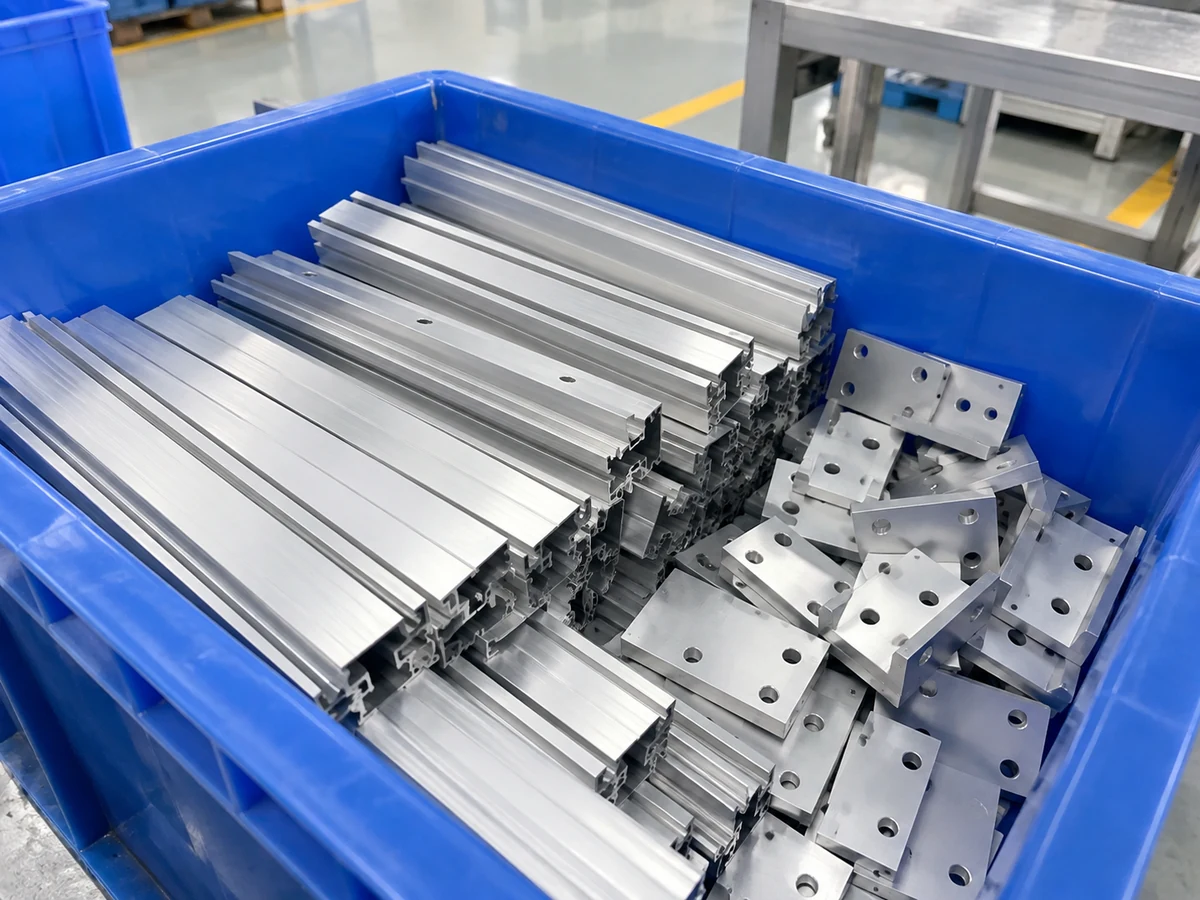
A finished-part container, a chip tray under the saw, and a collector discharge bin serve different jobs. A neat box of cut profiles says nothing about dust-bin capacity. The distinction matters because a sensor specified for one collection point cannot be assumed to protect every place where chips accumulate.
Collector suppliers also distinguish bin level from a hopper-plug point sensor and from filter differential pressure. Donaldson describes an optional bin or drum level alert separately from other condition monitoring. Its sensor overview lists hopper plugging and bin level as different measurements. Neither a filter-cleaning alarm nor a hopper sensor should be read as proof that the discharge bin is monitored.
Choose the response, not just the sensor name
There are several legitimate operating arrangements. A workshop may use a documented visual check and emptying interval. A collector may provide a near-full warning to its own controller. An integrated line may be designed to notify the saw operator or inhibit a new cut after a defined signal. Which arrangement is appropriate depends on the collector, wiring, control design, chip flow, and the site’s operating procedure; none is implied by the words “bin sensor” alone.
For example, a Nederman collector product page identifies a capacitive level sensor as an option and describes a controller warning. A different Nederman product manual specifies its own timed warning and stop behavior. Those are examples of model-specific functions, not specifications for a Jiurun saw or for a collector that has not been selected.
Map the saw-to-collector boundary in the quotation
For aluminum saw chip bin level planning, ask for a simple boundary drawing or written list that names the saw, ducting, collector, discharge container, sensor, controller, and operator display. Mark which items are included in the offered price and which belong to the buyer or a third-party installer. If the collector is already on site, record its exact model and available signal contacts before promising integration.
- Detection: Which physical bin is watched, what is the sensing method, and is “near full” adjustable for the actual container?
- Notification: Where does the warning appear, who is responsible for it, and can it be seen or heard at the saw station?
- Cut response: Does the proposal call for warning only, preventing the next cycle, or a controlled stop? Who designs and commissions that interface?
- Fault response: What happens if the sensor, cable, controller, or collector power fails? Request the supplier’s documented behavior for the selected system.
- Recovery: Who authorizes emptying and restart, and what indication confirms the bin and alarm are back in their normal state?
Also keep the saw chip-tray access and chip-cart emptying route in scope. A level alert does not make the tray accessible or create a safe route for removing the container. Filter pulse-cleaning air is a separate utility decision.
Specify an acceptance demonstration
Before sign-off, ask the supplier to demonstrate the agreed alarm through a manufacturer-approved test method, with the actual controller and display identified. Observe the warning location and the stated saw response, then document how authorized personnel clear and restart the system after the condition is resolved. Do not rely on an uncontrolled overfill or bypass guards to prove the alarm. Record the tested equipment versions and the boundary of what the demonstration proves.
The commercial comparison is then clearer: one offer may include a sensor but no saw connection; another may include wiring and commissioning; another may rely on operator checks. Compare the full scope and the resulting responsibilities, not a checkbox labelled “automatic.”
Related equipment video
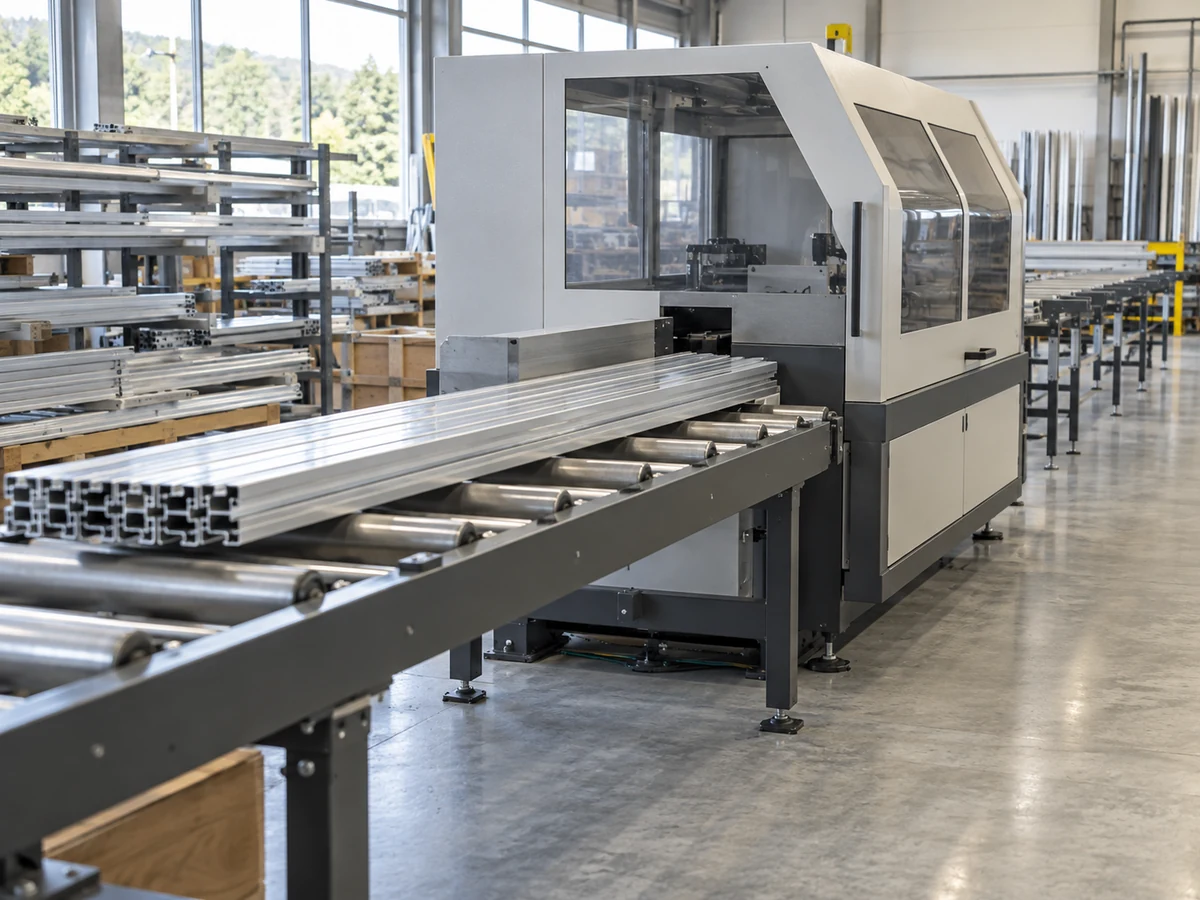
The Jiurun Machinery video below shows aluminum saw equipment and cutting flow. It is a related equipment view only; it does not establish a chip-bin sensor, collector configuration, full-bin response, customer installation, or measured performance for the system discussed here.
Send the right questions with your RFQ
For an aluminum saw chip bin level proposal, send the intended saw model or cutting process, expected material and shift pattern, the proposed or existing collector model, and a sketch of where the collection bin sits. Ask for the bin-level sensing option, warning point, saw control response, fault behavior, installation scope, and acceptance method in writing. Contact Jiurun Machinery with those details so the offered machine and collection arrangement can be reviewed against your actual line.