
A saw quote may list an extraction connection while the collector proposal separately lists a pulse-cleaned filter. The two documents can leave one utility unassigned: the compressed air that cleans the collector filters. For an aluminum saw dust collector, that omission can delay commissioning even when the fan and duct are installed. The buyer needs a named collector design, an air-demand statement from its supplier, and a site-side supply owner before comparing offers.
Start with the collector actually being offered
Ask whether the proposed collector uses pulse-jet cleaning at all. A dry collector label, a filter pressure gauge, and a fan motor do not answer that question. If pulse cleaning is part of the approved system, identify the collector make and configuration, the cleaning controller, and the compressed-air connection in the same quotation package. If it is not part of the system, do not add a fictional pulse-air load to the saw specification.
Donaldson’s collector compressed-air guidance says to use the requirements in the particular collector manual. Its FS/FT pulse-jet manual also describes a collector compressed-air connection and air-quality provisions for that equipment. Those are examples of why the named collector’s documentation matters; their settings are not universal specifications for a Jiurun saw or an unselected collector.
Write two air demands on the utility sheet
Keep the saw’s pneumatic functions and the collector’s filter-cleaning demand on separate lines. One may be supplied with the machine while the other belongs to a third-party collector. A shared plant header can still serve both, but the buyer should not add two brochure figures and assume the connection is adequate. Ask each supplier for the required quality, operating pressure range, connection, consumption basis, and the expected demand during the actual cleaning sequence. Then have the plant utility owner check the available conditions where each branch will connect.
The quotation should say who supplies regulators, filters, isolation points, condensate handling, controls, and the connection work for the specified package. Record exclusions just as clearly. This is a scope and handoff check, not an instruction to set pressures or change a collector’s safety design. The chosen collector and the site’s dust-safety review govern those details.
Use one commissioning question to expose the gap
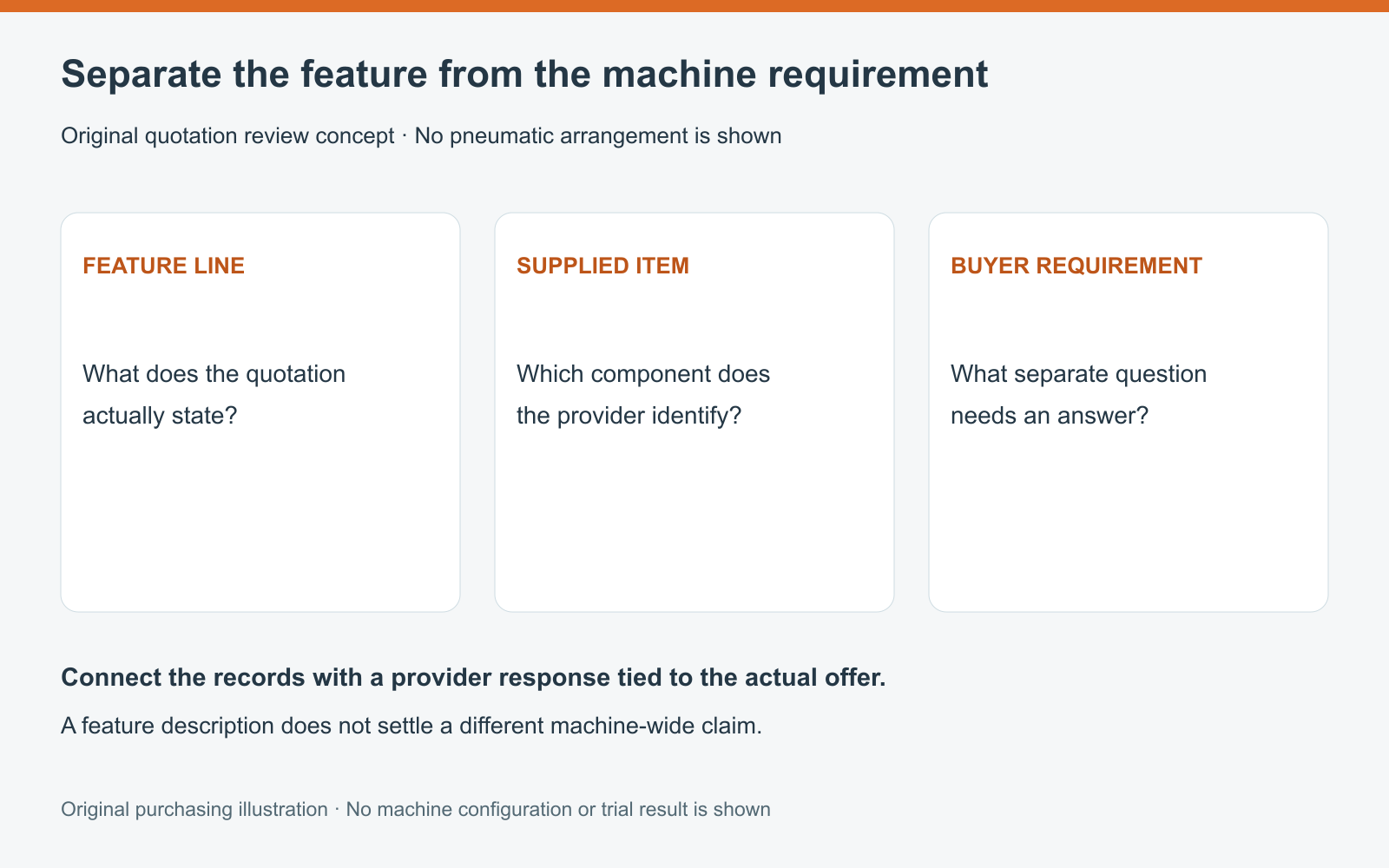
Before the order is released, ask the saw supplier, collector supplier, and plant team to answer one scenario: when the saw runs at the agreed representative cutting duty and the collector calls for filter cleaning, what evidence shows that the collector receives its specified air supply? Name the test observer and the record to be handed over. A fan-running signal alone cannot answer this utility question, and a clean differential-pressure reading cannot prove the supply arrangement.
Do not turn this into a universal pass number. The test conditions and acceptance criteria must come from the selected collector documentation and the agreed system design. If the proposed collector is changed after the saw quote, repeat the utility and responsibility review before treating the two offers as one installable package.
A compact RFQ note the buyer can send
For the proposed aluminum saw and dust-collection package, identify the collector and its filter-cleaning method. If pulse cleaning is specified, provide the collector’s compressed-air requirements and cleaning-demand basis, show the supply and treatment components included in each quotation, name the site connection owner, and define the commissioning record under the representative saw duty. Mark any unprovided items as exclusions.
Keep the decision separate from two neighboring questions: how to read collector filter pressure and how to choose a wet or dry collection route. Those reviews do not allocate the pulse-cleaning utility for the specific system being purchased.
Related Jiurun equipment video
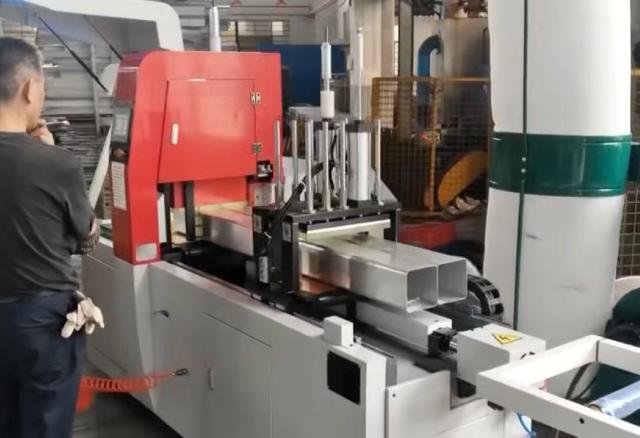
The following video from Jiurun’s YouTube channel shows a CNC aluminum saw and profile feeding. It is general equipment context. It does not show a pulse-cleaned collector, a compressed-air installation, the material or machine configuration in your RFQ, a customer trial, or verified extraction performance.
Send the system boundary with the inquiry
When you contact Jiurun about an aluminum saw, include the stock and cut-duty range, the proposed collector quotation if one exists, the intended plant air connection, and who will own the extraction system. Ask for the saw-side interface and exclusions in writing. The collector supplier and qualified site team can then confirm the separate filter-cleaning air requirement for the selected design.