
An aluminum saw blade flange pair is a machine-specific mounting assembly, not a generic add-on to a blade quotation. When a supplier offers replacement tooling, the buyer needs to know whether the offer is for a blade only, one flange, a matched inner-and-outer set, or a complete approved mounting kit. A shared blade bore does not answer that question. This guide turns a vague spare request into an identifiable quote, technical review, receiving check, and service handover for the exact saw.
Use the machine model, serial number, current tooling drawing, and blade product identity as the starting record. Ask the machine supplier or its authorized technical representative to confirm any change to the mounting arrangement. The checks below are for purchasing and acceptance planning; trained personnel must follow the actual machine and blade manufacturers’ procedures for access, installation, and service. No photograph or generic drawing here certifies a JiurunCut model’s flange size or mounting pattern.
Separate the blade order from the flange-pair order
A blade’s outside diameter, center bore, body thickness, and kerf describe different features. A flange contacts and retains the blade at the machine interface. Depending on the approved configuration, the assembly may also involve a hub, centering feature, drive pins, screws, or a specified adapter. Those are not interchangeable labels. If a quote says only “flange for 30 mm blade,” it may omit the exact face, mating component, fastener set, and machine revision.
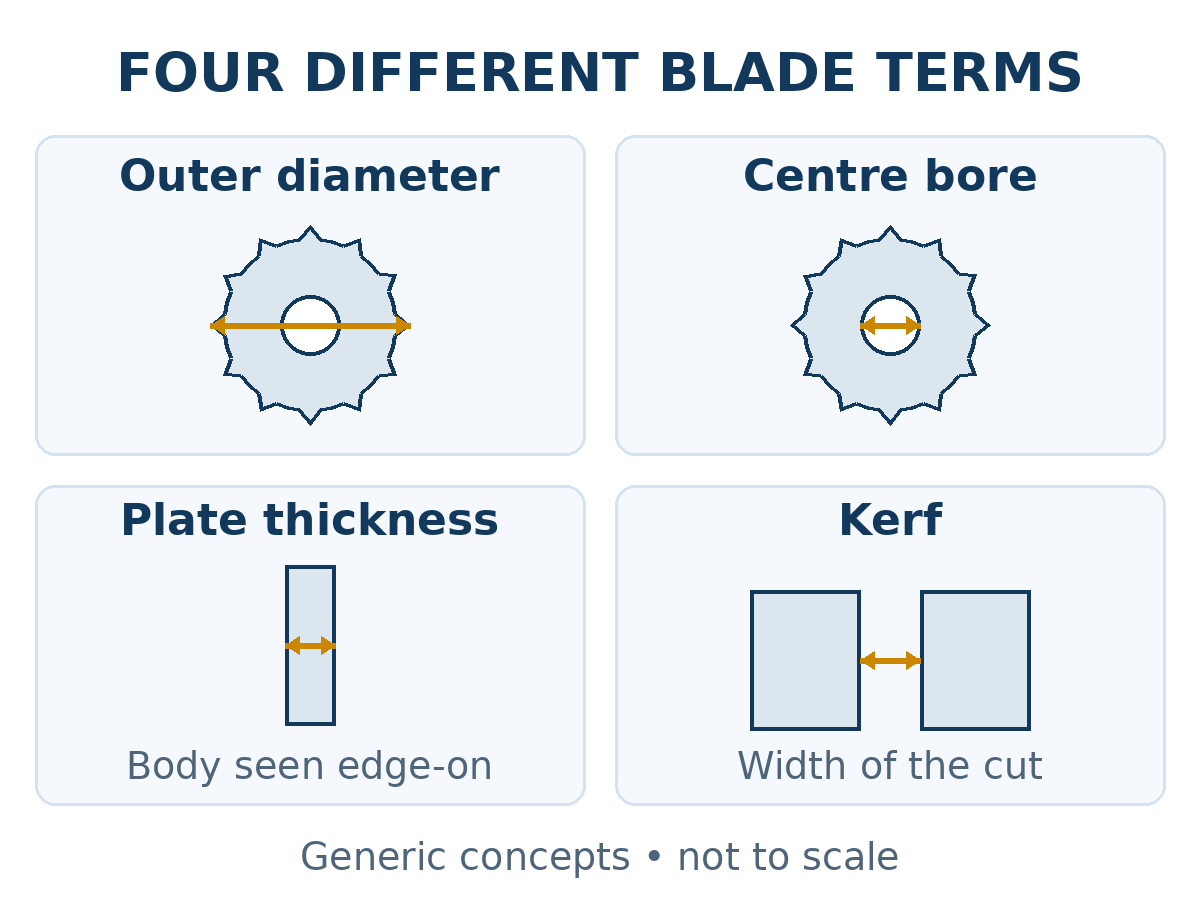
Our blade-bore order guide handles the center-hole decision. The present question is different: which identified flange components are being bought, and do they match the current approved saw-and-blade assembly? Keep the bore review attached, but do not treat it as approval of an unidentified spare flange.
Build one interface record before comparing prices
Ask the supplier for a drawing or parts list tied to the delivered machine, not a family photograph. The record should name the inner and outer flange where applicable, their individual part numbers and revision, the machine-side interface, the blade-side interface, and the fastening components included in the quoted supply. If the OEM uses a different arrangement, have the supplier describe it in its own terms rather than forcing it into a two-piece assumption.
| Field to identify | Buyer question | Evidence to retain |
|---|---|---|
| Machine identity | Which model, serial number and approved tooling revision does this fit? | Machine record and supplier confirmation. |
| Each mounting component | Is the offer one part, an inner/outer pair, or a complete kit? | Individual part numbers, drawing and quantity. |
| Blade interface | Which approved blade product, bore and any auxiliary mounting features are covered? | Blade product number and interface drawing. |
| Fasteners and accessories | Are the specified screws, pins, centering parts or rings supplied separately? | Itemized inclusion and exclusion list. |
| Decision owner | Who signs off a proposed substitute for this exact arrangement? | Written technical approval and revision. |
LEUCO’s mounting-flange product entry is a useful example of why item identity matters: it states a particular tool-side adapter size, blade-bore application, screw pattern, machine application, and related fasteners. That entry describes LEUCO’s listed product for named machines. It does not establish fit for a JiurunCut saw, or a universal flange dimension for aluminum cutting.
Ask for the current blade and mating-part evidence
A spare quote should name the blade that will be used with the pair, including the full manufacturer product code. Request a readable record of the currently approved blade and the mating machine parts. If the saw was serviced, retrofitted, or delivered with a later tooling revision, ask whether the quoted spare follows that change. A previous purchase order can be a lead, but it may describe an earlier assembly.
Where the buyer is offered a blade and flange together, compare the two offers as one approved combination. A low-priced blade may require an accessory that is not included; a spare pair may be listed for a different bore, blade body, or machine-side geometry. Record who supplies each component and who accepts the assembled configuration. Do not release an order merely because the visible blade resembles the reference image.
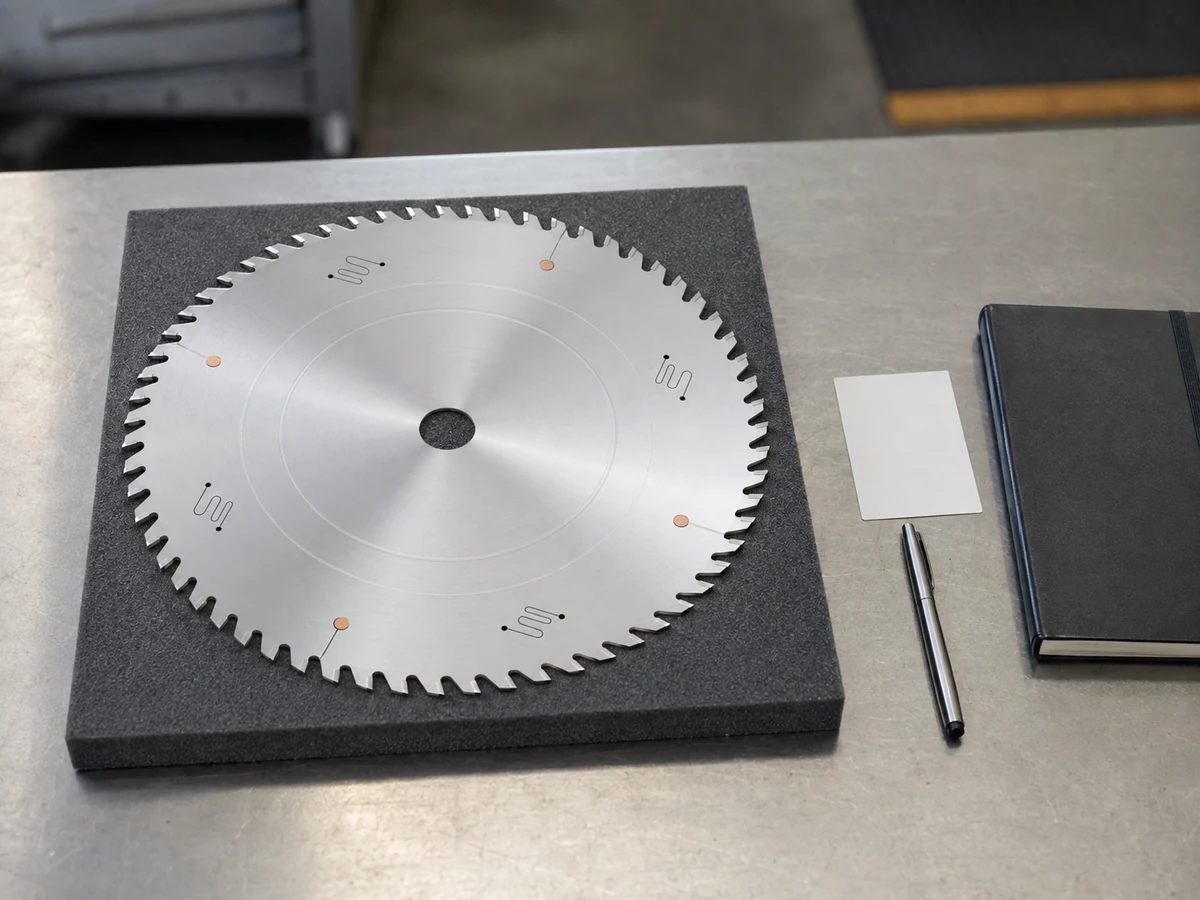
Freud’s original circular-saw-blade instructions tell users to observe the machine manufacturer’s information when fastening blades and machine components, and to keep clamping surfaces free of grease, oil and water. Those instructions support a buyer’s request for the applicable approved procedure and condition check. They are not a reason for purchasing staff to specify their own tightening method, force or tolerance.
Include guard access in the service handover
A correct component on paper may still be hard to verify if the quote omits how qualified personnel will identify it on the actual machine. Ask the supplier to identify the prescribed access route, the relevant guard or cover, the parts-document reference, and the safe service responsibility. Confirm that a spare can be identified without guessing from an exterior photograph. Any access or installation demonstration belongs under the approved machine procedure, with guards restored and acceptance documented by authorized people.

Separate this access question from a general maintenance aisle around the machine. The service-aisle guide addresses floor space for maintenance work. A flange quote needs the component-level path and responsibility for the particular machine. Neither guide authorizes opening a guard while the saw is operating.
Compare two offers without inventing compatibility
Imagine two fictional quotations for the same existing saw. Offer A says “replacement flange” with one photograph and one price. Offer B identifies a machine serial range, inner and outer component codes, included fasteners, compatible blade product, and the drawing revision. Offer B is more reviewable, but it is not automatically approved: the responsible machine and tooling specialists still need to confirm the exact installed configuration. Offer A remains incomplete until its missing fields are supplied.
If a seller proposes a different flange diameter, an adapter, or a different bolt pattern, record that as a substitution request. Ask what changes, what remains original, and which manufacturer accepts the combination. Do not let an offer’s apparent physical fit substitute for a signed technical decision. A supplier’s part photo is not a mounting measurement, and a general equipment video cannot demonstrate this specific fit.
Keep blade runout evidence separate. A reported reading requires a named measured feature, direction, reference, method, and approved limit; it is not established by a spare quote. Our blade-runout report guide explains how to request that record if it is part of the acceptance question.
Specify what receiving and acceptance will compare
At receiving, compare the delivered item labels and quantities with the released drawing and quotation. Preserve each component’s part number, revision, and package identity. If the supplier’s kit has separate fasteners or accessories, record whether they arrived as a complete set. Route a discrepancy back to the technical owner before installation; a warehouse visual match cannot approve a changed interface.
For commissioning or a qualified service trial, agree in advance on the actual blade identity, machine state, applicable manufacturer procedures, inspection record, and responsible sign-off. Ask the supplier to document what was checked and what was not. A successful cut of one sample does not independently validate every flange dimension, clamping face, spare part, or future blade substitution. Link the released spare list to the delivered machine documentation so later purchasing staff can repeat the same identity check.
General equipment video
The Jiurun Machinery channel video below shows general aluminum-cutting equipment. It is included only as equipment context. It does not show or prove the flange pair discussed here, an approved blade-mounting arrangement, a customer machine, a specific material trial, or any measured performance. Use the supplier’s machine-specific drawing and technical approval for this purchase decision.
Video: general equipment footage from the Jiurun Machinery YouTube channel, not evidence for this flange-pair quote.
Send a quote request that can be answered
Provide the machine model and serial number, current tooling-document revision, existing blade product number, and any known service change. Ask for the exact inner and outer flange or other approved assembly identity, individual quantities, drawings, fasteners and accessories, exclusions, lead time, and written compatibility decision. State who will compare the delivery with that approved list and who will perform the authorized service acceptance.
If those records are unavailable, label the request pending technical identification instead of ordering a guessed pair. Ask the machine supplier to identify the present arrangement first. That delay is more useful than buying two pieces that cannot be tied to the installed saw.
Buyer questions
Does a matching blade bore prove the flange pair will fit?
No. The complete machine-side and blade-side interfaces, mating components, fastening details, and approved configuration must be identified.
Should I buy one flange or two?
Order the parts shown in the approved parts list for the actual machine. Some configurations may quote one component, a pair, or a kit. The supplier should state exactly what is included.
Can a photo prove clamping-face condition?
A photo can identify a component or show an obvious concern, but it cannot by itself establish the full inspection method, surface condition, or acceptance limit. Request the applicable service record.
Is a different brand’s flange catalogue a JiurunCut compatibility table?
No. Manufacturer catalogues illustrate how flanges are specified; compatibility requires confirmation for the delivered saw and proposed tool.
For a machine-specific review, contact JiurunCut with the machine identity, blade reference, available parts drawing, and the exact missing flange information. We can route the question to the appropriate technical review without treating a generic image or video as a substitute for approval.