
Aluminum saw alloy changeover is a material-identity handoff, not just a program change. A saw can make an accurate blank from the wrong stock. When similar extrusions from two orders share a rack, a clean cut face and a passing length check cannot establish which alloy, temper or production lot entered the blade. The buyer needs a release rule that follows the material from the incoming bundle to the finished kit.
This guide is for a shop or OEM that cuts approved aluminum stock in more than one alloy or temper. It sets out what to put in the RFQ, what to clear between runs and what a first-off approval can actually prove. The material supplier remains responsible for its declared material certification; the cutter remains responsible for the agreed cutting and segregation controls. Neither should be asked to infer an alloy from a photograph.
1. Define the new job before moving stock
Give the cutting supplier a released job line with part number, drawing revision, profile cross-section, approved supplier or extrusion reference, alloy and temper, finish, source lot or heat identifier, finished length, angle, quantity and acceptance method. State whether the receiving item is a loose blank, a labeled cut kit or a prepared member with later operations. If the drawing says one material and the purchase order says another, hold the line until the buyer resolves it.
Ask how the supplier will connect the incoming bundle label and material certificate to the traveler and output labels. Hydro’s discussion of extrusion technical specifications distinguishes physical item marking from package marking and inspection acceptance, and notes that customer-specific marking requirements are agreed with the customer. Make those requirements explicit in the order instead of assuming every short cut piece will carry the original mark.
2. Close the previous lot at the saw
Before a different material is released, account for the last accepted blank, rejected blank, uncut bar, remnant and offcut from the prior job. Check the infeed rollers, stop area, outfeed, bins and any nearby rack that can feed the next cycle. A remnant with no trustworthy link to its parent bundle should be quarantined under the buyer’s procedure, not relabeled from its appearance. Record who cleared the station and when.
Clear the paperwork too: retire the previous traveler or program call-up and remove old labels from active totes. If the shop collects chips or offcuts by alloy for recycling, ask for the collection rule and the owner of that stream. Hydro explains why sorting aluminum scrap and documenting its origin matters. A scrap bin label is a control for that stream; it is not proof of the alloy in a finished blank.
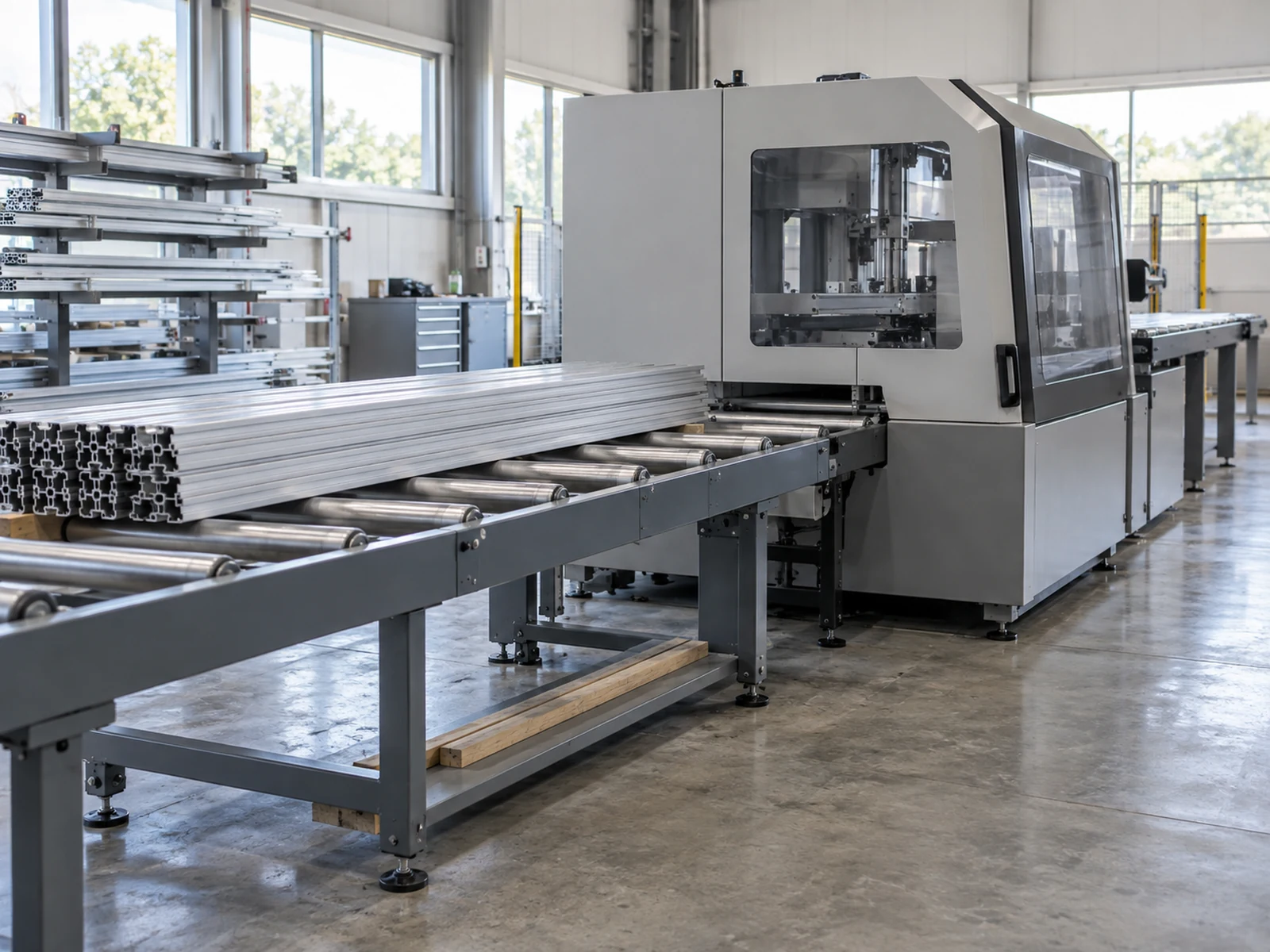
3. Verify the incoming bundle as a separate event
At the handoff, compare the bundle or bar identifier with the approved purchase order, traveler and material documentation. Check the cross-section and finish against the released part, but treat appearance as a geometry check, not a material test. Similar-looking aluminum can belong to different orders. If the stock arrives without a reliable identifier, establish a documented verification or return route before cutting. Do not let an operator guess the alloy from color, weight or surface texture.
For a mixed-order day, designate one active bundle and one destination for its output. Other lots can wait in separated, marked staging positions. If the buyer permits a remnant to return to the rack, specify the durable label information and the point at which the original lot link is lost. Our alloy and temper inquiry checklist covers the material fields to request before a saw trial; this changeover check carries that identity through the line.
4. Recheck the saw setup against this stock
Confirm the selected program, stop position, blade and fixture are the approved setup for the released cross-section and cut requirements. A change in alloy or temper may call for a new process review, but it does not justify assuming a universal feed or blade setting. The supplier should document the actual trial conditions it used for the representative stock and explain what is still unverified. If profile geometry also changes, review support, clamp contact and face protection rather than treating material identity as the only variable.
Ask for a safe first-piece route that keeps the new bundle identifier visible to the person who measures the cut. The saw’s dimensional controls and the material supplier’s alloy certification answer different questions. A correct program can still be loaded with the wrong bar; a correct bar can still be cut to the wrong revision. Both checks need their own sign-off.
5. Release a first-off blank with two checks
The first-off record should pair identity and cut quality. On the identity side, record the job, part, revision, stock lot and label or certificate reference. On the cut side, measure the agreed length and angle and inspect the specified burr, end condition and visible-face damage. Identify the measuring method and acceptance limit. If the drawing omits a limit, request clarification instead of inventing one during inspection.
A passing first-off cut confirms only the measured dimensions and observed condition for that sample under the recorded setup. It does not chemically verify an unmarked bar, certify a temper, demonstrate downstream assembly fit or guarantee every later piece. Hold the production run if either the identity trail or the cut acceptance is unresolved.

6. Keep output, remnants and exceptions separated during the run
Set a labeled output location for each part and lot before the first production cut. The label should survive a move from the saw to deburring, packing or assembly, with the level of detail agreed in the order. Define where a replacement blank goes after a failed piece and whether it must be cut from the same lot. A mixed tote is easy to create when two visually similar jobs share a length; a length gauge will not resolve it later.
Keep usable remnants and discard offcuts in their assigned places. If a label falls off or an unaccounted piece appears, stop the affected lot, isolate it and use the buyer’s disposition path. Do not silently add it to the nearest matching stack. Our cut-bundle traceability guide goes deeper on the output record, while the chip-stream guide covers the separate scrap decision.
7. Price the changeover work in the RFQ
Two suppliers can quote the same cut length yet include different amounts of line clearance. Request separate assumptions for unloading and accounting for the old lot, cleaning the active area, validating the new stock, calling up the next program, first-off inspection, relabeling output and handling remnants. State how many lots and changeovers the estimated order contains. If the buyer may interleave small batches, ask what changes in cost and delivery time compared with running each lot as a contiguous block.
Do not compare only saw cycle time. The cheaper per-cut price may require the buyer to supply more labels, more sorting labor or more rework after a mix-up. A useful quote names the owner of each check and the point at which the cutter is allowed to start the next lot. Ask whether a missing certificate or ambiguous stock mark creates a hold, and how that hold affects the delivery promise.
8. Agree on the final handoff and exception record
For each released lot, the packing list should pair part number, revision, alloy/temper as ordered, source lot reference, accepted quantity and any agreed first-off or inspection record. Distinguish this paper trail from a claim that the saw verified chemistry. If the order has a customer-specific marking standard, record where that mark appears on individual pieces or packaging and who inspects it before shipment.
Close the job with an exception log for lost labels, segregated pieces, changed stock, revised drawings and rejected first-offs. Each exception needs a named disposition owner. The practical acceptance question is simple: can the receiver trace every cut bundle to the approved material and released drawing without relying on memory or appearance?
Aluminum saw alloy changeover: compare two production routes
- Grouped lots: finish one identified material lot, clear the saw, then release the next. Quote the clearance and first-off effort once per transition.
- Interleaved lots: alternate jobs when production demand requires it. Quote the added clearance, first-off, handling and documentation for every switch.
- Unidentified stock: hold or return it under the agreed rule. Do not count it as available production material until the identity issue is resolved.
Tell bidders which route the schedule actually needs. The right choice depends on the buyer’s delivery priority, batch size and material-control requirements, not on a generic promise of faster cutting.
See a related Jiurun saw process
This video from Jiurun’s own channel shows an aluminum saw and clamping process. It is a general equipment illustration, not footage of this alloy changeover, an identified lot, the article’s first-off sample or certified material performance.
RFQ handoff for a controlled material change
Send the approved drawing, material order and certificate requirements, expected lot sizes, number of switches, cut acceptance limits, marking and packing rules, and the decision owner for exceptions. Send JiurunCut your profile drawing and cutting requirements if you want to discuss the saw-cut portion of that plan. Keep alloy certification and final application acceptance with the parties responsible for those decisions.