
Aluminum salt spray testing reports need more than an exposure-hour number. Confirm the method, specimen, finish, evaluation rules and connection to the supplied product. Test hours alone do not establish outdoor service life or approve every part with the same finish description.
Use the report to answer a defined purchasing question. Is it evidence for an approved coating system, a specified production sample or a particular acceptance requirement? Keep that purpose visible before comparing suppliers.
Read these fields first
- The complete method and edition, including the specified test variant.
- The identity and preparation of the specimens actually tested.
- The acceptance criteria and the observations recorded against them.
On this page
Aluminum salt spray testing: confirm the method
Read the report’s full standard designation and edition. Do not reduce it to “salt test” or assume two reports used the same conditions because they both state a duration. If a quotation names a required method, compare that exact requirement with the report.
ISO’s public description of ISO 9227 identifies neutral salt spray, acetic acid salt spray and copper-accelerated acetic acid salt spray methods. These are commonly abbreviated NSS, AASS and CASS. The method variant belongs in the report review.
The same public description explains that product-specific specimen details, exposure duration and interpretation come from the appropriate product specification. A standard name therefore does not supply the whole purchase acceptance requirement.
ASTM’s public B117 scope describes the apparatus and conditions for a controlled salt-fog environment. It does not prescribe a particular product’s specimen type, duration or result interpretation. State the governing product requirement alongside the method.
When the purchase order and report cite different editions, ask the responsible reviewer to resolve the difference. Preserve the designation on the original report rather than silently relabeling earlier testing as compliance with a later edition.
Check 2: identify what was tested
Find the specimen description before reading the conclusion. Was the tested item a flat panel, a cut extrusion, a formed component or an assembled joint? Record the material description, sample identifier and dimensions provided by the report.
A flat coating panel and a finished frame member describe different specimen geometries. The buyer needs to know why the available report is relevant to the requested product. Ask the responsible quality reviewer to define that relationship instead of assuming any aluminum sample represents the order.
Match sample identifiers to photographs and records. A photograph should show which sample and surface it documents. If several samples were tested, keep each result associated with its identifier rather than using one image for an unexplained group conclusion.
Also distinguish a coating supplier’s reference sample from a sample drawn from your production order. Both may have useful purposes, but the report should state the actual origin. Do not label qualification evidence as a test of delivered parts without a documented connection.
Check 3: record the finish and exposed surfaces
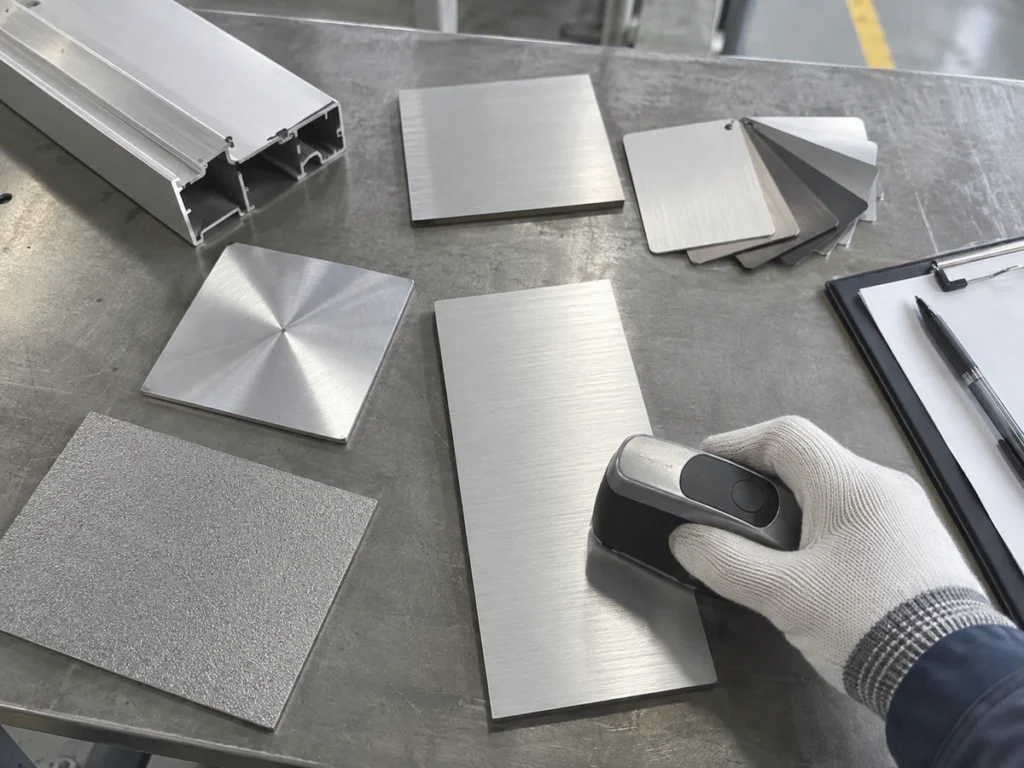
Identify the coating or surface treatment by the approved system description, not color alone. Ask which substrate, preparation and finish the tested specimens had. Keep the finish reference aligned with the supplier’s quoted production route.
The report or test plan should also describe specimen preparation relevant to evaluation. Review whether cut edges, holes, joints or deliberately prepared marks were included, protected or treated in a specified way. Use the approved procedure; do not invent a universal edge-preparation rule.
This is especially important when cutting follows finishing. A report on a coated panel may not explain how new end faces on your ordered members are addressed. Clarify whether the report supports the coating system only or a defined finished component.
The production guide to cutting before powder coating helps define operation boundaries. For an anodized requirement, keep the specified finish details with the order; see the separate anodizing-thickness purchase review.
Neither guide replaces the agreed corrosion test or acceptance specification. Their purpose is to make the supplied surfaces and production responsibilities clear.
Check 4: connect observations to acceptance rules
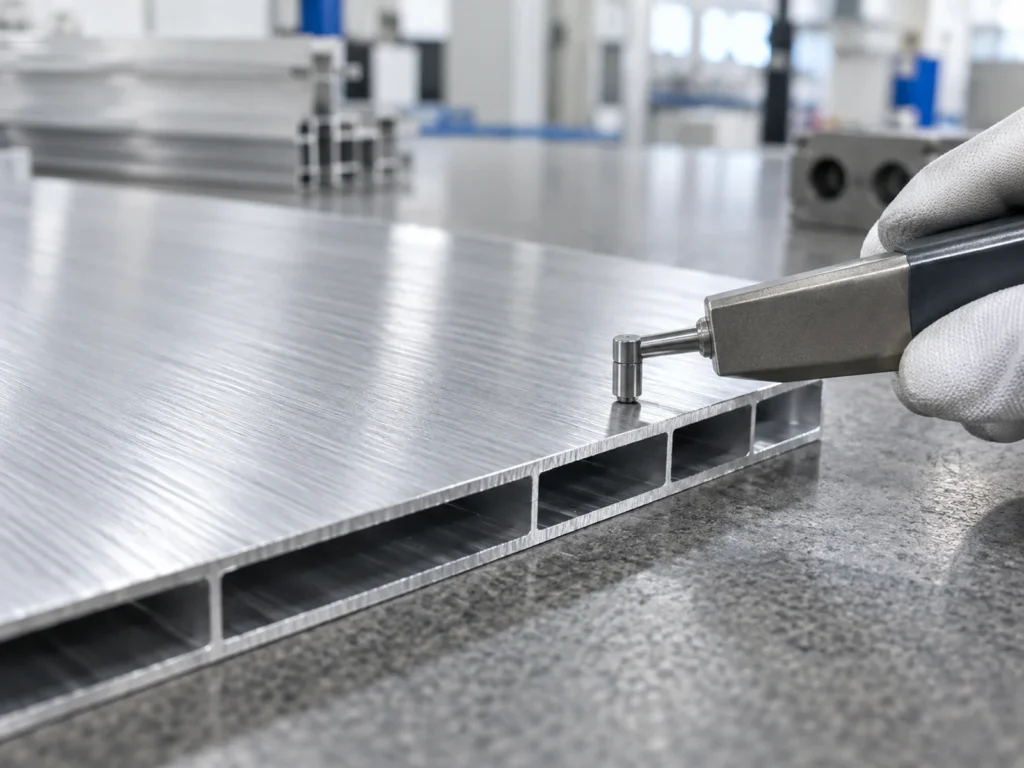
Read the evaluation criteria before deciding that a report passes your requirement. Identify which features or surfaces are assessed, what observations are recorded, and which acceptance document the conclusion references. A bare “passed” statement is incomplete when its criteria cannot be identified.
Keep exposure duration separate from acceptance. The duration records part of the test history; the evaluation states what was observed under the defined test and how those observations meet or fail the agreed criteria. Avoid merging those fields into a single claim.
Review the number of specimens and any differences among them. ASTM’s public significance statement notes that specimens, evaluation criteria and controlled variables affect reproducibility, and that variation can occur between chambers. Do not treat small differences between unrelated reports as a precise product ranking.
If the report includes photographs, ask for the corresponding sample identity and evaluation stage. An image of a clean face cannot establish the condition of an unshown edge, joint or reverse surface. Missing coverage is a question to resolve, not evidence of either success or failure.
| Report field | Purchase review question |
|---|---|
| Method and edition | Does the designation match the agreed requirement? |
| Specimen and finish | What exact product or system was tested? |
| Exposure and evaluation | Which duration, surfaces and acceptance rules apply? |
| Order connection | What evidence links this report to the offered delivery? |
Check 5: establish what the report supports
Ask the supplier to identify the claim supported by the report. It may address a specified coating qualification, a production-control requirement or acceptance of identified specimens. Keep the claim within the report’s documented scope.
ASTM cautions against predicting natural-environment performance from salt-spray data alone. ISO’s public description likewise says these methods are not intended to predict long-term corrosion resistance or rank different materials for that purpose. An exposure-hour number should not be translated into a promised number of outdoor years.
For a complete assembly, discuss the real environment and joint design separately. The guide to aluminum galvanic corrosion joint checks identifies the metal pairings and interfaces that a purchasing review should make visible.
Document who accepts the evidence for the intended application. A supplier can provide a report without being the party authorized to approve the product’s service conditions. Keep technical acceptance and commercial delivery confirmation as named responsibilities.
An incomplete report example: ask for the missing link
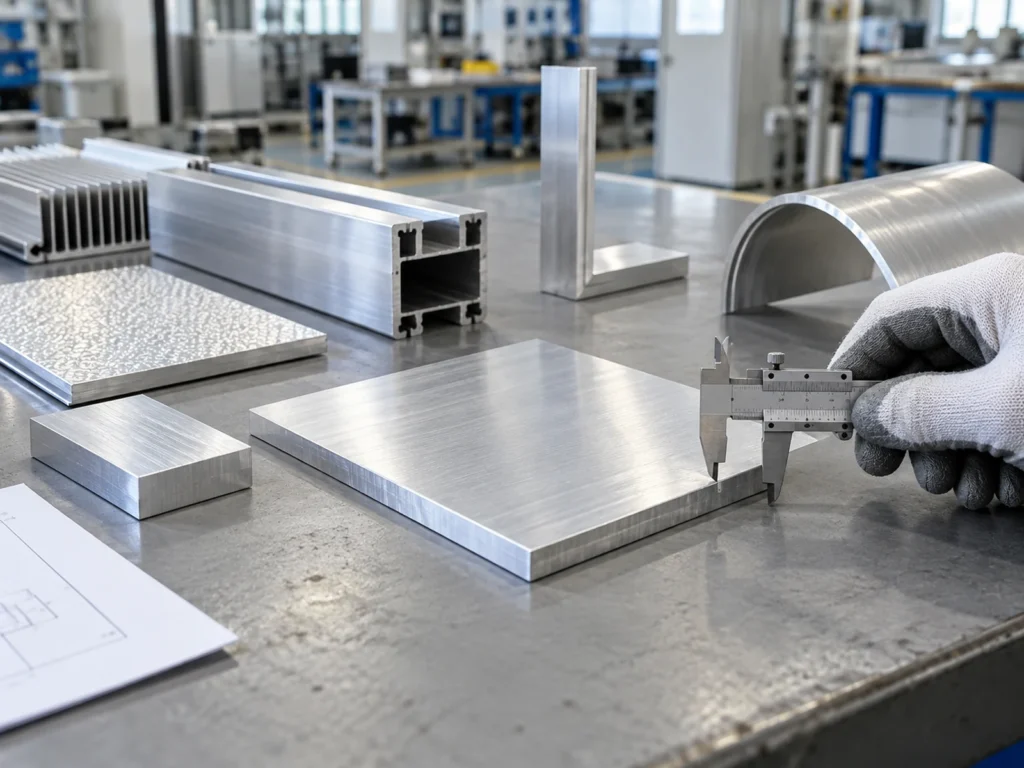
Illustrative example: quotation S14, revision B, offers finished enclosure members and attaches a report described only as “salt spray passed.” The sample description names flat panels. This fictional example shows a documentation gap, not a supplier failure or a tested JiurunCut product.
The buyer asks for the full method, specimen and finish references, exposure record, evaluation rules and the scope of the report’s relevance to the cut members. The quotation should also clarify treatment of new end faces and any later assembly work.
The report may provide useful coating-system evidence once those details are resolved. The decision should follow the agreed requirement rather than an invented equivalence between the flat panels and every finished enclosure surface.
Define cutting and testing as separate purchase scopes
A cutting request should specify the profile, lengths, quantities and surface-handling requirements. State whether finishing occurs before or after cutting and identify the end faces or interfaces that need attention in the subsequent operation.
Assign testing, specimen selection and final acceptance explicitly when they are required. Do not assume a cut-part quotation includes laboratory testing, a coating warranty or service-life approval. Those responsibilities need their own agreed scope and evidence.
Send JiurunCut the profile drawing and cutting requirements with the relevant finish and handover details. Include the approved test requirement when it affects sample preparation or production boundaries.
Buyer questions
Does more test time automatically mean a better product?
Compare the complete method, specimens, finish and evaluation criteria first. Unrelated hour figures do not establish an equivalent comparison or a service-life ranking.
Can a coating-panel report support a cut extrusion purchase?
It may provide evidence for a defined coating system. The responsible reviewer must decide how that evidence relates to the ordered geometry, surfaces and acceptance requirement.
Does the standard name define a pass?
The purchase review also needs the applicable product specification and acceptance criteria. Identify those documents before accepting the report’s conclusion.
Are these pictures evidence of aluminum salt spray testing?
No. They illustrate sample geometry and surfaces for a purchase review. Actual testing evidence must identify the exposed specimens, method and recorded results.