
Aluminum raceway base and cover cutting is a small part of a much larger system decision. A buyer may need a complete, manufacturer-approved raceway package, a prepared base-and-cover kit, or only identified aluminum blanks from released stock. Those orders are not interchangeable. A cut length that appears correct on a tape can still fail when a coupling, end fitting, cover joint, finish requirement, or installation responsibility was left out of the request.
This guide is for an OEM or project buyer comparing a cutting supplier with a complete raceway supplier. It helps define what a saw shop can quote and how the first cut pieces should be checked. It is not electrical installation advice, a wiring-capacity calculation, or approval to modify a listed system. The raceway manufacturer and qualified installation team retain those decisions.
Decide what is being bought before discussing the saw
A surface raceway has more than an aluminum extrusion. For example, Legrand’s AL3300 product page describes a two-piece aluminum system and provides a separate installation document. That document identifies a base, cover, coupling, end fittings, optional divider and other system components. The manufacturer example establishes why a generic channel photograph or a nominal run length cannot define a complete order. Its product-specific dimensions and installation details must not be copied to another series.
| Buying route | Supplier deliverable | Buyer must release |
|---|---|---|
| Complete raceway system | Named, approved product family and all specified components | System selection, approved schedule and installation authority |
| Prepared cut kit | Identified base and cover pieces, plus only the preparation expressly included | Base/cover part numbers, cut schedule, end conditions, kit identity and receiving test |
| Bare cut blanks | Cut pieces from approved stock, without implied fittings or installation readiness | Stock specification, part drawings, datum, finish protection and downstream owner |
If the project specifies a proprietary or listed raceway, confirm with the system owner that third-party cutting and the proposed handover are permitted. Do not use a saw quotation as evidence that a changed assembly retains any listing, certification or manufacturer warranty. If that permission is not clear, request the complete approved supply route first.
Aluminum raceway base and cover cutting needs separate records
Even when the base and cover appear to share a nominal run length, they are different part records. The base may have a mounting face, internal divider interface or end-fitting engagement. The cover has its own visible finish, snap engagement and joint treatment. Ask the system designer to identify the exact series and revision, then issue a separate line for each profile and each cut length. Record whether the dimension is a stock blank length, a finished piece length, an installed span, or a distance between fitting datums. Those measurements can differ.
Specify which face is the appearance face, which surface locates against the saw fence, and which end is the reference for the drawing. Mark any handed cuts or protected surfaces. The profile orientation RFQ guide explains why an apparently symmetric stock outline does not remove the need for a physical reference-face instruction. A cutting supplier should not infer a base or cover identity from a loose U-shaped sample.
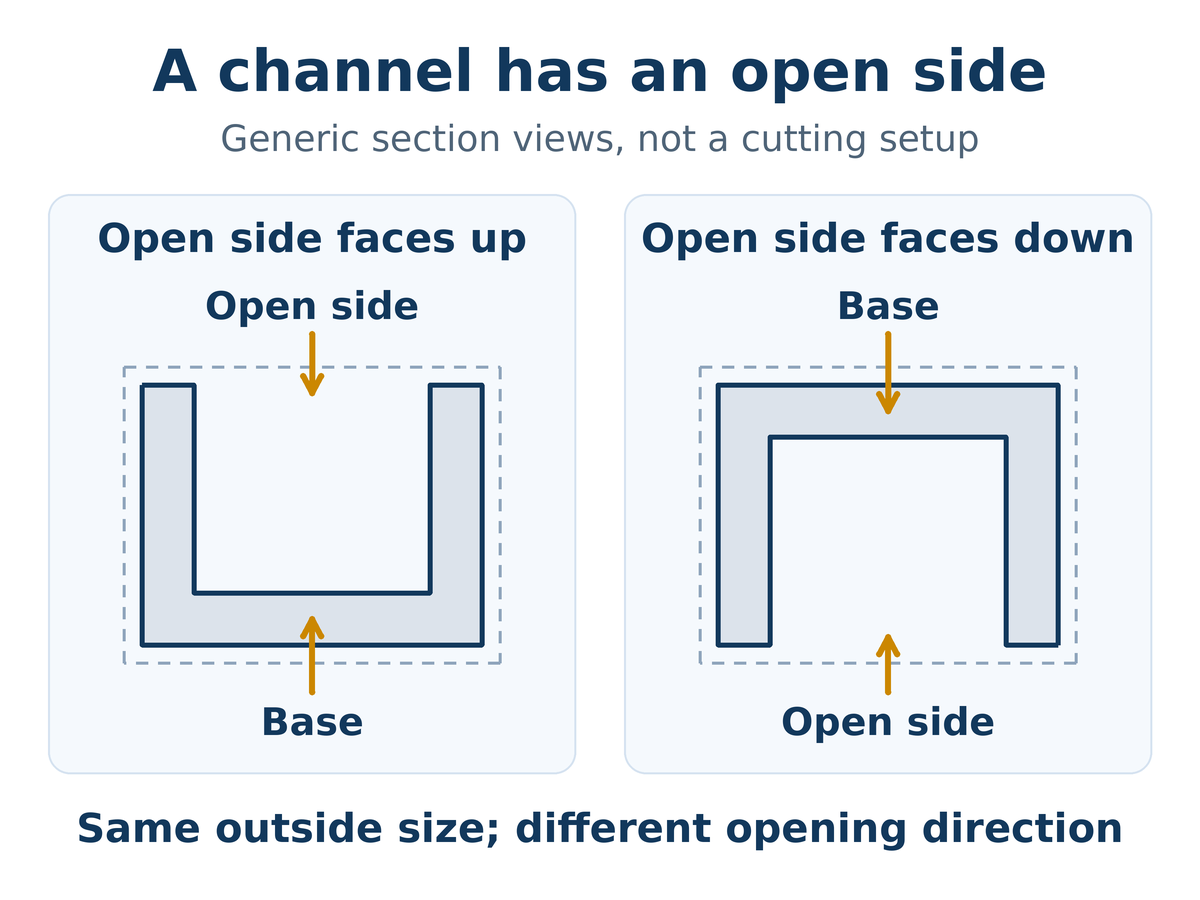
Field cutting permission is not a universal cutting recipe
Legrand’s ALDS4000 base page discusses field cutting its aluminum base and cover in a manufacturer answer. That is a series-specific example, not approval for every raceway, every prewired configuration, or any particular Jiurun saw. It also shows why the manufacturer-supplied cut instructions, finish condition and installer approval belong in the RFQ packet before anyone recommends equipment or a blade.
Keep three decisions separate: whether the system owner permits the proposed cut location and supply route; whether the actual base and cover stock can be held and cut to the released dimensions; and whether the receiving authority accepts the prepared pieces for the specified installation. A successful saw demonstration establishes only what was actually shown and measured on that sample. It cannot validate wiring, grounding, system listing or field installation.
Make fittings and joint positions part of the cut schedule
The AL3300 product page and linked installation instructions show separate base sections joined by a coupling and a cover snapped into the base, with end fittings at the run. That is enough to explain a common procurement error: ordering a pile of nominally equal metal lengths before the system designer places the joints and fittings. The specific assembly steps remain with the manufacturer and qualified installer.
Ask for an approved run schedule showing the intended start and finish of each base piece and each cover piece, the position of joints, and the fitting that owns each end. If cover joints are intentionally offset from base joints, record both schedules rather than assuming a one-to-one cut list. If the installer will trim pieces on site, identify which lengths are factory cut blanks and which are field-fit allowances. Never silently consume that allowance in the saw shop.
Trial the actual released profile and receiving condition
A trial should use the proposed stock condition and enough length to show support, clamping and cut-end handling. Compare both base and cover when both will be cut; one profile does not prove the other. Photograph the approved reference faces and the setup before the trial. On each first-off piece, record the measured length from the released datum, the cut orientation, the visible finish condition, burr or edge condition against the buyer’s stated criterion, and the part identity. Then have the system owner or installer check the mating base/cover relationship and fitting interface using the actual approved components.
For a cover with a visible anodized or coated face, protect that face at clamping, handling and packing stages. If a profile tends to deform under a proposed hold-down, adjust the approved support or fixture concept and repeat the witnessed trial. This is a question for the actual profile and machine configuration, not a universal pressure setting. The back-fence contact guide gives a separate method for identifying the reference face in a saw trial.

Do not rely on one neat sample to accept production. Define the smallest and largest released lengths, finish variants and any materially different section sizes. Confirm what changes between those jobs: support position, fixture contact, stop setting, scrap allowance, identification and first-piece check. If the job mix is too small or too variable for a dedicated automatic line, compare a manual or assisted route on the same accepted cut-part schedule. Quote the whole route, including handling and inspection, rather than only the cutting stroke.
Compare quotes at the same handover boundary
A base-only cut price and an installed raceway kit price answer different questions. For each route, request a line-item scope for stock or approved purchased system parts, base cuts, cover cuts, finish protection, deburring or edge preparation if specified, labels, fittings if included, packing, inspection records, rework responsibility and delivery point. The cutting supplier should state the machine and fixture configuration it proposes to evaluate; a generic video cannot substitute for this written proposal.
On the drawing or purchase order, name the party responsible for each remaining operation. The saw shop may deliver bare pieces while another supplier prepares openings, supplies connectors and covers, or assembles the system. If those tasks are not assigned, an inexpensive cut-part quotation can become an expensive installation delay. Require a physical first-off fit check at the agreed boundary, with a sample from the real base and cover family, before releasing quantity production.
Send this RFQ packet
- Approved raceway family, revision and the system owner’s permission for the proposed cutting route.
- Separate base and cover part numbers, drawings, stock condition, finish and quantities by run.
- Each length datum, joint and fitting schedule, with factory-cut versus field-fit allowance clearly distinguished.
- Appearance faces, reference faces, handed ends and buyer-defined edge or burr acceptance criteria.
- Representative trial pieces, first-off measurement method, fit-check owner and hold/release rule.
- Included fittings, preparation, packing, identification and downstream installation responsibilities.
Jiurun can discuss an aluminum cutting trial against released stock and a clear cut-part handover. We cannot infer a suitable saw, fixture, blade, productivity or electrical-system approval from the phrase “aluminum raceway” alone. Send the base and cover drawings and the system-owner constraints through the JiurunCut contact page; identify whether you need complete system supply, prepared pieces or bare cut blanks.
Equipment video: process context only
The video below is a Jiurun aluminum-cutting equipment example. It shows general saw and feed context. It does not show the raceway in this guide, a specified model configuration, a customer project, an approved first-off, or any validated performance or compliance result.
Frequently asked questions
Can a raceway cover be cut to the same length as its base?
Only when the approved system schedule says so. Joint offsets, fittings, end conditions and field-fit allowance can make the two records different. Release each part’s finished length and datum separately.
Does a clean cut prove that the raceway is ready to install?
No. A clean cut is one cut-part result. The system owner must still approve the part identity, mating fit, remaining preparation and installation route. Electrical and listing decisions belong to the appropriate qualified authority.
What should be supplied for a saw quotation?
Provide a sample or drawing of each actual base and cover profile, the released cut schedule, stock and finish condition, available support length, acceptable cut-end criteria and the named receiver. Ask for a witnessed trial using that same stock before comparing prices.