
Aluminum player bench plank cutting is a narrow manufacturing decision inside a larger seating system. A saw can produce a repeatable plank length, but it cannot establish whether an unapproved section, mounting pattern, end cap, or support arrangement is safe for a specific bench. For a school, sports facility, or bench fabricator, the first question is whether the order is for a complete OEM bench, a documented replacement plank, or an approved aluminum blank that still needs other work. This guide separates those supply routes and gives a practical cut-part RFQ.
Scope: The product example below is a Jaypro PB-75 portable player bench. Its published information describes an aluminum seat plank on a galvanized steel understructure. Those details are specific to that model; do not transfer its dimensions or component arrangement to another bench. The equipment and profile images below are related manufacturing illustrations, not Jaypro parts, a bench installation, or evidence of a validated cut.
Start with the supply route, not the saw
Buying a complete bench is often the cleanest route when the facility needs a ready-to-assemble, supported seating product and has no released component drawing. The bench maker owns the combination of plank, legs, fasteners, end treatment, and assembly instructions. Buying a genuine replacement plank may be appropriate when the rest of an existing bench is identified, serviceable, and the maker supplies the correct part. Cutting new stock is a different procurement project: it requires authorization for the exact section and finish, a drawing, acceptance criteria, and someone responsible for all work after the cut.
The Jaypro PB-75 product page illustrates why these routes should not be mixed. It identifies a 7-1/2 ft portable bench with a 10 in. wide non-skid seat plank and galvanized steel support structure, and links its specification and assembly documents. The aluminum plank is only one component. A quote for a saw-cut aluminum length is not a quote for the assembled bench, its support, mounting, finish, or suitability at a particular site. Confirm the current product revision and obtain the maker’s PB-75 assembly guide before ordering any replacement or fabrication work.
Ask the bench owner or OEM to identify the required route in writing. If a direct OEM replacement is available, compare that price and lead time with the full cost of qualifying a substitute. If a fabricator has a released drawing for a new bench design, define exactly which aluminum members are cut and which support or assembly operations remain outside the saw supplier’s scope. Do not infer that a visually similar industrial extrusion can stand in for a non-skid seat plank.
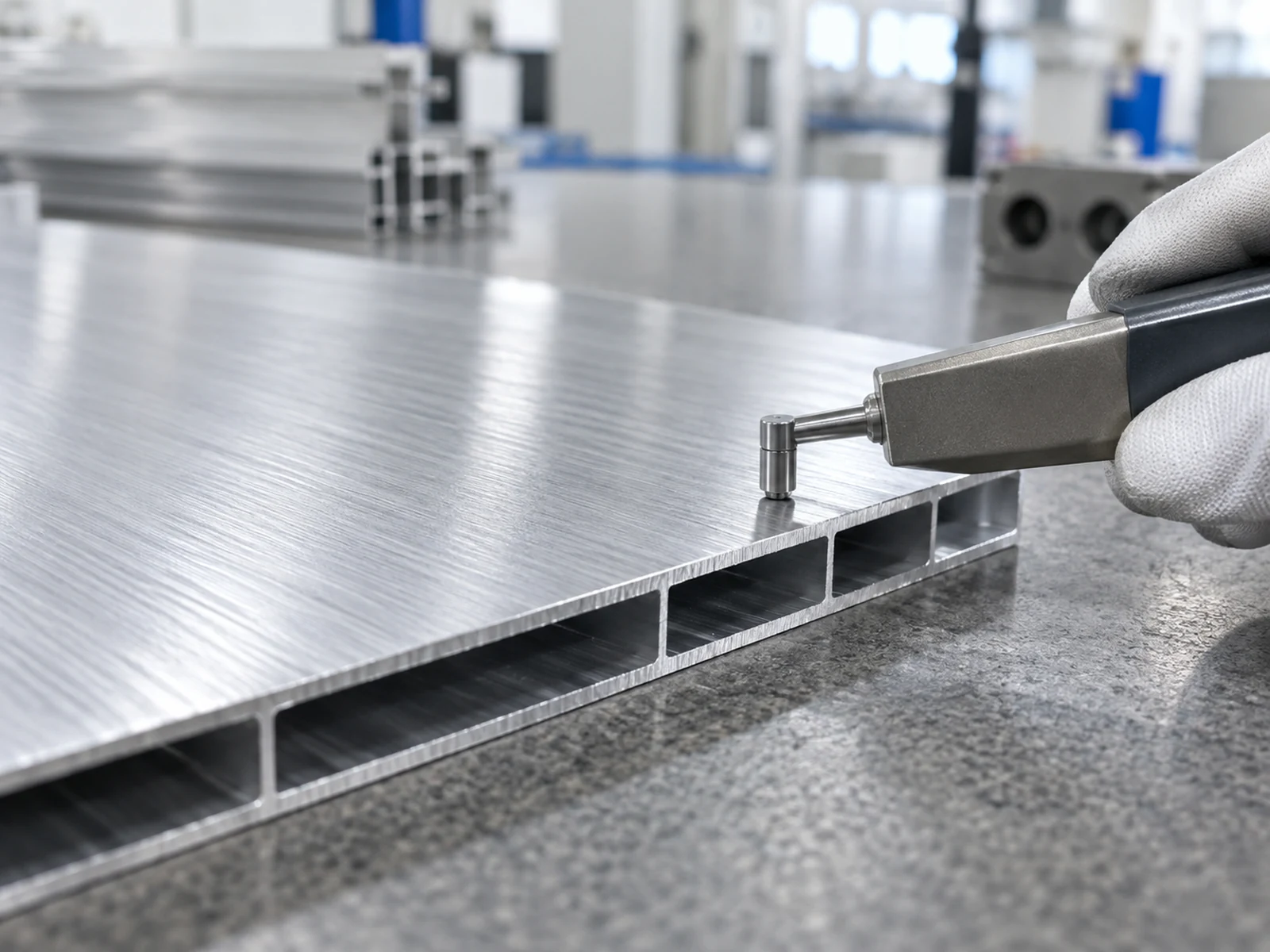
Aluminum player bench plank cutting starts with the approved section
For aluminum player bench plank cutting with approved stock, request the section drawing and identify the material, finish, seat-facing surface, cross-section, wall thicknesses, cavities, and edge geometry. The upper face may carry a texture or coating that changes how it may be supported or clamped. The underside may contain mounting features that a generic rectangular bar does not have. Record the approved supplier and revision rather than using a photograph as a substitute for a section drawing.
Separate three dimensions that are easy to confuse: the overall finished bench length, the aluminum plank’s physical cut length, and the distance between its attachment points. End caps, trim, legs, and hardware may change the relationship among them. A field measurement of an old assembled bench can be useful evidence, but it is not automatically a manufacturing datum. State whether the cut dimension runs from end face to end face, from a feature on the section, or between specified hole centers. If a plank has been damaged or bent, do not copy its measured length without checking the drawing.
List the quantity by part identity and finish, not merely by nominal bench size. A single bench may have a seat, a backrest, and support components with different sections or hole locations. Label each line with the finished face orientation, whether an end remains exposed, and whether the end receives a cap. If the cut shop is also expected to drill, punch, or deburr, state that as a separate operation with its own acceptance drawing. An RFQ that says only “cut 7-1/2 ft aluminum bench stock” leaves too much room for an expensive, consistent mistake.
Plan the first-off saw trial around the real section
Provide a representative length of the actual approved stock, including the production finish when possible. Ask the machine supplier to record how the plank is supported at the infeed, blade area, and outfeed. The objective is to prevent rocking, surface marks, and movement while preserving the section shape. Workholding pressure that is harmless on a thick structural extrusion could distort a thinner visible plank. Conversely, a setup that looks gentle may allow the part to shift and produce an inconsistent length or angled end.
The trial should state the blade and saw configuration actually used, the cut orientation, reference face, stop setting, and sample quantity. Measure the first accepted piece against the drawing, then repeat after moving or reloading stock. Inspect the face that a seated user will see and touch, the end edge, any end-cap interface, and any mating underside feature. If a hole pattern or cap fit is outside the cutting operation, keep it out of the saw trial’s claimed result and verify it in a separate assembly check.

Do not promise a numeric tolerance, burr limit, surface class, or production rate from a generic machine photograph or demonstration. Put the required limits on the drawing, then determine whether the selected saw and fixture can meet them on the actual section. If the first-off piece is not accepted, record what failed: incoming-stock condition, datum choice, cut length, end geometry, finish damage, or later assembly. Those failures point to different corrections.
Finish, cut edge, and receiving checks
An aluminum plank with a textured or finished upper face needs protection through loading, cutting, stacking, packaging, and shipment. Specify which side can contact rollers, stops, pads, or neighboring parts. If protective film is used, confirm with the finish supplier when it must be removed; a film can conceal scratches or leave residue. Choose a packaging method that avoids rubbing across the visible face and keeps cut ends from damaging adjacent pieces.
Define the end condition explicitly. A straight, square length may still need an approved deburr, cap, insert, or factory-finished edge. Do not assume a bench maker accepts a hand-finished exposed cut end. The receiving inspection should compare the part number and finish, count, length, end condition, visible-face condition, and label against the order. Retain one signed first-off sample or a documented inspection record for repeated batches. If parts are intended as replacements, a trial fit to the actual bench model is more meaningful than a visual resemblance between extrusions.
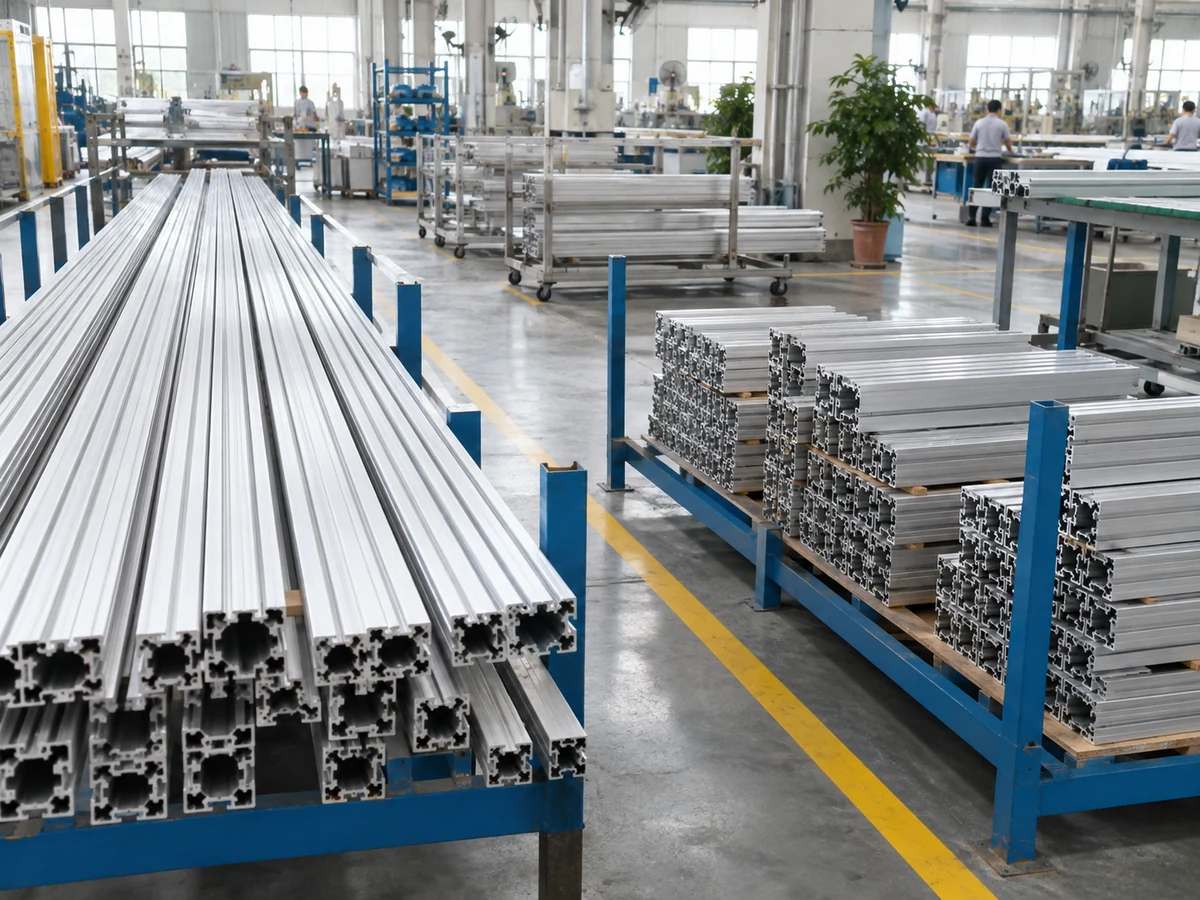
When a replacement blank is less economical than the OEM part
Compare the cost per accepted, usable plank, not the price of a raw bar alone. Include the correct section and finish, minimum material order, saw setup, trial scrap, secondary holes or inserts, caps, packaging, freight, inspection, and any required approval by the bench maker or facility. A one-off repair often favors the OEM replacement route because the system identification and fit risk dominate the cutting time. A repeatable production program may justify qualified cut blanks when the design owner controls the drawing, approves the section, and can test assembly consistently.
There are also cases where the right answer is to buy the complete bench. If the existing supports, hardware, or installation history cannot be verified, replacing only a plank may leave a broader problem untouched. A cutting-machine inquiry should never silently take responsibility for an installed seating system. State who accepts the assembly and what evidence that person needs. The saw vendor can discuss cut feasibility and equipment capacity; the product or project owner must approve the bench design and use.
Build an RFQ that a cut shop can actually price
- Supply stage: complete OEM bench, OEM spare plank, or owner-approved aluminum cut blank.
- Identity: model and revision, section drawing, supplier, material, finish, and visible-face orientation.
- Geometry: physical cut length, datum, allowable variation, exposed or capped ends, and any distinct seat/backrest parts.
- Operations: saw cut, approved deburr, drill or punch, cap or insert, labeling, and pack-out—each assigned to an owner.
- Trial and acceptance: actual sample stock, first-off quantity, dimensional check, face and edge inspection, assembly-fit decision, and sign-off authority.
- Economics: annual or batch volume, length mix, material yield, changeover frequency, scrap disposition, and accepted-part cost.
For a machine comparison, add the available stock lengths, largest section envelope, preferred feed orientation, support length, finish sensitivity, and desired output. Ask for a cut trial using the released section rather than a brochure claim. This turns a vague bench application into a measurable aluminum-cutting requirement.
Where a Jiurun aluminum saw may fit
A Jiurun profile-cutting saw may be worth evaluating when a fabricator has authorized aluminum plank stock and repeated, drawing-controlled lengths. The machine choice depends on the actual section, blade, support, clamp, finish, cut schedule, and acceptance test. Our related saw-trial stock-length guide explains why a short offcut may not represent long-stock feeding. It is a separate example, not proof for a player bench.
Video note: This own-channel Jiurun Machinery clip demonstrates related aluminum sawing equipment. It does not show a player-bench plank, the Jaypro product, the proposed fixture, a customer job, or a validated performance result.
Send us the released plank section, cut list, finish requirement, and first-off acceptance criteria if you want to discuss a suitable saw and trial. Contact JiurunCut with the actual aluminum part. We can evaluate the cutting step while the bench maker or design owner retains approval of the seating system.
Source note: The Jaypro PB-75 product page and linked specification/assembly guide are product-specific references. Verify the current model, replacement-parts route, and governing documents with Jaypro or the responsible system owner before ordering or modifying a bench.